Sesshoseki Myth Meaning & Symbolism
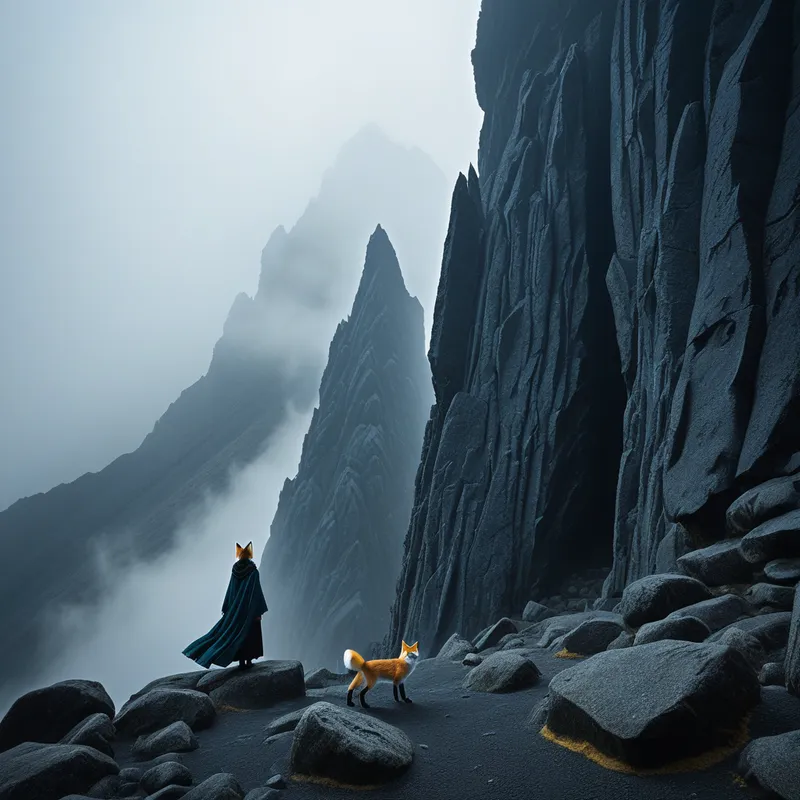
A nine-tailed fox spirit, slain and bound within a stone, poisons the land until a wandering monk confronts the curse to restore balance.
The Tale of Sesshoseki
Hear now a tale of beauty, betrayal, and a poison that seeped from stone. In a time when emperors ruled by divine mandate and spirits walked just beyond the veil, a shadow fell upon the land of the rising sun. It began not with a war, but with a whisper. The Emperor Konoe, a man of refined taste and delicate health, found his court graced by a lady of unparalleled beauty and intellect. Her name was Tamamo-no-Mae. Her poetry could move the heart to tears; her knowledge of the classics shamed the greatest scholars. The emperor was enchanted, and she became his favored consort.
Yet, as the emperor’s health grew weaker, so too did the fortunes of the realm. Strange plagues afflicted the people. Crops failed. A pall of misfortune settled over the palace. The court astrologer, Abe no Yasuchika, was summoned. Through secret rites and desperate divination, he peered beyond the veil of human form. What he saw was not a woman, but a being of ancient, cunning malice—a kitsune of nine tails, a creature of such power it was considered a celestial fox, a kyūbi no kitsune. This was no ordinary spirit, but a legendary entity that had sown chaos in the courts of India and China, and now it had come to Japan.
The revelation shattered the court’s peace. The beautiful Tamamo-no-Mae, her disguise torn asunder, fled the capital. The emperor, heartbroken and enraged, dispatched his two greatest warriors, Miura no suke and Kazusa no suke, to hunt the fox. The chase led them far to the east, to the volcanic plains of Nasu. There, amidst the sulfurous vents and barren earth, they cornered the spectral creature. Arrows flew, blessed by prayers, and found their mark. The great fox fell.
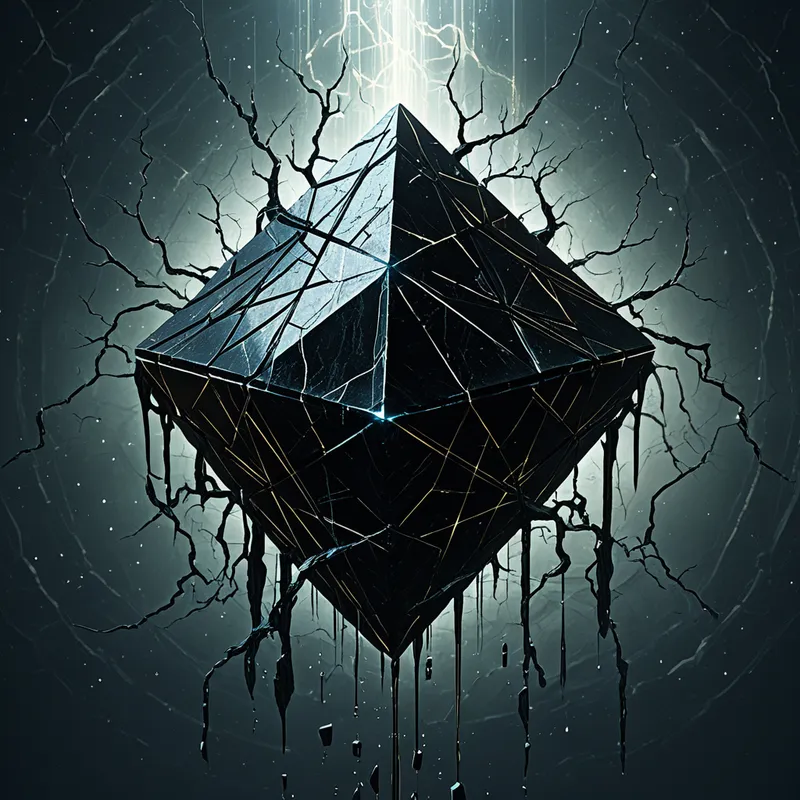
But death was not an end. The spirit’s malice was too potent, its resentment too deep. Its essence did not dissipate; instead, it fused with the very land, merging with a great volcanic rock in the pass of Nasu. This stone, the Sesshoseki, became a cursed nexus. Birds that flew over it fell dead from the sky. Grass withered at its base. A toxic miasma, the final breath of the fox’s grudge, seeped from its cracks, poisoning the life-force of the region for centuries. The stone stood as a monument to unresolved tragedy, a festering wound in the world.
Cultural Origins & Context
The legend of the Sesshoseki is a classic example of a setsuwa tale, a story explaining the origin and spiritual significance of a specific location. It is most famously recorded in the 14th-century military epic, the Taiheiki, and in the Noh play Sesshoseki. These narratives served a dual purpose: they provided an etiological myth for a real, forbidding geographical feature (a volcanic rock emitting toxic gases in Nasu, Tochigi), and they functioned as a powerful moral and spiritual lesson.
The tale circulated among monks, storytellers, and performers of Noh theater. In the Noh tradition, the story was adapted to explore themes of attachment, sin, and the possibility of salvation even for a monstrous spirit. The societal function was profound. It reinforced Buddhist concepts of karma and the dangers of unchecked ambition and attachment (the fox’s desire for power). It also illustrated the permeable boundary between the human and spirit worlds (utsushiyo and kakuriyo), a core tenet of Shinto animism. The story warned of the consequences when that boundary is violently transgressed, while also holding out hope for ritual resolution.
Symbolic Architecture
At its heart, the Sesshoseki myth is a powerful drama of the shadow made monumentally concrete. Tamamo-no-Mae represents the seductive, intelligent, and ultimately destructive aspect of the unconscious that infiltrates the seat of consciousness (the Imperial court). Her beauty and intellect are not false; they are real attributes of a complex psyche, but they are in service to a hidden, predatory agenda—the fox’s hunger for dominion.
The stone is not merely a prison; it is a psychic cyst. It is the place where unbearable experience—betrayal, exposure, violent death—is not processed, but petrified. The emotion turns to poison.
The Sesshoseki itself is the ultimate symbol of a curse that outlives its creator. It is trauma crystallized. The fox’s spirit is gone, but its final, furious emotion—its urami (deep-seated grudge)—has taken on a life of its own, becoming an autonomous, environmental hazard. This speaks to a profound psychological truth: unintegrated pain does not remain personal. It radiates outward, poisoning relationships, creativity, and one’s inner landscape. The stone’s lethal aura represents the toxic fallout of a psyche that has been shattered but not reconciled.
The Dreamer’s Resonance
When this myth pattern stirs in the modern unconscious, it often manifests in dreams of being trapped within, or threatened by, a mineral or crystalline substance. To dream of being slowly turned to stone, or of a beloved place becoming geometrically rigid and dead, is to feel the Sesshoseki’s curse at work. The dreamer may be experiencing a somatic process of psychic numbing—a defense against an emotional truth too sharp to bear.
Alternatively, one might dream of a beautiful, captivating figure (a lover, a mentor, a new idea) who, upon closer inspection, is revealed to have a hidden, feral nature or a “sting in the tail.” This is the Tamamo-no-Mae revelation. The psychological process here is one of disillusionment and the painful necessity of seeing through a compelling projection. The dream is initiating a confrontation with a complex that has been idealized but is, in fact, draining one’s vitality (the “emperor’s declining health”). The rising action of such a dream is the chase and confrontation; the lingering feeling upon waking is often the unresolved “miasma”—a sense of guilt, resentment, or pollution that remains even after the central conflict is identified.

Alchemical Translation
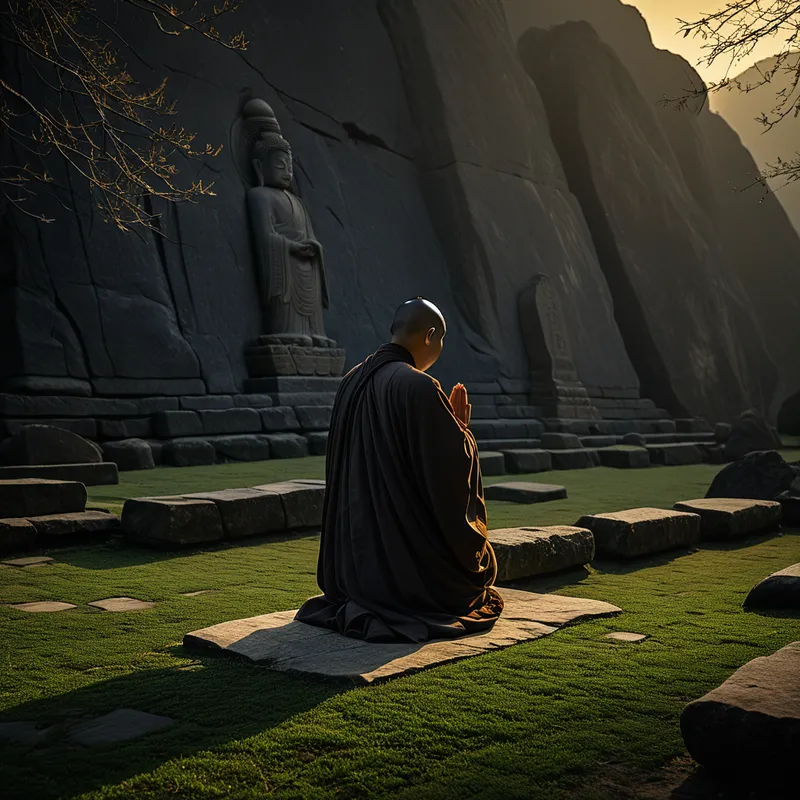
The full myth does not end with the cursed stone standing forever. Later legends tell of the wandering Buddhist monk Saigyō Hōshi encountering the stone and feeling its sorrow, and centuries later, the monk Gennō performing rites of pacification, splitting the stone and finally releasing the fox’s spirit to salvation. This is the crucial alchemical stage.
The individuation process modeled here is not the heroic slaying of the beast, which only creates the stone (the neurosis). True transmutation begins with the recognition of the curse within oneself. The monk does not fight the stone with a sword; he approaches it with sutras and compassion. He acknowledges the reality and power of the lodged pain.
The alchemical work is to apply the aqua permanens of conscious attention—not to dissolve the stone, but to hear the story trapped within it, to dignify its suffering, and in doing so, change its state from malignant to neutral, from poison to memory.
For the modern individual, this translates to the difficult, non-heroic work of sitting with one’s own petrified hurts—the old resentments, the core shames, the inherited traumas—not to excise them, but to listen to them. It is the process of converting a monolithic, toxic narrative (“I am cursed”) into a story that can be told, witnessed, and ultimately, laid to rest. The stone is split, not by force, but by the precise, gentle pressure of understanding. The spirit is not destroyed, but freed from its cycle of vengeance, allowing the land of the psyche to become fertile once more.
Associated Symbols
Explore related symbols from the CaleaDream lexicon: