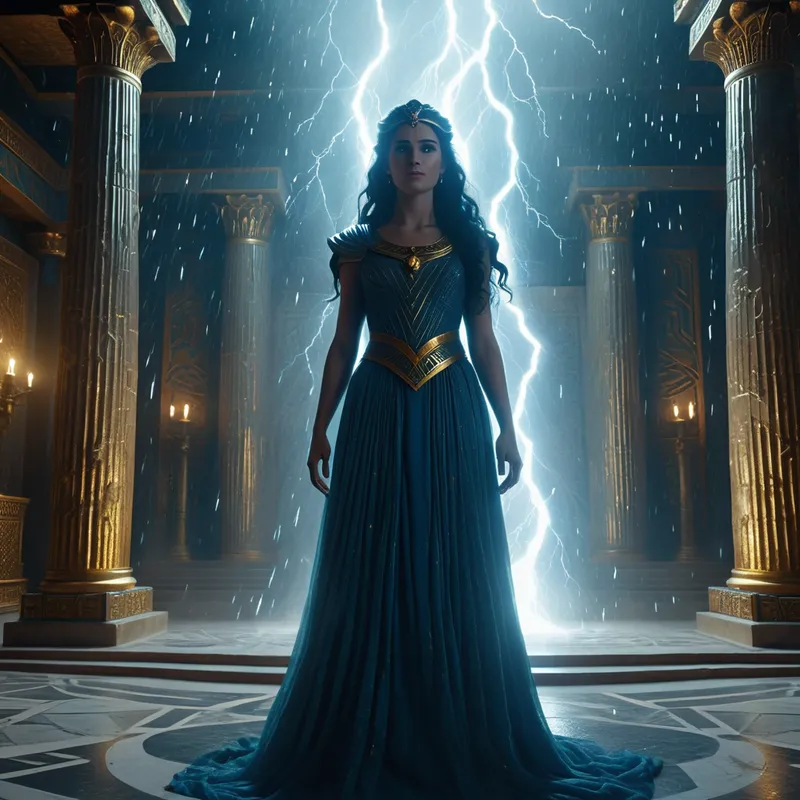
Semele beholding Zeus Myth Meaning & Symbolism
A mortal princess, consumed by a lover's doubt, demands to see her divine consort's true form and is incinerated by the unbearable glory of godhead.
The Tale of Semele beholding Zeus
Hear now the story of sight that sears, of a love that could not be contained by mortal flesh. In the high city of Thebes, there lived a princess named Semele, daughter of King Cadmus. Her beauty was not of the common kind; it held a light that seemed to call to [the sky](/myths/the-sky “Myth from Persian culture.”/) itself. And the sky answered.
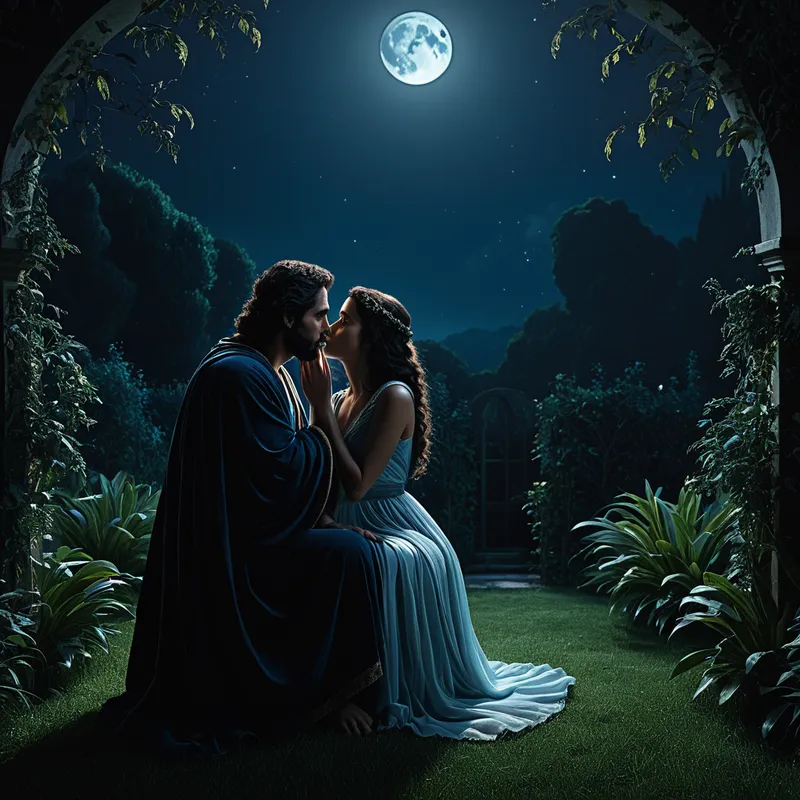
The ruler of Olympus, the cloud-gatherer Zeus, beheld her. Smitten by a passion that shook the foundations of [the world](/myths/the-world “Myth from Tarot culture.”/), he descended. But he did not come in the terror of his true form—the crackling aegis, the bolt that splits mountains. No. He came cloaked in mortal semblance, a lordly stranger with eyes holding the depth of storms. To Semele, he was simply a lover, divine in his ardor but touchable, knowable. In the secret, perfumed chambers of the palace, their union was consecrated. A child, a godling, quickened in her womb.
But the green-eyed whisper of the world is jealousy. Hera, the queen of heaven, saw this new flame in her husband’s eye and her heart turned to cold marble. She wove a plan not of brute force, but of subtle poison. Taking the form of Semele’s aged nurse, Beroe, she sat with the princess, sowing seeds in fertile soil. “This lover of yours,” the false nurse sighed, her voice honeyed with concern. “He speaks of divinity, but shows you only a mask. Are you certain he is who he claims to be? Would a true god hide his glory from the one he professes to love above all others?”
The doubt took root. It grew from a whisper to a thorny vine that choked her joy. When next Zeus came to her, she turned from his embrace, her eyes bright with a desperate, fearful resolve. “Swear to me by the black waters of the Styx,” she demanded, her voice trembling. “Swear you will grant me one wish, whatever it may be.” Blinded by love, or perhaps by the fatal trajectory of fate, Zeus swore the unbreakable oath.
Then she spoke the words that would become her epitaph: “Show yourself to me. As you are when you sit beside Hera on your throne. Let me behold you in your full power, without disguise or diminishment.”
A silence fell, heavier than stone. The god’s face became a landscape of anguish. He pleaded, he warned. He spoke of fire that mortal eyes cannot bear, of a glory that unmakes form. But the oath was iron. [The law](/myths/the-law “Myth from Biblical culture.”/) of the cosmos, older than he, bound him.
He ascended to the highest point of the chamber. And then, he let go.
The mortal disguise fell away like ash. What stood before Semele was not a man, but the principle of raw, sovereign power. He was the cataclysm made manifest: a towering form of pure, coruscating light, a nexus of thunderbolts that roared with the voice of creation and dissolution. [The aegis](/myths/the-aegis “Myth from Global/Universal culture.”/) flashed, each scale a mirror to a dying star. The palace walls meant nothing; they vaporized. The air itself screamed and ionized.
Semele beheld. In that infinitesimal fragment of a second before perception ended, she saw the truth of her lover. She saw the godhead in its terrible, beautiful totality. It was the consummation she had demanded, and it was annihilation. The glorious fire that was Zeus’s essence did not hate her; it simply was. And what was mortal in her—the flesh, the bone, the delicate web of consciousness—could not contain it. She was incinerated, not in anger, but in the unbearable fullness of truth.
From her ashes, falling to [the earth](/myths/the-earth “Myth from Hindu culture.”/), Zeus snatched the unborn, six-month child. He sewed the fetal Dionysus into his own thigh, a living womb of divine flesh. From that second birth would come a god who knew both the blaze of heaven and the dust of [the earth](/myths/the-earth “Myth from Hindu culture.”/), a god born from the ashes of a mortal who saw too much.
Cultural Origins & Context
This haunting myth is preserved primarily in the works of the poet Nonnus and the scholar Apollodorus, though its roots are far older, woven into the very fabric of Theban foundation myths. As a story explaining the miraculous birth of Dionysus, it served a crucial societal function. It established the divine and tragic origins of a god whose cult would later sweep through Greece, challenging social order with its ecstatic rites.
Told in symposia and during religious festivals, the tale was a warning and a theology. It graphically illustrated the unbridgeable chasm between mortal and immortal. The gods were not merely super-powered humans; they were forces of nature, consciousnesses operating on a scale that could shatter human reality. Semele’s demand was the ultimate transgression of divine law—the attempt to force the numinous into a frame of mortal understanding. Her destruction was not a punishment for sin, but a natural consequence, like a moth flying into a star. The myth reinforced the necessity of ritual mediation, of mystery, and of accepting that some truths are fatal to look upon directly.
Symbolic Architecture
At its core, this is a myth about the [psychology](/symbols/psychology “Symbol: Psychology in dreams often represents the exploration of the self, the subconscious mind, and emotional conflicts.”/) of encounter with the Absolute. Semele represents the [human](/symbols/human “Symbol: The symbol of a human represents individuality, complexity of emotions, and social relationships.”/) [soul](/symbols/soul “Symbol: The soul represents the essence of a person, encompassing their spirit, identity, and connection to the universe.”/)—specifically the soul in love, in a state of yearning for total union. Her [lover](/symbols/lover “Symbol: A lover in dreams often represents intimacy, connection, and the emotional aspects of relationships.”/) is not a person, but the archetypal mysterium tremendum et fascinans: the terrifying and fascinating [mystery](/symbols/mystery “Symbol: An enigmatic, unresolved element that invites curiosity and exploration, often representing the unknown or hidden aspects of existence.”/) of ultimate [reality](/symbols/reality “Symbol: Reality signifies the state of existence and perception, often reflecting one’s understanding of truth and life experiences.”/), of [the Self](/myths/the-self “Myth from Jungian culture.”/) in its divine [aspect](/symbols/aspect “Symbol: A distinct feature, quality, or perspective of something, often representing a partial view of a larger whole.”/).
The ultimate truth does not hate you; it is simply fatal to the vessel you currently inhabit.
Zeus’s mortal disguise is [the way](/myths/the-way “Myth from Taoist culture.”/) the numinous initially approaches us: in manageable, comprehensible forms—as a compelling [idea](/symbols/idea “Symbol: An ‘Idea’ represents a spark of creativity, innovation, or realization, often emerging as a solution to a problem or a new outlook on life.”/), a profound [emotion](/symbols/emotion “Symbol: Emotion symbolizes our inner feelings and responses to experiences, often guiding our actions and choices.”/), a synchronistic [event](/symbols/event “Symbol: An event within dreams often signifies significant life changes, transitions, or emotional milestones.”/). The [relationship](/symbols/relationship “Symbol: A representation of connections we have with others in our lives, often reflecting our emotional state.”/) flourishes in this mediated [space](/symbols/space “Symbol: Dreaming of ‘Space’ often symbolizes the vastness of potential, personal freedom, or feelings of isolation and exploration in one’s life.”/). Hera’s intervention symbolizes the corrosive power of [the ego](/myths/the-ego “Myth from Jungian culture.”/)-complex, the part of the [psyche](/myths/psyche “Myth from Greek culture.”/) invested in a separate, secure [identity](/symbols/identity “Symbol: Identity represents the sense of self, encompassing personal beliefs, cultural background, and social roles.”/). It whispers the fatal question: “Is this all there is? I demand proof. I demand the full experience, now.” This is not curiosity, but a possessive doubt that cannot tolerate mystery.
The fatal wish, sworn on the Styx, is the psyche committing irrevocably to its own [expansion](/symbols/expansion “Symbol: A symbol of growth, increase, or extension beyond current boundaries, often representing personal development, opportunity, or overwhelming change.”/), even at the cost of its current form. There is no turning back from such an [oath](/symbols/oath “Symbol: A solemn promise or vow, often invoking a higher power or sacred principle, binding individuals to specific actions or loyalties.”/). The unveiling is the catastrophic, yet necessary, [moment](/symbols/moment “Symbol: The symbol of a ‘moment’ embodies the significance of transient experiences that encapsulate emotional depth or pivotal transformations in life.”/) of total [revelation](/symbols/revelation “Symbol: A sudden, profound disclosure of truth or insight, often through artistic or musical means, that transforms understanding.”/). The ego-[structure](/symbols/structure “Symbol: Structure in dreams often symbolizes stability, organization, and the framework of one’s life, reflecting how one perceives their environment and personal life.”/) (Semele) is incinerated by the direct experience of the Self (Zeus in his [pleroma](/symbols/pleroma “Symbol: In Gnostic cosmology, the Pleroma is the divine fullness or totality of spiritual powers, representing the realm of perfection beyond the material world.”/)). It is a [death](/symbols/death “Symbol: Symbolizes transformation, endings, and new beginnings; often associated with fear of the unknown.”/), but not an end.
The Dreamer’s Resonance
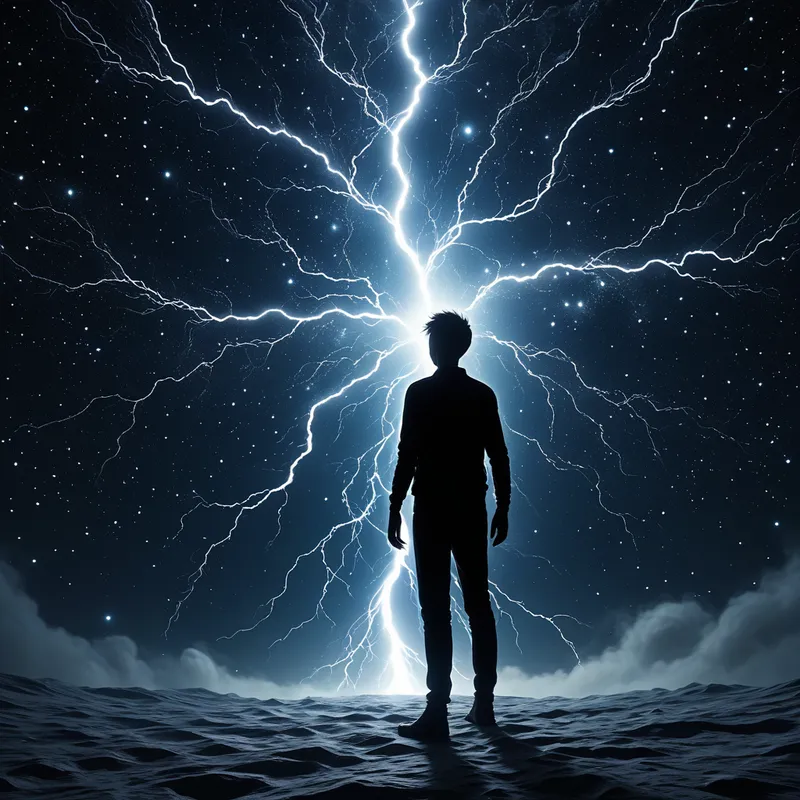
When this myth stirs in the modern dreamer, it announces a profound psychic initiation. One does not dream of Semele casually. To dream of demanding to see a lover’s “true face,” or of a light so brilliant it burns, or of being consumed by fire from the inside out, is to be in the grip of this archetypal process.
Somatically, it may manifest as anxiety, insomnia, or a feeling of being “overwhelmed” or “blown open” by an insight or emotion. Psychologically, the dreamer is at the crisis point of a transformative experience—perhaps the breakdown of a long-held self-image, the shattering of a foundational belief, or the overwhelming influx of material from the unconscious. The dream is the psyche’s depiction of the ego’s necessary dissolution in the face of a greater truth it has courted but is not yet strong enough to contain. The terror and the awe in the dream are real; the psyche is showing you the cost of the revelation you are seeking.
Alchemical Translation
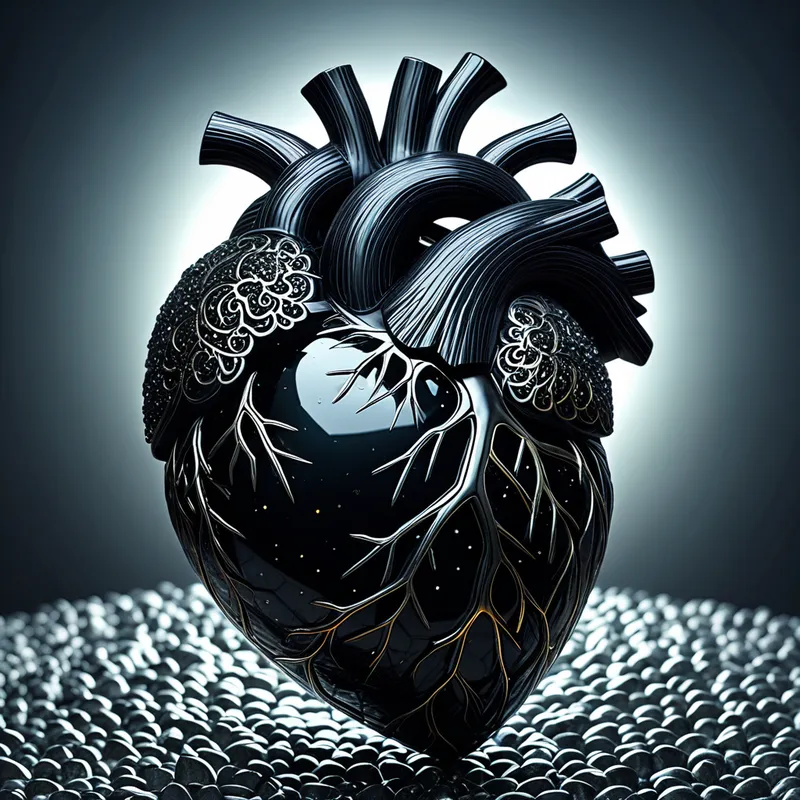
The alchemical process mirrored here is [solutio](/myths/solutio “Myth from Alchemical culture.”/) and calcinatio—dissolution and burning to ash—followed by a miraculous extractio. Semele’s incineration is the [nigredo](/myths/nigredo “Myth from Alchemical culture.”/), the blackening, the utter ruin of the old, leaden state of being. The mortal princess, the limited identity, must be reduced to her essential, primal matter.
The god is born from the ashes of the mortal, and from the wound of the god. Wholeness requires both the sacrifice and the sanctuary.
But the myth does not end in ash. Zeus’s act of sewing the fetal Dionysus into his thigh is the alchemical coniunctio on a higher level. [The divine spark](/myths/the-divine-spark “Myth from Gnostic culture.”/) (the potential for wholeness, the divine child) that was conceived in the mortal vessel is rescued and incubated within the divine substance itself. The “thigh” is often a euphemism for the loins; this is a masculine pregnancy, a symbol of the psyche’s ability to give birth to itself from its own deepest resources after the catastrophic encounter.
For the modern individual, this models the path of individuation. We are first engaged by a compelling, life-giving energy (the god in disguise). Our ego, threatened, demands total possession and understanding, forcing a crisis. The ensuing psychological “incineration”—a depression, a life-upheaval, a dark night of the soul—feels like annihilation. But if we can hold to the process, something is saved from the ashes. A new, more resilient consciousness (Dionysus, the god of boundary-dissolution who transcends the mortal/immortal split) is born, now nurtured directly by the central, organizing power of the Self. We are not who we were. We have beheld, been unmade, and from the union of our mortal experience and the divine spark, something transcendent is laboring to be born.
Associated Symbols
Explore related symbols from the CaleaDream lexicon: