Selene & Oceanus Myth Meaning & Symbolism
The moon goddess Selene descends nightly into the encircling world-river Oceanus, a myth of cosmic union, cyclical renewal, and the psyche's ultimate container.
The Tale of Selene & Oceanus
Listen, and let the night itself tell the tale.
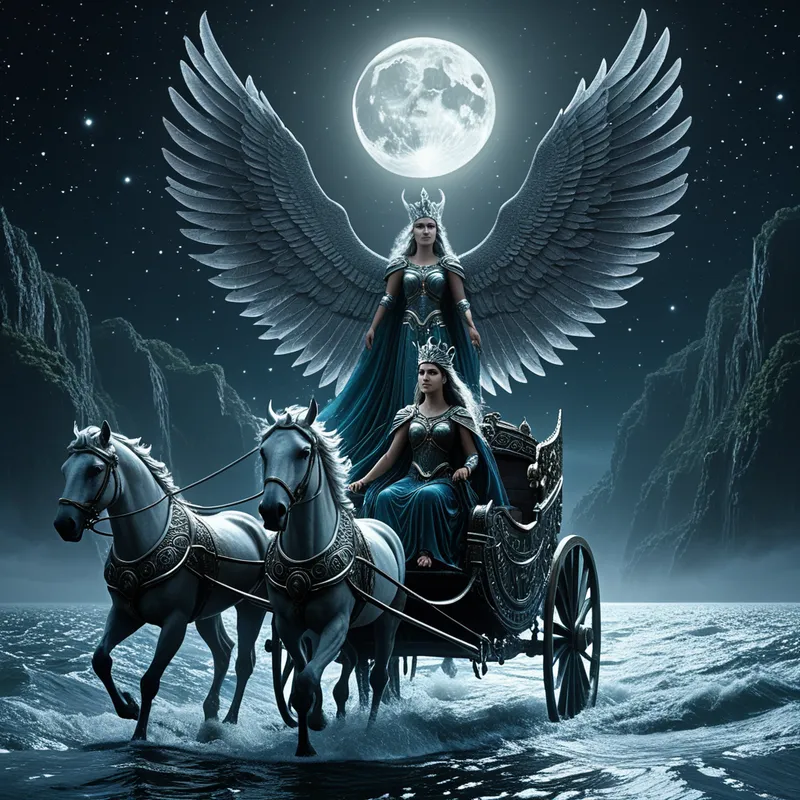
Before the clamor of heroes and the schemes of Olympians, the world was held in a deeper, quieter rhythm. Each evening, as the last blush of Helios faded from the western sky, a profound silence would fall. Then, from the eastern vault, she would rise: Selene. Clad in robes of spun starlight, her face the very pallor of mystery, she would mount her chariot of polished silver. Her steeds, often two, sometimes four, were not beasts of flesh but of breath and beam, their hooves striking no sound upon the vault of heaven. She was the watcher, the gentle illuminator of secrets, painting the world below in shades of pearl and shadow.
Her journey was a solitary vigil, a long, slow arc from horizon to horizon. Below her, the mortal world slept, dreamed, loved, and died in the quiet she provided. But every journey must find its rest. Her destination was not a palace, but a embrace. In the farthest west, where the sky melts into the great unknown, waited Oceanus.
He was not a god of a single sea, but the source of all waters. He was the great, fresh-water river that coiled around the entirety of the flat earth, a serpent of profound depth with no beginning and no end. His form was ancient, bearded, and wise, rising from the deeps where the stars themselves were said to bathe. His waters were not turbulent, but eternally, calmly receptive—the ultimate container.
As Selene’s chariot descended, the dark, star-flecked surface of Oceanus would stir, not in tumult, but in welcome. The silver light of the moon would diffuse into the black water, a liquid merging. Here, the myth whispers, she would find her repose. Some say her chariot was stored, her luminous steeds unharnessed to drink from the celestial stream. Others say she herself would step into his waters, her light dissolving into his depth, in a union so complete it was less an event and more a state of being—the moon bathing in the world-river.
In that silent confluence, the moon was renewed. Her light, spent on the world, was gathered back from the primal waters. Oceanus, in turn, was illuminated from within, his dark depths holding the celestial reflection. This was the resolution of her daily death: not an end, but a immersion into the source. And from this union, from this nightly return to the origin of all things fluid, she would emerge again, reborn, to begin her journey anew with the coming dusk. The cycle was eternal, necessary, and profoundly peaceful—the moon’s descent into the river at the edge of the world.
Cultural Origins & Context
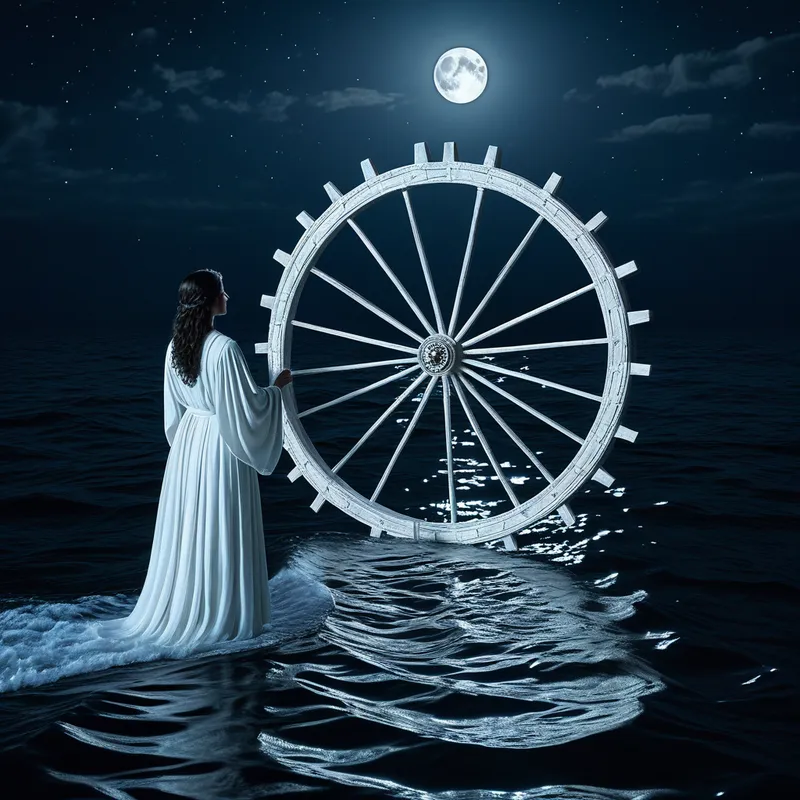
This myth is not a drama of passion or conflict, but a fundamental piece of archaic Greek cosmography and theology. It originates from the earliest layers of Greek thought, the Theogony of Hesiod (c. 700 BCE), where Oceanus and his consort Tethys are among the firstborn Titans, the primal parents of all rivers and water nymphs. Selene, too, is a Titaness, daughter of the Titans Hyperion and Theia.
The story of her nightly descent into Oceanus is less a plotted narrative and more a cosmological fact, repeated in poetry and understood as a literal description of the world’s function. It answered the simple, profound question every ancient Greek observed: where does the moon go at dawn? The answer was a geographical and theological one: it travels to the world-encircling river in the west, is refreshed, and returns. This myth was passed down by poets like Hesiod and later referenced by lyric poets and tragedians, not as a central drama but as a bedrock truth of the natural order. Its societal function was to reinforce a model of the cosmos as orderly, cyclical, and alive with divine presence in its most basic operations—the setting of celestial bodies.
Symbolic Architecture
Psychologically, this myth presents a perfect, serene model of the self-regulating psyche. Selene represents the conscious, illuminating principle—the light of awareness, reflection, and cyclical change (the phases of the moon). She is our waking mind, our persona, that which is visible and goes out into the world.
Oceanus is the ultimate symbol of the unconscious—not a chaotic sea, but a profound, encircling, containing river. He is the deep, fresh-water source of all life and potential that surrounds and undergirds the known world of the ego.
Their nightly union is not a passionate romance, but a necessary immersion. It symbolizes the daily descent of consciousness into the unconscious for renewal. Just as the moon’s light is not its own but reflected from the sun, our conscious awareness is sustained by energies drawn from the unconscious depths. The myth beautifully inverts the common heroic journey; here, the “goal” is not to conquer the unknown waters, but to be received by them, to allow the light of day-consciousness to be softened, dissolved, and replenished in the dark waters of the source.
This is a symbolism of containment and trust. The ego (Selene) does not fear its dissolution in the unconscious (Oceanus) because this dissolution is part of a sacred, eternal cycle. It is a return to the origin, a baptism in the waters of the prima materia.
The Dreamer’s Resonance
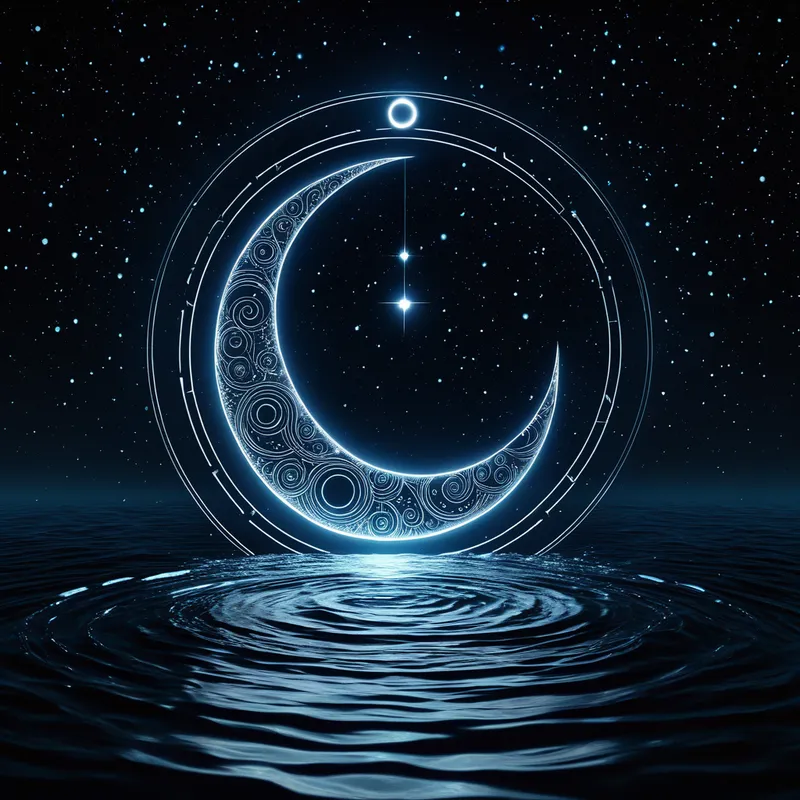
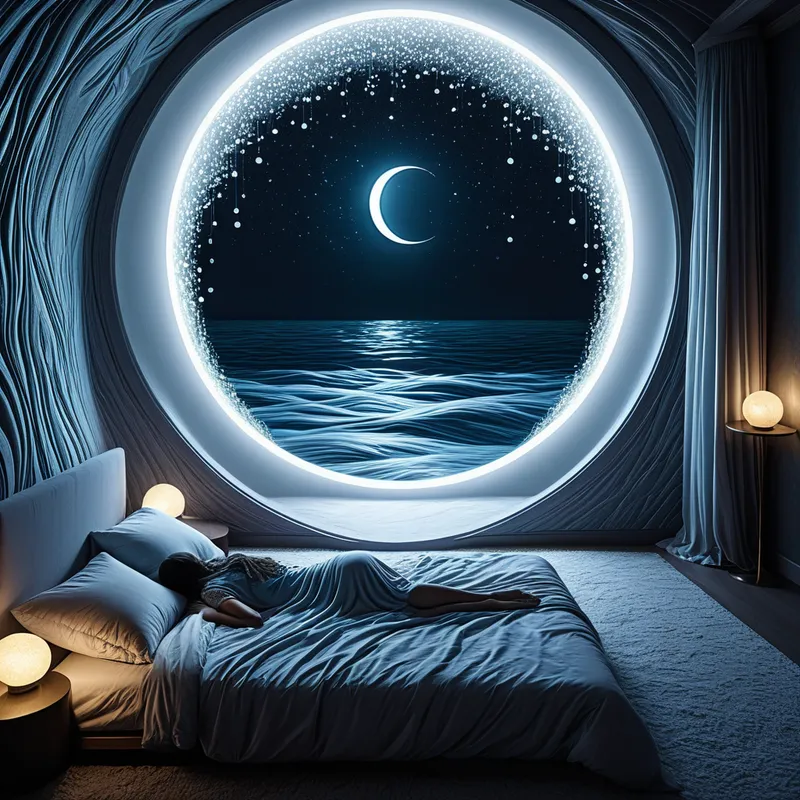
When this mythic pattern stirs in the modern dreamer, it often manifests not as a literal scene of gods, but as profound somatic and atmospheric experiences. One might dream of finding a perfectly still, black lake under a full moon and feeling compelled to step into its cool, enveloping waters without fear. Another might dream of their bedroom, or their entire house, being gently encircled by a deep, slow-moving river that feels protective, not threatening.
These dreams signal a psychological process of necessary withdrawal and introversion. The conscious mind has been over-extended, its light “spent.” The psyche is orchestrating a return to the source. The somatic feeling is often one of immense relief, a deep sigh of the soul. There is no conflict to resolve here, only a allowing. It is the dream equivalent of the body demanding sleep. The dreamer is being instructed to stop striving, to let their conscious identity soften, and to trust the deeper, encircling wisdom of the unconscious to hold and renew them. It is a call to honor the natural rhythm of engagement and retreat.
Alchemical Translation
In the alchemical process of individuation—the journey toward psychic wholeness—the myth of Selene and Oceanus models the critical stage of solutio (dissolution). This is not a destruction, but a merciful dissolving of rigid ego structures in the waters of the unconscious.
The modern individual, identified solely with their “Selene” aspect—their public face, their achievements, their constant illuminating activity—becomes brittle, lonely, and depleted. The alchemical work is to consciously enact the myth: to descend.
This means creating sacred space for non-doing, for receptivity, for allowing the logical mind to be quieted by immersion in art, nature, deep sleep, or meditation. It is the practice of letting your “light” be swallowed by the “river” without panic. In this contained dissolution, a transmutation occurs. The ego’s petty concerns are washed away, and from the depths, new, more authentic contents can surface—fresh insights, renewed energy, a sense of being part of a vaster, sustaining cycle.
The ultimate triumph here is not an achievement, but a reconciliation. It is the realization that one is both the journeying moon and the encircling river. The conscious self learns to trust its own depths. The individuated person no longer fears the dark or rest, but sees them as the sacred, necessary counterpart to light and action. They achieve a state of inner autarkeia, where the cycle of expenditure and renewal is internalized and honored, creating a psyche that, like the ancient cosmos, is eternally sustained by its own serene, rhythmic union of light and depth.
Associated Symbols
Explore related symbols from the CaleaDream lexicon: