Sarimanok Myth Meaning & Symbolism
A mythical, multi-colored bird of fortune and prophecy, bridging the human and divine realms in Filipino folklore.
The Tale of Sarimanok
Listen, and let the story take root. In the time when the world was still a conversation between the [diwata](/myths/diwata “Myth from Filipino culture.”/) and the waking earth, there was a silence that needed to be broken. It was the silence of a people who could see the sun but not its soul, who could hear the rain but not its message.
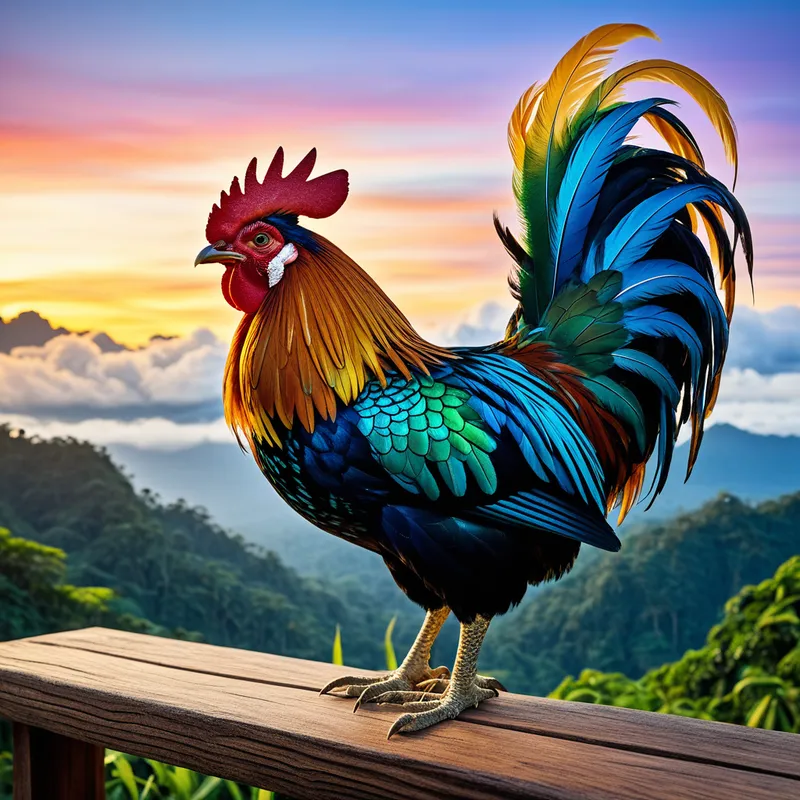
From the place where dreams are woven—Kaluwalhatian—a vision descended. It was not a god, but a herald. A creature of impossible beauty, born from the first light that ever cracked the shell of the primordial dark. They called it Sarimanokr. Its body was the deep, resonant blue of the midnight sea, but upon it danced every color the sun had ever kissed: the fiery red of volcanic soil, the radiant gold of ripe rice, the verdant green of the jungle canopy, and the pure white of mountain mist. Its tail feathers arched like a rainbow bridge, and its crest was a crown of living flame. But in its sharp, golden beak, it always carried a single, silver fish.
It did not walk; it appeared. At the edge of a clearing, at the foot of a great balete, or perched upon the roof-beam of a chieftain’s house. Its call was not a crow, but a clear, melodic note that hung in the air like a question. Where it alighted, the air itself grew thick with possibility. The conflict was not of claws and teeth, but of meaning. What was this sign? Was the fish a promise of bounty from the rivers and seas? Or was it a warning, a symbol of something elusive that must be grasped? The people held their breath. The Sarimanok would turn its head, one eye holding the reflection of the mortal who beheld it, the other seeing deep into the weave of tadhana.
The resolution was never in capture, but in witness. To see the Sarimanok was to be chosen by fortune, to be touched by a thread of destiny from the other world. It would stand, a statue of vibrant prophecy, for a moment that stretched into eternity. Then, with a beat of its wings that sounded like a sigh of the world itself, it would vanish. Not into the sky, but into the very texture of reality, leaving behind only a sense of awe and a profound, unsettling question: what journey must now begin? The fish in its beak remained, the eternal symbol of the sustenance and mystery it bridged from the spirit realm to the hands of humanity.
Cultural Origins & Context
The Sarimanok is a central figure in the oral traditions and visual arts of the Maranao people of Mindanao. It is not merely a creature of story, but a living emblem woven into the very fabric of social and spiritual life. Its primary home is in the epic poetry of the Darangen, chanted by skilled oni (bards) during significant gatherings—weddings, coronations, and communal rites. In these performances, the Sarimanok is often associated with nobility, heralding the arrival or presence of a hero or a figure of high status.
Beyond the spoken word, its most enduring expression is in the spectacular art of okir. The Sarimanok’s sinuous, flowing form, with its curvilinear feathers and arabesque patterns, becomes the supreme motif in wood carving, brassware, and textile design. It adorns the prows of ceremonial boats (vinta), the handles of sacred swords (kris), and the panels of the panolong on the torogan (royal house). Here, its societal function is clear: it is a symbol of prestige, cultural identity, and a tangible connection to a mythic past. It serves as a protective charm and a public declaration of a lineage’s connection to fortune and divine favor.
Symbolic Architecture
The Sarimanok is a complex [symbol](/symbols/symbol “Symbol: A symbol can represent an idea, concept, or belief, serving as a powerful tool for communication and understanding.”/) of mediation. It is not a god to be worshipped, but a psychopomp of [fortune](/symbols/fortune “Symbol: Fortune symbolizes luck, wealth, and opportunities that may be present or sought in one’s life.”/) and a mirror of the [soul](/symbols/soul “Symbol: The soul represents the essence of a person, encompassing their spirit, identity, and connection to the universe.”/)’s potential.
The bird does not own the fish; it is the act of carrying it that matters. It is the living bridge between the depth of the unconscious (the sea, the fish) and the soaring potential of consciousness (the sky, the bird).
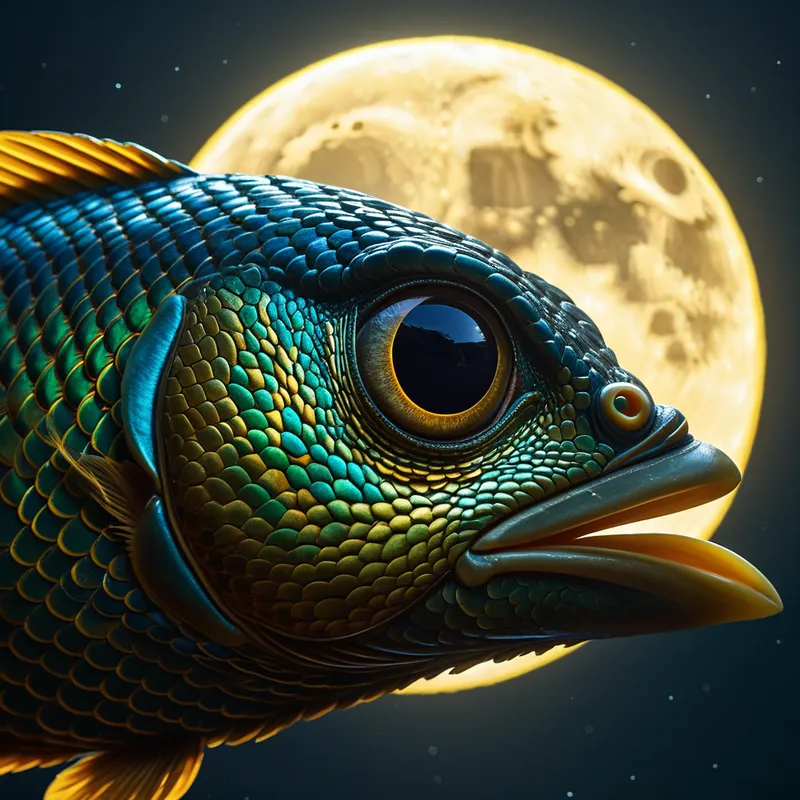
The fish in its beak is the crucial element. It represents sustenance, prosperity, and the latent potentials of the deep—the untapped resources of the psyche and the bounty of [fate](/symbols/fate “Symbol: Fate represents the belief in predetermined outcomes, suggesting that some aspects of life are beyond human control.”/). That the Sarimanok holds it but does not consume it signifies that these blessings are offered, but must be received and integrated by [the witness](/symbols/the-witness “Symbol: A figure observing events without direct participation, representing conscience, memory, or societal judgment.”/). The [bird](/symbols/bird “Symbol: Birds symbolize freedom, perspective, and the connection between the earthly and spiritual realms, often representing the soul’s aspirations or personal growth.”/) itself, a [fusion](/symbols/fusion “Symbol: The merging of separate elements into a unified whole, often representing integration of self, relationships, or conflicting aspects of identity.”/) of rooster (herald of the new day) and peacock (symbol of immortality and [vision](/symbols/vision “Symbol: Vision reflects perception, insight, and clarity — often signifying the ability to foresee or understand deeper truths.”/)), represents awakened [consciousness](/symbols/consciousness “Symbol: Consciousness represents the state of awareness and perception, encompassing thoughts, feelings, and experiences.”/), prophetic [insight](/symbols/insight “Symbol: A sudden, deep understanding of a complex situation or truth, often arriving unexpectedly and illuminating hidden connections.”/), and the beautiful, terrifying [responsibility](/symbols/responsibility “Symbol: Responsibility in dreams often signifies the weight of duties and the expectations placed upon the dreamer.”/) of seeing one’s own [destiny](/symbols/destiny “Symbol: A predetermined course of events or ultimate purpose, often linked to spiritual forces or cosmic order, representing life’s inherent direction.”/). Its myriad colors speak to the [integration](/symbols/integration “Symbol: The process of unifying disparate parts of the self or experience into a cohesive whole, often representing psychological wholeness or resolution of internal conflict.”/) of all aspects of [life](/symbols/life “Symbol: The symbol of ‘Life’ represents a journey of growth, interconnectedness, and existential meaning, encompassing both the joys and challenges that define human experience.”/)—joy and sorrow, [earth](/symbols/earth “Symbol: The symbol of Earth often represents grounding, stability, and the physical realm, embodying a connection to nature and the innate support it provides.”/) and [spirit](/symbols/spirit “Symbol: Spirit symbolizes the essence of life, vitality, and the spiritual journey of the individual.”/)—into a cohesive, radiant whole.

The Dreamer’s Resonance
When the Sarimanok appears in a modern dream, it signals a moment of psychic inflection. The dreamer is at a threshold. Somatic sensations might include a tightening in the chest (the awe of the encounter) or a feeling of weightlessness (the call to ascend).
Psychologically, this is the emergence of a guiding symbol from the Self, the central archetype of wholeness. The dream Sarimanok often appears when one’s life feels monochromatic, stuck in literalism. The bird’s impossible colors are a direct challenge from the unconscious: Your potential is more vibrant than you allow. The fish may represent a specific talent, a forgotten memory, or an emotional truth (“the one that got away”) that the psyche is now presenting as essential nourishment for the next stage of life. To dream of the Sarimanok is to be asked: What fortune is being held out to you? And do you have the courage to take it from the beak of mystery and make it your own?

Alchemical Translation
The journey of the Sarimanok models the alchemical process of individuation—becoming who one inherently is. The starting materia is the base, instinctual self (symbolized by the fish, the creature of the deep). The goal is the glorified, conscious Self (the magnificent, sky-bound bird).
The transmutation occurs not in escaping the fish, but in lifting it. The soul’s task is to carry its primal, nourishing essence into the realm of light and meaning.
The modern individual’s “Sarimanok process” begins with the call—a strange, beautiful, and unsettling vision of a more integrated, colorful, and purposeful life. This is the nigredo, a confrontation with one’s own depth. The “fish” must be identified: What is my core, nourishing truth? A creative impulse? A capacity for love? A need for sovereignty? The long, often solitary work of albedo (whitening) and citrinitas (yellowing) is the patient, careful lifting of this truth into daily life, refining it through action and reflection. Finally, the rubedo (reddening) is achieved when one becomes the Sarimanok—not by abandoning one’s origins, but by becoming the conscious vessel that bridges inner truth and outer manifestation. The individual becomes their own herald of fortune, their life a vibrant, cohesive work of art that carries the stamp of the sacred.
Associated Symbols
Explore related symbols from the CaleaDream lexicon:
- Bird — The Sarimanok is the avian archetype par excellence, representing the soul’s capacity for vision, transcendence, and carrying messages between realms.
- Fish — The creature held in the Sarimanok’s beak symbolizes the bounty of the unconscious, latent potential, and the nourishing truths that must be brought to the surface of consciousness.
- Journey — The myth embodies the essential journey of the soul from a state of unconscious potential to conscious, integrated manifestation.
- Vision — The Sarimanok is itself a living vision, an apparition that grants prophetic insight and compels the witness to see their life and destiny anew.
- Bridge — The bird functions as a psychic bridge, connecting the earthly realm of human need with the celestial realm of divine fortune and meaning.
- Rainbow — The multicolored plumage represents the integration of all opposites and the full spectrum of human experience into a harmonious whole.
- Spirit — It is a manifestation of the animating spirit of the world, a direct envoy from the realm of the diwata and ancestors.
- Destiny — Its appearance is an intervention of tadhana, a tangible sign that one’s personal fate is active and calling for engagement.
- Light — Born of primordial light, the Sarimanok illuminates dark paths and reveals possibilities previously hidden in shadow.
- Dream — As a figure that operates between worlds, it is a quintessential symbol of the dream state, where profound guidance from the deep psyche takes form.