Sakura Myth Meaning & Symbolism
A myth of a goddess who sacrifices her eternal life to become the fleeting cherry blossom, teaching humanity the profound beauty of impermanence.
The Tale of Sakura
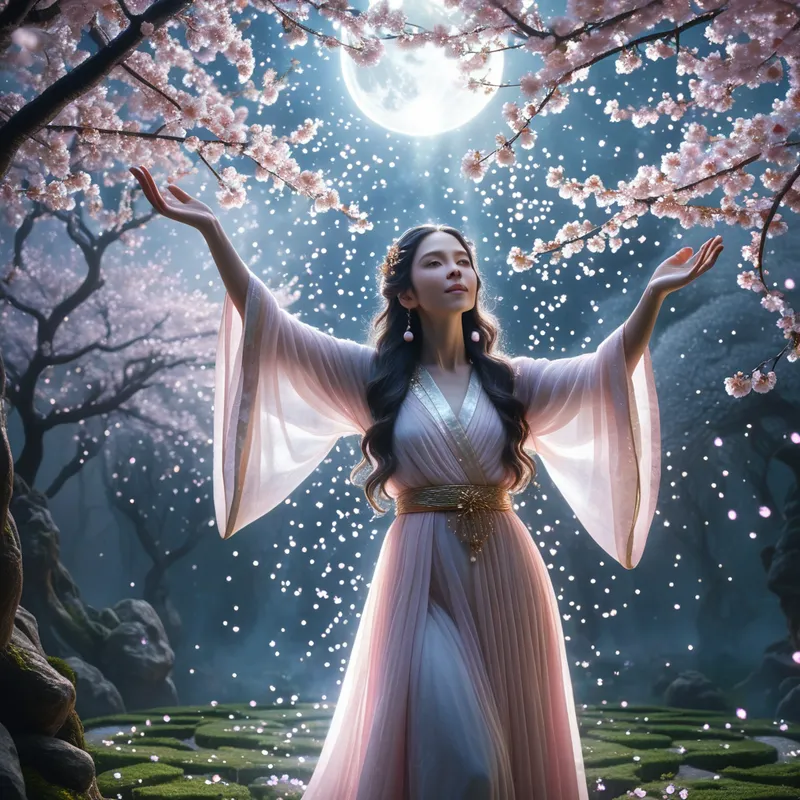
Listen, and I will tell you of the time before time was measured in seasons, when [the world](/myths/the-world “Myth from Tarot culture.”/) was young and [the sky](/myths/the-sky “Myth from Persian culture.”/) was closer to [the earth](/myths/the-earth “Myth from Hindu culture.”/). In the Takamagahara, where the kami dwell in eternal light, there lived a maiden of such grace that the stars themselves paused in their dance to watch her. Her name was Konohana-no-Sakuyahime, but all called her Sakura, for her spirit was the very essence of the blossom.
Her laughter was the sound of spring breezes, and her presence brought a gentle warmth to the celestial plains. Yet, her eyes, the color of a twilight sky, often gazed downward, through the veils of cloud, to the world of mortals below. She saw their struggles, their brief, hard lives shadowed by toil and sorrow, their world a palette of unyielding greens and somber browns.
In the heart of the High Plain grew the Eien no Sakura, the Eternal Cherry. Its blossoms never fell; they shimmered in a perpetual, silent bloom, a testament to the unchanging perfection of heaven. Sakura would sit beneath it, but its static beauty began to feel like a beautiful prison. She felt a longing, a pull towards the raw, messy, vibrant story unfolding on earth.
She went before the great Amaterasu, whose light illuminated all realms. “Great One,” Sakura whispered, her voice trembling like a petal in [the wind](/myths/the-wind “Myth from Various culture.”/). “I wish to go to the mortal world. I wish to give them a gift.”
Amaterasu’s gaze was as penetrating as the noon sun. “What can you give them that they do not already have? They have fire from my brother, the wild seas from my uncle, the very earth from our parents.”
“They have life,” Sakura said, her conviction growing. “But they do not have a mirror for its truth. Their lives are fleeting, filled with loss, and they know only to mourn its passing. I wish to show them that the passing is not a flaw, but the source of its deepest beauty.”
A silence fell over Takamagahara. No kami had ever asked such a [thing](/myths/thing “Myth from Norse culture.”/). To leave eternity for a world of decay was unthinkable.
“The price is your eternity,” Amaterasu declared, her voice echoing with finality. “To gift them this truth, you must embody it. You must become as fleeting as they are.”
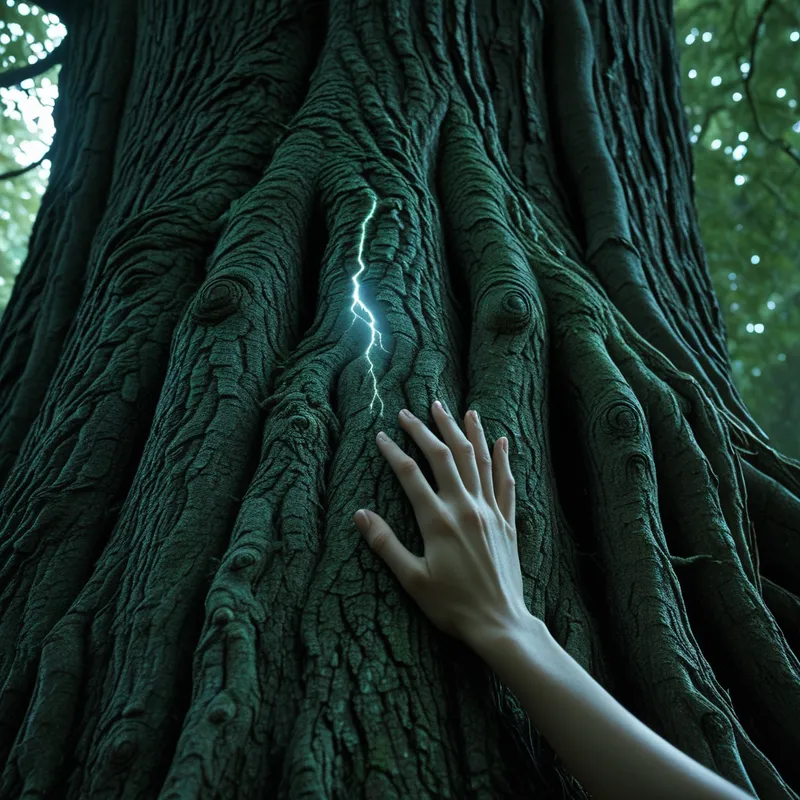
Sakura did not hesitate. She walked to the Eien no Sakura and placed her hands upon its immortal trunk. She poured her celestial essence into the tree, not to strengthen it, but to break its eternal cycle. A shudder passed through the roots of heaven. The perfect, unmoving blossoms began to tremble. Then, one by one, they let go.
A blizzard of pink and white petals, more beautiful in their falling than they ever were in their static hold, swirled around Sakura. Her form grew luminous, then began to dissolve into the cascade. She was not dying; she was transforming. Her spirit fragmented into billions of seeds of consciousness, each carried on a petal, riding the celestial winds down to the islands of mortals.
Where they touched the earth, slender trees sprouted, not over centuries, but in the space of a breath. And when spring came, they bloomed in a breathtaking, collective explosion of soft color—a spectacle of utter, vulnerable beauty that lasted only a handful of days before the winds came again, scattering the blossoms in a glorious, tragic shower.
The people emerged from their homes, struck dumb by the sight. They felt no sorrow at the falling petals. Instead, they felt a piercing, joyful ache in their hearts. They understood. They named the fleeting bloom sakura, and in its brief, brilliant life and graceful death, they saw the story of their own.
Cultural Origins & Context
The myth of Sakura is not a single, codified narrative from a text like the Kojiki or Nihon Shoki. It is a folkloric tapestry, woven from the threads of ancient Shinto animism and later refined by the aesthetic sensibilities of the Heian court and the philosophical insights of Zen Buddhism. The figure often associated with blossoms is Konohana-no-Sakuyahime, the blossom-princess daughter of the mountain god, symbolizing delicate life. Another layer comes from the deification of natural beauty itself—kami reside in remarkable trees, rocks, and waterfalls.
This “myth” was passed down not just by storytellers, but by poets, painters, and priests. Its societal function was profound: to provide an emotional and philosophical container for the central Japanese concept of [mono no aware](/myths/mono-no-aware “Myth from Japanese culture.”/). It taught an entire culture how to feel about life’s inevitable end. The annual ritual of hanami (flower viewing) is the living enactment of this myth—a communal celebration that is also a meditation on mortality, a deliberate and joyful gathering under the temporary beauty.
Symbolic Architecture
At its core, the Sakura myth is an alchemical equation where [Eternity](/symbols/eternity “Symbol: The infinite, timeless state beyond human life and measurement, often representing the ultimate or divine.”/) + Sacrifice = [Ephemeral Beauty](/symbols/ephemeral-beauty “Symbol: This symbol signifies the transient nature of beauty and existence, urging appreciation for fleeting moments.”/). Sakura, the [celestial entity](/symbols/celestial-entity “Symbol: An ethereal being or spirit often linked to the cosmos, representing connection and guidance from the universe.”/), represents pure, potential [beauty](/symbols/beauty “Symbol: This symbol embodies aesthetics, harmony, and the appreciation of life’s finer qualities.”/)—unseen and untouchable in its heavenly form. The mortal world represents [consciousness](/symbols/consciousness “Symbol: Consciousness represents the state of awareness and perception, encompassing thoughts, feelings, and experiences.”/) embodied in time, subject to suffering and decay.
The most profound beauty is not that which lasts, but that which knows its end. In its acceptance of death, it liberates life from the burden of permanence.
The act of leaving Takamagahara is the descent of [spirit](/symbols/spirit “Symbol: Spirit symbolizes the essence of life, vitality, and the spiritual journey of the individual.”/) into matter, of [idea](/symbols/idea “Symbol: An ‘Idea’ represents a spark of creativity, innovation, or realization, often emerging as a solution to a problem or a new outlook on life.”/) into form. The shattering of the Eternal Cherry is the necessary destruction of a perfect, but sterile, ideal. The blossoming on [earth](/symbols/earth “Symbol: The symbol of Earth often represents grounding, stability, and the physical realm, embodying a connection to nature and the innate support it provides.”/) is the [moment](/symbols/moment “Symbol: The symbol of a ‘moment’ embodies the significance of transient experiences that encapsulate emotional depth or pivotal transformations in life.”/) of incarnation—brilliant, conscious, and tragically brief. The falling petals are not a [symbol](/symbols/symbol “Symbol: A symbol can represent an idea, concept, or belief, serving as a powerful tool for communication and understanding.”/) of [death](/symbols/death “Symbol: Symbolizes transformation, endings, and new beginnings; often associated with fear of the unknown.”/) as finality, but of death as a phase in a cycle, a return that nourishes the roots for the next [bloom](/symbols/bloom “Symbol: Represents growth, vitality, and the flourishing of potential, often tied to emotional awakening or physical health.”/). Psychologically, Sakura represents the part of [the Self](/myths/the-self “Myth from Jungian culture.”/) that chooses meaningful experience in time over safe abstraction in eternity.
The Dreamer’s Resonance
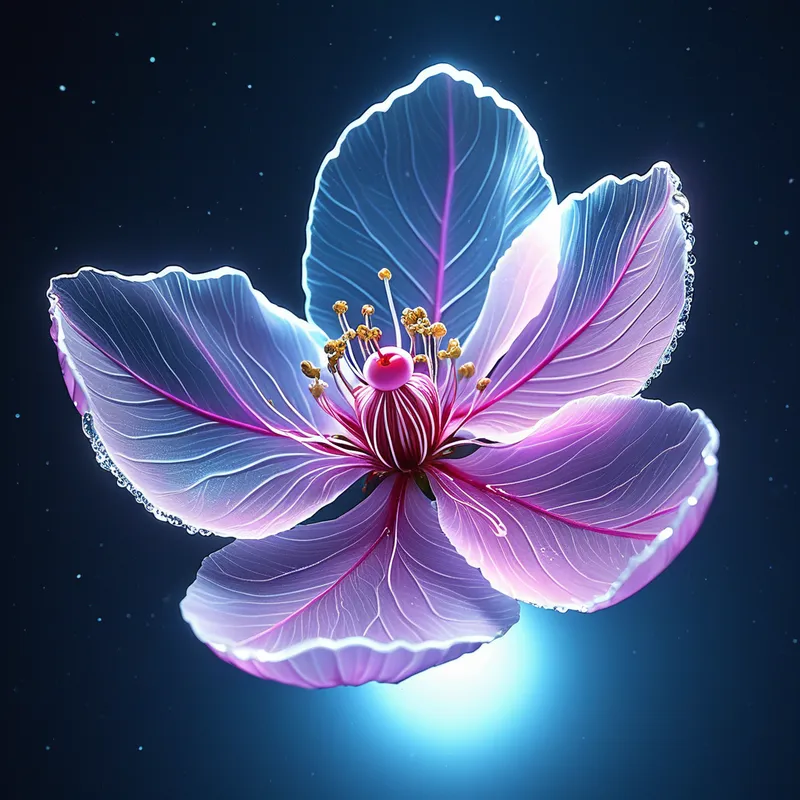
When the Sakura myth appears in modern dreams, it often manifests during life’s poignant transitions: the end of a relationship, children leaving home, a career shift, or the first conscious confrontations with one’s own aging. The dreamer may see a cherry tree blooming out of season in a concrete landscape, or find themselves catching falling petals that turn to [water](/myths/water “Myth from Chinese culture.”/) in their hands.
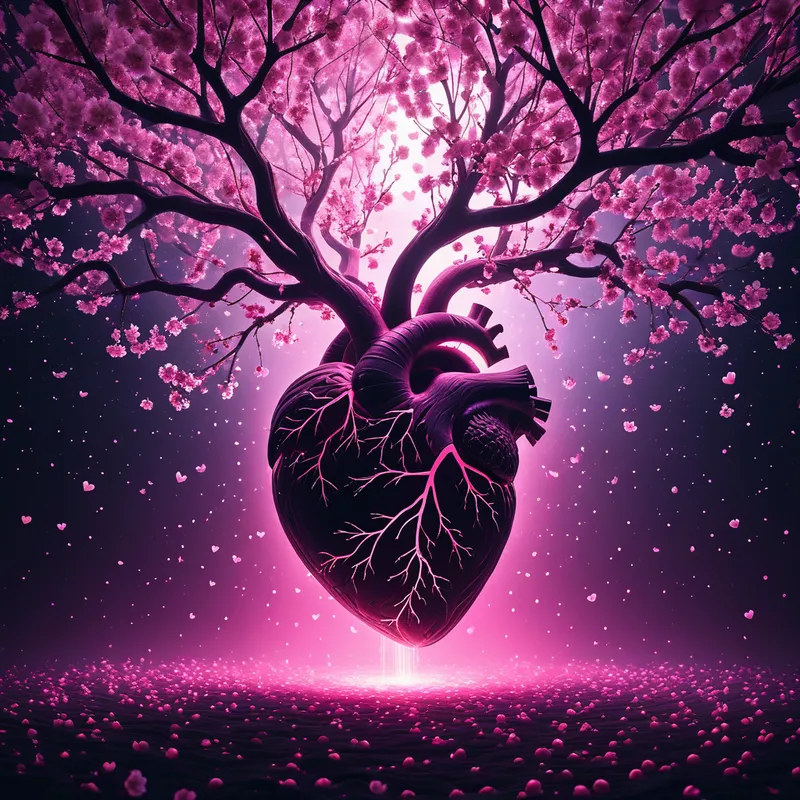
Somatically, this dream pattern correlates with a bittersweet ache in the chest—not the sharp pain of grief, but the expansive, tender ache of mono no aware. Psychologically, the dreamer is undergoing the process of releasing a cherished “eternal” self-image—the perfect job, the ideal relationship, the unchanging body—and learning to identify with the process itself. The dream is the [psyche](/myths/psyche “Myth from Greek culture.”/)’s way of practicing non-attachment, of finding the sublime beauty in the cycle of holding and letting go. It is an invitation to mourn not what is lost, but to be awed by the fact that it was ever there to lose.
Alchemical Translation
The individuation process modeled by Sakura is not the classic hero’s journey to conquer and return. It is the Lover’s journey of empathetic descent and transformative dissolution. For the modern individual, the “Eternal Cherry” is [the ego](/myths/the-ego “Myth from Jungian culture.”/)’s constructed ideal of a perfect, controlled, permanent life. The “celestial realm” is the detached, analytical mind that observes life but does not fully live it.
Individuation is not about building a monument of a Self, but about becoming a willing participant in the sacred, fleeting dance of form.
The alchemical work begins with Sakura’s gaze downward—the stirring of the heart, the feeling of empathy for one’s own messy, temporal humanity. The sacrifice is the conscious decision to abandon the safety of perfectionism and emotional detachment. The “blossoming” is the vulnerable, full-hearted engagement with a project, a relationship, or a phase of life, knowing it will end. The “scattering” is the graceful release when that time comes, without bitterness, trusting that the essence of the experience has been integrated and will seed future growth.
The [triumph](/myths/triumph “Myth from Roman culture.”/) is not in permanence, but in the achievement of a certain relationship to time. The individual who integrates this myth no longer sees life as a line moving toward an end, but as a series of exquisite, temporary bloomings. Their psychic gold is the capacity for mono no aware—to feel the profound depth of the present moment precisely because it is passing through their fingers, like petals on the spring wind. They become, in essence, both the tree and the blossom, the holder and the released, fully human and deeply at peace within the beautiful, tragic, and endless cycle.
Associated Symbols
Explore related symbols from the CaleaDream lexicon: