Saints Myth Meaning & Symbolism
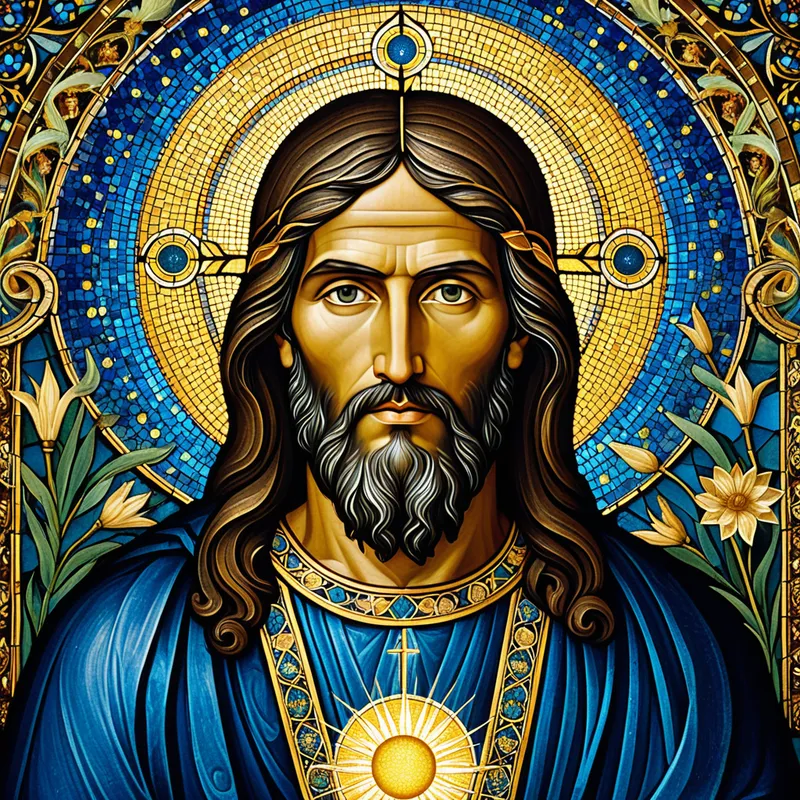
The myth of the Saint is the story of a human life transformed into a vessel of the divine, a map of suffering alchemized into luminous wholeness.
The Tale of Saints
Listen, and let the story settle in your bones. It begins not in a palace, but in the ordinary clay of a human life. A man, a woman, born into the dust and noise of [the world](/myths/the-world “Myth from Tarot culture.”/). They feel the same hungers, the same fears that coil in every heart. But then, a rupture. A call that is not a sound, but a silence so vast it swallows all other noise. It is the whisper of the Godhead, not from a distant throne, but from the very core of their own being.
The world, sensing this strange allegiance, turns hostile. The flesh is scourged by cold and hunger. The spirit is assailed by the Adversary, who offers kingdoms of comfort in exchange for the soul’s singular devotion. Our figure stands in a desert of the spirit, parched, alone, wrestling with angels made of their own shadow. They retreat to caves, to forests, to the stark white cells of monasteries, places where the chatter of the world dies, and the only voice left is the terrible, beautiful one within.
And then, the miracle—not of walking on [water](/myths/water “Myth from Chinese culture.”/), but of walking through fire. The suffering does not cease; it is transmuted. The wounds become windows. Where there was lack, a profound generosity blooms, feeding the poor from an inner well that never runs dry. Where there was pain, a healing touch emerges, mending bodies as an outward sign of a soul made whole. They perform wonders—calming storms, speaking to beasts—not as acts of power, but as a natural consequence of a life brought back into harmony with the hidden order of things. They become a bridge. People flock to them, not to a perfect being, but to a transparent one—a human life through which the divine light shines, fractured perhaps, but undeniable.
Their end is often written in blood or in the slow, glorious wasting away of the body, a final offering. They die, but their story does not. It is sealed in the fragrant oil of chrism, in the whispered prayers of the desperate, in the quiet recognition that in this one, broken vessel, something of the eternal managed to dwell.
Cultural Origins & Context
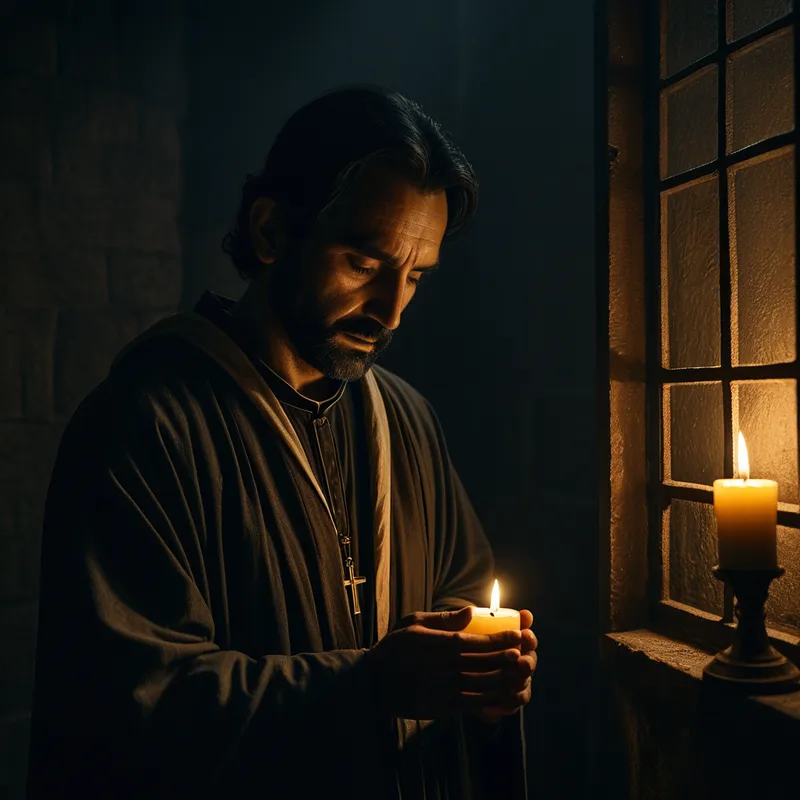
The myth of the Saint did not spring fully formed from doctrine. It grew from the fertile, bloody soil of the early Church, watered by the blood of martyrs. These were the first Saints: witnesses who enacted the ultimate paradox, finding life in death. As the age of persecution faded, the myth adapted. [The desert](/myths/the-desert “Myth from Biblical culture.”/) became the new arena, with [the Desert Fathers](/myths/the-desert-fathers “Myth from Christian culture.”/) and Mothers wrestling with inner demons, crafting a psychology of the soul that would underpin Western mysticism.
The myth was passed down not in dry treatises, but in hagiographies—lives of the Saints. These were less historical documents and more symbolic roadmaps, told in communities, painted on icons, sung in liturgies. Their societal function was multifaceted: they provided models of extreme virtue, yes, but more importantly, they localized the sacred. A Saint connected a village, a craft, a specific illness to the cosmic drama. They were divine empathy made specific, a guarantee that heaven was not indifferent to the particulars of human suffering and trade.
Symbolic Architecture
At its core, the Saint is not a model of moral perfection, but a [symbol](/symbols/symbol “Symbol: A symbol can represent an idea, concept, or belief, serving as a powerful tool for communication and understanding.”/) of the integrated Self. The Saint’s [journey](/symbols/journey “Symbol: A journey in dreams typically signifies adventure, growth, or a significant life transition.”/) maps the process by which [the ego](/myths/the-ego “Myth from Jungian culture.”/), the conscious “I,” aligns itself with the larger, transcendent totality of the [psyche](/myths/psyche “Myth from Greek culture.”/)—what Jung termed the Self.
The Saint does not escape their humanity; they become so fully human that the divine can no longer be kept out.
The suffering and asceticism are not masochism, but a radical simplification. It is the stripping away of the [persona](/symbols/persona “Symbol: The social mask or outward identity one presents to the world, often concealing the true self.”/) and the confrontation with the [shadow](/symbols/shadow “Symbol: The ‘shadow’ embodies the unconscious, repressed aspects of the self and often represents fears or hidden emotions.”/). The desert is the psyche itself, barren of projections. The miracles symbolize the new, spontaneous functioning of a psyche that has made [peace](/symbols/peace “Symbol: Peace represents a state of tranquility and harmony, both internally and externally, often reflecting a desire for resolution and serenity in one’s life.”/) with its [unconscious depths](/symbols/unconscious-depths “Symbol: The hidden, primordial layers of the psyche containing repressed memories, instincts, archetypes, and collective wisdom beyond conscious awareness.”/). Healing the sick represents integrating disowned parts of [the self](/myths/the-self “Myth from Jungian culture.”/); taming beasts signifies mastering [primal instincts](/symbols/primal-instincts “Symbol: Primal Instincts represent the basic drives and survival mechanisms inherent in every individual, harkening back to our animalistic nature.”/). The [halo](/symbols/halo “Symbol: A luminous circle or ring of light, often depicted around a head, symbolizing divinity, enlightenment, or exceptional virtue.”/) is not merely a [crown](/symbols/crown “Symbol: A crown symbolizes authority, power, and achievement, often representing an individual’s aspirations, leadership, or societal role.”/) of reward, but a [mandala](/symbols/mandala “Symbol: A sacred geometric circle representing wholeness, the cosmos, and the journey toward spiritual integration.”/)—a symbol of the psychical totality, the [radiance](/symbols/radiance “Symbol: A powerful symbol of illumination, divine presence, and inner awakening, often representing clarity, truth, and spiritual energy.”/) of a [consciousness](/symbols/consciousness “Symbol: Consciousness represents the state of awareness and perception, encompassing thoughts, feelings, and experiences.”/) that has made [room](/symbols/room “Symbol: A room in a dream often symbolizes the self, representing personal space, mental state, or aspects of one’s identity.”/) for the whole of its being.

The Dreamer’s Resonance
When the archetype of the Saint stirs in modern dreams, it rarely appears as a religious figure in robes. It manifests as a profound somatic and psychological process. You may dream of finding a hidden, radiant source of water in a barren landscape of your life, symbolizing the discovery of an inner wellspring of meaning. You may dream of tending to a wounded animal or a sick stranger, reflecting the psyche’s urge to heal and integrate its own neglected or injured aspects.
The dream may present a figure of immense, quiet authority who speaks few words but whose presence brings peace, pointing to the emerging influence of the Self. Conversely, you might dream of enduring a harsh trial or purification—a storm, a fire—and emerging not unscathed, but fundamentally changed. These are not dreams of comfort, but of initiation. They signal a call to move beyond the ego’s comfortable fictions, to engage in the difficult, sacred work of becoming whole.
Alchemical Translation
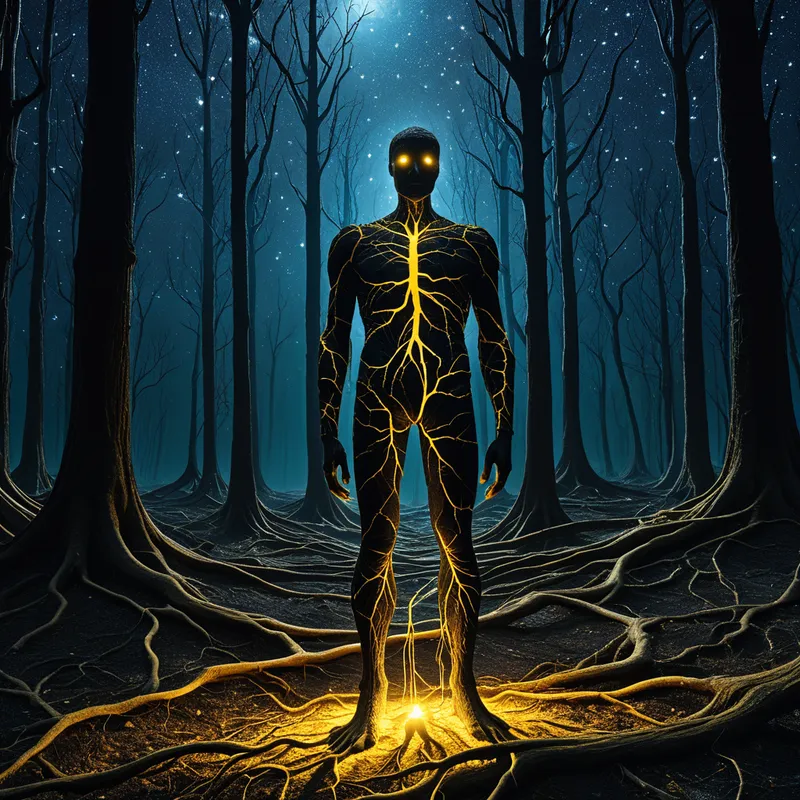
The myth of the Saint is a precise alchemical manual for individuation. Its stages mirror the [nigredo](/myths/nigredo “Myth from Alchemical culture.”/), albedo, and [rubedo](/myths/rubedo “Myth from Alchemical culture.”/).
The initial calling and subsequent suffering represent the nigredo: the blackening, the dissolution of the old ego-identity. This is [the dark night of the soul](/myths/the-dark-night-of-the-soul “Myth from Christian Mysticism culture.”/), where everything one thought they were is called into question. [The ascetic](/myths/the-ascetic “Myth from Christian culture.”/) practice is the albedo: the whitening. It is the purification, the washing in the tears of introspection, the separation of the essential from the dross of conditioning. It creates [the vessel](/myths/the-vessel “Myth from Alchemical culture.”/)—the disciplined consciousness capable of holding the transformation.
The final miracle is not the goal, but the evidence. The gold was always in the lead; the Saint is the one who consented to the fire that revealed it.
The life of service and the miraculous signs are the rubedo: the reddening, the production of the philosophical gold. This is not a selfish enlightenment, but a connected one. The integrated Self, having confronted its own depths, now turns outward, not with a [persona](/myths/persona “Myth from Greek culture.”/) of goodness, but with the authentic, generative power of wholeness. The Saint’s “sacrifice” is the ultimate alchemical truth: you must lose your life (the limited ego-life) to find it (the life of the Self). For the modern individual, the saintly path is the courage to face one’s own desert, to listen to the terrifying call within, and to slowly, painstakingly, allow the fragmented self to be reassembled—not as it was, but as it was always meant to be: a unique, imperfect, and luminous vessel of the whole.
Associated Symbols
Explore related symbols from the CaleaDream lexicon: