Runestones Myth Meaning & Symbolism
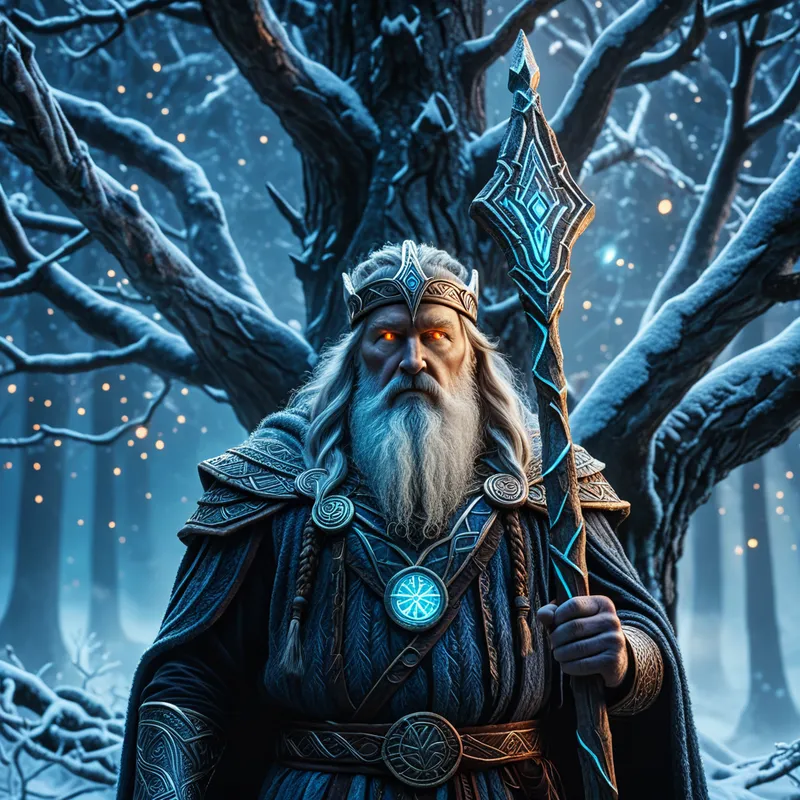
The myth of how the god Odin sacrificed himself to win the secret of the runes, the primal alphabet that carves reality from chaos.
The Tale of Runestones
Listen. [The wind](/myths/the-wind “Myth from Various culture.”/) does not just blow through the pines of the north. It whispers secrets older than the mountains, secrets that were bought with a king’s agony. In the time before time, when the worlds were still young and raw, there was only the great, groaning silence of potential. The [Yggdrasil](/myths/yggdrasil “Myth from Global/Universal culture.”/) held the nine realms in its branches, but the language to name them, to bind them, to sing them into being… that was hidden.
Only one sought it with a hunger that burned like a cold star. Odin, the hooded one, the spear-god. He was king of Asgard, but a king who knew his throne was built on ignorance. He wandered the roots of [the world](/myths/the-world “Myth from Tarot culture.”/), drinking from the well of [Mimir](/myths/mimir “Myth from Norse culture.”/), but wisdom is not power. Power is creation. Power is [the word](/myths/the-word “Myth from Biblical culture.”/) that shapes [the void](/myths/the-void “Myth from Buddhist culture.”/).
He came to the foot of [the World Tree](/myths/the-world-tree “Myth from Celtic culture.”/), where its three great roots drink from three wells. He looked not to the [water](/myths/water “Myth from Chinese culture.”/), but to the trunk itself, a column of reality so vast it blotted out [the sky](/myths/the-sky “Myth from Persian culture.”/). And there, in the rough bark, he saw them—faint, shifting, like the afterimage of lightning. Shapes. Angles. Cuts in the fabric of everything. They were not yet real. They were a promise, a secret the tree kept for itself.
Odin knew the price. The universe gives nothing freely. So he took his own spear, [Gungnir](/myths/gungnir “Myth from Norse culture.”/), and with a cry that echoed through [Jotunheim](/myths/jotunheim “Myth from Norse culture.”/), he drove it through his own side, pinning himself to the great trunk. He hung there, a sacrifice to himself. The wind ripped at his cloak. The cold of [Niflheim](/myths/niflheim “Myth from Norse culture.”/) seeped into his bones. For nine nights and nine days, he dangled between life and death, staring into the churning waters of the well of Urd below.
He starved. He thirsted. He peered into [the abyss](/myths/the-abyss “Myth from Kabbalistic culture.”/) of his own ending. On the final night, as his consciousness frayed like an old rope, the shapes in the bark began to move. They bled from the wood, glowing with a fierce, rune-red light. They were not gentle. They were truths—hard, sharp, and absolute. They carved themselves into his mind: Fehu, cattle, wealth, raw possession. Uruz, the wild auroch, untamed strength. Thurisaz, the thorn, the giant, destructive force. One by one, they burned their forms into his soul, twenty-four primal sounds of being.
With a final gasp, he reached down, his fingers straining toward the dark water. And as his hand broke the surface, the last of the mysteries flooded into him. He fell from the tree, broken and reborn. He was no longer just Odin the king. He was Odin the Runemaster. The blood from his wound, mingling with [the dew](/myths/the-dew “Myth from Alchemical culture.”/) from the tree, became the first ink. The branch that scraped his palm became the first stylus. He had wrested the secret of [the runes](/myths/the-runes “Myth from Norse culture.”/) from the belly of the cosmos, and now the silence of the worlds was broken forever.
Cultural Origins & Context
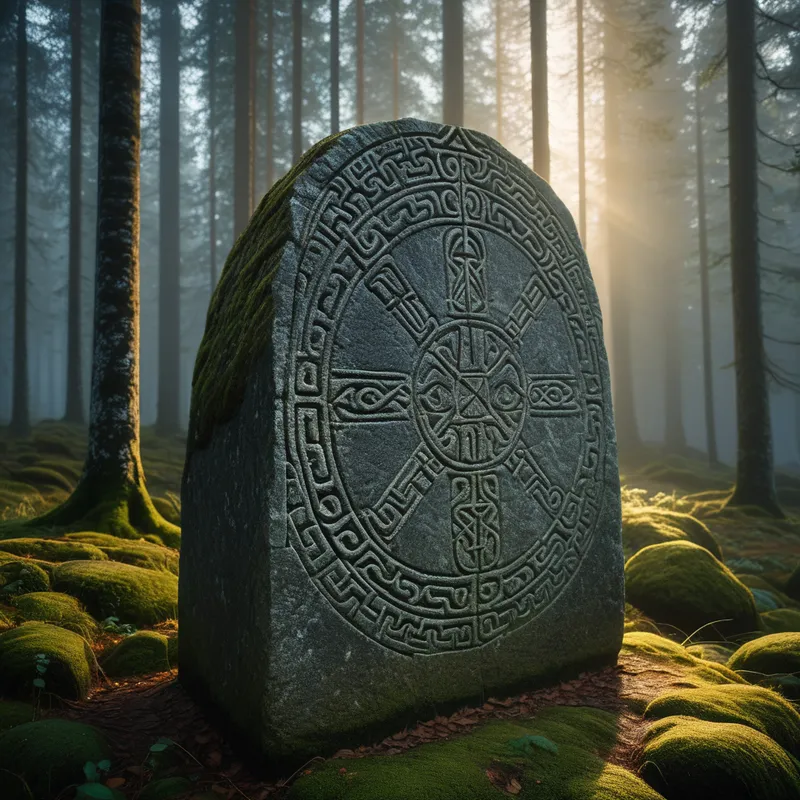
This myth, preserved primarily in the Old Norse poem Hávamál (“Sayings of the High One”), is not a story for children by the fire. It is esoteric knowledge, a foundational text for the gothi and runemasters. In a culture with a rich oral tradition but late literacy using the Latin alphabet, the [runes](/myths/runes “Myth from Norse culture.”/) (rúnar) held a sacred, numinous power distinct from mere writing.
They were not invented; they were discovered by the ultimate seeker, the Allfather himself. This divine origin made them a technology of the gods, a means to interface with the hidden layers of reality. Runestones—the large, public monuments we associate with the Viking Age—are the grand, mortal echoes of Odin’s sacrifice. They were raised as memorials, as declarations of land ownership, as boasts of great deeds. But beneath that social function lay a deeper magic: to carve a rune was to invoke its essence, to fix a moment, a name, or a curse into the fabric of wyrd. The stone was not just a canvas; it was an anchor, pinning a piece of human story into the eternal flow of time, much as Odin pinned himself to Yggdrasil to stop the flow of his own life to gain understanding.
Symbolic Architecture
At its [heart](/symbols/heart “Symbol: The heart symbolizes love, emotion, and the core of one’s existence, representing deep connections with others and self.”/), this is not a myth about writing. It is a myth about the terrifying cost of [consciousness](/symbols/consciousness “Symbol: Consciousness represents the state of awareness and perception, encompassing thoughts, feelings, and experiences.”/). The runes represent the fundamental archetypal patterns—the psychic DNA—that [structure](/symbols/structure “Symbol: Structure in dreams often symbolizes stability, organization, and the framework of one’s life, reflecting how one perceives their environment and personal life.”/) [reality](/symbols/reality “Symbol: Reality signifies the state of existence and perception, often reflecting one’s understanding of truth and life experiences.”/). Before Odin’s ordeal, these patterns were unconscious, latent in the World [Tree](/symbols/tree “Symbol: In dreams, the tree often symbolizes growth, stability, and the interconnectedness of life.”/) (the [symbol](/symbols/symbol “Symbol: A symbol can represent an idea, concept, or belief, serving as a powerful tool for communication and understanding.”/) of the interconnected [cosmos](/symbols/cosmos “Symbol: The entire universe as an ordered, harmonious system, often representing the totality of existence, spiritual connection, and the unknown.”/)). His agonizing vigil is the ultimate act of bringing to light.
The birth of language is the birth of the conscious self, a painful separation from the silent, undifferentiated womb of the unconscious.
Odin’s sacrifice is multifaceted. He gives his physical comfort ([hunger](/symbols/hunger “Symbol: A primal bodily sensation symbolizing unmet needs, desires, or emotional voids. It represents craving for fulfillment beyond physical nourishment.”/), thirst), his sovereignty (the [king](/symbols/king “Symbol: A symbol of ultimate authority, leadership, and societal order, often representing the dreamer’s inner power or external control figures.”/) becomes a [victim](/symbols/victim “Symbol: A person harmed by external forces, representing vulnerability, injustice, or sacrifice in dreams. Often symbolizes powerlessness or moral conflict.”/)), and even part of his [perception](/symbols/perception “Symbol: The process of becoming aware of something through the senses. In dreams, it often represents how one interprets reality or internal states.”/) (his single eye is often seen as a price paid earlier for wisdom). He gains, in return, the tools of [differentiation](/symbols/differentiation “Symbol: The process of distinguishing or separating parts of the self, emotions, or identity from a whole, often marking a developmental or psychological milestone.”/): names, categories, meanings. Each [rune](/symbols/rune “Symbol: Ancient alphabetic symbols used in Germanic languages, often associated with divination, magic, and ancestral wisdom.”/) is a frozen [piece](/symbols/piece “Symbol: A ‘piece’ in dreams often symbolizes a fragment of the self or a situation that requires integration, reflection, or understanding.”/) of divine speech, a [snapshot](/symbols/snapshot “Symbol: A frozen moment in time, representing memory, preservation, and the desire to capture fleeting reality.”/) of a cosmic force—Ansuz is the god-force, Raidho is the [journey](/symbols/journey “Symbol: A journey in dreams typically signifies adventure, growth, or a significant life transition.”/), Kenaz is the transformative [torch](/symbols/torch “Symbol: A portable light source symbolizing illumination, guidance, and the transfer of knowledge or life force.”/). To know them is to have a map of the inner and outer worlds. The myth tells us that true wisdom, the kind that creates and defines, is not found in comfort or inherited power. It is forged in the liminal [space](/symbols/space “Symbol: Dreaming of ‘Space’ often symbolizes the vastness of potential, personal freedom, or feelings of isolation and exploration in one’s life.”/) of extreme [vulnerability](/symbols/vulnerability “Symbol: A state of emotional or physical exposure, often involving risk of harm, that reveals authentic self beneath protective layers.”/), at [the threshold](/myths/the-threshold “Myth from Folklore culture.”/) of [death](/symbols/death “Symbol: Symbolizes transformation, endings, and new beginnings; often associated with fear of the unknown.”/).
The Dreamer’s Resonance
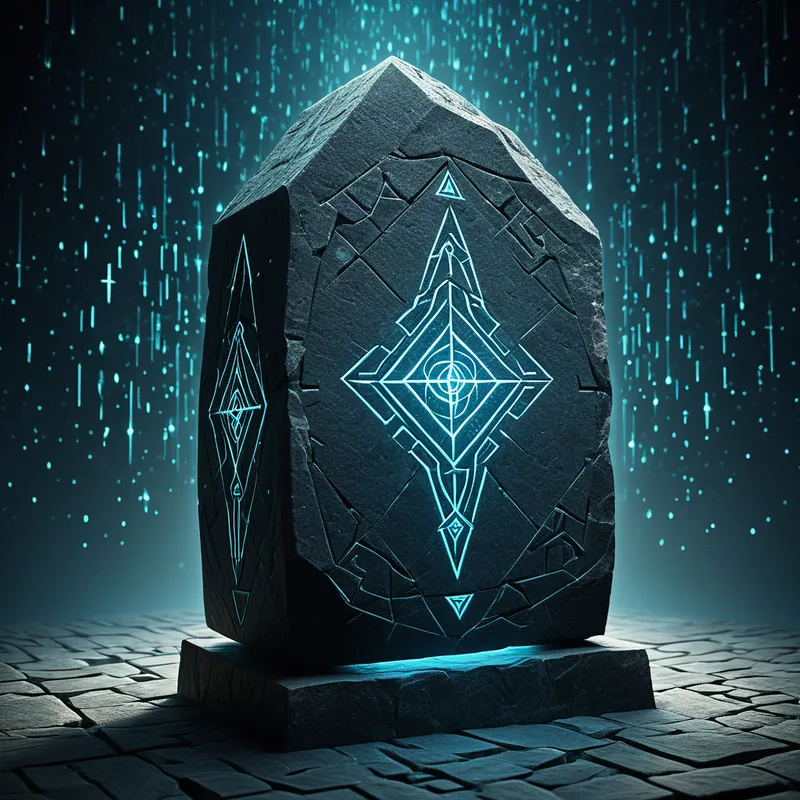
When the myth of [the runestones](/myths/the-runestones “Myth from Norse culture.”/) appears in modern dreams, it rarely manifests as a literal Viking carving. Instead, one might dream of finding strange, angular symbols etched into the wall of one’s childhood home, or floating in a dark pool. One might dream of trying to speak, but only these hard, geometric shapes emerge from one’s mouth. The somatic feeling is often one of pressure, of a truth pushing to be expressed in a form that feels foreign yet deeply familiar.
Psychologically, this dream pattern signals a confrontation with the archetypal layer of the [psyche](/myths/psyche “Myth from Greek culture.”/). The dreamer is undergoing a process where raw, unconscious content—instincts, potentials, forgotten memories—is demanding to be “carved” into conscious understanding. It is a call to make the implicit explicit. The struggle in the dream mirrors Odin’s struggle: there is a cost to this integration. It may feel like a sacrifice of an old identity (hanging helpless), a period of emotional or intellectual austerity (the nine nights), before the new “language” of [the self](/myths/the-self “Myth from Jungian culture.”/) clicks into place. The runestone in the dream is the nascent, permanent record of this inner transformation, a psychic monument [the ego](/myths/the-ego “Myth from Jungian culture.”/) is building to mark a profound shift.
Alchemical Translation
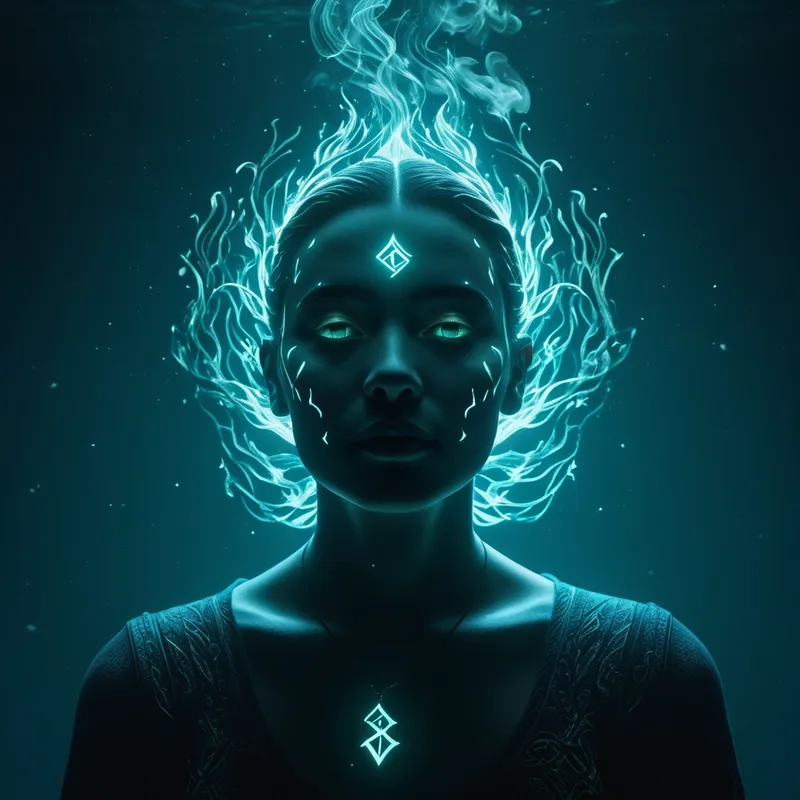
The alchemical journey modeled here is the opus of conscious individuation. The [prima materia](/myths/prima-materia “Myth from Alchemical culture.”/) is the undifferentiated self, living in the “great silence” of unconscious habit and collective norms. Odin’s decision to seek the runes is the [nigredo](/myths/nigredo “Myth from Alchemical culture.”/)—the descent into darkness, the willing engagement with the shadowy, painful parts of existence (symbolized by [the well of Urd](/myths/the-well-of-urd “Myth from Norse culture.”/), which holds past deeds and fate).
The hanging on Yggdrasil is the core of the albedo, the whitening. It is a sublime, painful state of suspension and purification. The ego is crucified on the structure of the Self (the [World Tree](/myths/world-tree “Myth from Global culture.”/)). All illusions are stripped away. In psychological terms, this is the intense introspective phase where one holds contradictory truths in mind without rushing to resolution, allowing old complexes to die.
The runes themselves are the rubedo, the reddening, the emergence of the new, conscious substance. They are the crystallized facets of the newly integrated psyche.
The gained knowledge is not intellectual, but embodied. Odin becomes the runes. For the modern individual, the [triumph](/myths/triumph “Myth from Roman culture.”/) is not in becoming a magician, but in achieving a new, more complex vocabulary of the soul. One learns the “runes” of one’s own nature: the glyph of one’s resilience (Uruz), the shape of one’s creative fire (Kenaz), the pattern of one’s necessary journeys (Raidho). This hard-won alphabet allows one to no longer just be lived by life, but to inscribe meaning upon it, to carve one’s own story—one’s personal runestone—into the flowing stone of time, with all the authority of one who has paid the price in blood and vision.
Associated Symbols
Explore related symbols from the CaleaDream lexicon: