Ra's Solar Barge Myth Meaning & Symbolism
The sun god Ra journeys through day and night on his barge, battling the serpent Apophis to ensure the world's daily rebirth from primordial chaos.
The Tale of Ra’s Solar Barge
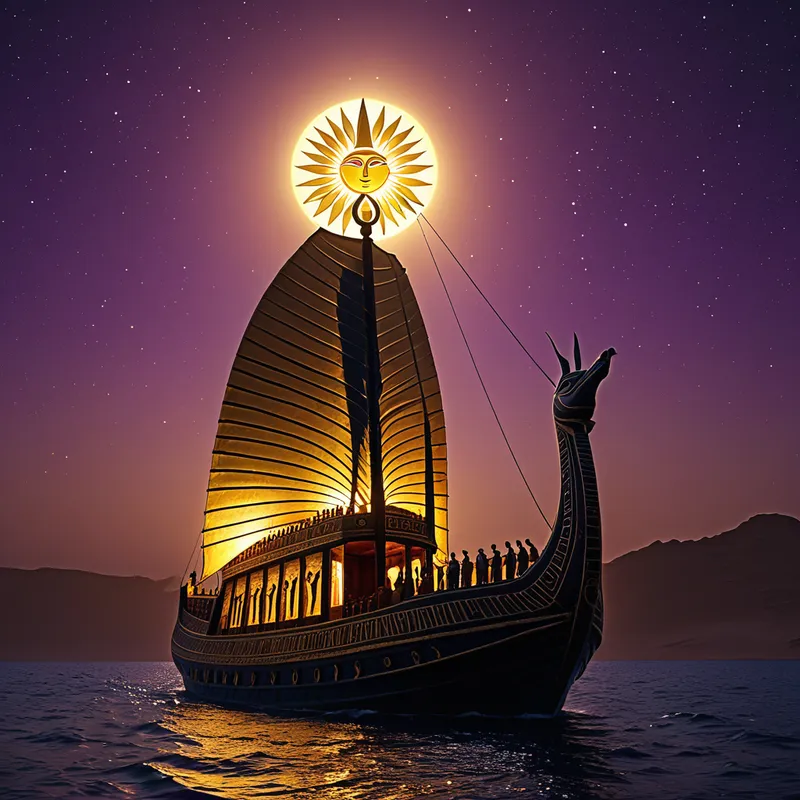
Before the first word was spoken, before the first stone was laid, there was the Nun. From its silent, infinite depths, a light was born. It was Ra, the self-created, and his first act was to step onto a barque of light. This was the Mandjet, the Solar Barge, and upon it, Ra began the first journey.
Each dawn, he is Khepri, pushing the sun-disk above the eastern mountains. The barge sails across the turquoise vault of the sky, a blazing vessel crewed by the gods themselves. Thoth records the passage. Maat stands at the prow, her feather the measure of all things. Below, the world breathes in the light. Crops grow, rivers flow, and hearts beat in time with Ra’s radiant passage. This is the known world, the realm of life and order.
But the sun must set. As the sky bleeds into ochre and violet, the barge dips below the western horizon. It does not vanish. It transforms. The Mandjet becomes the Mesektet, and Ra becomes an old man, a weary traveler entering the Duat.
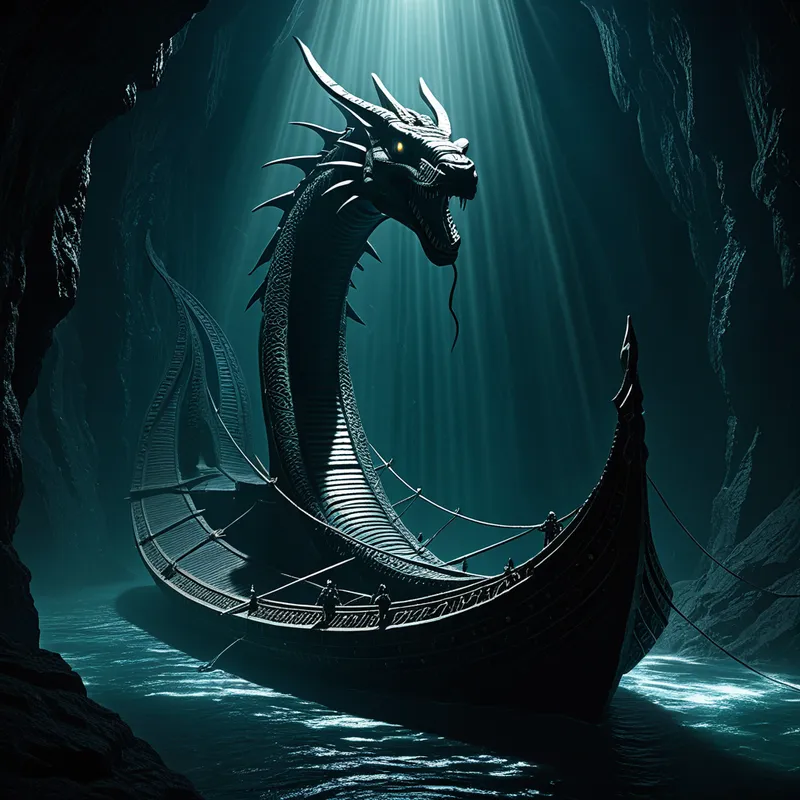
Here, in the twelve caverns of the night, the air is thick with the scent of damp earth and forgotten things. The light of the barge is no longer a triumphant blaze but a fragile, defiant torch in an ocean of black. This is the realm of the dead, and the blessed souls sing to Ra as he passes, nourished by his fleeting light. But another presence stirs in the deep waters of the Nun that surrounds the Duat. It is Apophis, the serpent of dissolution, who was never created and seeks only to un-create. He hates the light, the order, the very is-ness that Ra represents.
Each night, the battle is joined. Apophis coils his mountainous body around the river of the underworld, seeking to swallow the barge whole, to drink the sun and return all to endless, silent chaos. The crew becomes warriors. Set, with his red hair and fierce strength, stands at the prow, driving his spear into the serpent’s hide. Isis weaves spells of protection. The gods bind Apophis with chains of magic, and Ra’s gaze withers the serpent’s power. Apophis is vanquished—but never destroyed. He retreats, wounded, to the dark waters, to gather his formless strength for the next night’s assault.
The barge sails on. In the deepest hour, Ra merges with Osiris, the lord of the Duat. In this sacred union of the sun and the resurrected king, the seed of tomorrow’s light is forged. The journey continues, through renewal and into the final gate. And as the night thins to a grey veil, Ra is born again as Khepri. The Mesektet breaks the surface of the eastern horizon. The sun-disk is lifted. The world wakes. The Mandjet sails once more. The serpent is defeated for another day. Creation is renewed. The journey never ends.
Cultural Origins & Context
This myth was not mere entertainment; it was the fundamental operating system of Egyptian reality. It was recited in temple liturgies, inscribed in the corridors of royal tombs (most completely in the <abbr title=""New Kingdom” funerary texts found in royal tombs”>Book of the Amduat), and likely echoed in more accessible forms by storytellers. Its primary custodians were the priesthood of Ra, particularly at his cult centers like Heliopolis. The myth served multiple, intertwined societal functions. On a cosmic level, it was a sacred technology: the ritual recitation of the journey was believed to magically assist Ra in his battle, ensuring the sun’s return. On a national level, it legitimized the pharaoh’s role as Ra’s son and earthly deputy, tasked with maintaining Maat against chaos. On a personal level, it mapped the soul’s journey after death, with the deceased hoping to join the crew of the blessed in the solar barge, escaping the perils of the Duat. The myth was a continuous, daily reaffirmation that existence was a hard-won victory, and that collective ritual and right living were essential to upholding the fabric of the world.
Symbolic Architecture
At its core, the Solar Barge is a myth of consciousness itself. Ra is not merely a sun god; he is the animating principle of awareness, the light that allows the world to be known. His daily journey is the cycle of conscious life: the bright, active engagement with the external world (the Day Barge), followed by the necessary descent into the unconscious, internal world (the Night Barge).
The hero’s journey is a single day. The god’s journey is every day. The true work is not to reach a destination, but to become the vessel that can endure the voyage.
The Duat represents the personal and collective unconscious—a realm of forgotten memories, unintegrated traumas, latent potentials, and the psychic contents we have buried. Apophis is the force of entropy, not just physically but psychically. It is the pull toward dissolution, depression, meaninglessness, and the undoing of the ego’s hard-won structure. The battle is not against an external monster, but against the inner inertia that seeks to drag consciousness back into the formless Nun of non-being. The crew of gods symbolizes the various faculties of the psyche—wisdom (Thoth), order (Maat), aggressive defense (Set), and nurturing magic (Isis)—that must be integrated and mobilized to protect the fragile light of the self.
The Dreamer’s Resonance
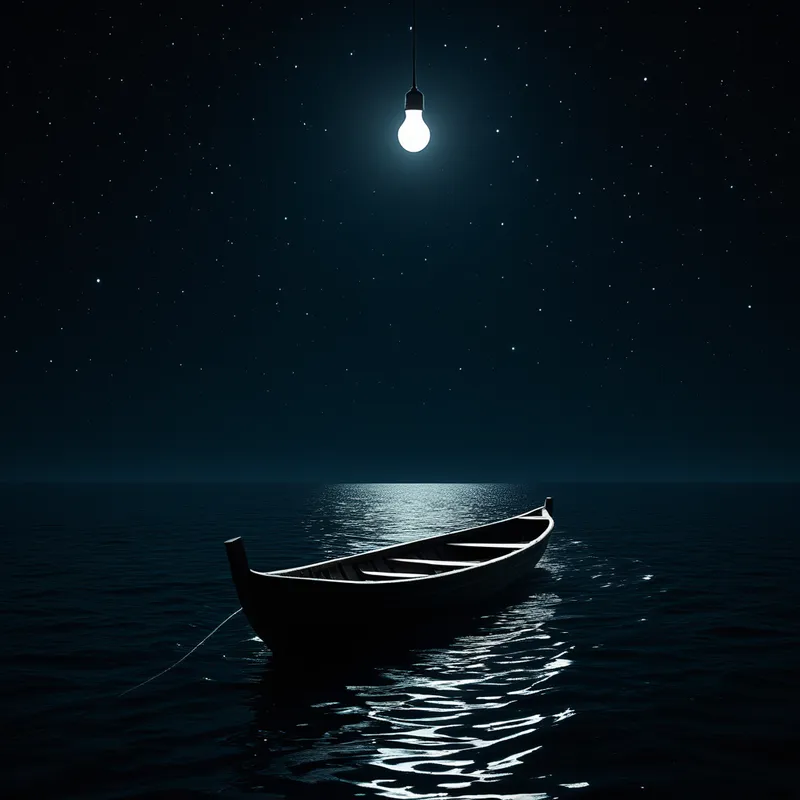
When this myth stirs in modern dreams, it often signals a profound passage through the Duat of one’s own psyche. Dreaming of a boat on a night sea, of being a lone light in darkness, or of fighting a formless, engulfing threat points to this archetypal process. Somatic sensations may accompany it: a feeling of heavy dread, of being weighed down, or conversely, a brittle, fragile alertness.
Psychologically, the dreamer is in a phase of nocturnal transit. The conscious ego (the sun) is no longer in command of its familiar, daytime landscape. It is navigating the shadowlands—perhaps through depression, a life crisis, grief, or a period of intense introspection. The serpentine threat represents the very real risk of psychic disintegration, of being overwhelmed by chaos or despair. The dream is not a prophecy of failure, but a map of the terrain. The presence of the boat, however fragile, indicates the dreamer’s essential self is still intact and on its necessary, if terrifying, journey. The dream asks: What is your crew? What inner resources—your wisdom, your sense of order, your fierce will, your healing magic—are you calling upon to see this passage through?
Alchemical Translation
The alchemical work modeled by Ra’s journey is the opus of individuation. It is the transmutation of the base lead of an unexamined life into the gold of a realized self. This does not happen in the constant light of day, but requires the deliberate, courageous descent.
The first stage is nigredo, the blackening, perfectly mirrored in the entry into the Duat. This is a confrontation with shadow, with failure, with all that one has avoided. The battle with Apophis is the crucial friction of this stage—the ego’s resistance to being undone, which paradoxically is necessary for its renewal. The union of Ra and Osiris in the deepest night is the coniunctio, the sacred marriage. Here, the conscious principle (solar, active Ra) integrates with the soul of the past, the buried life, the transformative power of death and resurrection (chthonic, passive Osiris).
The sun must become a corpse to be reborn. The ego must know its limits to transcend them.
From this union springs the albedo, the whitening, the dawn. The new consciousness that emerges is not the same as the one that set. It has been tempered in the waters of chaos. It has faced the serpent and knows its face. The individual who completes this cycle internally no longer merely has a life, but is the barge—the vessel capable of containing both light and darkness, of sailing the full circuit of experience without breaking apart. They become the ruler of their own inner cosmos, maintaining Maat within, understanding that the work of renewal is a daily, eternal practice. The journey does not end; it becomes the very ground of being.
Associated Symbols
Explore related symbols from the CaleaDream lexicon: