
Pyramus and Thisbe Myth Meaning & Symbolism
Two lovers, separated by a wall, plan a secret meeting. A tragic misunderstanding leads to a double suicide, staining a mulberry tree forever.
The Tale of Pyramus and Thisbe
Hear now a tale whispered not by the winds of Attica, but carried on the hot, spice-laden breezes of ancient Babylon. In that city of towering walls and hanging gardens, there lived two young souls, Pyramus and Thisbe. They were neighbors, their homes sharing a common wall, yet they were worlds apart. For their families, bound by a bitter and senseless feud, had decreed the two should never meet, never speak, never know one another.
But love, that most cunning of daimons, finds a way where reason builds barriers. In the very wall that divided their households, the lovers discovered a thin, hidden crack—a flaw in the stone, a gift from the gods. Through this slender channel, their voices would pass, soft as moth wings, carrying vows and sighs. Their lips would press against the cold stone, as if to kiss through the rock itself. The wall, meant to sever, became their secret altar, their confessional. There they planned their escape, a desperate bid for a life together beyond the prison of their parents’ hatred.
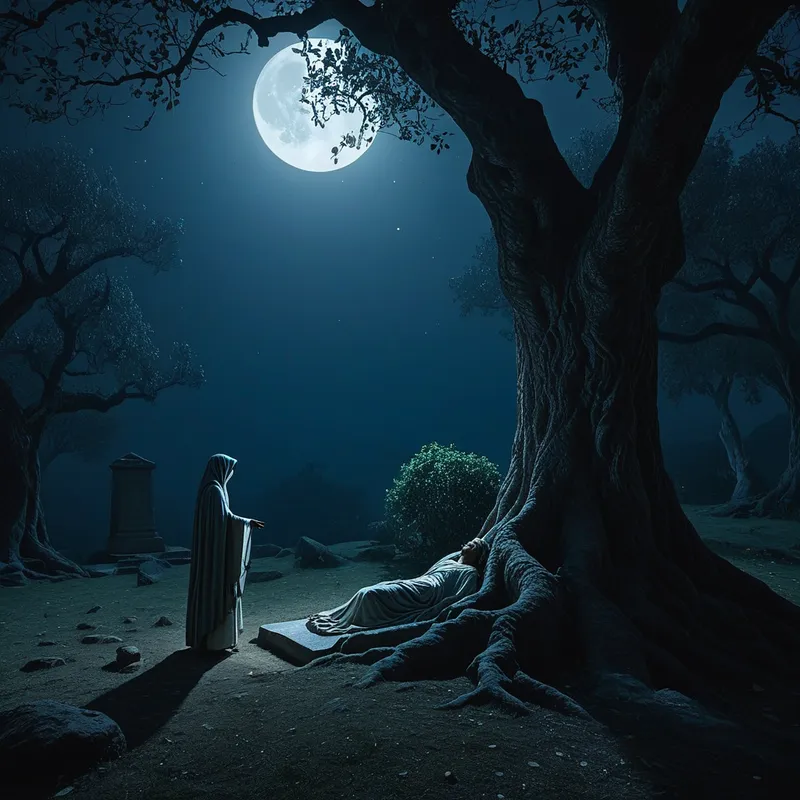
They vowed to steal away under the cloak of night, to meet at the Tomb of Ninus, beneath the sheltering branches of a great white mulberry tree that grew beside a cool spring. Thisbe, her heart a frantic bird, arrived first in the silvery moonlight. But as she waited, a lioness, its jaws still bloody from a recent kill, came to the spring to slake its thirst. Terrified, Thisbe fled into a dark cave, dropping her delicate veil in her haste.
The lioness, upon leaving the water, found the veil, mauled it with bloody jaws, and left it torn upon the earth. Soon after, Pyramus arrived. He saw in the sand the fresh tracks of the beast. Then his eyes fell upon Thisbe’s veil, rent and stained with gore. The world collapsed. His mind, fevered with love and dread, conjured the worst horror. He had failed her. His delay had delivered his beloved to the jaws of death. In an instant, all hope, all future, turned to ash.
Drawing his sword, he cried out to the uncaring night, “I am the cause of your death!” and without hesitation, he fell upon the blade. His lifeblood gushed forth, a dark fountain that soaked the roots of the mulberry tree and sprayed its hanging fruits. Moments later, Thisbe, fearing for her love, emerged from hiding. She found not a beast, but her lover in his final throes, the mulberry tree now a witness bathed in his sacrifice. She saw his eyes, the fallen sword, her ruined veil. Understanding crashed upon her with the weight of the world. She cradled his head, her tears mingling with his blood. “You have killed yourself for love of me,” she wept. “Love, which gave you the courage, shall give it to me as well.” Taking up the still-warm sword, she joined him in death.
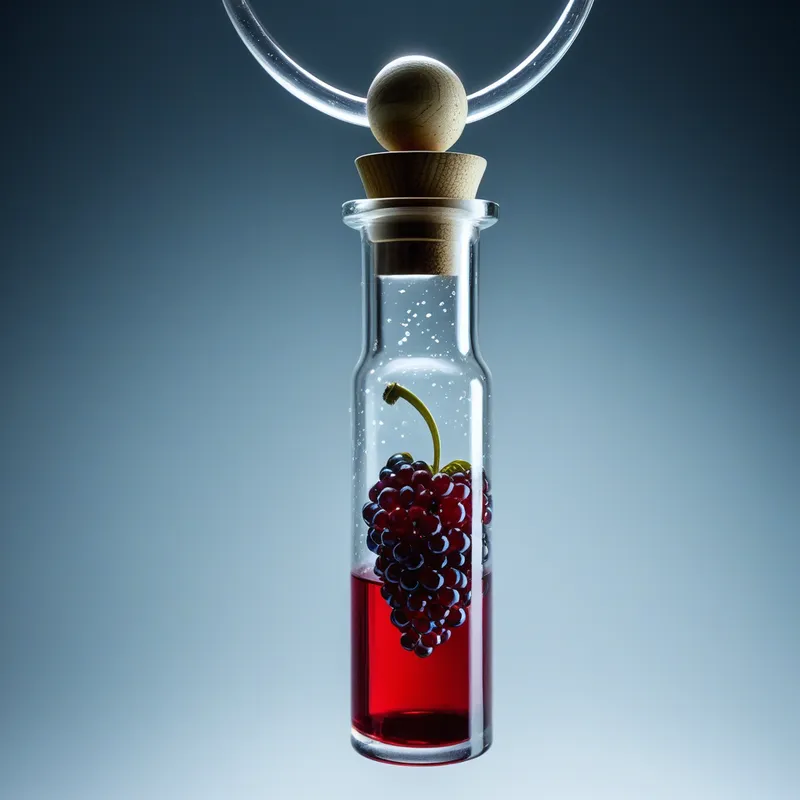
And the gods, who had watched this human tragedy unfold, heard Thisbe’s final prayer. From that hour, the fruit of the mulberry tree, once white as moonlight, was stained forever a deep, mournful crimson—an eternal memorial to love and loss, painted in the very blood of the lovers.
Cultural Origins & Context
While its heart beats with a universal passion, the story of Pyramus and Thisbe is not, in its earliest surviving form, a native Hellenic myth. It comes to us from the Roman poet Ovid, who included it in his epic masterpiece, the Metamorphoses. Ovid set the tale in Babylon, a location synonymous with exotic grandeur and human folly in the Roman imagination. However, by adopting and retelling it within the framework of Greek and Near Eastern mythological tropes, Ovid effectively Hellenized it, weaving it into the broader tapestry of stories that Western culture inherited from the ancient world.
Its societal function was multifaceted. On one level, it was a cautionary tale about the dangers of impulsive passion and the fatal consequences of miscommunication. On another, deeper level, it served as a powerful narrative about the transcendent nature of love, which could defy social edicts and even transform the natural world. The metamorphosis of the mulberry tree is the quintessential Ovidian touch—the physical world altering in response to human extremity, ensuring the story and its emotions are literally rooted in the landscape, remembered with every season’s fruit.
Symbolic Architecture
The myth is a perfect, painful blueprint of the archetypal Star-Crossed Lover dynamic. Every element is a potent symbol. The wall is not merely a physical barrier; it is the embodiment of the Persona and the imposed divisions of family, society, and prejudice. It represents everything that says “thou shalt not.”
The crack in the wall is the first fissure in the ego’s fortress, where the unconscious longing of the soul finds a voice.
The crack, then, is the symbol of clandestine connection, the secret self that thrives in shadow. It is the initial, fragile channel of the unconscious dialogue that must occur before any conscious union can be attempted. The lioness represents the sudden, brutal intrusion of untamed nature and fate—the Shadow in its most terrifying, devouring form. It is the unforeseen catastrophe that shatters careful plans.
The blood-stained veil is the core symbol of tragic misperception. It is the partial truth, the misleading symbol, the projection of our deepest fears onto an ambiguous world. Pyramus does not see a veil; he sees the confirmed death of his anima, his inner feminine and connection to life. His suicide is not just a romantic gesture, but the ultimate disintegration of the ego when it believes its central connecting principle has been destroyed.
Finally, the mulberry tree’s transformation is the myth’s alchemical signature. The white fruit, pure and potential, is irrevocably dyed by the blood of conscious choice and sacrifice. It signifies that true feeling, especially love and grief, does not vanish; it transmutes the very substance of our world, leaving a permanent mark on the fabric of reality.
The Dreamer’s Resonance
When this myth stirs in the modern dreamer, it signals a profound psychological process centered on forbidden connection and catastrophic misunderstanding. To dream of whispering at a wall signifies a deep, perhaps illicit, dialogue with a repressed part of the self—a talent, a desire, a memory—that the conscious personality has walled off.
Dreaming of arriving at a rendezvous to find a loved one gone, or a symbol of them violated, speaks to a core anxiety of abandonment and the fear that one’s own actions (or inactions) have irrevocably damaged a vital relationship. The somatic experience is often one of suffocating panic, a tightness in the chest, a gasp upon waking—the body remembering the shock of perceived loss.
This dream pattern asks the dreamer: What have I misunderstood? What partial evidence (the stained veil) am I basing a catastrophic conclusion upon? Where in my life am I ready to “fall on my sword” and abandon hope because I cannot bear the uncertainty of waiting, of not knowing? It is the psyche working through the terror of miscommunication and the grief of projects or relationships that seem to have died before they could truly live.
Alchemical Translation
The journey of Pyramus and Thisbe is not a map for a happy life, but a profound model for the alchemy of heartbreak and the individuation that can arise from it. Their story outlines the Nigredo, the blackening, of a love that seeks wholeness against all odds.
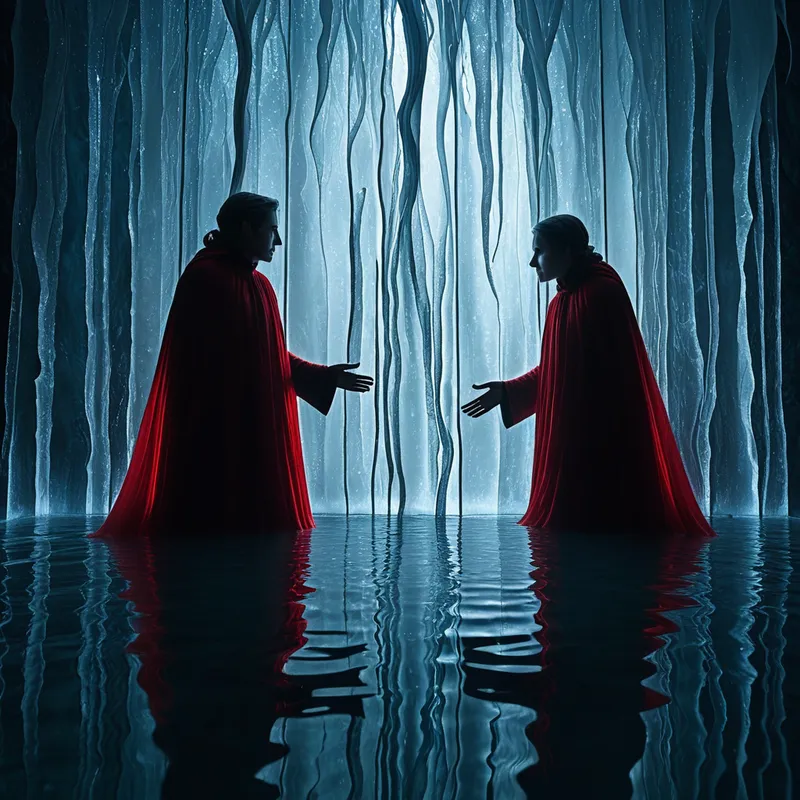
The first alchemical operation is the Coniunctio—the forbidden meeting at the wall. This is the soul’s recognition of its missing counterpart, a yearning that defies rational order.
The planned rendezvous under the mulberry tree is the attempted Coniunctio Oppositorum, the sacred marriage of conscious and unconscious. Its failure, via the lioness (chaos) and the veil (illusion), is inevitable in a first, naive attempt. The ego, represented by Pyramus, cannot yet withstand the shadowy terrors of the deep unconscious. It mistakes a symbol for the totality and destroys itself in despair.
Yet, this is not the end of the work. Thisbe’s return and her conscious choice to join him completes the circuit. Her action transforms a solitary suicide into a shared sacrifice. This is the moment of psychic integration. The ego, having faced its own annihilation, is not simply reborn; it is united with the anima principle in a new, transcendent form.
For the modern individual, the myth teaches that the passions which seem to destroy us—forbidden love, devastating grief, crushing misunderstanding—are the very agents of transmutation. We are stained by our experiences as the mulberry fruit is stained. That stain, that deep, permanent crimson, is not a flaw, but the sign of a feeling that was real, a choice that was made, a love that altered the very nature of our being. The fruit is not destroyed; it is made significant. The work is to bear that significance, to let the heart’-blood of our deepest experiences color our world, and in doing so, to find that the love and the loss were, in the end, inseparable parts of a single, transformative truth.
Associated Symbols
Explore related symbols from the CaleaDream lexicon: