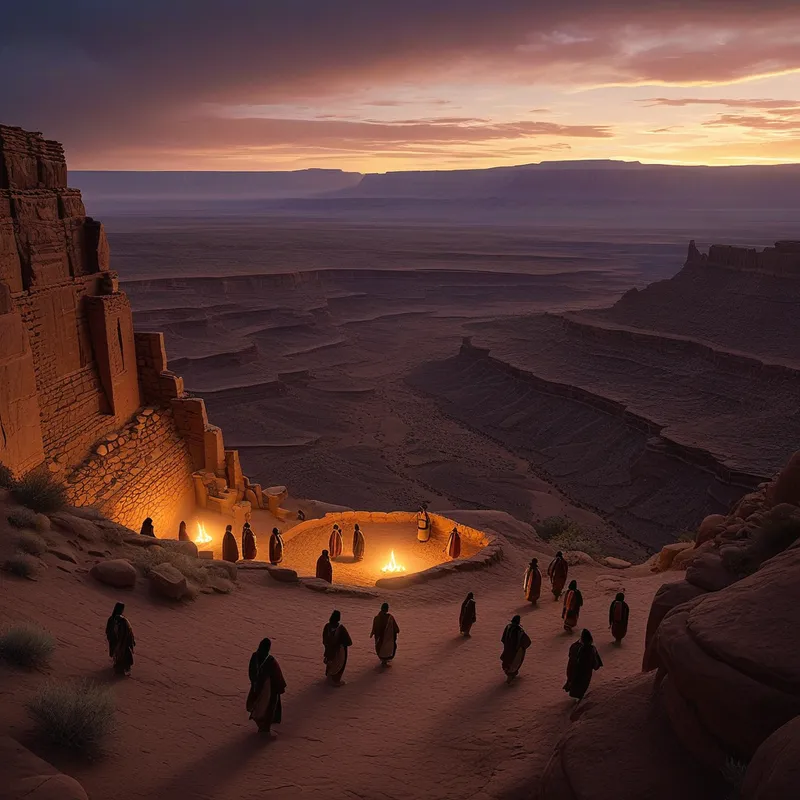
Pueblo Creation Myths Myth Meaning & Symbolism
A people journey through three dark underworlds guided by spirits, emerging into this world through a sacred sipapu to become the Pueblo ancestors.
The Tale of Pueblo Creation Myths
In the beginning, there was only the deep, silent belly of [the earth](/myths/the-earth “Myth from Hindu culture.”/). Not [the world](/myths/the-world “Myth from Tarot culture.”/) we know, but a world beneath worlds, a place of cramped darkness and muffled sound. This was the [Sipapu](/myths/sipapu “Myth from Hopi culture.”/), [the womb](/myths/the-womb “Myth from Various culture.”/)-cave of all life. Here, the First People lived, not as we are now, but as raw potential, their forms shifting, their understanding dim. They were crowded together in the damp, red dark, guided only by the faint, rhythmic pulse of [the earth](/myths/the-earth “Myth from Hindu culture.”/)-mother’s heart.
But a stirring began—a longing for light, for space, for a world of color and wind. The twin brothers, the Pöqangwhoya and Palöngawhoya, heard this yearning. They descended from the spirit realms, their presence a vibration of purpose in the gloom. “You cannot stay here,” their voices echoed, not as sound, but as a knowing in the bones. “You must climb. You must seek the Fifth World, the world of dawn.”
And so the great journey began. The people, led by the twins and the wisdom of [Spider Grandmother](/myths/spider-grandmother “Myth from Native American culture.”/), Kókyangwso’wu, began to ascend. They climbed through a stalk of giant reed, or up the roots of a great tree, pushing through the membrane of one world into the next. The Second World was a little brighter, a little larger, but still not right. Conflict arose; the people quarreled in the half-light. The order was not yet found. So they climbed again, to the Third World. Here, they learned to build, to plant, to shape society. But darkness entered in—trickery, greed, a forgetting of the sacred way. The world grew corrupt, and the earth itself began to weep.
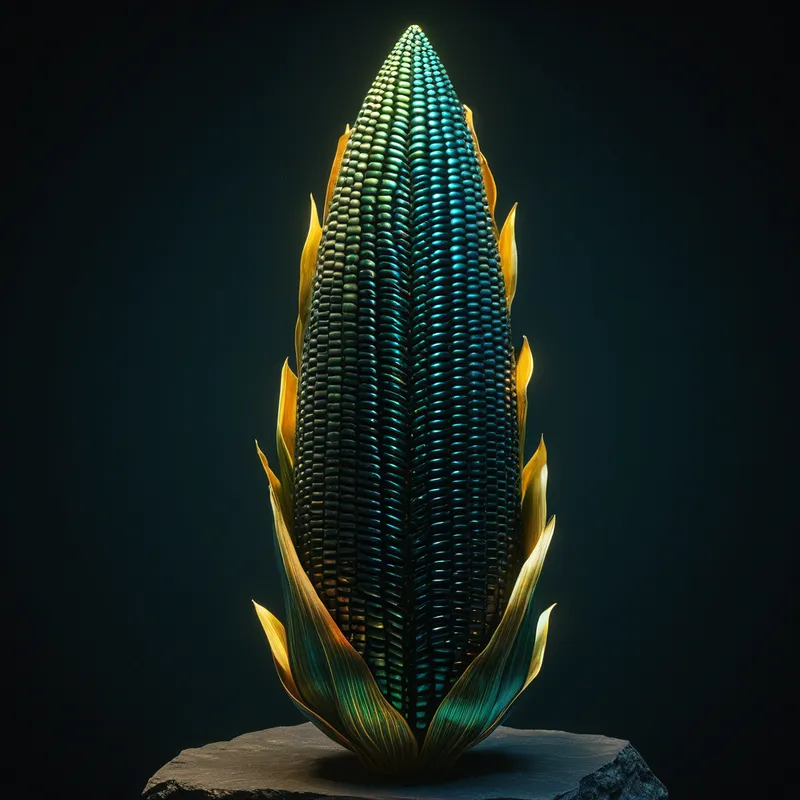
In the chaos, [Spider](/myths/spider “Myth from Native American culture.”/) Grandmother wove a plan of salvation. She gave a sacred gift: seeds of corn, blue and white and yellow. “This will be your flesh,” she whispered. “This will be your prayer.” As the Third World flooded or burned in its imbalance, the people planted the corn. It grew with miraculous speed, its stalk piercing the roof of [the sky](/myths/the-sky “Myth from Persian culture.”/), creating a ladder to the Fourth World. The virtuous climbed, clutching their corn children. Those lost to the darkness were left behind.
Exhausted, they emerged into the Fourth World—our world. But it was a formless, watery place, shrouded in mist. They had arrived, but they were not yet home. The twin heroes took up their bows and shot arrows to the four corners. They drew the land up from the waters, sculpting the mesas, the canyons, [the river](/myths/the-river “Myth from Buddhist culture.”/) valleys. They placed the sun and moon on their tracks across the sky. Finally, the opening through which they emerged—the true sipapu—was sealed in the earth, a sacred navel connecting this world to all the worlds below. The people, now solid in their forms, their hearts aligned with the corn, became the Pueblo. They had found their place in the center of the world, at last.
Cultural Origins & Context
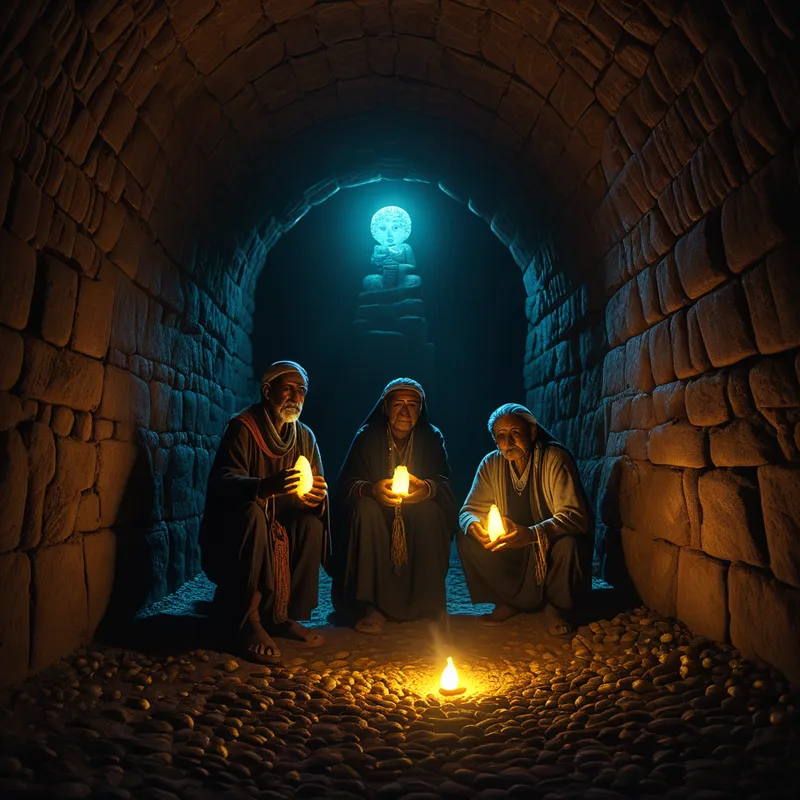
These are not stories told for mere entertainment; they are the living breath of Pueblo identity. Primarily associated with the Hopi, Zuni, Acoma, and other Pueblo peoples of the Southwestern United States, these narratives are the foundational map of reality. They were and are transmitted orally, not from books, but from the lips of elders and spiritual leaders within the sacred space of the kiva. The kiva itself is a architectural echo of the myth—a circular, underground room with a small hole in the floor, the symbolic sipapu, linking the community directly to the place of emergence.
The societal function is multifaceted. It is a historical charter, explaining the people’s right to their land and their sacred relationship with it. It is a social contract, encoding the values of harmony, cooperation, and respect for the natural order that allowed them to survive the ascension. It is a religious text, detailing the origins of ceremonial practices, the roles of clans, and the proper way to live in a world balanced between the powers of the sky, the earth, and [the underworld](/myths/the-underworld “Myth from Greek culture.”/). To hear the creation story is to be reminded of one’s place in a vast, interconnected, and purposeful cosmos.
Symbolic Architecture
At its core, the Pueblo [emergence](/symbols/emergence “Symbol: A process of coming into being, rising from obscurity, or breaking through a barrier, often representing birth, transformation, or revelation.”/) myth is a grand [metaphor](/symbols/metaphor “Symbol: A figure of speech where one thing represents another, often revealing hidden connections and deeper truths through symbolic comparison.”/) for the [birth](/symbols/birth “Symbol: Birth symbolizes new beginnings, transformation, and the potential for growth and development.”/) of [consciousness](/symbols/consciousness “Symbol: Consciousness represents the state of awareness and perception, encompassing thoughts, feelings, and experiences.”/) itself. The dark, undifferentiated underworlds represent the unconscious—the primal, chaotic state of being before the light of [awareness](/symbols/awareness “Symbol: Conscious perception of self, surroundings, or internal states. Often signifies awakening, insight, or heightened sensitivity.”/).
The journey upward is not a flight from darkness, but a process of differentiation, where the unified soul of the people is tested and refined into individual and collective consciousness.
Each failed world symbolizes a psychological stage that must be outgrown: the instinctual [chaos](/symbols/chaos “Symbol: In Arts & Music, chaos represents raw creative potential, uncontrolled expression, and the breakdown of order to forge new artistic forms.”/) of the first, the social strife of the second, the spiritual corruption of the third. The corn is the ultimate [symbol](/symbols/symbol “Symbol: A symbol can represent an idea, concept, or belief, serving as a powerful tool for communication and understanding.”/) of this transformation. It is not just [food](/symbols/food “Symbol: Food in dreams often symbolizes nourishment, both physical and emotional, representing the fulfillment of basic needs as well as deeper desires for connection or growth.”/); it is the embodied [spirit](/symbols/spirit “Symbol: Spirit symbolizes the essence of life, vitality, and the spiritual journey of the individual.”/), the result of sacrifice (the planting of the seed) and careful cultivation ([ritual](/symbols/ritual “Symbol: Rituals signify structured, meaningful actions carried out regularly, reflecting cultural beliefs and emotional needs.”/), [prayer](/symbols/prayer “Symbol: Prayer represents communication with the divine or a higher power, often reflecting inner desires and spiritual needs.”/), right living). The people become the corn; their physical and spiritual sustenance are one. The final emergence into the Fourth World, which must then be shaped and ordered, reflects the ongoing [human](/symbols/human “Symbol: The symbol of a human represents individuality, complexity of emotions, and social relationships.”/) [task](/symbols/task “Symbol: A task represents responsibilities, duties, or challenges one faces.”/): we do not simply arrive at enlightenment. We must actively participate in creating a habitable, meaningful world from the raw [material](/symbols/material “Symbol: Material signifies the tangible aspects of life, often representing physical resources, desires, and the physical world’s influence on our existence.”/) of our existence.
The Dreamer’s Resonance
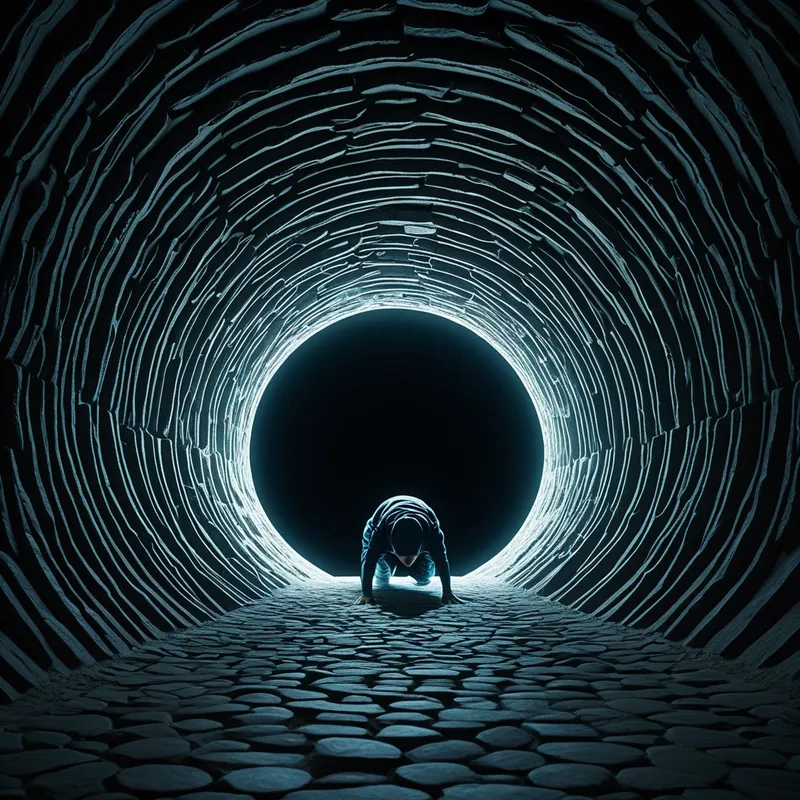
When this mythic pattern stirs in the modern dreamer, it often manifests as dreams of climbing through narrow, dark passages—caves, tunnels, chimneys, or dense, root-filled earth. There is a somatic sense of pressure and constriction, of a necessary struggle. One might dream of being in a crowded, chaotic place (a failing institution, a collapsing house) and seeking a narrow way out.
These dreams point to a process of psychological emergence. The dreamer is in a “lower world” state: perhaps feeling trapped in an outgrown identity, a stifling job, a depressive episode, or a pattern of unconscious behavior. The cramped darkness is the womb of a new self struggling to be born. The act of climbing, however difficult, is the [psyche](/myths/psyche “Myth from Greek culture.”/)’s insistence on growth. To dream of finally emerging into a vast, open, but unfamiliar landscape signals a profound transition. The initial feeling may be disorientation or awe, mirroring the vulnerability and potential of having shed an old skin but not yet being established in the new.
Alchemical Translation
For the individual on the path of individuation, the Pueblo myth provides a powerful alchemical map. The process is not one of escaping one’s origins, but of transmuting them through a series of sacred trials.
The first alchemical stage ([nigredo](/myths/nigredo “Myth from Alchemical culture.”/)) is the acknowledgment of being in the “dark world”—a state of confusion, suffering, or inner conflict. The call of the twin heroes is the first spark of self-awareness, [the ego](/myths/the-ego “Myth from Jungian culture.”/)’s realization that the current state is untenable. The ascent through the worlds is the arduous work of therapy, introspection, and shadow work (albedo), where one confronts and purifies the quarrels, corruptions, and imbalances within.
The corn seed is the symbol of the transcendent function—the tiny, potent kernel of the future Self that must be planted in the darkness of the unconscious and tended with absolute faith.
The catastrophic end of each world is a necessary mortificatio, the death of an old attitude or complex that clears space for new growth. Finally, emerging and shaping the new world ([rubedo](/myths/rubedo “Myth from Alchemical culture.”/)) is the act of living from the integrated Self. It is building a life structure—relationships, work, creative expression—that is authentic and harmonious, rooted in the sacred sipapu of one’s deepest being, yet open to the sky. One does not leave the lower worlds behind; one carries their lessons upward, building the Fifth World of the individual spirit within the Fourth World of daily life.
Associated Symbols
Explore related symbols from the CaleaDream lexicon: