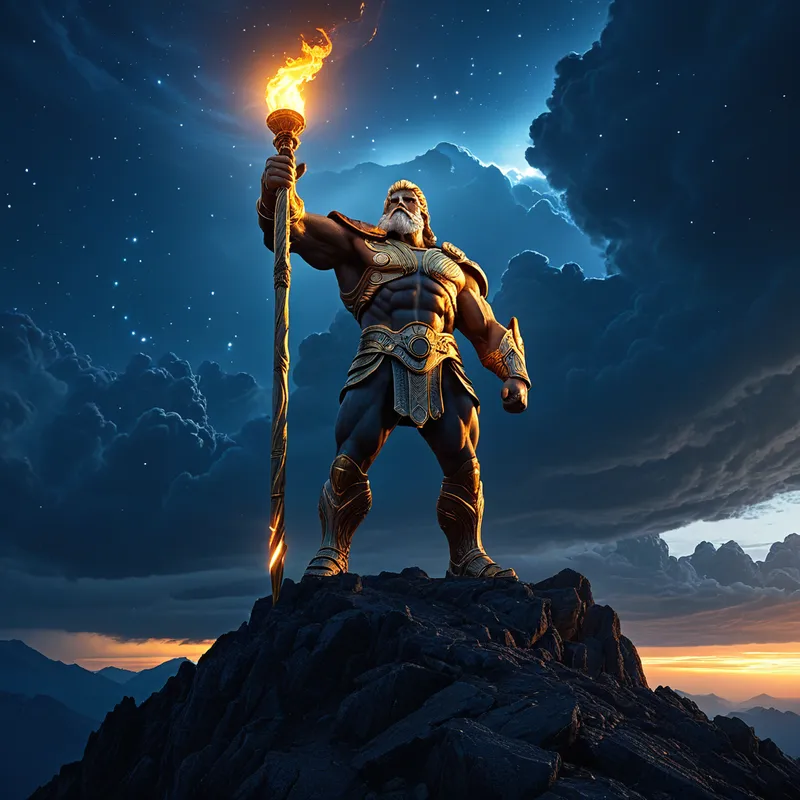
Prometheus's Torch Myth Meaning & Symbolism
The Titan Prometheus defies Zeus to steal fire from the gods, gifting humanity with knowledge, technology, and the burden of consciousness.
The Tale of Prometheus’s Torch
Before the age of heroes, when the world was young and the gods were new to their thrones, there was a silence. Humanity, shaped from clay by the hands of Prometheus, lived in darkness. Not the darkness of night, but a deeper, more profound shadow—a shadow of ignorance. They huddled in caves, teeth chattering against the cold, eating their meat raw, their minds as unlit as the caverns they called home. They had no art, no craft, no hope beyond the next sunrise.
High above, on the sun-drenched peaks of Mount Olympus, the new king, Zeus</ab title>, presided over a brilliant and eternal feast. The nectar flowed, ambrosia sparkled, and the divine fire in the great hearth of the gods burned with a perpetual, roaring light—the source of all warmth, all skill, all mastery over the raw stuff of the earth. This fire was the exclusive property of the immortals, a boundary stone between the divine and the mortal.
Prometheus, whose name means Forethought, watched his creations suffer. His heart, a Titan’s heart, was vast and contained a dangerous seed: pity. He saw not just clay figures, but potential. One evening, as the chariot of Helios dipped below the horizon and the first stars, the eyes of Nyx, began to open, he made his choice. He would cross the line.
He journeyed to Olympus, not as a supplicant, but as a thief in the house of his kin. Using a stalk of giant fennel—hollow, dry, and slow to burn—he approached the divine hearth. The air crackled with power. He touched the stalk to the primordial flames. A spark caught, then another, until a steady, beautiful fire bloomed within the stalk’s core. He had captured a piece of the sun itself, a fragment of the gods’ own power.
Hiding the burning stalk within the folds of his cloak, he descended from the radiant heights back into the gloom of the mortal world. He arrived at the mouth of a human cave. The people within shrank back, fearful of the light. Prometheus knelt. He did not speak, but gently placed the fennel stalk on the ground. He blew upon the embers. The fire leaped to life.
He showed them. He showed them how to tend it, to feed it wood, to respect its hunger. Then, using its heat, he taught them to forge metal into plowshares and sickles, to bake clay into pots, to cook food that brought health and strength, to read the stars as guides. The torch was not just a flame; it was the first teacher. It was the spark of techne, of medicine, of astronomy, of civilization itself. The darkness retreated, and in the new, flickering light, humanity saw its own future.
But on Olympus, the theft was discovered. Zeus looked down and saw the pinpricks of fire where before there was only dark. He saw the smoke of forges rising. He saw the boundary violated. His rage was a thunderclap that shook the foundations of the world. The benefactor would pay. The price for stolen divinity is always written in agony.
Cultural Origins & Context
This foundational myth comes to us primarily from the pen of the Boeotian poet Hesiod, in his Theogony and Works and Days (8th-7th century BCE). It was a story told not in temples as sacred liturgy, but in the communal spaces—the symposium, the agora, around hearths of the very fire Prometheus gifted. It functioned as an etiological myth, explaining the human condition: why we have technology and suffer, why we sacrifice bones to the gods, and our fundamentally ambiguous relationship with the divine.
The Prometheus cycle was a cornerstone of Athenian civic identity, dramatized most famously in Aeschylus’s lost trilogy, of which Prometheus Bound survives. Here, the myth transcended simple folklore, becoming a profound meditation on authority, justice, and resilience. For the Greeks, it was a dark mirror. It explained their own brilliance and their own suffering as two sides of the same coin, forged in an act of divine rebellion and divine punishment.
Symbolic Architecture
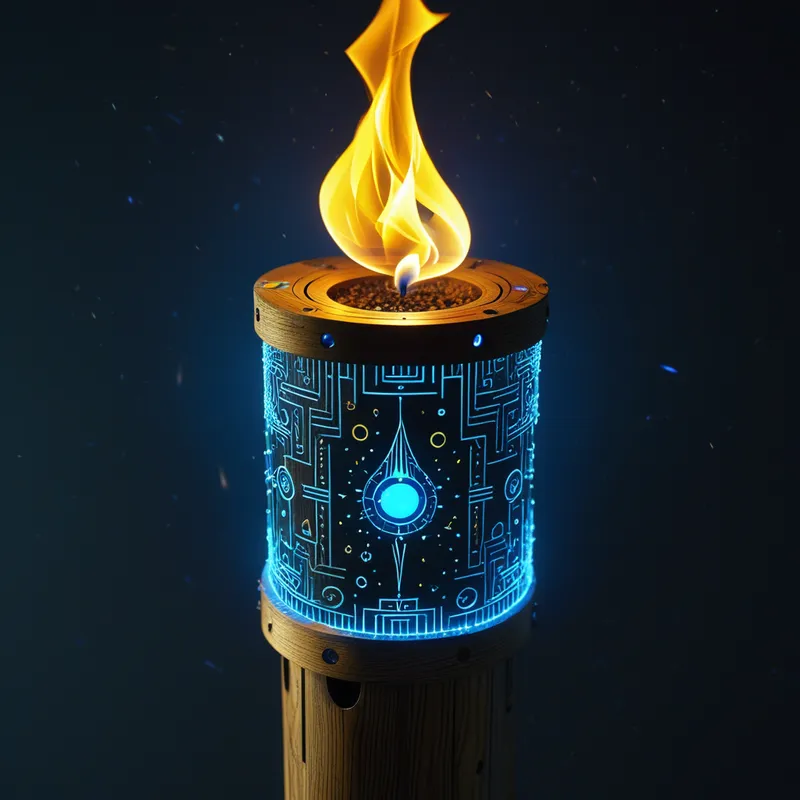
The myth’s power lies in its stark, irreducible symbols. The Torch is not merely fire; it is the stolen spark of consciousness itself. It represents the moment the human psyche awoke from the unconscious, instinctual life of nature and into the painful, glorious light of self-awareness, choice, and creativity.
The gift of fire is the curse of consciousness. We are warmed by its light and scarred by its flame.
Prometheus is the archetype of the trickster and the compassionate rebel. He acts not for personal gain, but for the evolution of another. His theft is the ultimate transgression against a static, hierarchical order. He represents the aspect of the psyche that must defy internalized, tyrannical authority (the Zeus within) to access a more profound, creative, and liberated state of being.
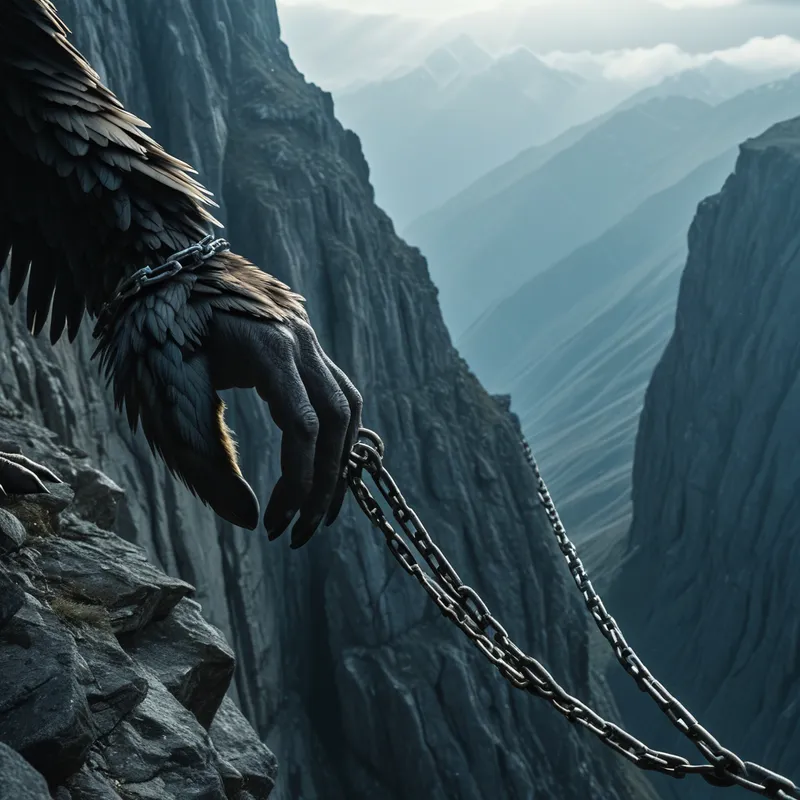
Zeus’s punishment—the eternal eagle feasting on the regenerating liver—is horrifically precise. The liver was anciently considered the seat of passion, desire, and life-force. The torture is thus an endless consumption of one’s vital, feeling self by a relentless, predatory spirit (the eagle of Zeus). It symbolizes the perpetual cost of enlightenment: the ongoing vulnerability, the cyclical pain of deep feeling, and the burden of a consciousness that is forever being “pecked at” by the realities of a harsh world.
The Dreamer’s Resonance
When this myth stirs in the modern dreamer, it often signals a profound psychological ignition. To dream of stealing a sacred flame or protecting a fragile, vital light suggests the dreamer is in the process of “stealing back” a part of their own innate power or creativity from an internal or external authority that has kept it suppressed. This could be a parental complex, a societal expectation, or a rigid, outdated self-image.
The somatic experience is one of thrilling risk followed by deep anxiety—the adrenaline of the theft, then the dread of the eagle’s shadow. Dreaming of being chained, yet unbroken, speaks to a feeling of being trapped by the consequences of one’s own awakening or truth. The dream is not a warning against the act, but a mapping of its inevitable psychic terrain: the glorious liberation and the ensuing, necessary ordeal. The fire in the dream is always both beautiful and dangerous, illuminating hidden talents and casting long, troubling shadows.
Alchemical Translation
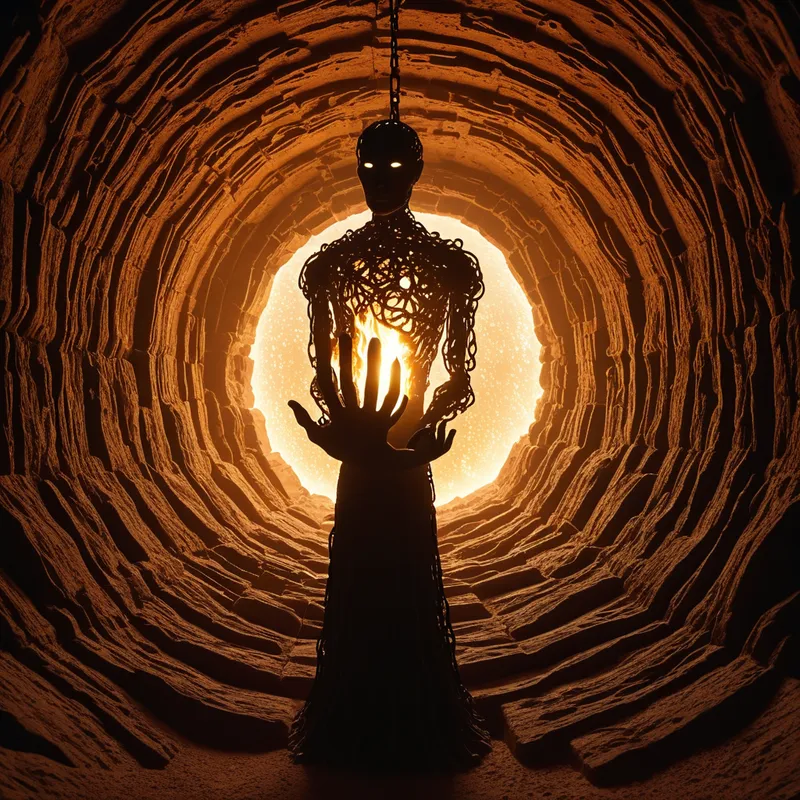
In the alchemical vessel of the soul, the myth of Prometheus’s Torch models the opus contra naturam—the work against nature, or rather, against one’s given, unconscious state. The initial human condition (the massa confusa of cold, dark clay) is inert. The Promethean impulse is the first, crucial act of rebellion that begins the work of individuation.
To individuate is to become a thief in the house of the gods you were taught to worship, stealing the fire of your own authority.
Stealing the fire is the separatio and ignis—the separation from the collective unconscious (Olympian rule) and the application of the transformative fire. This fire then becomes the agent of all subsequent alchemical stages: it “cooks” the raw material of the personality (forging skills, intellect, art), leading to illumination (illuminatio).
The binding to the rock is the inevitable mortificatio or nigredo—the dark night of the soul that follows expansion. This suffering is not meaningless punishment; it is the tempering. The regenerating liver signifies the psyche’s incredible capacity for renewal and the understanding that the work is cyclical. The final reconciliation with Zeus (hinted at in the lost parts of Aeschylus’s trilogy) represents the ultimate stage: the integration of the rebellious, transformative spirit with the ruling principle of order and consciousness, creating a sovereign, whole self. The torchbearer endures the darkness and the pain so that the light does not go out. In doing so, he transforms his punishment into the very proof of his gift’s divinity.
Associated Symbols
Explore related symbols from the CaleaDream lexicon: