Prometheus' Spark Myth Meaning & Symbolism
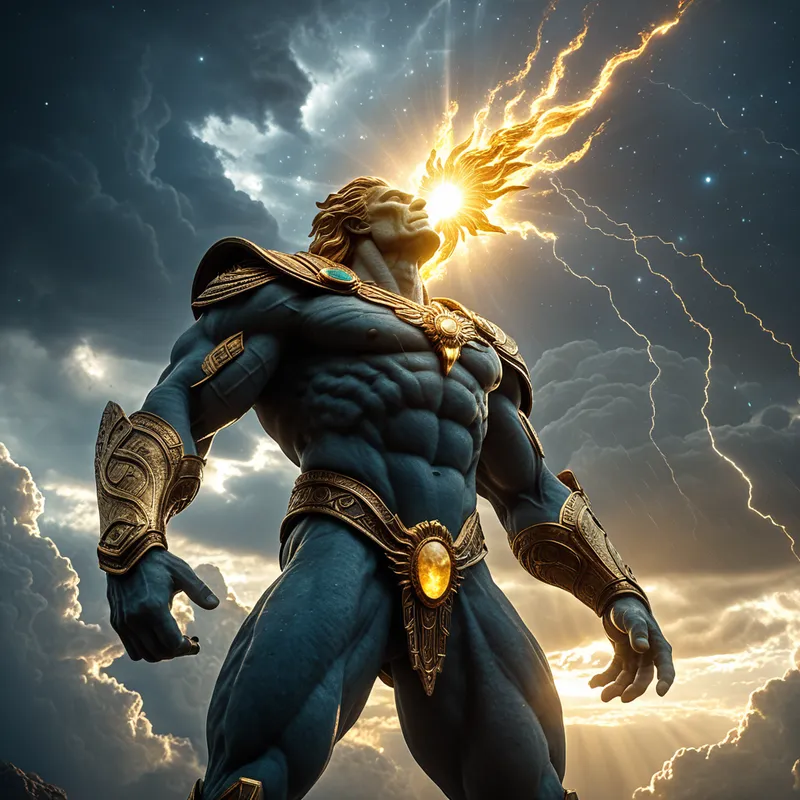
The Titan Prometheus defies Zeus to steal divine fire for humanity, gifting them consciousness and technology, and suffering eternal torment for his rebellion.
The Tale of Prometheus’ Spark
In the first grey dawn of [the world](/myths/the-world “Myth from Tarot culture.”/), after the great war of [the Titans](/myths/the-titans “Myth from Greek culture.”/) had subsided and the new order of Zeus was established, humanity crept upon [the earth](/myths/the-earth “Myth from Hindu culture.”/). They were not as you know them. They were shadows in caves, creatures of mud and dusk, huddled in the cold, eating their meat raw, their minds as dark and silent as the deepest pit of [Tartarus](/myths/tartarus “Myth from Greek culture.”/).
But one being watched them with a heart that was not made of stone. [Prometheus](/myths/prometheus “Myth from Greek culture.”/), whose name means Forethought, saw in these fragile, shivering forms a potential for more. He was a Titan, kin to the old gods, and though he had fought alongside Zeus, a bond of pity—a dangerous, divine emotion—tied him to these creatures of clay. He had shaped them, some say, with his own hands. They were his unfinished work.
Zeus, the Cloud-Gatherer, the wielder of the terrible thunderbolt, cared little for them. To him, they were a passing experiment, a source of smoky sacrifices, their suffering irrelevant. He withheld from them the final gift: fire. Not just the flame to cook meat or ward off beasts, but the celestial spark, the essence of [Hestia](/myths/hestia “Myth from Global/Universal culture.”/) and the forge of [Hephaestus](/myths/hephaestus “Myth from Global/Universal culture.”/). Fire was the property of the gods alone, the clear line between the deathless Olympians and the mortal, trembling things below.
Prometheus’s compassion became a quiet rebellion. He journeyed to the sun-chariot of [Helios](/myths/helios “Myth from Greek culture.”/) as it blazed across the firmament. There, with a cunning that was his birthright, he took a fragment of that primordial, rolling fire. Some say he hid it in a hollow fennel stalk, its pith smoldering with stolen divinity. The feel of it was not heat, but pure potential—the crackle of thought, the warmth of community, the fierce light of ambition.
He descended to the mortal plain. Imagine the scene: a huddle of figures in a damp cave, flinching from the night’s chill. Then, a figure, taller than the trees, kneels. From his hands, he offers not a weapon, but a dancing, living light. He shows them how to nurture it, to feed it twigs, to make it a companion. He shows them how to cook, how to harden spear-tips, how to see each other’s faces in the dark. The spark leapt from the kindling into their eyes. Postures straightened. Murmurs became words, plans, stories. The dark receded, not just from [the cave](/myths/the-cave “Myth from Platonic culture.”/), but from their minds.
On Olympus, Zeus felt the disturbance in the order of things. He looked down and saw the pinpricks of firelight where before there was only dark. He saw the smoke of forges rising, a new scent on [the wind](/myths/the-wind “Myth from Various culture.”/). His rage was a [thunderclap](/myths/thunderclap “Myth from Various culture.”/) that shook the foundations of the world. The line had been crossed. The divine gift was stolen. The balance of power was threatened.
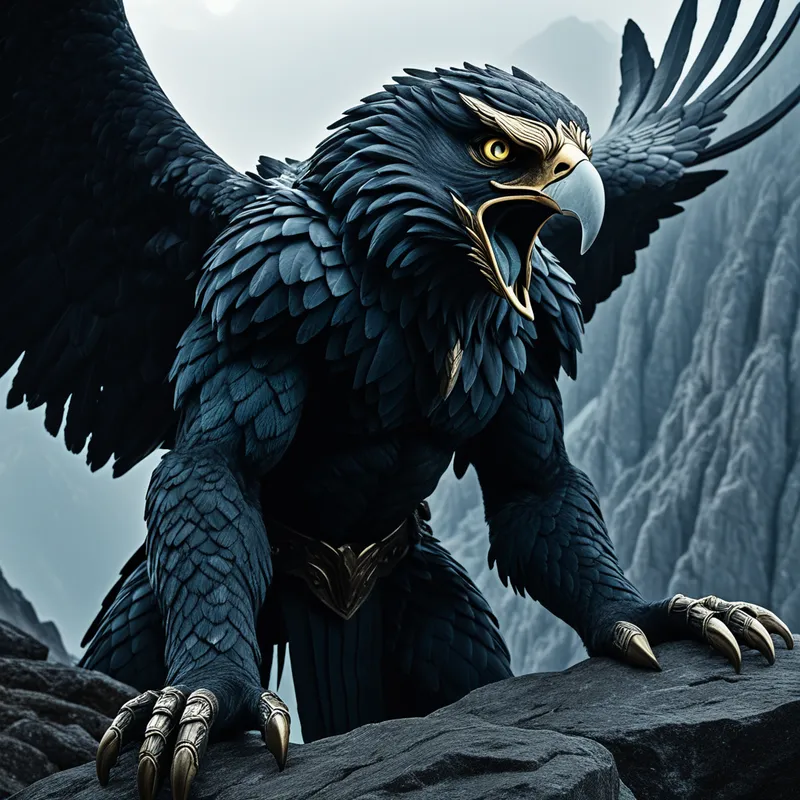
The punishment was to be a spectacle, a lesson etched in agony for all eternity. Hephaestus, the very master of fire, was ordered to forge unbreakable chains. With a heavy heart, the smith-god bound his kinsman Prometheus to a desolate, wind-scoured cliff in the Caucasus Mountains. There, exposed to the lashing elements, Prometheus was made immortal in his suffering. Each day, a monstrous eagle, the emissary of Zeus, would descend. Its talons would tear open his flesh and feast upon his liver, the seat of passion and emotion. Each night, as an immortal, the organ would regrow, ripe and whole, only for the torture to begin again at dawn’s first cruel light. His crime was compassion. His sentence was an endless cycle of violation for the gift of consciousness.
Cultural Origins & Context
The myth of Prometheus is one of the foundational narratives of Greek culture, primarily preserved in the epic poetry of Hesiod (Theogony, Works and Days) and later dramatically expanded by the tragedian Aeschylus in his masterpiece Prometheus Bound. It was not a simple folktale but a profound theological and philosophical exploration. Performed in the great [theater of Dionysus](/myths/theater-of-dionysus “Myth from Greek culture.”/) in Athens, Aeschylus’s version transformed the tale into a searing drama about authority, [justice](/myths/justice “Myth from Tarot culture.”/), and the cost of progress.
In the context of ancient Greek society, the myth served multiple functions. It was an aetiological myth, explaining the origin of human technology (techne) and our fraught, sacrificial relationship with the divine. The practice of sacrificing fatty bones to the gods while keeping the meat for themselves was explained as a trick of Prometheus, further cementing humanity’s indebtedness to this rebellious Titan. Societally, it reinforced a complex worldview: progress comes at a terrible price, and challenging divine (or by extension, political) order invites catastrophic retribution, even if the challenge is morally justified. It asked the Athenian citizen to hold two truths: reverence for the cosmic order (Zeus) and awe for the defiant spirit that elevates humanity (Prometheus).
Symbolic Architecture
At its core, the Spark is not merely fire. It is the animating principle of [consciousness](/symbols/consciousness “Symbol: Consciousness represents the state of awareness and perception, encompassing thoughts, feelings, and experiences.”/), culture, and rebellion against blind [fate](/symbols/fate “Symbol: Fate represents the belief in predetermined outcomes, suggesting that some aspects of life are beyond human control.”/).
- The Spark as Conscious Awakening: The gift is the light of the mind—reason, foresight, self-[awareness](/symbols/awareness “Symbol: Conscious perception of self, surroundings, or internal states. Often signifies awakening, insight, or heightened sensitivity.”/), and the [ability](/symbols/ability “Symbol: In dreams, ‘ability’ often denotes a recognition of skills or potential that one possesses, whether acknowledged or suppressed.”/) to shape one’s environment. It represents the [moment](/symbols/moment “Symbol: The symbol of a ‘moment’ embodies the significance of transient experiences that encapsulate emotional depth or pivotal transformations in life.”/) humanity stepped out of instinctual, animal existence and into the [realm](/symbols/realm “Symbol: The symbol of ‘Realm’ often signifies the boundaries of one’s consciousness, experiences, or emotional states, suggesting aspects of reality that are either explored or ignored.”/) of [history](/symbols/history “Symbol: History in dreams often represents the dreamer’s past experiences, lessons learned, or unresolved issues that continue to influence their present.”/), art, and [science](/symbols/science “Symbol: Science symbolizes the pursuit of knowledge and understanding through observation and experimentation, representing logic and rationality.”/).
- Prometheus as the Rebel-[Savior](/symbols/savior “Symbol: A figure representing rescue, redemption, or deliverance from crisis, often embodying hope and external intervention in times of need.”/) [Archetype](/symbols/archetype “Symbol: A universal, primordial pattern or prototype in the collective unconscious that shapes human experience, behavior, and creative expression.”/): He is the ultimate embodiment of the rebel and the [savior](/symbols/savior “Symbol: A figure representing rescue, redemption, or deliverance from crisis, often embodying hope and external intervention in times of need.”/). His defiance is not for personal gain but for the elevation of another, weaker species. He represents the part of the [psyche](/myths/psyche “Myth from Greek culture.”/) that questions imposed limitations, that values [empathy](/symbols/empathy “Symbol: The capacity to understand and share the feelings of others, often manifesting as emotional resonance or intuitive connection in dreams.”/) over obedience, and that is willing to endure profound suffering for a deeply held principle.
The theft of fire is the first act of civil disobedience: the conscious self seizing the tools of creation from the unconscious, authoritarian gods.
- Zeus as the Established Order: The [king](/symbols/king “Symbol: A symbol of ultimate authority, leadership, and societal order, often representing the dreamer’s inner power or external control figures.”/) of gods symbolizes the tyrannical [aspect](/symbols/aspect “Symbol: A distinct feature, quality, or perspective of something, often representing a partial view of a larger whole.”/) of the reigning psychic order—the superego, societal laws, tradition, or any inflexible [structure](/symbols/structure “Symbol: Structure in dreams often symbolizes stability, organization, and the framework of one’s life, reflecting how one perceives their environment and personal life.”/) that demands submission and punishes innovation. His [punishment](/symbols/punishment “Symbol: A dream symbol representing consequences for actions, often tied to guilt, societal rules, or internal moral conflicts.”/) represents the brutal cost of individuation, of becoming a conscious self distinct from the collective.
- The [Liver](/symbols/liver “Symbol: Represents emotional processing, purification, and vitality. Often symbolizes anger, toxicity, or life force in dreams.”/) and the [Eagle](/symbols/eagle “Symbol: The eagle is a symbol of power, freedom, and transcendence, often representing a person’s aspirations and higher self.”/): The torture is profoundly symbolic. The [liver](/symbols/liver “Symbol: Represents emotional processing, purification, and vitality. Often symbolizes anger, toxicity, or life force in dreams.”/) was considered the [source](/symbols/source “Symbol: The origin point of something, often representing beginnings, nourishment, or the fundamental cause behind phenomena.”/) of passions, desires, and darkest emotions. The [eagle](/symbols/eagle “Symbol: The eagle is a symbol of power, freedom, and transcendence, often representing a person’s aspirations and higher self.”/), king of birds, is Zeus’s own [bird](/symbols/bird “Symbol: Birds symbolize freedom, perspective, and the connection between the earthly and spiritual realms, often representing the soul’s aspirations or personal growth.”/). Thus, the punishment is the daily devouring of the rebel’s vital, passionate self by the very [symbol](/symbols/symbol “Symbol: A symbol can represent an idea, concept, or belief, serving as a powerful tool for communication and understanding.”/) of [the authority](/symbols/the-authority “Symbol: A figure representing power, control, and societal structure, often embodying rules, leadership, or external judgment.”/) he defied. It is the psyche’s fear that its own awakening will be perpetually consumed by [guilt](/symbols/guilt “Symbol: A painful emotional state arising from a perceived violation of moral or social standards, often tied to actions or inactions.”/), [anxiety](/symbols/anxiety “Symbol: Anxiety in dreams reflects internal conflicts, fears of the unknown, or stress from waking life, often demonstrating the subconscious mind’s struggle for peace.”/), or external punishment.
The Dreamer’s Resonance
When this myth stirs in the modern dreamscape, it often signals a critical juncture in the dreamer’s psychological development. To dream of stealing a light or a forbidden piece of knowledge suggests a nascent rebellion against an internal or external “Zeus”—a stifling job, a repressive family dynamic, or one’s own rigid beliefs. The dreamer is preparing to claim their own “spark” of authentic insight or creative power.
Dreams of being bound or trapped, often while observing a crucial activity from which one is excluded, mirror Prometheus’s bondage. This is the somatic feeling of potential shackled by fear, obligation, or depression. The eagle’s attack may manifest as a recurring nightmare of violation, a looming deadline, or a critical authority figure, representing the acute anxiety that pursuing one’s true path will lead to devastating retribution. Such dreams are not portents of doom, but maps of the internal conflict between the desire for conscious selfhood and the terror of its consequences.
Alchemical Translation
The myth of Prometheus is a grand allegory for the individuation process. The [prima materia](/myths/prima-materia “Myth from Alchemical culture.”/) is dormant, unconscious humanity (or the sleeping psyche). The theft is the crucial, violent act of differentiation—stealing energy (libido) from the unconscious, parental complexes (the Gods) to fuel the development of the conscious ego.
The Caucasus rock is the alchemical crucible. The eternal torture is the nigredo, the blackening, where the old identity is dissolved in the agony of isolation and self-confrontation.
The process demands what Prometheus embodies: forethought (conscious intention) and the willingness to endure the sacrifice. The “Zeus” within—the internal critic, the fear of social exile, the weight of tradition—must be confronted and its wrath endured. The stolen fire is the [lapis philosophorum](/myths/lapis-philosophorum “Myth from Alchemical culture.”/), the philosopher’s stone of self-knowledge and creative potency. But the work is never done. The eagle returns at dawn, meaning the integrated self must continually renew itself against the regressive pull of the unconscious and the demands of the world.
The ultimate alchemical promise, hinted at in later myths where [Heracles](/myths/heracles “Myth from Greek culture.”/) frees Prometheus, is that after the long torment, a reconciliation is possible. The conscious, rebellious self (Prometheus) and the ruling principle of order (Zeus) can reach a new equilibrium. The savior who frees him is the heroic aspect of [the ego](/myths/the-ego “Myth from Jungian culture.”/) itself, strong enough to integrate the lesson of the suffering. We are both the thief, the sufferer, and the eventual liberator. We bear the spark, we endure the cost of carrying it, and we hold the potential to break our own chains.
Associated Symbols
Explore related symbols from the CaleaDream lexicon: