Prometheus / Culture Heroes Myth Meaning & Symbolism
The defiant Titan who stole celestial fire for humanity, suffering eternal torment to ignite the spark of civilization and consciousness.
The Tale of Prometheus
Before the age of mortals, when the world was young and raw, the cosmos was a theater of divine war. The Titans had fallen, and a new, colder order reigned from Olympus. In this new world, there walked a Titan who remembered the old clay. His name was Prometheus, and his heart was a forge of pity.
He looked upon the earth and saw the creatures that crawled there—the humans. They were wretched things, shivering in the dark, eating their meat raw, their minds as opaque as stone. They lived and died without memory or hope, mere playthings for the distant, glittering gods. A fire kindled in Prometheus’s breast, a fire not of destruction, but of a terrible, loving defiance.
He ascended the secret paths to the chariot of the sun. There, in the heart of the divine furnace, he took a fragment of the living flame. He hid the celestial spark in a hollow fennel stalk, its cool, pithy interior a shield against the eyes of heaven. He descended, a thief of destiny, and presented his gift to the huddled forms by the river.
The change was not instantaneous, but it was irrevocable. The fire did more than cook meat and ward off beasts. It lit the caves, and in that light, shadows became stories. It softened metal, and hands learned to shape tools instead of just clutching. It warmed the circle where voices could gather, and language was born from the warmth. Humanity awoke from its long, animal sleep.
On Olympus, the scent of burning wood and roasting meat, the sound of laughter and planning, reached the nostrils of Zeus. His wrath was a thunderclap that shook the foundations of the world. The benefactor had become a criminal. For the crime of stealing a privilege reserved for the gods and giving it to clay, a punishment was devised that would echo through eternity.
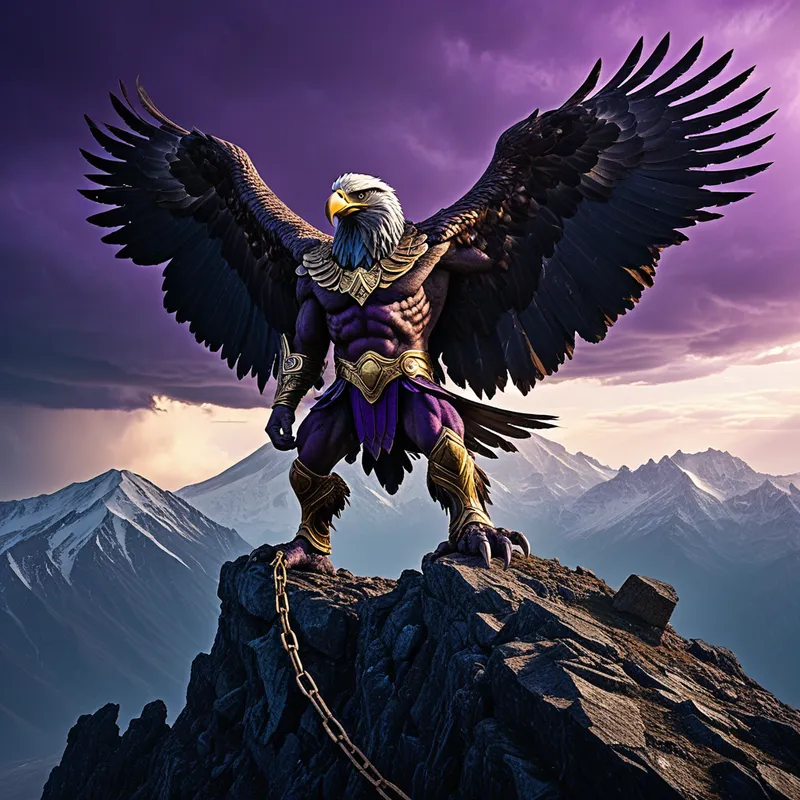
Prometheus was dragged to the uttermost crags of the Caucasus. Unbreakable chains, forged by the smith-god Hephaestus himself, were driven into the living rock. The Titan was spread-eagled against the stone, exposed to the lash of wind and frost. And each day, as the sun rose, a great eagle—the emissary of Zeus—would descend. With a beak and talons of adamant, it would tear open his side and feast upon his liver, the seat of passion and life. Each night, as the creature flew away, the divine flesh would regenerate, ensuring the agony was as infinite as his crime.
And there he remained, a testament written in torment on the face of the world. Not in silence, but in prophecy, for he held a secret that even Zeus feared: the name of the one who would one day overthrow the king of gods. His suffering was his power, his defiance his only freedom.

Cultural Origins & Context
The myth of Prometheus is a cornerstone of Greek mythology, primarily preserved in the epic poetry of Hesiod’s Theogony and Works and Days (8th-7th century BCE) and later dramatized with profound psychological depth in Aeschylus’s tragedy Prometheus Bound (5th century BCE). It functioned as a foundational etiological narrative for the ancient Greeks, explaining the origins of human technology, sacrifice, and our fraught, dependent relationship with the divine. The story was not merely entertainment; it was a theological and philosophical exploration of the cost of progress, the nature of justice, and the tension between authoritarian order and compassionate rebellion. As a culture hero, Prometheus embodies the archetype found globally—from the Anansi of the Akan people who brings stories and wisdom, to the Māui of Polynesia who snares the sun. These figures often operate at the boundary between the divine and mortal realms, securing through cunning or courage the gifts that define civilized life, always at a great personal cost.
Symbolic Architecture
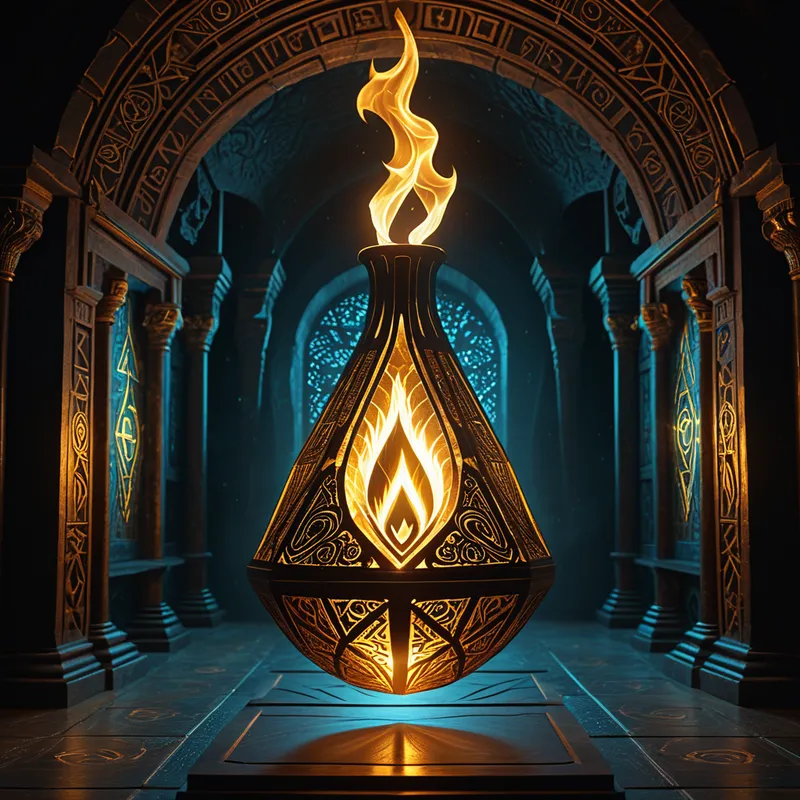
At its core, the Prometheus myth is a drama of consciousness itself. The stolen fire is far more than a physical tool; it is the spark of nous—mind, foresight, creative intelligence, and self-awareness. It represents the moment humanity stepped out of instinctual participation with nature and into the painful, glorious realm of choice, consequence, and culture.
The fire is the light of the ego emerging from the unconscious dark, a necessary theft from the Self that initiates the long, painful journey of individuation.
Prometheus, whose name means “Forethought,” symbolizes the principium individuationis—the force that urges differentiation and conscious development. Zeus represents the established, totalitarian order of the psyche, the Self in its absolute, often tyrannical, form that seeks to keep all energy and knowledge contained within its unified field. The rebellion is thus an intra-psychic necessity: the conscious mind must inevitably challenge the unconscious totality to carve out its own identity and purpose.
The punishment is equally symbolic. The liver, regenerating nightly, points to the eternal nature of this psychic conflict. The conscious ego that has seized knowledge (the fire) must forever endure the torment of its own awareness—the eagle of anxiety, guilt, and existential isolation that perpetually feeds on our vital energies. The chains are the limitations of the human condition, the consequences of our consciousness: mortality, morality, and endless yearning.
The Dreamer’s Resonance
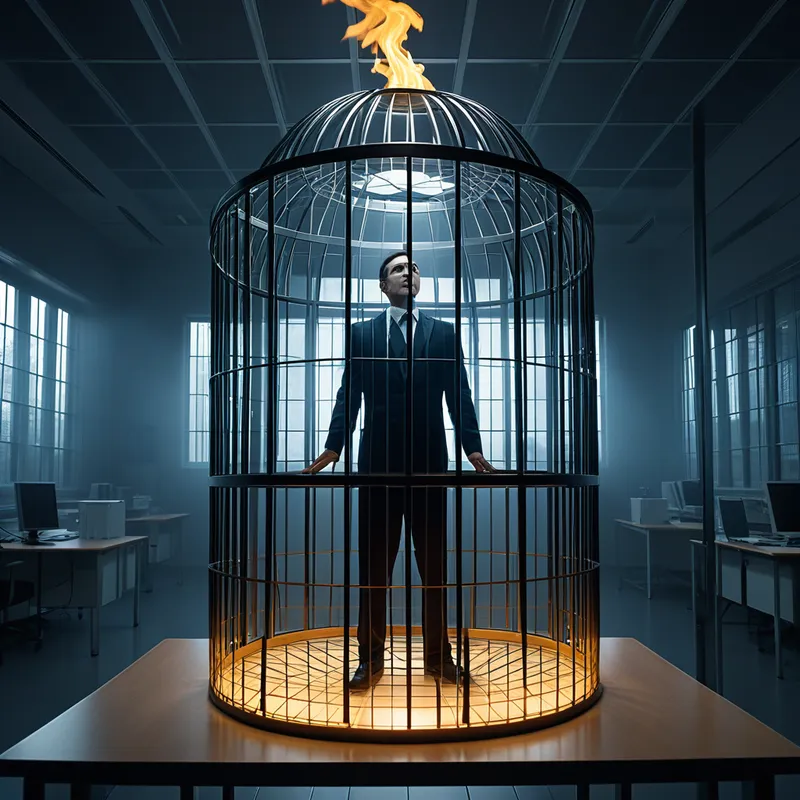
When this myth activates in the modern psyche, it often manifests in dreams of profound rebellion or transgression with a noble aim. One might dream of stealing a precious, glowing artifact from a heavily guarded institution (a corporation, a government building, a sterile laboratory). The dream is charged with both thrilling defiance and deep dread. Alternatively, the dreamer may find themselves bound—not by physical chains, but by contracts, social expectations, or invisible forces—while being pecked at by birds of prey or harassed by authoritarian figures.
Somatically, this can feel like a burning in the chest or a constriction around the ribs—the fire seeking outlet, the chains binding it. Psychologically, this dream pattern signals a critical stage in the individual’s development. The psyche is attempting to “steal fire”: to claim a forbidden knowledge or power from within themselves that their internal “Zeus” (perhaps an internalized critical parent, a rigid belief system, or a fear of one’s own potential) has forbidden. The torment in the dream is the ego’s fear of the consequences of its own awakening and empowerment.
Alchemical Translation
The alchemical journey modeled by Prometheus is the opus contra naturam—the work against nature, or more precisely, against the prevailing, unconscious order. For the modern individual, the “theft of fire” is the act of claiming one’s own authority, one’s unique vision, or a deeply buried talent. It is the decision to leave a soul-crushing job to pursue art, to speak a painful truth within a family system of silence, or to embrace an identity that one’s community rejects.
The Caucasus mountain is the crucible of the soul where the base metal of compliant identity is dissolved in the acid of suffering to reveal the gold of authentic selfhood.
The process is agonizingly cyclical, like the regenerating liver. Each time we assert our hard-won consciousness, we face the returning “eagle” of doubt, criticism, or isolation. The alchemical secret, however, lies in the prophecy Prometheus holds. His suffering is not meaningless; it contains the seed of the tyrant’s downfall. Psychologically, this means that the very pain endured in holding one’s ground—the anxiety of being oneself—gradually undermines the internal tyranny of the old order. The ego, through steadfast endurance, eventually forces a renegotiation with the Self. The defiant, suffering consciousness becomes so integral that the central psyche must adapt to include it. This is the moment of potential release, where the Heracles within us—the heroic strength of the integrated personality—can ascend the mountain, slay the tormenting bird, and break the chains. We are not freed from being fire-bearers, but from the punishment for bearing it. The fire becomes ours by right, and the task shifts from stealing it to tending it wisely.
Associated Symbols
Explore related symbols from the CaleaDream lexicon: