Pomona Myth Meaning & Symbolism
The story of the orchard goddess who shuns all suitors until Vertumnus, god of seasons, transforms himself to win her trust and sacred partnership.
The Tale of Pomona
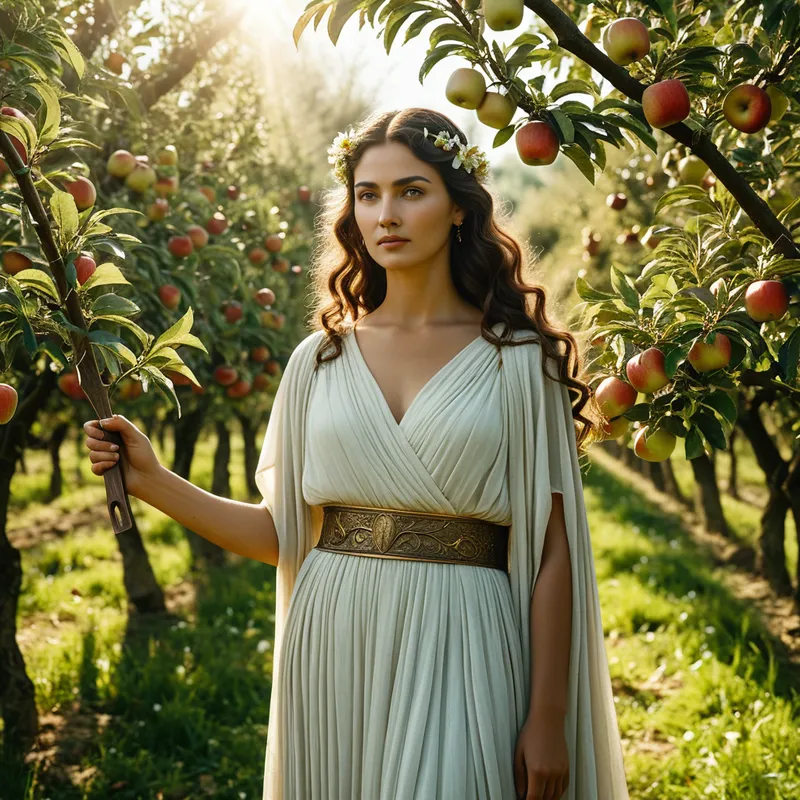
Listen, and hear the rustle of leaves in a sacred grove. This is not a story of thunderous gods on distant peaks, but of a quiet divinity who walked the cultivated earth. Her name was Pomona. While others ruled seas or wielded lightning, her domain was the patient, green pulse of life itself. She had no temple of marble, but her sanctuary was every orchard, every vineyard, every garden where the graft takes hold and the bud swells into sweetness.
She was a numen of such singular devotion that she cared not for the company of gods or mortals, only for her trees. She knew each bough’s strength, each trunk’s secret hollow. With her curved pruning knife, she was a sculptor of abundance, guiding wild growth into ordered fruitfulness. Satyrs and fauns pursued her, Pan himself blew his syrinx for her, but she turned them all away. She barred her orchard with a high wall and lived within, content with the whisper of leaves and the scent of ripe pears.
But one watched her with a love that was not mere lust. He was Vertumnus, a [shape-shifter](/myths/shape-shifter “Myth from Native American culture.”/) whose essence was the turning year. He understood her heart was not made of stone, but of heartwood—deep, strong, and slow to trust. He knew he could not storm her walls. So he began to change. First, he came as a rough reaper, speaking of the harvest. She listened politely to his rustic wisdom but sent him on his way. He returned as a fisherman, smelling of [the sea](/myths/the-sea “Myth from Greek culture.”/), then a soldier, then a vine-dresser. Each time, he spoke not of love, but of the things she cherished: the health of the soil, the threat of blight, [the way](/myths/the-way “Myth from Taoist culture.”/) sunlight falls on a laden branch.
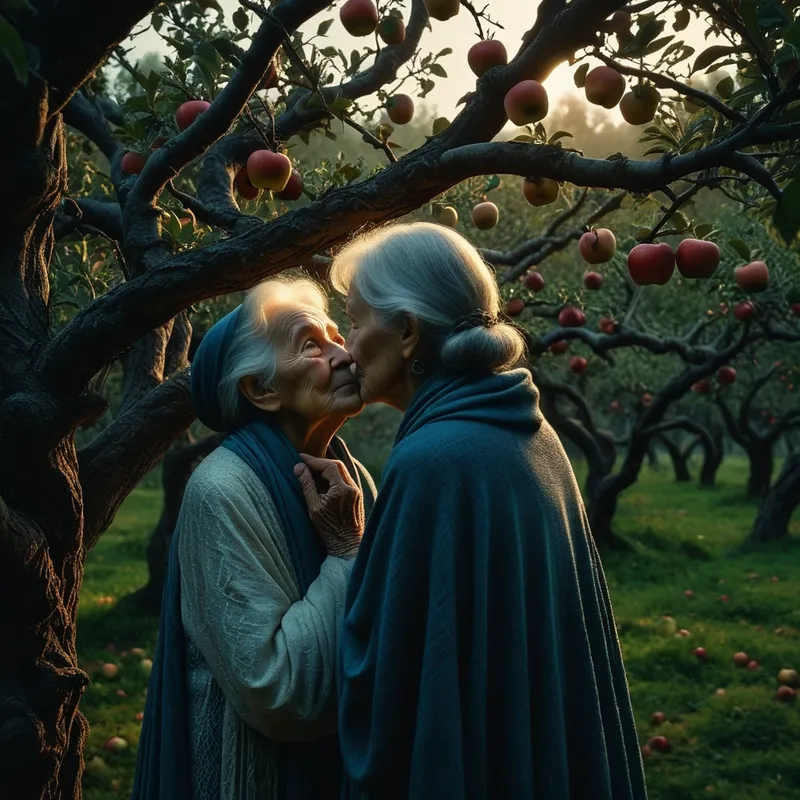
His masterstroke was his transformation into an old, bent crone. Silver-haired and leaning on a staff, this kindly grandmother passed Pomona’s gate unchallenged. She sat in the dappled shade and praised the nymph’s work. “What a paradise you have made,” the old woman sighed. Then, with a voice like rustling parchment, she began a warning. She spoke of a handsome youth, Vertumnus, whose love was as constant as the seasons’ turn. “Do not be like the vine that scorns the elm,” she counseled, “and withers alone on the ground for its pride.” To illustrate her point, she told a tale of a maiden who refused all suitors and was turned to stone by vengeful [Venus](/myths/venus “Myth from Alchemical culture.”/).
As the story ended, the old woman pointed to a magnificent elm entwined by a vibrant vine, heavy with grapes. “See how they embrace? One gives support, the other gives fruit. Alone, they are less. Together, they create a greater life.” The metaphor sank into Pomona’s soul like rain into dry earth. Then, as the nymph stood contemplating the intertwined plants, [the crone](/myths/the-crone “Myth from Celtic culture.”/)’s form shimmered and melted away. In her place stood Vertumnus in his true, radiant form—not as a conqueror, but as the very spirit of fertile change, handsome and warm as the autumn sun.
Pomona did not startle. The truth had been growing in her all along, watered by his patient, many-formed courtship. She looked from the god to the elm and the vine, and in that moment, her walled heart opened. She saw not an invasion, but a completion. She offered her hand, and he took it. And it is said that from that day forth, the most bountiful grafts—where one life is joined to another to create a new, more perfect fruit—were their sacred doing.
Cultural Origins & Context
The tale of Pomona and Vertumnus comes to us primarily from the poet Ovid, in his [Metamorphoses](/myths/metamorphoses “Myth from Greek culture.”/). It is a distinctly Roman myth, reflecting a culture deeply invested in agriculture, land stewardship, and the pax deorum—the peaceful, contractual relationship with the gods to ensure prosperity. Unlike the grand, foundational myths of Greece, this story feels local, almost pastoral. It belongs to [the world](/myths/the-world “Myth from Tarot culture.”/) of the villa, the carefully tended estate, the hortus (garden).
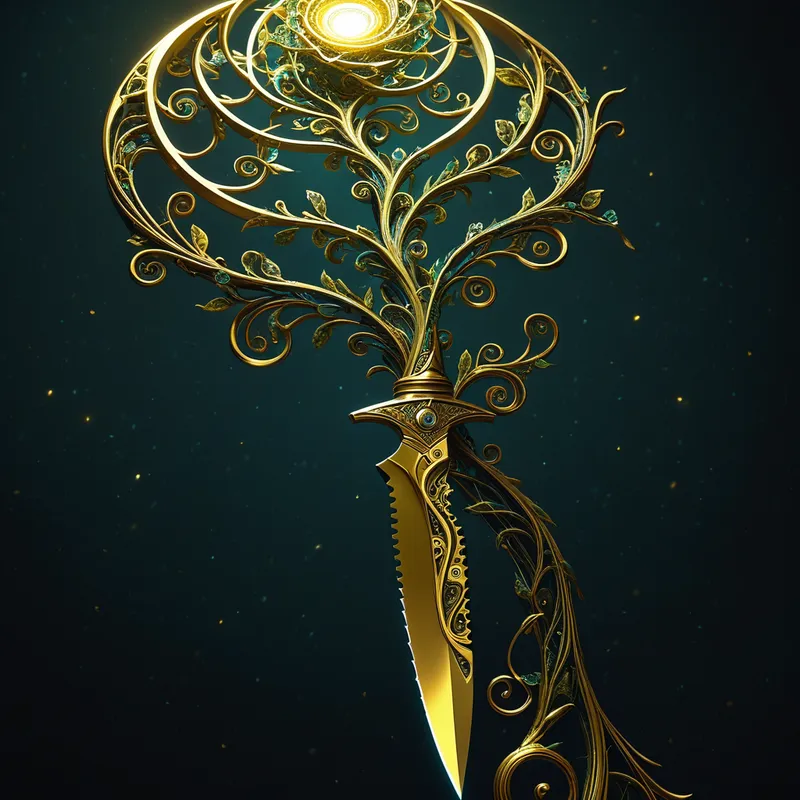
Pomona herself is one of the many indigitamenta—a list of deified abstract concepts or functions crucial to Roman ritual. She was not merely a nymph but the divine force of “fruitfulness” (pomum meaning fruit). Her worship was likely practical and domestic. Offerings would be made to her for a good yield, and her pruning knife (faucilla) was her sacred symbol. The myth, as told by Ovid, elevates this agricultural function into a resonant narrative. It was a story for a people who understood that abundance did not come from wild nature alone, but from the intelligent, devoted application of human (and divine) care—the art of cultivation.
The myth’s societal function was multifaceted. It sanctified the arts of gardening, grafting, and orchard-keeping. It also modeled ideal courtship: patience, intelligence, and empathetic persuasion triumphing over brute force or fleeting passion. Vertumnus, whose name derives from vertere (to turn), represents the necessary changes and adaptations required for a successful union, whether between spouses, between farmer and land, or between the Roman state and the rhythms of the natural world it depended upon.
Symbolic Architecture
At its core, this is a myth about the sacred [marriage](/symbols/marriage “Symbol: Marriage symbolizes commitment, partnership, and the merging of two identities, often reflecting one’s feelings about relationships and social obligations.”/) of two essential principles. Pomona symbolizes the cultivated [soul](/symbols/soul “Symbol: The soul represents the essence of a person, encompassing their spirit, identity, and connection to the universe.”/). She is order, [boundary](/symbols/boundary “Symbol: A conceptual or physical limit defining separation, protection, or identity between entities, spaces, or states of being.”/), focused skill, and the wisdom of containment. Her [wall](/symbols/wall “Symbol: Walls in dreams often symbolize boundaries, protection, or obstacles in one’s life, reflecting the dreamer’s feelings of confinement or security.”/) is not just a physical [barrier](/symbols/barrier “Symbol: A barrier symbolizes obstacles, limitations, and boundaries that prevent progression in various aspects of life.”/) but a psychological one—[the ego](/myths/the-ego “Myth from Jungian culture.”/)’s necessary [structure](/symbols/structure “Symbol: Structure in dreams often symbolizes stability, organization, and the framework of one’s life, reflecting how one perceives their environment and personal life.”/) that allows deep work and expertise to develop. She is [the principle](/symbols/the-principle “Symbol: A fundamental truth, law, or doctrine that serves as a foundation for a system of belief, behavior, or reasoning, often representing moral or ethical standards.”/) of individuation in its early stages: a self-contained, self-sufficient [system](/symbols/system “Symbol: A system represents structure, organization, and interrelated components functioning together, often reflecting personal or social order.”/) of care.
The walled garden is the soul’s necessary first act of creation—a defined space where something precious can be nurtured apart from the chaos.
Vertumnus symbolizes the transformative [impulse](/symbols/impulse “Symbol: A sudden, powerful urge or drive that arises without conscious deliberation, often linked to primal instincts or emotional surges.”/). He is change, fluidity, the persuasive power of eros ([life](/symbols/life “Symbol: The symbol of ‘Life’ represents a journey of growth, interconnectedness, and existential meaning, encompassing both the joys and challenges that define human experience.”/) force), and the intelligence of [adaptation](/symbols/adaptation “Symbol: The process of adjusting to new conditions, often involving psychological or physical change to survive or thrive.”/). He is not a [destroyer](/symbols/destroyer “Symbol: A figure or force representing radical change through dismantling existing structures, often evoking fear and awe.”/) but a translator, finding endless ways to communicate across Pomona’s boundary. His final form as the elm-and-[vine](/symbols/vine “Symbol: Represents connection, growth, entanglement, or suffocation. Often symbolizes relationships, life force, or binding emotions.”/) is the key [symbol](/symbols/symbol “Symbol: A symbol can represent an idea, concept, or belief, serving as a powerful tool for communication and understanding.”/): he represents the supportive structure that allows her fruitfulness to climb and flourish, and the fertile change that softens rigid [isolation](/symbols/isolation “Symbol: A state of physical or emotional separation from others, often representing a need for introspection or signaling distress.”/).
Their union is the alchemical coniunctio oppositorum—the [conjunction](/symbols/conjunction “Symbol: In arts and music, a conjunction represents the harmonious or dissonant merging of separate elements to create a new, unified whole.”/) of opposites. It is the marriage of structure and flow, discipline and adaptation, the [virgin](/symbols/virgin “Symbol: The virgin represents purity, innocence, and new beginnings, often echoing themes of untainted potential.”/)’s self-possession and the [lover](/symbols/lover “Symbol: A lover in dreams often represents intimacy, connection, and the emotional aspects of relationships.”/)’s seeking. The “[fruit](/symbols/fruit “Symbol: Fruit symbolizes abundance, nourishment, and the fruits of one’s labor in dreams.”/)” of this union is not just literal [abundance](/symbols/abundance “Symbol: A state of plentifulness or overflowing resources, often representing fulfillment, prosperity, or spiritual richness beyond material needs.”/), but a higher state of being: a [psyche](/myths/psyche “Myth from Greek culture.”/) where deep, focused work is fertilized by [connection](/symbols/connection “Symbol: Connection symbolizes relationships, communication, and bonds among individuals.”/) and where love takes the form of patient, shapeshifting understanding.
The Dreamer’s Resonance
When this myth stirs in the modern unconscious, it often manifests in dreams of walls, gardens, and shapeshifters. To dream of being inside a beautiful, walled garden you tend alone, while feeling a vague longing or hearing whispers from beyond the wall, speaks to the Pomona complex. The dreamer may be in a phase of profound but isolated self-cultivation—excelling in a career, mastering a skill, or maintaining a carefully controlled life—yet sensing an inner sterility, a lack of cross-pollination.
Dreams of an old, wise crone offering crucial advice, or of a specific, significant person appearing in multiple guises, channel the energy of Vertumnus. The psyche is attempting to communicate a need for connection and transformation through symbolic figures. The somatic feeling is often one of tension between deep comfort in one’s ordered space and a pulling, magnetic attraction toward an unknown integration. The dream may present a key, a gate, or a tool of union (like a grafting knife), indicating the psyche is ready to move from maintenance to a [sacred marriage](/myths/sacred-marriage “Myth from Alchemy culture.”/) of inner opposites.
Alchemical Translation
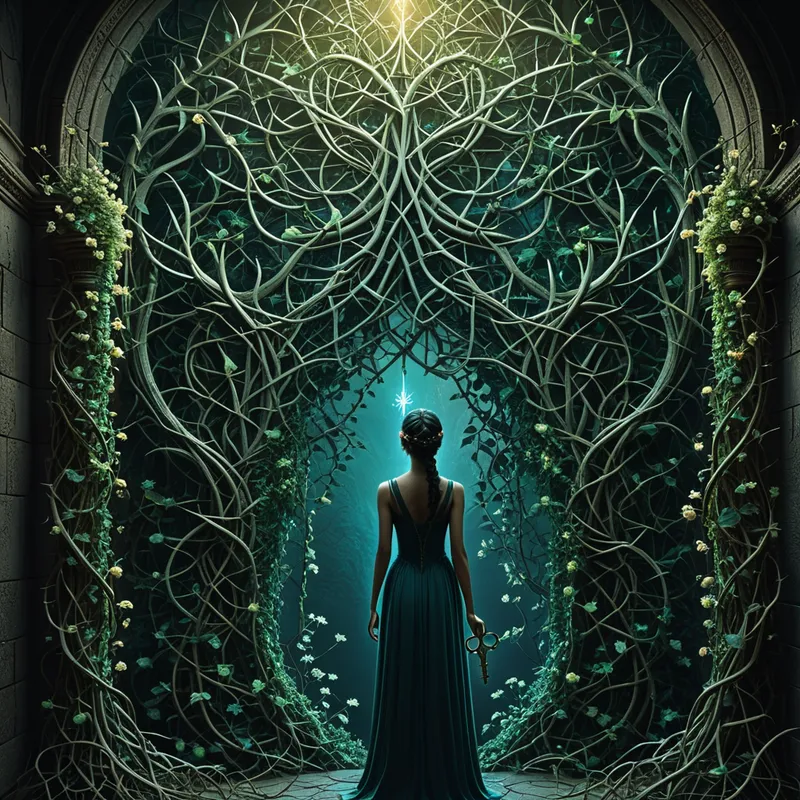
The individuation process modeled here is not one of heroic conquest, but of receptive courtship. The modern individual often begins as Pomona: building a competent, well-defended ego-structure. We prune away distractions, focus our energy, and become proficient in our chosen “orchard.” This is a vital and noble stage. But the process stalls if the walls become a prison. The Vertumnus archetype must then be integrated—not as an invading force, but as an inner capacity for adaptive relating.
Individuation is not the perfection of the wall, but the conscious creation of a gate.
The “alchemical translation” is the grafting of the soul. It is the conscious, skilled act of opening one’s self-contained structure to allow another influence—a relationship, a new idea, a surrendered control—to be joined to one’s core being. This is not a loss of self, but the creation of a new, more resilient and fruitful hybrid. Vertumnus’s transformations teach us to approach our own inner walls with creativity, patience, and respect. We must learn to speak the language of our own guarded depths, to court our own latent potentials with the guise of stories, metaphors, and patient attention.
The [triumph](/myths/triumph “Myth from Roman culture.”/) is the realization that the ultimate fruit—a life of deep meaning and creative abundance—cannot be produced by skill alone, nor by wild change alone. It is born from their sacred, willing union. The tool of the pruning knife, once used only to cut away, becomes the instrument of grafting, the active principle that makes the union possible. The individual becomes, like the joined elm and vine, both the steadfast support and the ever-growing, ever-fruitful expression of life.
Associated Symbols
Explore related symbols from the CaleaDream lexicon: