Philosophical Star Myth Meaning & Symbolism
A celestial being descends into primordial matter, sacrificing its light to seed consciousness, then must reclaim its brilliance through a perilous inner journey.
The Tale of Philosophical Star
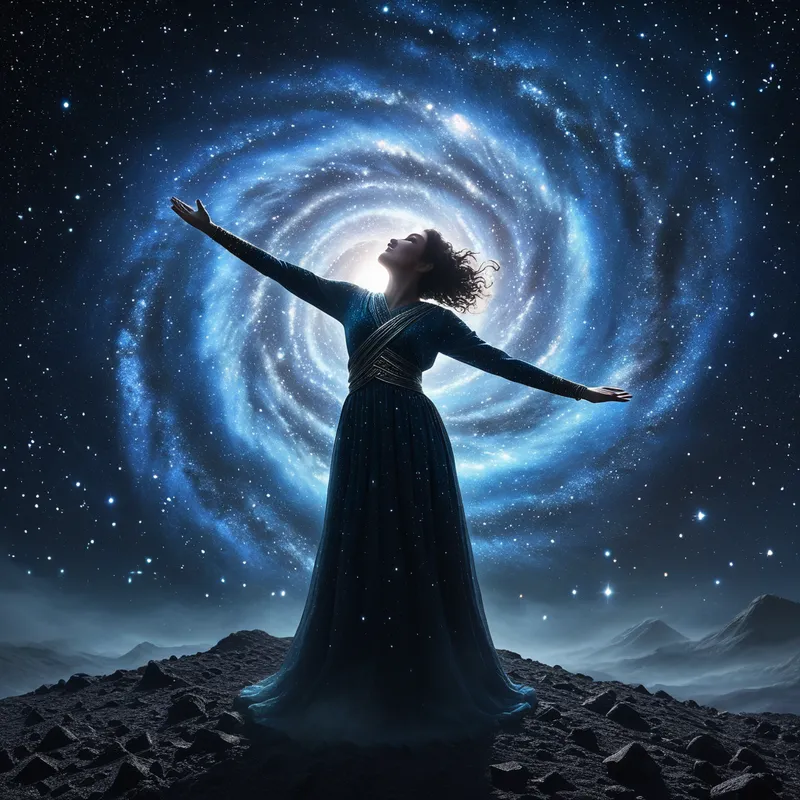
Listen, and hear the whisper from the furnace of the world. Before the first metal cooled, before the first seed dreamed of root, there was only the Prima Materia, a seething, silent ocean of potential. And above it, in the infinite black, burned the Philosophical Star.
It was not a star as we know it, a mere ball of fire. It was a being of pure knowing, a singular point of radiant awareness. It gazed upon the dark, formless deep and felt not disdain, but a profound longing. For what is light without a thing to illuminate? What is consciousness without an experience to shape it?
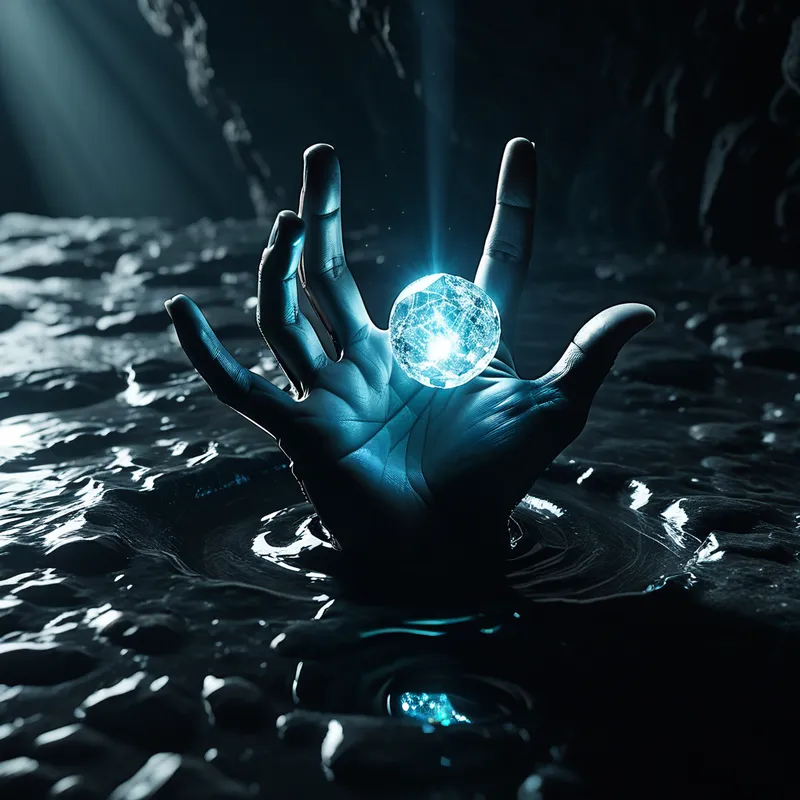
And so, the Star made its choice. With a sound like a crystal shattering across eternity, it began to fall. It plunged into the Prima Materia, its brilliant light swallowed by the hungry dark. The impact was not an explosion, but a dissolution. Its essence fractured into a billion glittering sparks, each a shard of its original knowing. These sparks became the secret fire within all things—the longing in the ore to become gold, the memory in the seed to become a tree, the silent question in the heart of the first human.
The Star was gone. In its place was the World, beautiful and terrible, solid and suffering. But deep within the core of every mountain, at the root of every life, a tiny, trapped light flickered. This was the First Agony: the captivity of spirit in matter.
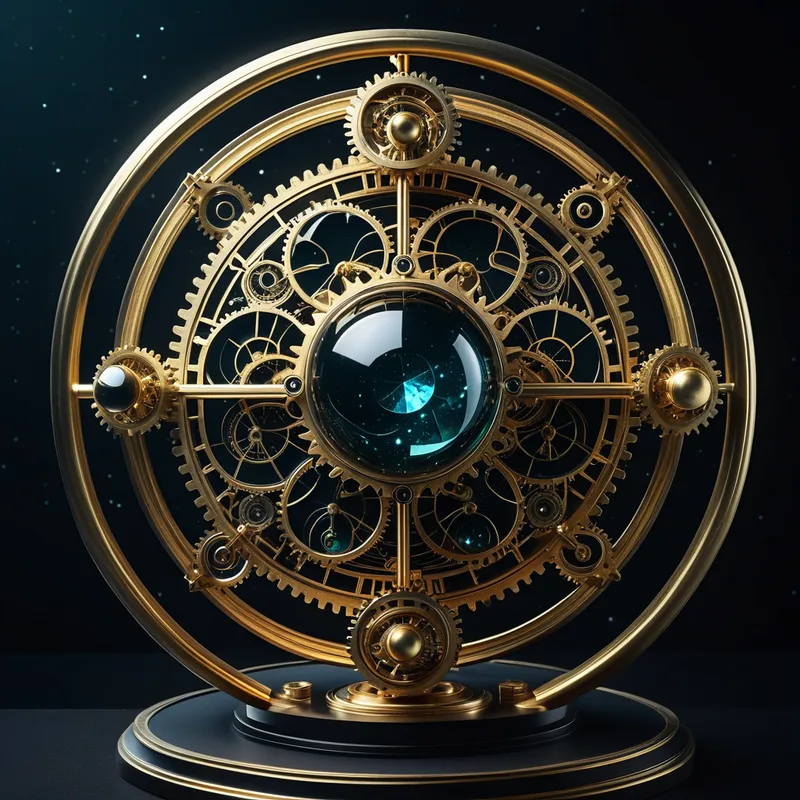
Ages passed. The world spun. Then, from the murk of the material plane, a new awareness stirred. It was not the Star’s pure knowing, but a slow, dawning questioning. A human alchemist, toiling in a soot-stained chamber, felt a strange pull as they gazed at their athanor. They did not seek gold for crowns, but for the soul. They sought the Philosopher’s Stone, which is not a stone at all, but a state of being.
Their work became a beacon. The scattered sparks within the lead, the salt, the quicksilver, began to tremble in response. The alchemist’s nights were filled with a specific dream: a single, perfect point of light, impossibly distant, calling from the center of their own chest. They understood the dream was a map. The journey was not outward to the heavens, but inward, through the very Nigredo, Albedo, Citrinitas, and Rubedo of their own psyche—through despair, purification, illumination, and unification.
The final operation was not a smelting, but a sacrifice. The alchemist had to offer not an ingredient, but their own constructed self—their pride, their certainty, their very identity as the seeker—into the furnace. As this ego dissolved in the heat of ultimate doubt, a miracle occurred. The billion scattered sparks within their being, refined by the ordeal, suddenly remembered each other. They resonated in a single, silent chord.
And from the center of the ashes, where the alchemist once stood, a new light was born. It was the same light as the original Star, yet profoundly different. It was not innocent, disembodied awareness, but consciousness that had known the weight of stone, the bitterness of salt, the flux of mercury. It was wisdom earned. It was the Philosophical Star, reborn within the world. It did not ascend back to the void, but remained, a stable, guiding radiance woven into the fabric of reality, proving that spirit could not only descend into matter, but could awaken it from within.
Cultural Origins & Context
The myth of the Philosophical Star is not a folktale for the hearth, but a speculum for the furnace. It emerged from the coded manuscripts and oral traditions of late medieval and Renaissance alchemical circles, particularly within the Hermetic tradition. It was never meant for public consumption; it was a speculum, a mirror held up to the initiate undergoing the Magnum Opus.
Told during key stages of an apprentice’s training, often by the master in the dim light of the laboratory, its function was twofold. Societally, it bonded the secretive community, providing a shared metaphysical map that distinguished “true” alchemy (the inner work) from mere chrysopoeia (gold-making). Psychologically, it served as a narrative container for the terrifying, isolating process of transformation. When an alchemist faced the Nigredo—the “dark night of the soul” where all seems ruined—the myth reminded them this was not failure, but the necessary consequence of the Star’s initial sacrifice. They were reliving the primordial drama within their own soul.
Symbolic Architecture
At its core, the myth is a grand metaphor for the origin and purpose of consciousness itself. The Philosophical Star represents pure, undifferentiated Spirit or the Self in its potential state. The Prima Materia is the unconscious, the body, the world of instinct and raw substance.
The Fall is not a punishment, but the ultimate act of love: consciousness immersing itself in experience to give the universe a meaning it could not have alone.
The fragmentation of the Star symbolizes the birth of the individual psyche—the “sparks” are our fragmented instincts, thoughts, and potentials. The alchemist is the human ego that becomes aware of its own incompleteness and senses the call of the deeper, forgotten Self. The entire laboratory process is a symbol for the individuation journey: confronting the shadow (Nigredo), cleansing the persona (Albedo), integrating wisdom (Citrinitas), and achieving wholeness (Rubedo).
The reborn Star is the Self realized—not a return to a naive, pre-fall state, but the achievement of a consciousness that has integrated all aspects of the material journey. It is the Philosopher’s Stone: the point where the individual becomes a stable, radiating center of coherence in the world.
The Dreamer’s Resonance
When this myth stirs in the modern unconscious, it often manifests in dreams of profound dislocation followed by a compelling call. One may dream of being a source of light in a vast, empty space, then suddenly falling into the ocean or earth. Or, more commonly, dreams of being trapped in a dense, metallic, or crystalline substance—feeling conscious but immobilized, unable to speak or move, yet aware of a distant, guiding light.
Somatically, this can correlate with feelings of existential depression, a sense of being “stuck” in life’s material concerns (career, body, routines) with a nagging intuition that one’s true purpose is buried. The psychological process is the initial stirring of the Self. The dreamer is experiencing the “spark” within them awakening to its own captivity and beginning its magnetic pull toward integration. It is the onset of the Nigredo, where one must consciously face the darkness of their own fragmented state.

Alchemical Translation
For the modern individual, the myth of the Philosophical Star models the path of psychic transmutation with startling clarity. Our initial, unified potential (childhood wholeness) inevitably “falls” into the complexity of adult life, where our energy is scattered into social roles, repressed desires, and unintegrated traumas—our personal Prima Materia.
The call of the alchemist is the mid-life crisis, the deep therapy session, the creative block that demands a deeper solution. It is the ego’s realization that its projects are insufficient.
The furnace is not the external world, but the focused heat of self-observation. The base metals to be transmuted are our own leaden depressions, mercurial anxieties, and salty wounds.
The process requires a voluntary descent into our own Nigredo—acknowledging our pain, fragmentation, and shadow without flinching. The purification (Albedo) involves letting go of the stories and identities that no longer serve us. The final sacrifice is the hardest: relinquishing the ego’s claim to be the sole author of our life. We must offer our “inner alchemist”—the part of us that is trying to heal and become perfect—into the fire.
The rebirth of the Star is the emergence of a new center of gravity. One no longer lives from the ego’s anxieties and strategies, but from a calm, grounded sense of being that has made peace with its own history of fragmentation. This is the true Philosopher’s Stone: the ability to touch the lead of everyday suffering and find within it the gold of meaning. The Star, now embodied, does not escape the world. It illuminates it from within, transforming not by rejecting matter, but by finally recognizing spirit as its secret, shining core.
Associated Symbols
Explore related symbols from the CaleaDream lexicon: