Philomela & Procne Myth Meaning & Symbolism
A myth of sisterhood, violation, and a terrible revenge that transforms the victims into birds, forever singing their story.
The Tale of Philomela & Procne
Hear now a story not of gleaming heroes, but of the dark loom of fate, woven in the chambers of the heart. It begins in the royal house of Pandion, where two daughters, bound by blood as close as ivy on a single stem, were parted by the cruel currents of men’s wars and men’s desires.
Procne, the elder, was given in marriage to Tereus, a lord of Thrace, as reward for his aid in war. He bore her away to his bleak, northern kingdom. For years, she lived in his high halls, bearing him a son, Itys, yet her soul pined for the voice of her sister, [Philomela](/myths/philomela “Myth from Greek culture.”/), whose laughter was like spring [water](/myths/water “Myth from Chinese culture.”/) in Athenian sun. The longing became a hollow ache. At her pleading, Tereus sailed to Athens to fetch Philomela for a visit.
But the moment Tereus beheld Philomela—her youth, her grace a brighter echo of her sister’s—a black fire ignited in his chest. The journey back was not one of familial joy, but of monstrous intent. Upon landing in a lonely part of Thrace, he dragged Philomela into a deep forest, to a hidden shepherd’s hut. There, he committed the unspeakable. And when her screams threatened to fill the silent woods, he did a [thing](/myths/thing “Myth from Norse culture.”/) more terrible than the violence itself: he drew a blade and cut out her tongue.
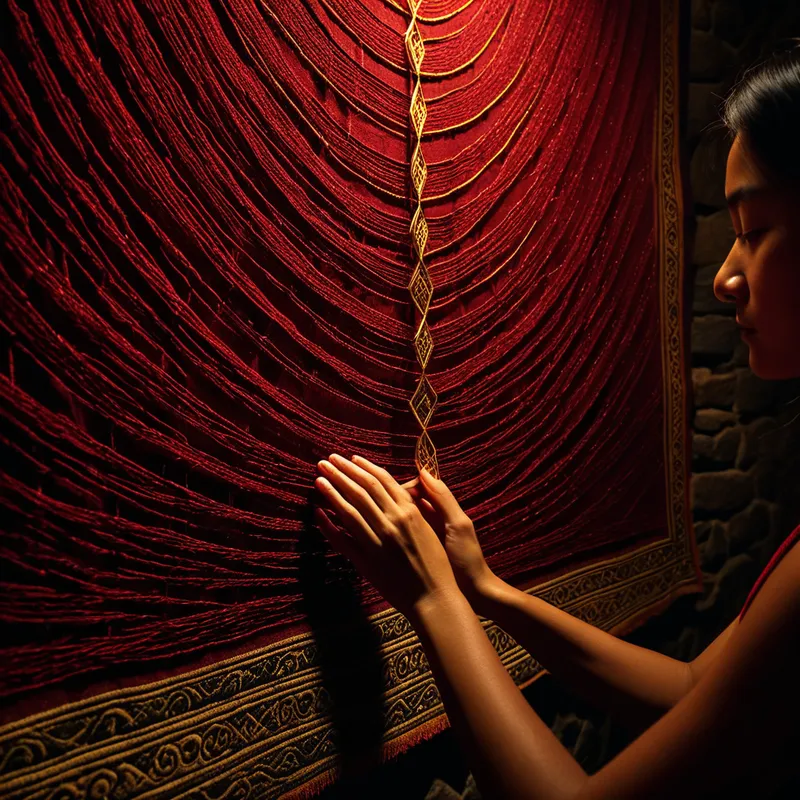
He left her there, imprisoned in stone and silence, telling Procne her sister had died on the voyage. Philomela’s world collapsed into a red haze of pain and muteness. But in the desperate dark, her spirit, though caged, would not be extinguished. She had her hands. She had the year’s passage, marked by the shuttle of a loom. From the wool provided by her jailers, she wove. Not patterns of flowers or beasts, but a testament. Thread by thread, she told her entire story—the voyage, the hut, the violation, the cruel silencing—into a tapestry of stunning, horrific clarity.
When it was complete, she convinced an old servant woman to carry this woven cry to the palace, to the hands of Procne. The queen unrolled the fabric. Her eyes read the crimson and grey threads. She did not scream. A silence colder than Philomela’s fell upon her. The festival of Dionysus was near, with its rites that freed women to roam the wilds. In this sacred chaos, Procne found the hut, freed her sister, and brought her, shrouded, back to the palace.
What does grief do when it passes beyond tears? It hardens into a resolve as sharp as flint. In a secluded chamber, the sisters stood over the innocent cause of Procne’s bondage—young Itys. And in a vengeance that mirrors the brutality it sought to answer, they killed him. They butchered his flesh, boiled it in a cauldron, and served it to Tereus at a feast, a grim communion of his own lineage.
The king ate heartily. When he called for his son, Philomela, her vengeance complete, stepped forward and hurled [the child](/myths/the-child “Myth from Alchemy culture.”/)’s bloody head onto the table. The horror that followed was a storm of realization and rage. Tereus seized an axe, and the sisters fled, their feet barely touching [the earth](/myths/the-earth “Myth from Hindu culture.”/). As he gained on them, in that moment of ultimate extremity, they cried out not to a god of [justice](/myths/justice “Myth from Tarot culture.”/), but of change. Their prayer was heard.
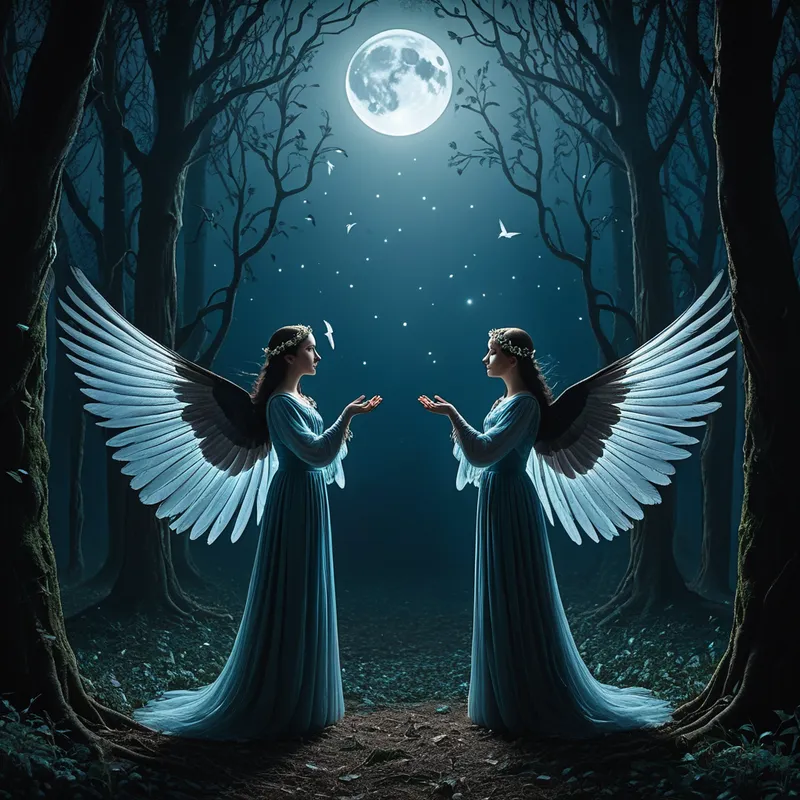
Philomela was transformed into a nightingale, a bird that sings a beautiful, mournful song in the thickets of the night. Procne became a swallow, a bird of restless, jagged flight. And Tereus, pursuing still, was made a hoopoe, a crested bird forever chasing the others, his beak become a weapon. The song, the flight, the chase—eternal.
Cultural Origins & Context
This harrowing narrative comes to us primarily from the Roman poet Ovid, in his epic [Metamorphoses](/myths/metamorphoses “Myth from Greek culture.”/). While Ovid’s version is the most complete, the myth has older, fragmentary roots in Greek literature, suggesting it was a known, if disturbing, part of the mythological corpus. It is a story told not around [the hearth](/myths/the-hearth “Myth from Norse culture.”/) of the noble family, but perhaps in the women’s quarters, or by poets exploring the darkest corners of human—and divine—psychology.
Its societal function is complex. On one level, it is a dire warning tale about the extremes of passion (eros turning to hubris), the violation of sacred hospitality ([xenia](/myths/xenia “Myth from Greek culture.”/)), and the catastrophic breakdown of familial bonds. It also serves as an aetiological myth, explaining the perceived behaviors of the nightingale, swallow, and hoopoe. But more profoundly, it gives voice, paradoxically through muteness, to the unspeakable experiences of women in a patriarchal structure, where their bodies and voices were often subject to male control. The myth acknowledges a violence so profound it can only be answered by a transgression equally profound, culminating in an escape from the human condition altogether.
Symbolic Architecture
The myth’s power lies in its stark, almost unbearable symbols. Philomela’s severed [tongue](/symbols/tongue “Symbol: Represents communication, self-expression, and the power of words.”/) is the ultimate [symbol](/symbols/symbol “Symbol: A symbol can represent an idea, concept, or belief, serving as a powerful tool for communication and understanding.”/) of stolen voice, of [trauma](/symbols/trauma “Symbol: A deeply distressing or disturbing experience that overwhelms the psyche, often manifesting in dreams as unresolved emotional wounds or psychological injury.”/) that renders the [victim](/symbols/victim “Symbol: A person harmed by external forces, representing vulnerability, injustice, or sacrifice in dreams. Often symbolizes powerlessness or moral conflict.”/) mute in the social world. Her [prison](/symbols/prison “Symbol: Prison in dreams typically represents feelings of restriction, confinement, or a lack of freedom in one’s life or mind.”/) is not just physical; it is the prison of a [story](/symbols/story “Symbol: The symbol of ‘Story’ represents the narrative woven through our lives, embodying experiences, lessons, and emotions that shape our identities.”/) that cannot be told.
The loom, then, becomes the psyche’s last, most ingenious recourse. When the mouth is sealed, the hands must speak.
Weaving is the archetypal feminine act of creation and order. Philomela subverts this domestic art into a medium of [testimony](/symbols/testimony “Symbol: A formal statement of truth, often given under oath, representing personal truth, accountability, and the act of bearing witness.”/). The [tapestry](/symbols/tapestry “Symbol: The tapestry represents interconnected stories, creativity, and the weaving of personal and collective experiences into a cohesive narrative.”/) is a coded message, a map of trauma that bypasses spoken [language](/symbols/language “Symbol: Language symbolizes communication, understanding, and the complexities of expressing thoughts and emotions.”/) to communicate directly to another who can understand its symbology—her [sister](/symbols/sister “Symbol: The symbol of a sister in a dream often represents connection, support, and the complexities of familial relationships.”/). It represents the [psyche](/myths/psyche “Myth from Greek culture.”/)’s drive to externalize and witness its own suffering, to transform passive [agony](/symbols/agony “Symbol: Intense physical or emotional suffering, often representing unresolved pain, internal conflict, or profound transformation.”/) into an active, shaped [artifact](/symbols/artifact “Symbol: An object from the past carrying historical, cultural, or personal significance, often representing legacy, memory, or hidden knowledge.”/).
The feast of Itys is the most challenging symbol. It represents the total consumption of the old [life](/symbols/life “Symbol: The symbol of ‘Life’ represents a journey of growth, interconnectedness, and existential meaning, encompassing both the joys and challenges that define human experience.”/), the innocent future (the son), and the marital bond. It is a horrific, literal enactment of internalizing one’s pain until it becomes the very substance of one’s revenge. This act shatters [the world](/myths/the-world “Myth from Tarot culture.”/) irrevocably.
Finally, the [metamorphosis](/symbols/metamorphosis “Symbol: A profound, often irreversible transformation of form, identity, or state, representing a complete journey from one condition to another.”/) into birds is not a reward, but a [resolution](/symbols/resolution “Symbol: In arts and music, resolution refers to the movement from dissonance to consonance, creating a sense of completion, release, or finality in a composition.”/). It is a psychic [dissociation](/symbols/dissociation “Symbol: A psychological separation from one’s thoughts, feelings, or identity, often experienced as a journey away from the self during trauma or stress.”/) from the [human](/symbols/human “Symbol: The symbol of a human represents individuality, complexity of emotions, and social relationships.”/) [realm](/symbols/realm “Symbol: The symbol of ‘Realm’ often signifies the boundaries of one’s consciousness, experiences, or emotional states, suggesting aspects of reality that are either explored or ignored.”/) where such atrocities are possible. The nightingale’s song is the trauma sublimated into haunting [beauty](/symbols/beauty “Symbol: This symbol embodies aesthetics, harmony, and the appreciation of life’s finer qualities.”/); [the swallow](/myths/the-swallow “Myth from Greek culture.”/)’s frantic [flight](/symbols/flight “Symbol: Flight symbolizes freedom, escape, and the pursuit of one’s aspirations, reflecting a desire to transcend limitations.”/) is restless, unresolved [anguish](/symbols/anguish “Symbol: Intense emotional or physical suffering, often linked to unresolved pain, loss, or existential crisis.”/); the hoopoe’s [chase](/symbols/chase “Symbol: Dreaming of a chase often symbolizes avoidance of anxiety or confrontation, manifesting as fleeing from something threatening or overwhelming in one’s waking life.”/) is the perpetual, aggressive [energy](/symbols/energy “Symbol: Energy symbolizes vitality, motivation, and the drive that fuels actions and ambitions.”/) of the violator, forever trapped in his own destructive [pattern](/symbols/pattern “Symbol: A ‘Pattern’ in dreams often signifies the underlying structure of experiences and thoughts, representing both order and the repetitiveness of life’s situations.”/).
The Dreamer’s Resonance
When this myth stirs in the modern dreamer, it signals a profound psychological process related to voiceless trauma and the search for a medium of expression. To dream of being mute, of having one’s mouth sewn or blocked, points directly to a Philomela complex—a deep, personal truth or a history of violation that feels impossible to articulate in waking life.
Dreams of frantic weaving, of creating a tapestry or a map with urgent, incomprehensible symbols, mirror Philomela’s act. The dream-ego is attempting to fabricate a testimony from the raw materials of the unconscious. It is the somatic intelligence of the hands working what the conscious mind cannot yet speak.
Dreams of transformation into a bird, particularly upon being pursued, indicate a powerful movement towards a psychic escape hatch. The dreamer’s system is seeking transcendence—not a spiritual bypass, but a fundamental change in the form of their being to survive an untenable inner or outer situation. The specific bird—whether its song is mournful, its flight erratic, or its demeanor aggressive—will illuminate which aspect of the myth’s triad (victim, avenger, perpetrator) is most active in the psyche.
Alchemical Translation
The path of Philomela and Procne is a brutal, nonlinear map of psychic transmutation. It begins with the [nigredo](/myths/nigredo “Myth from Alchemical culture.”/), the blackening: the violent rupture, the descent into the muteness of the hut. This is the utter dissolution of the conscious personality, the immersion in the shadowy, traumatic material.
Philomela’s weaving is the albedo, the whitening. It is the slow, painstaking work of bringing form to the formless pain. This is the therapeutic act—whether through art, journaling, or somatic experiencing—where the chaotic experience is given a narrative structure. It is not yet healing, but it is witnessing. The artifact (the tapestry) is the first coherent product of the unconscious, a symbol that bridges the isolated self and a potential witness (the sister/Procne/the therapist/the inner other).
The revenge feast is the dreaded, necessary rubedo, the reddening. In alchemy, this is the stage of coagulation, where the separated elements are fused under intense heat. Psychologically, it represents the conscious, agonizing integration of the shadow. The “innocent” parts of the old self (Itys) must be sacrificed—not literally, but in the sense that one’s previous identity, built perhaps on silence or compliance, is utterly destroyed and consumed. This stage feels like madness or evil, for it involves owning a destructive rage that feels alien to the self.
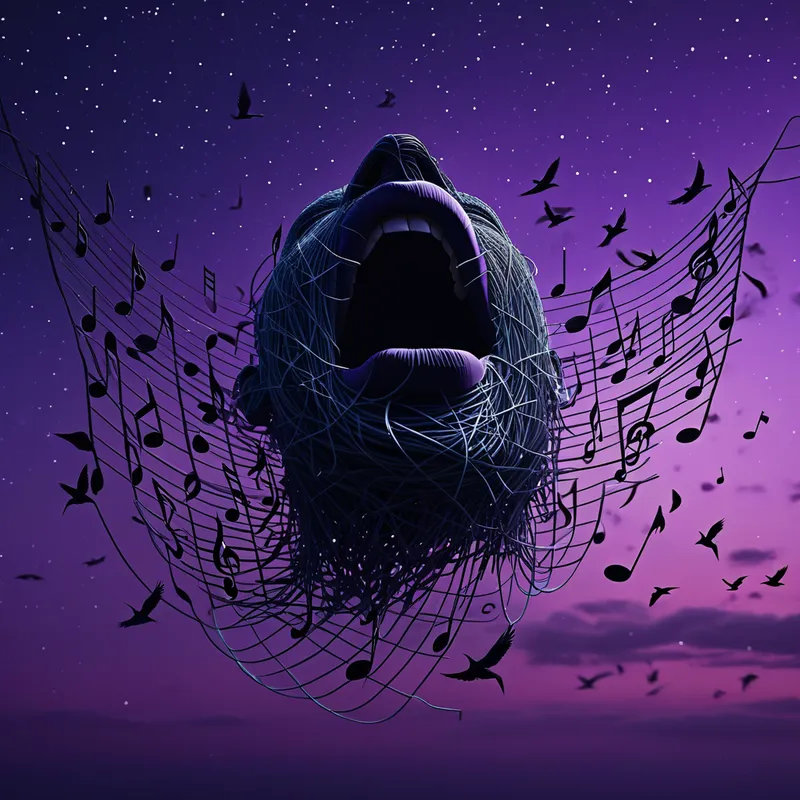
The final metamorphosis is the citrinitas, the yellowing, or the attainment of a new, enduring form. The psyche, having passed through the fire, can no longer remain human in the old way. It achieves a kind of objectivity. The trauma is not erased; it is transformed into a defining characteristic—a song, a flight pattern, a relentless pursuit. The individual is freed from the literal human drama but eternally shaped by it, their new “nature” a direct expression of their deepest wound and their ultimate survival. The process ends not in a tidy resolution, but in a dynamic, eternal pattern—the ongoing song of the soul that has found its voice through the very instrument of its silencing.
Associated Symbols
Explore related symbols from the CaleaDream lexicon: