Patala Myth Meaning & Symbolism
A journey into the seven-layered underworld of Patala, a realm of serpents, demons, and hidden treasures, symbolizing the descent into the unconscious.
The Tale of Patala
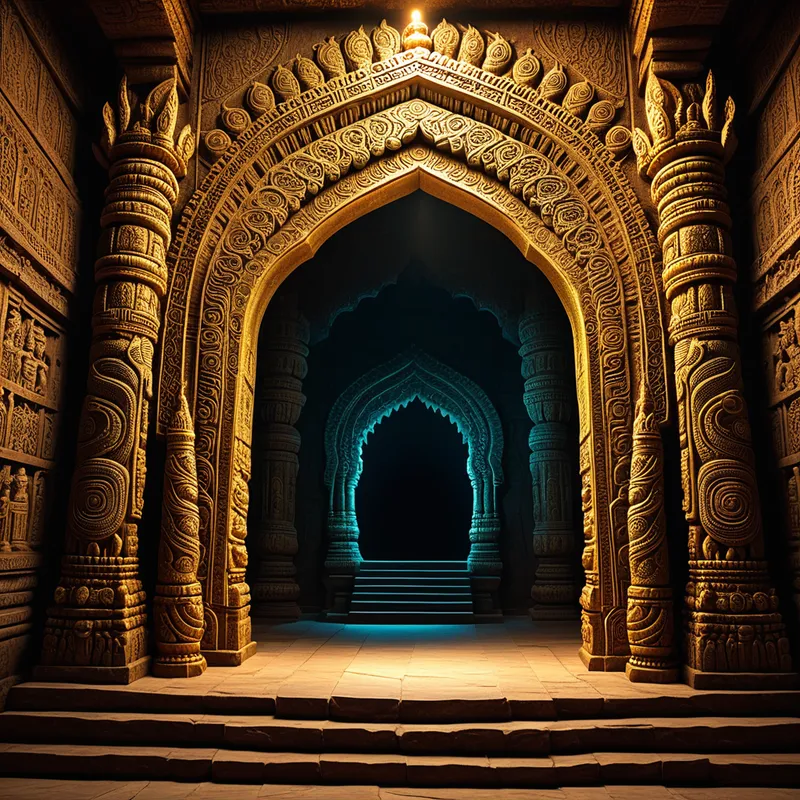
Listen. Beneath the roots of the Mount Meru, deeper than the darkest soil, beyond the realm where light is a forgotten rumor, lies Patala. It is not one place, but seven. Seven concentric realms of increasing splendor and terror, a churning inversion of heaven. The air is thick with the scent of damp earth, rare perfumes, and the electric tang of primal power.
This is the dominion of the Nagas. Their scales, polished by eons in the dark, shimmer with stolen moonlight. Their jewels are not mined but grown in the heat of the earth’s heart. Here, in the city of Bhogavati, ruled by the Naga king Vasuki, palaces of crystal and gold rise from cavern floors, lit by the cold fire of luminous gems. Demons, the Asuras, dwell here too, licking their wounds from celestial wars, plotting in shadows draped with velvet darkness.
The journey to Patala is never undertaken lightly. It is a passage of desperation or divine mandate. A hero, a sage, or a god must descend. They do not walk but are swallowed—by a cave mouth, a whirlpool, a crack in the world. The descent is a stripping away. The warmth of the sun vanishes. The familiar sounds of life fade, replaced by the drip of water on stone, the hiss of unseen things, the low, tectonic groan of the world settling on its foundations.
They encounter guardians. Serpents with hoods like canopies, their gaze holding the patience of stone. They navigate rivers of molten gold and lakes of illusion. They face the Asuras, beings of immense power and cunning, who test not with brute force alone, but with riddles that echo the seeker’s deepest doubts. The treasure they seek is never mere gold. It is the Amrita, stolen and hidden. It is a lost weapon, a captured goddess, a boon from the lord of the Nagas. The conflict is not a simple battle; it is a negotiation with the very essence of the underworld. To take by force is to be ensnared forever. To approach with respect, with an offering of one’s own pride, is to be granted passage.
And in the deepest layer, Naraka awaits, not as a place of punishment for all, but as the final crucible. Here, the hero meets the ultimate lord of this inverted realm—often a form of Vishnu as Sheshashayi, reclining on the coils of the endless serpent Ananta Shesha, floating on the dark waters of causality. The resolution is a revelation. The seeker understands that the treasure and the guardian, the light and the dark, the surface and the depth, are part of one continuous whole. They return, if they return at all, not just with an object, but with a secret etched into their soul—the knowledge of what lies beneath.

Cultural Origins & Context
The myth of Patala is woven into the vast tapestry of Hindu cosmology found in the Puranas, epics like the Mahabharata and Ramayana, and later tantric literature. It was not a single, standardized story but a resonant cosmological concept passed down by storytellers, priests, and ascetics. Its function was multifaceted. For the society at large, it mapped the unseen world, providing a geography for the afterlife, the abode of powerful beings, and the source of earthly riches like gems and metals. It explained seismic events as the stirring of the serpents below.
For kings and warriors, tales of descent into Patala served as allegories for military campaigns into unknown lands or the quest for hidden wealth. For the religious and philosophical mind, however, Patala held deeper significance. It represented the antithesis and necessary complement to Svarga (heaven). In the holistic Hindu worldview, the universe is a balanced organism. The heavens could not exist without the netherworlds; order (Dharma) is defined against and sustained by its interaction with chaos and potentiality. Patala was the cultural container for all that was potent, hidden, feared, and foundational.
Symbolic Architecture
Psychologically, Patala is the ultimate symbol of the personal and collective unconscious. Its seven layers mirror the hidden strata of the psyche, each holding different contents: repressed memories, instinctual drives (symbolized by the serpents), complexes (the powerful Asuras), and ultimately, the deepest archetypal patterns of the Self.
The descent into the underworld is not an escape from life, but a dive into the source of life. What is hidden in the dark is not merely refuse, but the un-minted gold of the soul.
The Nagas are profound symbols. They represent the primal, instinctual energy of Kundalini—dormant, coiled, and immensely powerful. They are guardians because this raw psychic energy is dangerous if approached without consciousness (hence their venom) but is the very source of vitality and wisdom (hence their jewels). The treasures of Patala—the Amrita, the weapons, the gems—symbolize the latent potentials and transformative insights that can only be retrieved by engaging with the shadow. The hero’s journey is one of encounter and negotiation, not annihilation. One does not slay the serpent of the unconscious; one learns its language and earns its gift.

The Dreamer’s Resonance
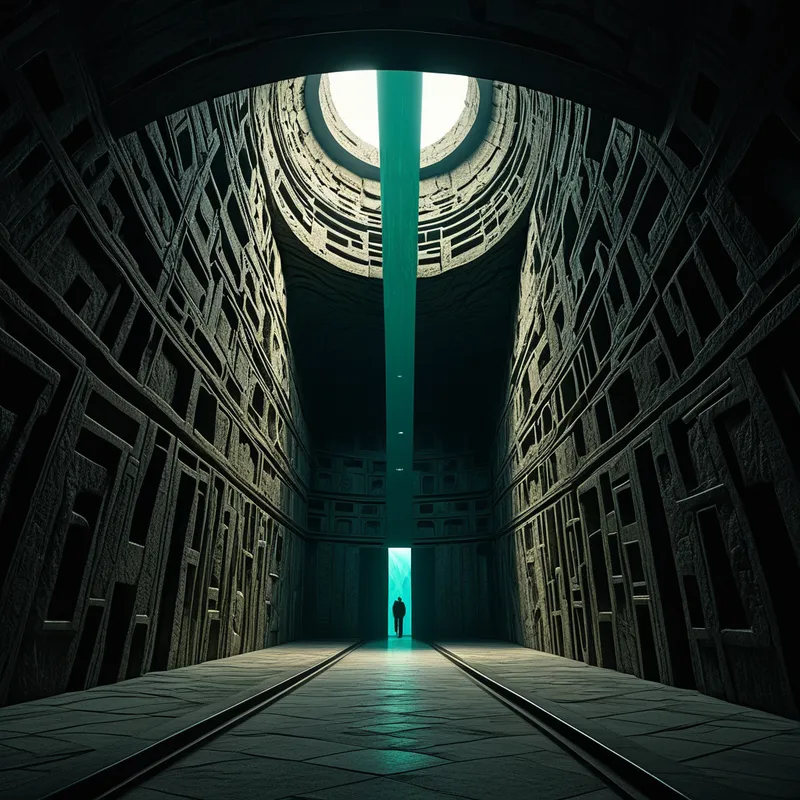
When the pattern of Patala manifests in modern dreams, it signals a powerful process of descent initiated by the psyche. The dreamer may find themselves in basements that descend further than architecturally possible, in subways traveling to unknown depths, or in caves revealing hidden, opulent rooms. The somatic feeling is often one of weight, pressure, and a mix of dread and fascination.
This is the psyche’s call to shadow-work. The “demons” or intimidating figures encountered are personifications of disowned parts of the self: repressed anger, unexpressed creativity, or childhood wounds. The “serpents” may appear as threatening animals or as sinuous, enigmatic guides. The dream is a theater where the ego, the surface-dweller, is compelled to engage with its own underworld. The process is psychological digestion—assimilating the powerful, often unsettling contents that have been buried to maintain a surface-level identity. To dream of Patala is to be in the throes of a necessary disintegration, where old certainties are challenged by truths rising from below.
Alchemical Translation
The myth of Patala models the alchemical stage of Nigredo, the descent into the blackness, which is the essential first step in the process of individuation. For the modern individual, the “hero’s journey” is largely an internal one. Our “Patala” is the sum total of our unconscious conditioning, familial complexes, cultural shadows, and untapped instinct.
The alchemical gold is not found by building taller towers of achievement, but by descending into the forgotten mines of the self. The serpent you fear guards the treasure you need.
The modern seeker must voluntarily undertake this descent through introspection, therapy, creative expression, or confronting life crises. The “negotiation with the Naga king” translates to consciously engaging with our deepest patterns—our anger, our grief, our primal fears—not to be ruled by them, but to understand their origin and claim their energy. The “retrieval of the treasure” is the integration of this shadow material, which transforms it. What was a destructive complex becomes a source of resilience; a repressed emotion becomes a well of compassion or creative fire. To find Vishnu resting on Shesha in the depths is the ultimate realization: that at the core of the personal unconscious lies the transpersonal archetype of the Self, the central, ordering principle that was present all along, waiting in the dark waters to be recognized. The return is the emergence of a more whole, grounded, and authentic individual, one who carries the knowledge of the depths within their daily life on the surface.
Associated Symbols
Explore related symbols from the CaleaDream lexicon: