
Papatuanuku Myth Meaning & Symbolism
The primal myth of the Earth Mother Papatuanuku, whose forced separation from the Sky Father Ranginui creates the world and the space for life.
The Tale of Papatuanuku
In the beginning, there was no light, no wind, no space for life to stir. There was only the profound, eternal embrace of [Ranginui](/myths/ranginui “Myth from Maori culture.”/) and Papatuanuku. He was the sky, a vast, star-studded cloak of darkness. She was the earth, a warm, fertile plain of silent potential. They lay together, face to face, limbs entwined in a love so complete it left no room between them. Their union was the universe, a closed and breathless sphere.
Within that warm, dark womb, their children were conceived. Seventy sons, gods of the forests, the seas, the winds, and the cultivated foods. But these children knew no form, no freedom. They existed in perpetual twilight, pressed between the sweating skin of their father and the nurturing flesh of their mother. They grew in the dark, their thoughts becoming whispers of discontent, their bodies aching for movement, for light, for a world of their own.
The darkness was a weight, a suffocating blanket. Tāne-mahuta, the god of forests, felt the press of it in his sap. Tangaroa, god of the seas, felt it in his tides, which had no space to flow. Rongo-mā-Tāne, god of peace and cultivated foods, hungered for a place to plant. [Haumia-tiketike](/myths/haumia-tiketike “Myth from Maori culture.”/) and [Tūmatauenga](/myths/tmatauenga “Myth from Maori culture.”/) stirred with restless fury. Only Tāwhirimātea, god of winds, clung to the darkness, fearing the chaos light would bring.
A council was held in the whispering dark. “We must part them,” one voice insisted. “We must create Te Ao Mārama,” declared another. One by one, the sons tried. Tangaroa pushed with all the force of the ocean, but the embrace held. Haumia-tiketike tried to root them apart, but found no purchase. Tūmatauenga, in a rage, threatened and screamed, but his violence only made the parents cling tighter in their grief.
Then Tāne-mahuta rose. He did not push against the sky. Instead, he planted his head upon his mother, Papatuanuku, and his feet against his father, Ranginui. With a slow, inexorable groan that echoed through the very bones of creation, he began to stretch. Muscles of ancient wood and sinew of unbreakable vine strained. The air grew taut. The eternal kiss was broken by a sliver, then a crack, then a chasm of blinding, terrifying light.
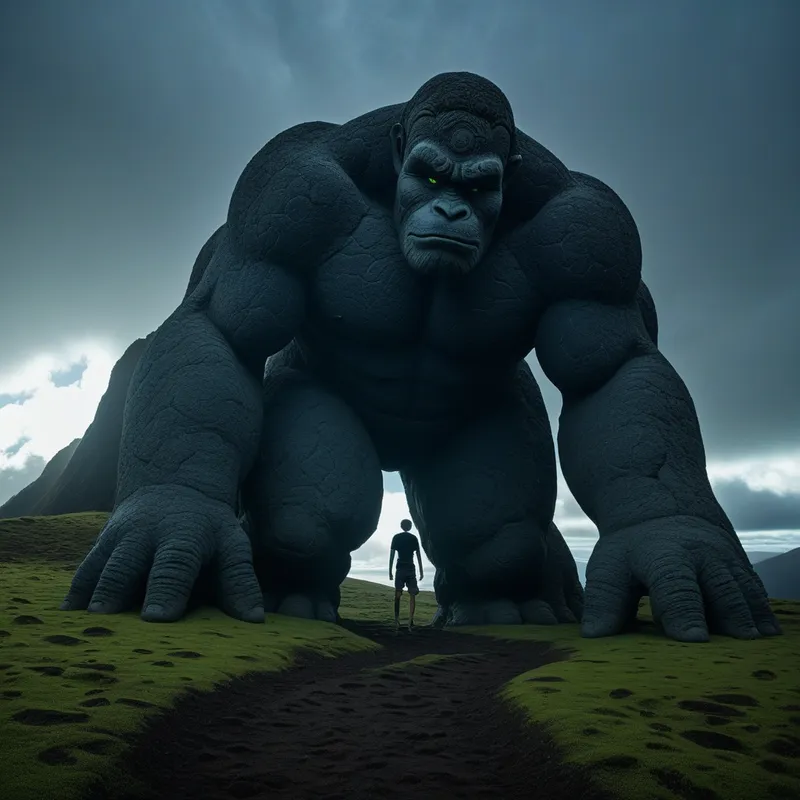
Ranginui was wrenched upwards, crying out in anguish, his tears becoming the first rain. Papatuanuku was left below, her body now a landscape of mountains and valleys, her sighs the mist that rises from the warm ground at dawn. Between them was the world—a realm of light, of air, of distance. The children spilled into it, giving shape to their domains. But the sound that filled this new world was not of celebration, but of a profound, echoing lament. The parents, separated, wept for each other across the vast and lonely gulf. Her grief is the morning dew. His sorrow is the falling rain. Their love is the horizon where they forever almost touch.
Cultural Origins & Context
This cosmogony is the foundational narrative of Māori culture, belonging to the kōrero tuku iho—the stories handed down. It was not mere entertainment but the sacred map of reality, recited by tohunga (priests and scholars) during significant rituals, upon the marae, and in the teaching of the young. Its transmission was oral, precise, and laden with mana and tapu.
The myth served multiple vital functions. It established a cosmological order, explaining the origin of the natural world and humanity’s place within it as descendants of the gods. It encoded an ecological ethic: humans are not masters of the land but children of the Earth Mother, Papatuanuku, and thus owe her profound respect, care, and gratitude—a principle known as kaitiakitanga. It also modeled the painful but necessary processes of life: growth requires separation, creation is born from disruption, and profound love can manifest as eternal, aching distance.
Symbolic Architecture
The myth is a profound [allegory](/symbols/allegory “Symbol: A narrative device where characters, events, or settings represent abstract ideas or moral qualities, conveying deeper meanings through symbolic storytelling.”/) for the [birth](/symbols/birth “Symbol: Birth symbolizes new beginnings, transformation, and the potential for growth and development.”/) of [consciousness](/symbols/consciousness “Symbol: Consciousness represents the state of awareness and perception, encompassing thoughts, feelings, and experiences.”/) from the unconscious. Papatuanuku and Ranginui represent the primal, undifferentiated unity—the unconscious [matrix](/symbols/matrix “Symbol: A dream symbol representing the fundamental structure of reality, consciousness, or the self. It often signifies feelings of being trapped, controlled, or questioning the nature of existence.”/) where all potentials exist but nothing is distinct. Their embrace is the state of psychic oneness, of being embedded in [nature](/symbols/nature “Symbol: Nature symbolizes growth, connectivity, and the primal forces of existence.”/), instinct, and the maternal/paternal [source](/symbols/source “Symbol: The origin point of something, often representing beginnings, nourishment, or the fundamental cause behind phenomena.”/).
The first act of consciousness is not to understand, but to separate. It is a violent, loving, and necessary crime against the primal unity.
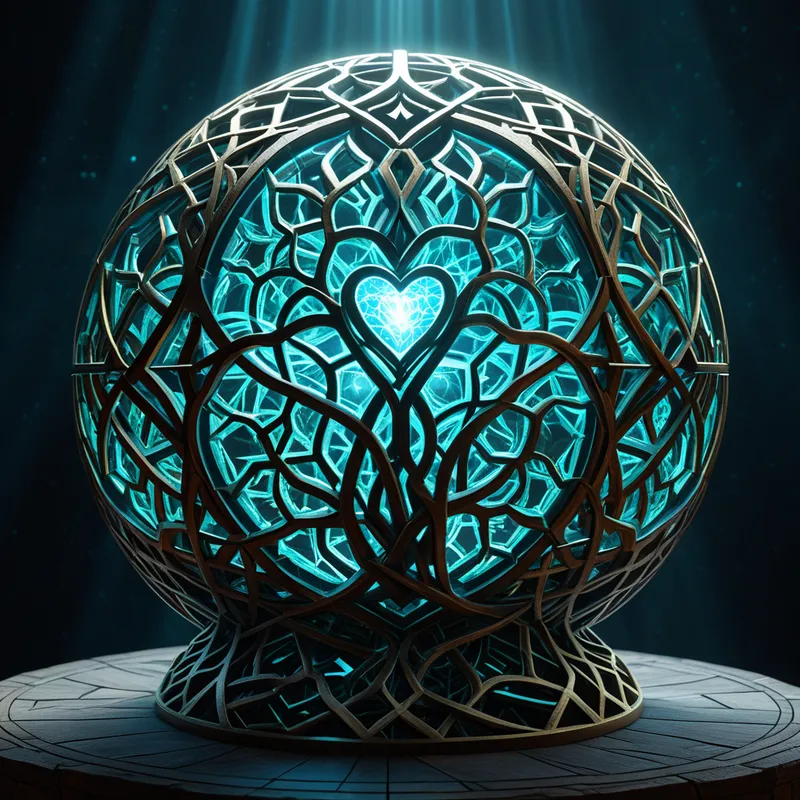
The children are the nascent faculties of the emerging psyche: thought (Tāne), [emotion](/symbols/emotion “Symbol: Emotion symbolizes our inner feelings and responses to experiences, often guiding our actions and choices.”/) (Tangaroa), nourishment (Rongo), aggression (Tū), and the ambivalent force of change (Tāwhiri). Their suffering in the dark is the pressure of unlived [life](/symbols/life “Symbol: The symbol of ‘Life’ represents a journey of growth, interconnectedness, and existential meaning, encompassing both the joys and challenges that define human experience.”/), of potentials demanding actualization. Tāne-mahuta’s [action](/symbols/action “Symbol: Action in dreams represents the drive for agency, motivation, and the ability to take control of situations in waking life.”/) is the archetypal act of ego-consciousness rising, using the [tension](/symbols/tension “Symbol: A state of mental or emotional strain, often manifesting physically as tightness, pressure, or unease, signaling unresolved conflict or anticipation.”/) of opposites ([earth](/symbols/earth “Symbol: The symbol of Earth often represents grounding, stability, and the physical realm, embodying a connection to nature and the innate support it provides.”/) and sky) to create the psychic [space](/symbols/space “Symbol: Dreaming of ‘Space’ often symbolizes the vastness of potential, personal freedom, or feelings of isolation and exploration in one’s life.”/)—Te Ao Mārama—where differentiated [life](/symbols/life “Symbol: The symbol of ‘Life’ represents a journey of growth, interconnectedness, and existential meaning, encompassing both the joys and challenges that define human experience.”/) and experience become possible. The parents’ [grief](/symbols/grief “Symbol: A profound emotional response to loss, often manifesting as deep sorrow, yearning, and a sense of emptiness.”/) symbolizes the eternal longing of the conscious mind for the lost unity of the unconscious, and the unconscious’s yearning for the consciousness that has departed from it.
The Dreamer’s Resonance
When this myth patterns a modern dream, it speaks to a fundamental process of psychic differentiation. To dream of being trapped in a dark, enclosed, yet comforting space may reflect a clinging to a psychological womb—a relationship, an identity, a state of dependency that is safe but stifling growth. The dreamer may feel the “pressure of potential” as anxiety, claustrophobia, or a deep, nameless yearning.
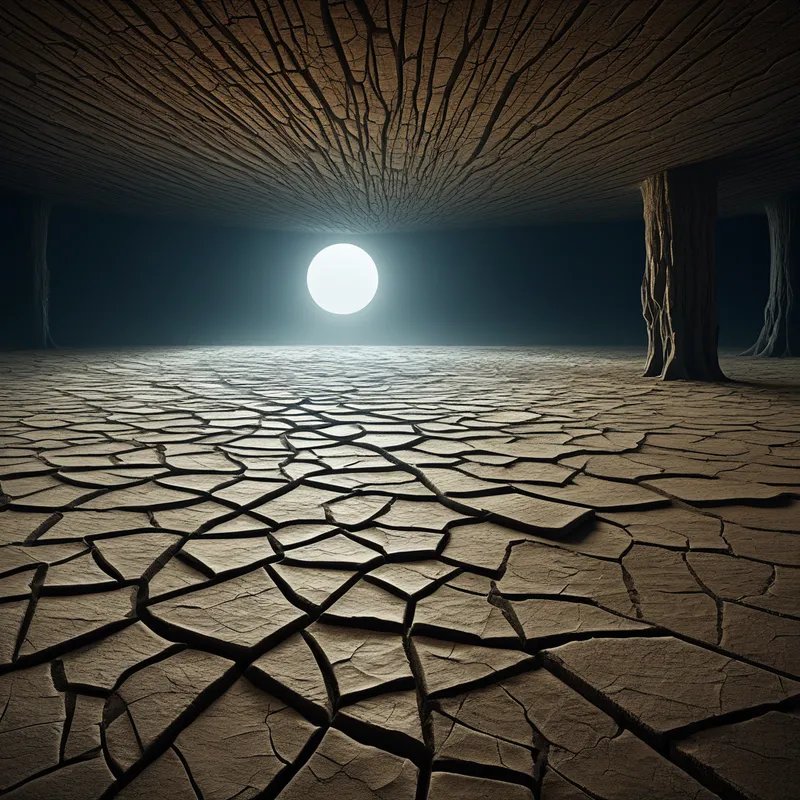
Dreams of a great separation—a ceiling tearing away, a floor falling out, a rift opening in a relationship—can be terrifying but are often symbolic of this necessary individuation step. The somatic experience might be one of sudden, dizzying space, of cold air on skin that was never exposed, mirroring the shock of the gods entering the light. The subsequent grief in the dream, perhaps represented by endless rain or a landscape that feels abandoned, is not pathology but the psyche acknowledging the real cost of growth: the loss of an old, encompassing unity to gain a new, independent self.
Alchemical Translation
The alchemical journey of individuation begins in the massa confusa, the chaotic unity, represented by the embrace of Ranginui and Papatuanuku. The process requires the separatio, the crucial and painful separation of opposites. For the modern individual, this is the differentiation of the ego from the parental complexes, of conscious values from inherited beliefs, of one’s own identity from the collective.
Individuation is not achieved by fleeing the earth or conquering the sky, but by learning to stand in the world their separation created, holding the tension of their eternal pull.
Tāne-mahuta models the correct attitude: his force is applied not in rage or desperation, but with rooted strength and upward striving. He is the archetype of the mediating principle, the “world pillar” that allows space for the transcendent function to emerge. The goal is not to vanquish the unconscious (the Earth) or to escape it entirely for pure spirit (the Sky), but to create a livable, conscious existence in the space between—to honor both the grounding, nurturing reality of Papatuanuku (the body, nature, the instinctual) and the ordering, aspirational reality of Ranginui (the mind, spirit, the ideal).
The enduring grief of the parents teaches that wholeness is not a return to undifferentiated bliss, but a conscious relationship with the split. The individuated person carries the memory of the unity and the reality of the separation, finding meaning in the creative tension of the distance itself. They learn to see the rain not just as weather, but as a love letter; to feel the ground not just as dirt, but as a living embrace from which they have healthily, necessarily, risen.
Associated Symbols
Explore related symbols from the CaleaDream lexicon:
- Earth — The primal body of Papatuanuku, representing the unconscious, the nourishing matrix, the ground of all being and the source from which consciousness must ultimately rise.
- Sky — The domain of Ranginui, representing the father principle, consciousness, order, and the transcendent realm towards which the differentiated psyche aspires.
- Separation — The central, traumatic, and creative act of the myth, modeling the necessary psychological process of differentiating the self from the parental and collective unconscious.
- Grief — The eternal emotional consequence of separation, signifying the authentic cost of growth and the enduring connection that persists across any divide.
- Mother — The archetypal nurturing, containing, and grounding principle embodied by Papatuanuku, the source from which all life emerges and to which it ultimately returns.
- Forest — The domain of Tāne-mahuta, symbolizing organic growth, the mediating life force that connects earth and sky, and the natural world born from the act of separation.
- Rain — The tears of Ranginui, representing the fertilizing connection between the separated opposites, the ongoing communication between consciousness and the unconscious.
- Root — The connection to Papatuanuku, symbolizing groundedness, ancestry, and the essential link to the instinctual and nourishing depths that must be maintained even after ascent.
- Mountain — The form of the Earth Mother’s body, representing solidity, endurance, and the monumental, enduring presence of the foundational psyche.
- Light — The shocking revelation of Te Ao Mārama, symbolizing consciousness, awareness, and the illuminating but often painful clarity that follows a break from embeddedness.
- Journey — The path of the children from darkness into the world, representing the individuation process itself, a voyage from unconscious unity to conscious, differentiated existence.
- Love — The binding force between Ranginui and Papatuanuku, which persists as longing after separation, symbolizing the ultimate unity that underlies all apparent duality in the psyche.