Pandora's Box- a seal Myth Meaning & Symbolism
A tale of a sealed vessel, divine wrath, and the moment curiosity overcomes obedience, releasing all woes but trapping hope within the human heart.
The Tale of Pandora’s Box- a seal
In the beginning, after the great war of the Titans, the world was young and mankind lived without care. They walked with the gods, knew no sorrow, and their days were long and golden. But then came the trick at Mecone. Prometheus, the fire-bringer, sought to aid his clay creations, and in doing so, he deceived Zeus himself. The lord of the sky, his pride wounded and his law challenged, conceived a punishment not for the Titan, but for all of humanity.
He commanded the divine smith, Hephaestus, to mix earth and water and fashion a being of breathtaking beauty. To this form, each Olympian bestowed a gift. Aphrodite gave grace and desire. Hermes bestowed a cunning mind and a persuasive tongue. Athena clothed her in silvery raiment. They named her Pandora, “the all-gifted.” But her greatest gift, and her ultimate purpose, was her unquenchable curiosity—a divine spark placed in a mortal vessel.
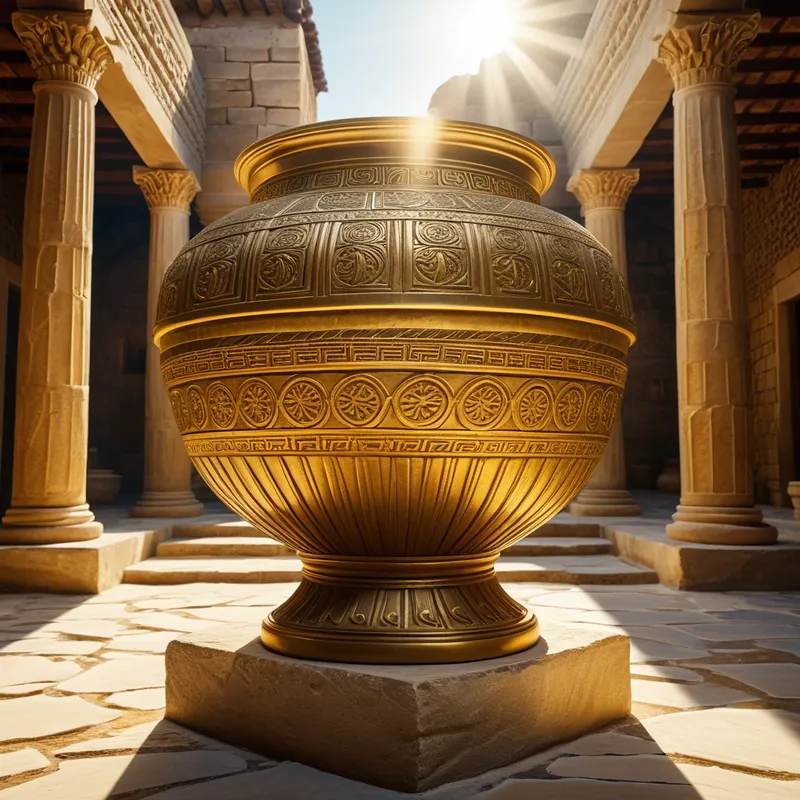
Zeus presented this woman, this beautiful calamity, to Epimetheus, brother of Prometheus. Though warned, Epimetheus was enchanted. He welcomed her, and with her, she brought a dowry from the gods: a large jar, a pithos, of heavy clay, sealed with a great and solemn seal. No one told her what lay within. Only that it was not to be opened. Not ever.
For a time, all was well. But the gift of Hermes whispered in her soul. The silent jar sat in the corner of their home, a presence. It called to her in the quiet hours. What divine treasure was so precious it must be forever hidden? What secret did the gods keep from their new creation? The seal became an obsession, a question etched in clay.
One day, the whisper became a shout. The weight of not-knowing grew heavier than the jar itself. With trembling hands, driven by a force older than reason, she approached. The seal was cool under her fingers. A twist, a crack, and the sacred fastening gave way. She lifted the lid.
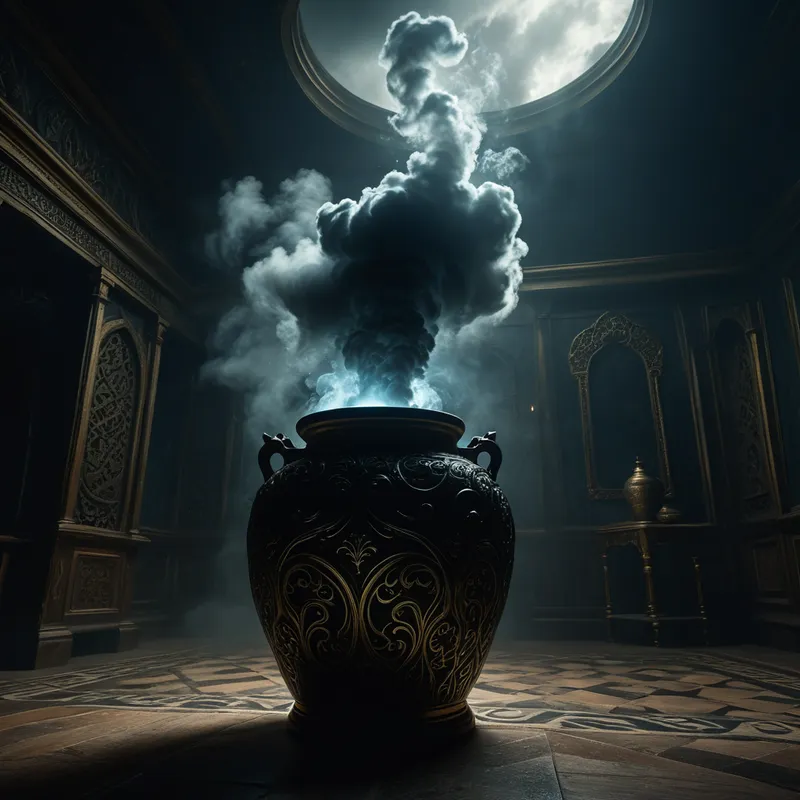
It was not treasure that erupted. It was a shrieking, formless torrent—a black swarm of every misery the divine mind could conceive. Ponos (Toil) and Nosos (Sickness) flew out. Lyssa and Geras followed, with Ker close behind. Grief, Envy, Spite, and Famine—all the unseen spirits of suffering poured forth into the world, filling the air with a bitter chill. They seeped into the hearts of men and the fabric of the earth itself. The golden age was ended in a single, gasping breath.
Terrified, Pandora slammed the lid shut. But it was too late. The evils were abroad, destined to wander among humanity forever. All that remained in the jar, trapped beneath the rim by her quick, desperate action, was a single, fluttering thing: Elpis. And so, the jar sat once more, sealed again, but now holding only that one, last, elusive spirit.
Cultural Origins & Context
The myth of Pandora is one of the foundational aetiological narratives from ancient Greece, primarily preserved in the epic poetry of Hesiod, specifically in his Works and Days (c. 700 BCE). It functions as a divine explanation for the human condition—answering the perennial question of why life is hard, why suffering exists. In Hesiod’s misogynistic context, the story also served as a cautionary tale about the dangers posed by women, presented as a “beautiful evil” crafted by the gods to punish mankind for Prometheus’s transgression.
The vessel itself is crucial. Early Greek sources consistently describe a pithos, a large storage jar for grain or wine, a common household object. The later Renaissance translation into Latin popularized the term “box” (pyxis), which has stuck in the cultural imagination. The “seal” represents divine interdiction, a tangible boundary between the permitted and the forbidden. This myth was not just entertainment; it was a theological and social tool used to explain the origin of evil, justify a patriarchal order, and underscore the importance of obeying divine (and by extension, societal) law.
Symbolic Architecture
At its heart, Pandora’s sealed jar is a symbol of the unconscious itself—a contained universe of latent potentials, both terrible and wonderful. The act of opening it is the irreversible moment of awakening, of gaining knowledge that forever alters one’s state of being.
The sealed vessel is the pristine, unconscious state; to break the seal is to initiate the painful, necessary journey into consciousness.
Pandora represents the human psyche, “all-gifted” with capacities for love, craft, and reason, but also inherently endowed with a curiosity that drives it toward the forbidden, the hidden, the traumatic. She is not merely a passive instrument but the active agent of humanity’s fall into complexity. The released “evils” symbolize the unavoidable psychological burdens of conscious existence: anxiety, grief, conflict, and the awareness of mortality. They are not external punishments, but the intrinsic contents of a examined life.
Most profound is the trapped spirit of Elpis. Is Hope a benevolent comfort, left to sustain us? Or is it the final, cruelest evil—a deceptive expectation that keeps humanity striving in a world of suffering? The myth wisely leaves this ambiguous. Hope remains in the jar, suggesting it is not a force freely available in the world, but something contained, internal, and accessed only with intention. It is the psychic resource that remains after catastrophe.

The Dreamer’s Resonance
When this myth pattern erupts in the modern dreamscape, it signals a profound confrontation with forbidden knowledge or a repressed complex. Dreaming of a sealed box, vault, or room one feels compelled to open speaks to a psyche on the brink of revelation. The somatic feeling is one of intense anticipation mixed with dread—a tightness in the chest, a literal holding of breath.
This is the dream of the therapy session about to uncover a core memory, of the individual about to confront a long-avoided truth about their identity, relationships, or past trauma. The “evils” that fly out are the raw, chaotic emotions—the shame, rage, or grief—that have been carefully bottled up. The dreamer is Pandora in that moment: both the cause of the release and its first, overwhelmed witness. The psychological process is one of deintegration—the necessary breaking apart of a too-rigid psychic structure to allow for new, albeit painful, awareness.

Alchemical Translation
The alchemical journey mirrored in this myth is the Nigredo, the essential first step of dissolution. One cannot transmute lead into gold without first reducing it to a black, chaotic prima materia. Pandora’s action is that necessary, catastrophic first step in individuation. The obedient, naive persona (the sealed state) must be shattered for the true, complex self to begin to form.
The hope trapped under the lid is the Scintilla, the indestructible core of the Self that survives all psychic turmoil.
The modern individual undertaking this alchemy is not avoiding the opening of their own jar, but consciously choosing to break the seal. In therapy, shadow work, or deep introspection, we deliberately invite the “evils”—our repressed fears, wounds, and destructive patterns—into the light of consciousness. This is a terrifying, chaotic release. Yet, the myth instructs us that this is not the end. After the swarm dissipates, we must learn to return to the jar, not to close it forever (which is impossible), but to access what remains inside: Elpis. This is the transformed hope, no longer naive expectation, but the resilient, grounded capacity to endure, to find meaning, and to continue the work of integration. Our suffering, once named and faced, becomes the prima materia from which a more conscious, compassionate, and whole existence is forged. The seal, once broken, cannot be restored; but the vessel itself becomes a sacred repository for the one gift that makes the journey endurable.
Associated Symbols
Explore related symbols from the CaleaDream lexicon: