Osiris's Regeneration Myth Meaning & Symbolism
A murdered god is scattered across the land, then lovingly reassembled to become the eternal king of the underworld and the promise of life renewed.
The Tale of Osiris’s Regeneration
In the time when gods walked the black soil of Kemet, a shadow fell across the Two Lands. It began with a feast. [Osiris](/myths/osiris “Myth from Global/Universal culture.”/), the Green God, whose laughter made the barley grow, had returned from his travels. His palace shimmered with light and music. But in a dark corner of the hall, his brother Set watched, his heart a knot of envy and scorching sand.
Set had crafted a deception, a beautiful chest of cedar and ebony, inlaid with ivory. “He who fits this chest perfectly,” Set declared, his voice like dry wind, “shall have it as a gift.” One by one, the guests tried and failed. Then Osiris, trusting, lay down within it. The moment his body touched the wood, Set’s seventy-two conspirators sprang forward. The lid slammed shut. They sealed it with molten lead. The laughter died. The heavy chest was carried to the Nile and cast into the dark, churning waters. The Green God was gone, drowned in his own life-giving river.
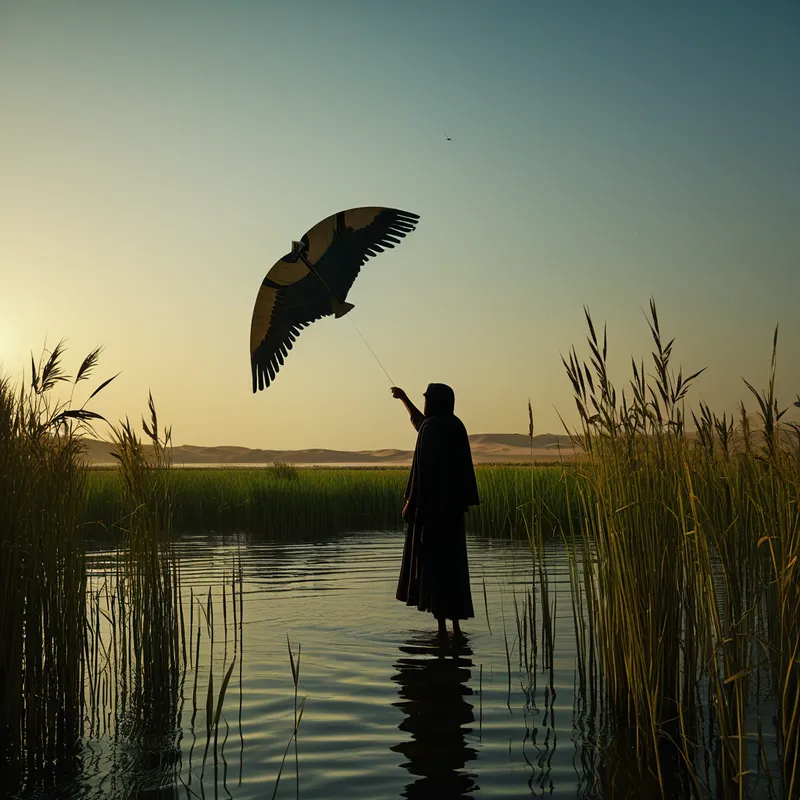
The chest sailed north on the current, finally coming to rest in the marshes of the Delta, entangled in the roots of a mighty tamarisk tree. The tree grew, enveloping the coffin within its trunk, becoming a living tomb. Far away, Isis felt the severing. A cry tore from her, a sound that stilled birds in flight. She cut her hair, donned mourning robes, and began her search, a journey of relentless love. She questioned every reed, every wave, until she found the great tree, now a pillar in a foreign king’s hall. With cunning and magic, she retrieved the chest and hid it in the deep marshes to mourn and work her rites of revival.
But Set, hunting by the light of a full moon, found it. His rage was a desert storm. He tore open the chest, and before the horrified eyes of the night, he dismembered his brother’s body. Fourteen pieces. He scattered them to the far corners of the land, each piece buried in sand or thrown to crocodiles, so that no tomb could ever hold the whole.
Isis’s grief now became a quest of impossible scale. With her sister [Nephthys](/myths/nephthys “Myth from Egyptian culture.”/), and the jackal-headed Anubis, she traversed the entire kingdom. For every piece she found—a thigh in the north, an arm in the south—she built a shrine. She used her potent magic, the heka that moves the universe, to reconstitute each part. All were found save one, the phallus, consumed by the Nile’s oxyrhynchus fish. From gold and wax, she fashioned a replacement, and with her sister, fanned the breath of life back into the reassembled form.
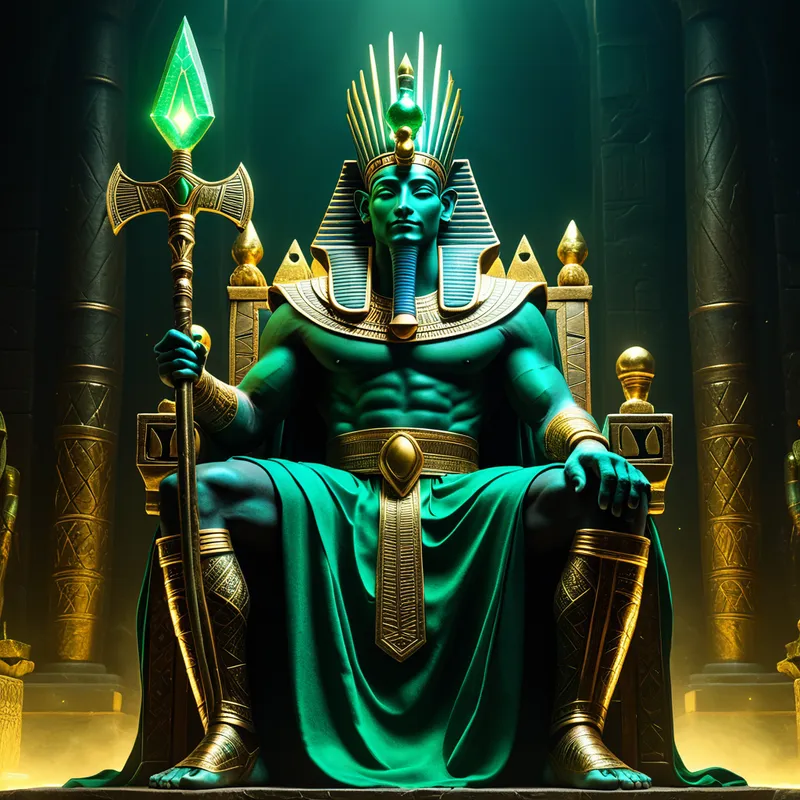
In the hidden darkness of the marsh, the reconstituted Osiris awoke. Not to the sunlit world of the living, but to a deeper, more enduring reality. His transformation was complete. He would not rule the land of the living again. Instead, he rose as the King of the Beautiful West, the Lord of the Silent Land, the judge of souls and the promise of life everlasting. From his union with Isis in that liminal space was conceived [Horus](/myths/horus “Myth from Egyptian culture.”/), the avenger, who would one day challenge Set and reclaim the earthly throne. Osiris, once broken and scattered, was now whole and eternal, the very bedrock of the afterlife.
Cultural Origins & Context
This was not merely a story told for entertainment; it was the central nervous system of Egyptian civilization for millennia. The myth of Osiris is first coherently recorded in the [Pyramid Texts](/myths/pyramid-texts “Myth from Egyptian culture.”/) of the Old Kingdom (c. 2400-2300 BCE), carved into the very stone of royal tombs, and evolved through the Coffin Texts and the Book of Coming Forth by Day. It was performed annually in great mystery plays at cult centers like Abydos, where the public could participate in the god’s passion, death, and triumphant vindication.
The myth served multiple, intertwined societal functions. It was the foundational narrative for the institution of kingship: every [Pharaoh](/myths/pharaoh “Myth from Egyptian culture.”/) was the living Horus, and upon death, became Osiris, ensuring the continuity of cosmic order (Maat). For the common person, it offered a democratized hope of resurrection. Through identification with Osiris—via funerary rites, amulets, and spells—any individual could aspire to overcome death. The myth explained the central mystery of life: the annual death and rebirth of vegetation (Osiris as the grain), and the daily journey of the sun. It was a sacred map for the soul’s journey, making the terrifying unknown of death a patterned, navigable process with a divine precedent.
Symbolic Architecture
At its core, the myth is a profound [allegory](/symbols/allegory “Symbol: A narrative device where characters, events, or settings represent abstract ideas or moral qualities, conveying deeper meanings through symbolic storytelling.”/) for the [disintegration](/symbols/disintegration “Symbol: A symbol of breakdown, loss of form, or fragmentation, often reflecting anxiety about personal identity, control, or stability.”/) and reintegration of [the self](/myths/the-self “Myth from Jungian culture.”/). Osiris represents [the principle](/symbols/the-principle “Symbol: A fundamental truth, law, or doctrine that serves as a foundation for a system of belief, behavior, or reasoning, often representing moral or ethical standards.”/) of organized, fertile [consciousness](/symbols/consciousness “Symbol: Consciousness represents the state of awareness and perception, encompassing thoughts, feelings, and experiences.”/)—[the ego](/myths/the-ego “Myth from Jungian culture.”/), the established order, the known self. Set is the necessary, destructive force of [chaos](/symbols/chaos “Symbol: In Arts & Music, chaos represents raw creative potential, uncontrolled expression, and the breakdown of order to forge new artistic forms.”/), the [shadow](/symbols/shadow “Symbol: The ‘shadow’ embodies the unconscious, repressed aspects of the self and often represents fears or hidden emotions.”/), the unconscious that shatters our comfortable wholeness.
The coffin is the first tomb of the ego, the rigid structure of identity that becomes a prison. Dismemberment is the utter dissolution of that identity.
Isis is the active, seeking consciousness—the power of love, [memory](/symbols/memory “Symbol: Memory symbolizes the past, lessons learned, and the narratives we construct about our identities.”/), and relentless [attention](/symbols/attention “Symbol: Attention in dreams signifies focus, awareness, and the priorities in one’s life, often indicating where the dreamer’s energy is invested.”/) (heka) that can gather the scattered pieces of a shattered [psyche](/myths/psyche “Myth from Greek culture.”/). Her search is the work of therapy, of introspection, of piecing together a [life](/symbols/life “Symbol: The symbol of ‘Life’ represents a journey of growth, interconnectedness, and existential meaning, encompassing both the joys and challenges that define human experience.”/) [story](/symbols/story “Symbol: The symbol of ‘Story’ represents the narrative woven through our lives, embodying experiences, lessons, and emotions that shape our identities.”/) from fragments of [trauma](/symbols/trauma “Symbol: A deeply distressing or disturbing experience that overwhelms the psyche, often manifesting in dreams as unresolved emotional wounds or psychological injury.”/) and [memory](/symbols/memory “Symbol: Memory symbolizes the past, lessons learned, and the narratives we construct about our identities.”/). Anubis, the embalmer, represents the sacred container—the [ritual](/symbols/ritual “Symbol: Rituals signify structured, meaningful actions carried out regularly, reflecting cultural beliefs and emotional needs.”/), the therapeutic frame—that holds and preserves the pieces during this painful work.
The final, missing [piece](/symbols/piece “Symbol: A ‘piece’ in dreams often symbolizes a fragment of the self or a situation that requires integration, reflection, or understanding.”/) replaced by gold signifies that [regeneration](/symbols/regeneration “Symbol: The process of renewal, restoration, and growth following damage or depletion, often representing emotional healing, transformation, or a fresh start.”/) is not a return to a pristine, original state. It is a new creation. Something is lost forever, and in its place, a sacred, crafted [artifact](/symbols/artifact “Symbol: An object from the past carrying historical, cultural, or personal significance, often representing legacy, memory, or hidden knowledge.”/) of meaning must be installed. The resurrected Osiris does not return to his old [kingdom](/symbols/kingdom “Symbol: A kingdom symbolizes authority, belonging, and a sense of identity within a larger context or community.”/) but assumes a new, greater sovereignty in the [underworld](/symbols/underworld “Symbol: A symbolic journey into the unconscious, representing exploration of hidden aspects of self, transformation, or confronting repressed material.”/). He becomes the [Lord](/symbols/lord “Symbol: The symbol of ‘Lord’ represents authority, mastery, and control, along with associated power dynamics in relationships.”/) of the [Depths](/symbols/depths “Symbol: Represents the subconscious, hidden emotions, or foundational aspects of the self, often linked to primal fears or profound truths.”/), integrating [the shadow](/myths/the-shadow “Myth from Jungian culture.”/) (Set’s [realm](/symbols/realm “Symbol: The symbol of ‘Realm’ often signifies the boundaries of one’s consciousness, experiences, or emotional states, suggesting aspects of reality that are either explored or ignored.”/)) into his new [kingdom](/symbols/kingdom “Symbol: A kingdom symbolizes authority, belonging, and a sense of identity within a larger context or community.”/).
The Dreamer’s Resonance
When this myth stirs in the modern unconscious, it often manifests in dreams of profound fragmentation or searching. You may dream of losing vital body parts, of a house crumbling into separate rooms, or of searching through a vast, confusing landscape for a lost, precious object. These are not literal prophecies but somatic metaphors for a psychological state.
The feeling is one of disintegration—after a betrayal, a profound loss, a failure, or an identity crisis. The conscious, organizing principle (the Osiris-self) has been attacked and shattered by an uncontrollable force (the Set-event). The dreamer is in the Isis-phase: a period of necessary, often grief-stricken, gathering. This is the slow, painstaking work of acknowledging and reclaiming the disowned parts of oneself: the anger buried, the vulnerability denied, the creativity locked away. The dream may offer images of reassembly, of finding a lost piece in an unexpected place, or of a guiding figure (the Anubis-principle) providing a safe, ritualized space for this work.
Alchemical Translation
For the individual, the Osirian journey is the alchemy of individuation. It is the process by which the provisional, socially-constructed personality (the ruling king) must be sacrificed, allowed to be trapped and drowned by the unconscious (the Nile, the coffin). The ego’s grand plans are dissolved.
The leaden seal on the coffin is the weight of depression and stagnation that follows a great defeat, which paradoxically creates the hermetic vessel for transformation.
The dismemberment by Set is the painful but necessary deconstruction of complexes, the breaking apart of rigid attitudes and identifications that no longer serve life. This is the [nigredo](/myths/nigredo “Myth from Alchemical culture.”/), the blackening, the darkest night of the soul.
The work of Isis is the albedo, the whitening. It is the conscious, loving attention we must bring to our own brokenness. It is the act of journaling, of therapy, of honest conversation—gathering the stories of our wounds and honoring them. Creating the golden replacement is the [rubedo](/myths/rubedo “Myth from Alchemical culture.”/), the reddening. It is the creation of new meaning, new purpose, and a new center of gravity from the raw material of our experience. We do not get our old innocence back; we forge a hard-won wisdom in its place.
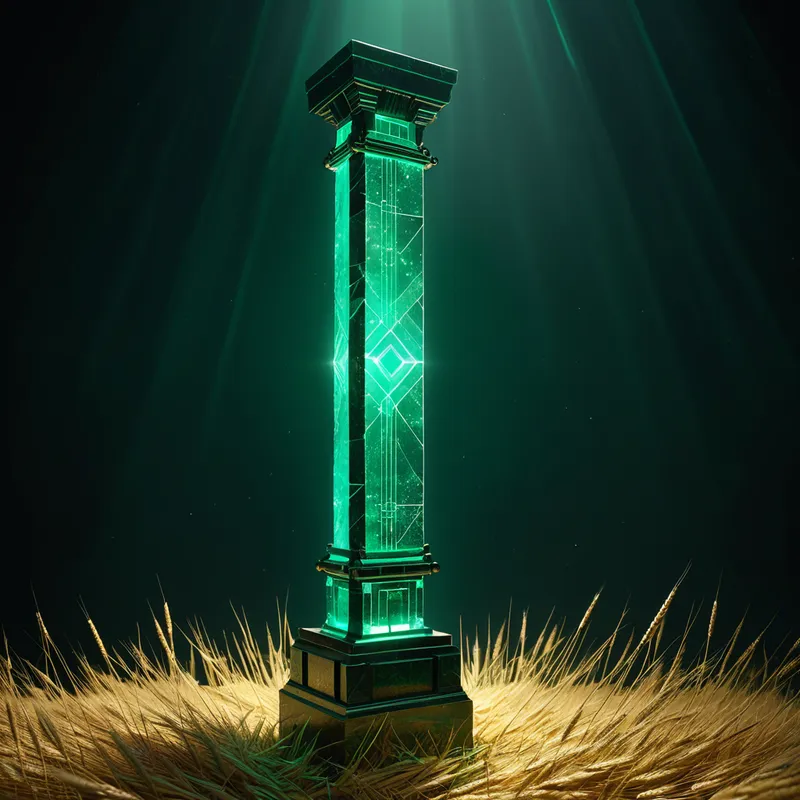
The regenerated Osiris is the Self, in Jungian terms—the total, integrated psyche that includes both the light of consciousness and the dark riches of [the underworld](/myths/the-underworld “Myth from Greek culture.”/). He rules from the depths, not the heights. To complete this alchemy is to move from being a victim of chaos (Osiris in the chest) to becoming the sovereign of one’s own inner landscape (Osiris on the throne of [the Duat](/myths/the-duat “Myth from Egyptian culture.”/)). We become, like him, a stable djed-pillar around which the wheat of new life can grow, offering the promise that from every scattering, a deeper, more enduring wholeness can be born.
Associated Symbols
Explore related symbols from the CaleaDream lexicon: