
Original Sin Myth Meaning & Symbolism
A foundational story of humanity's fall from divine grace through an act of forbidden knowledge, establishing a legacy of separation and mortality.
The Tale of Original Sin
In the beginning, before time was counted, there was a garden. Not a garden as we know it, but a place of pure resonance, where every leaf vibrated with the breath of its maker. Here, in the heart of Eden, the first humans walked. They were called Adam and Eve, and they were naked, not with shame, but with the unselfconscious glory of newborn things. They knew the names of all creatures, for the naming was a act of communion, not domination.
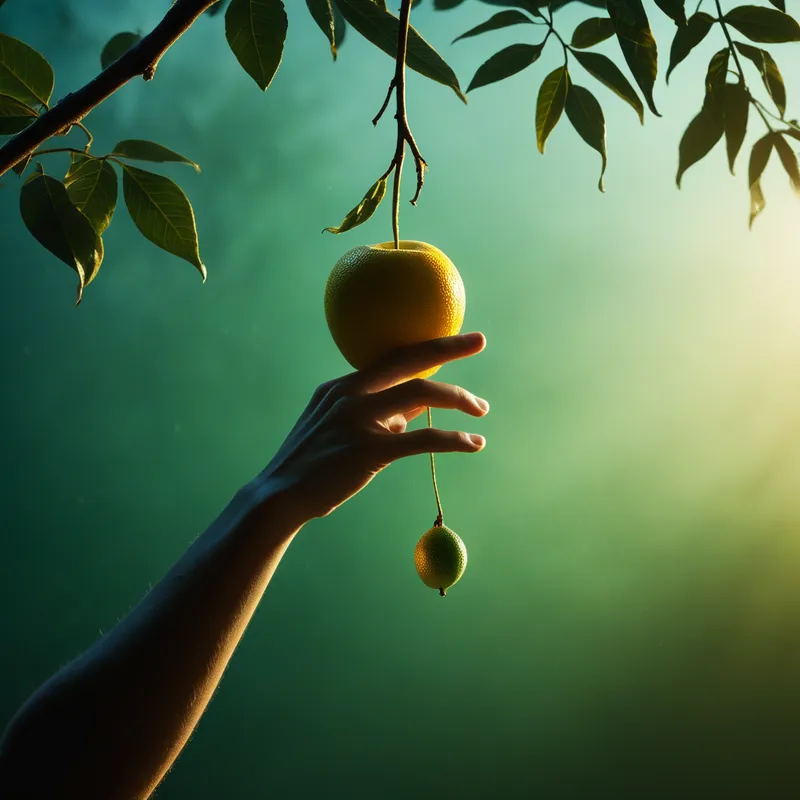
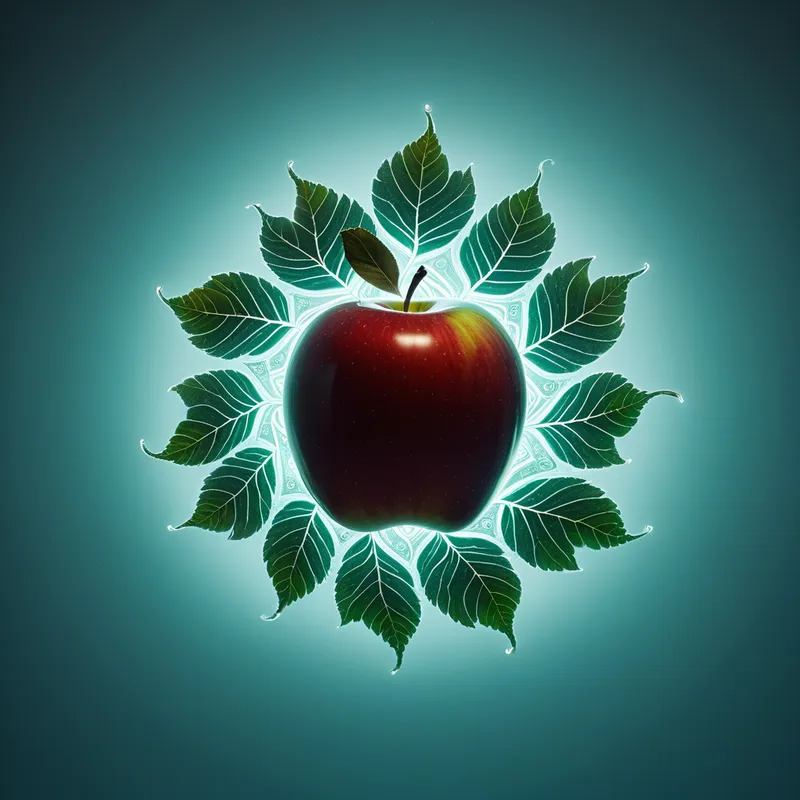
At the center of this shimmering world stood two trees. One was the Tree of Life, its branches heavy with fruit that pulsed like a slow, golden heart. The other was the Tree of the Knowledge of Good and Evil. Its fruit was different—a deep, unsettling crimson, veined with silver, and it hummed with a silent, potent energy. A single command echoed in the garden's stillness: "You may eat freely of every tree, but of this tree you shall not eat, for on the day you eat of it, you shall surely die."
The serpent was there, more cunning than any beast. It did not slither with menace, but moved with a liquid, persuasive grace. It found Eve by the forbidden tree, her eyes reflecting its strange fruit. "Has God truly said you shall not eat of any tree?" it whispered, its voice the sound of wind through dry reeds.
Eve, her innocence a clear pool, replied, "We may eat of the fruit of the trees, but of the fruit of this tree, God said, 'You shall not eat of it, neither shall you touch it, lest you die.'"
The serpent coiled upon a root, its scales catching the dappled light. "You will not surely die," it murmured. "For God knows that on the day you eat of it, your eyes will be opened, and you will be like gods, knowing good and evil."
The words hung in the air, a seed taking root. To be like gods. To know. Eve looked at the fruit—not as forbidden, but as a vessel of a terrible, magnificent promise. She reached out. The skin was cool and firm. She plucked it. The sound was a tiny fracture in the silence of the world. She ate, and the taste was not sweet, but immense—a flood of sharp clarity. She gave some to Adam, who was with her. He ate.
And then, the world changed. The light did not dim, but their perception of it did. They saw their own bodies, and for the first time, they saw otherness. They saw nakedness, and they felt shame. They scrambled for fig leaves, their hands fumbling, sewing together a crude veil between themselves and the world. When they heard the sound of YHWH walking in the garden in the cool of the day, they hid among the trees, their hearts a drumbeat of fear.
"Where are you?" the voice called, not with anger, but with a sorrow already ancient.
Adam's voice trembled from the shadows. "I heard your voice in the garden, and I was afraid, because I was naked, and I hid."
"Who told you that you were naked? Have you eaten of the tree of which I commanded you not to eat?"
The blame began to flow, a bitter river. "The woman you gave to be with me—she gave me fruit from the tree, and I ate." Eve, in turn, pointed to the serpent. "The serpent deceived me, and I ate."
Then came the pronouncements, not as thunderous curses, but as the inevitable consequences of a law of nature now set in motion. The serpent was condemned to crawl on its belly. For Eve, pain in childbirth and a dynamic of desire and domination with her husband. For Adam, the ground itself would resist him; he would toil by the sweat of his brow until he returned to the dust from which he was taken.
And finally, an act of fearful mercy: "Behold, the man has become like one of us, knowing good and evil. Now, lest he reach out his hand and take also of the tree of life, and eat, and live forever..." So YHWH sent them out from the garden of Eden. East of the garden, cherubim were placed, and a flaming sword that turned every way, to guard the way to the tree of life. The first exile had begun.
Cultural Origins & Context
This foundational narrative is found in the book of Genesis, chapters 2 and 3. Its origins are layered, drawing from the oral traditions of ancient Israel and likely reflecting broader ANE motifs about primordial humans, divine gardens, and serpents. It was not originally called "Original Sin"; that theological formulation was developed centuries later, most notably by Augustine of Hippo in the 4th-5th centuries CE.
For ancient Israel, the story functioned as an etiology—an explanation for why the world is as it is: why humans labor, why childbirth is painful, why we wear clothes, why we die, and why we experience a fundamental separation from the divine and the natural world. It was a story told to make sense of human suffering and moral complexity. It established a paradigm of covenant and consequence, setting the stage for the entire salvation history that follows in the biblical text. The myth was preserved, studied, and interpreted by priests, scribes, and later by rabbis and church fathers, becoming the bedrock of Western anthropology.
Symbolic Architecture
The myth is a profound map of the birth of human consciousness. The Garden of Eden represents the unconscious, paradisiacal state of infancy—a world of undifferentiated unity with the parent (the divine), where needs are met without asking, and there is no knowledge of self as separate.
The fruit is not evil; it is the fruit of knowledge. The fall is not into depravity, but into awareness.
The Tree of Knowledge symbolizes the dawn of ego-consciousness, the capacity for moral discrimination, and the painful gift of self-reflection. To eat is to choose consciousness over unconscious bliss, independence over symbiotic unity. The serpent is a complex symbol: not the devil of later theology, but an embodiment of instinct, cunning, and the transformative impulse itself—the very force that pushes life out of stasis and into evolution.
The immediate consequences—shame, blame, and hiding—are the inevitable shadows of consciousness: the birth of the persona (the fig leaves), the projection of shadow (the blaming of the other), and the experience of alienation. Exile from the garden is the human condition: we can never return to the unconscious paradise once we have tasted the knowledge of our own separated, mortal nature.
The Dreamer's Resonance
When this myth activates in the modern psyche, it often manifests in dreams of profound transition or painful awakening. One might dream of being in a beautiful, safe place that suddenly becomes threatening or from which they are expelled. Dreaming of eating a strange, potent food or drink and feeling a sudden, irreversible change in perception is a direct resonance. Dreams of being naked in public and feeling overwhelming shame point to the exposure of a vulnerable, authentic self before the judging "eyes" of the world (the superego or collective norms).
Somatically, this can feel like a rift, a tear in the fabric of one's being—a deep anxiety that accompanies major life choices that separate one from family, tradition, or a previous, simpler identity. It is the psychological process of individuation in its most primal, painful stage: leaving the collective "garden" of inherited beliefs and unquestioned norms to establish one's own moral and existential authority, with all the loneliness and responsibility that entails.

Alchemical Translation
The alchemical journey modeled here is the nigredo, the blackening—the necessary first stage of dissolution and despair that precedes transformation. The pristine, unified materia prima (the innocent couple in the garden) must be "spoiled" by the introduction of a contrasting principle (the serpent's whisper, the act of eating) to begin the work.
The exile is not the end of the story, but the beginning of the soul's true journey. Paradise is not lost, but transformed from a place of residence into a guiding memory, a north star for the conscious quest.
The modern individual undergoing this "fall" is not being punished, but is being initiated into full humanity. The "sin" is reframed as the necessary, if traumatic, act of separation that allows for a conscious relationship with the divine, rather than an unconscious absorption within it. The flaming sword that bars the return is not merely a punishment; it is a protective boundary ensuring that the individual does not regress into spiritual infantilism. The task of the alchemist (the modern psyche) is not to crawl back to the garden, but to integrate the knowledge gained—the awareness of good and evil, light and shadow—and, through the long labor of life (Adam's toil), to cultivate a conscious, earned wisdom. In this view, Christ's role in later Christian theology becomes the symbol of the one who walks fully conscious into the heart of the fallen condition and transforms it from within, offering a model of how to carry the cross of consciousness without being crushed by it. The goal is not to return to pre-fall innocence, but to achieve a post-fall wisdom, a second naiveté that has passed through the fire of experience.
Associated Symbols
Explore related symbols from the CaleaDream lexicon: