Odin's Mead of Poetry Myth Meaning & Symbolism
Odin endures profound sacrifice to steal the mead of inspiration, transforming blood into poetry and chaos into the ordered power of the word.
The Tale of Odin’s Mead of Poetry
Listen, and hear the tale of how the gift of poetry, the fury of inspiration, and the sweet, terrible mead of the skalds came to be. It begins not with gods, but with a truce gone sour, in the blood-soaked mud between the divine Æsir and the primal Vanir.
To seal their weary peace, the gods spat into a great vat. From that mingled spittle, a being formed: [Kvasir](/myths/kvasir “Myth from Norse culture.”/), the wisest of all. He wandered the worlds, answering every question, a living font of knowledge. But his light drew shadows. Two cunning dwarves, Fjalar and Galar, invited him to a private counsel and there, in the dark of their stone hall, they slew him. They drained his blood into three wondrous vessels—Óðrerir, and the vats Són and Bodn. They mixed the blood with honey, and from this blasphemous brew, a mead was born. Whoever drank of it would become a skald, a scholar, a speaker of truths and weaver of worlds.
[The dwarves](/myths/the-dwarves “Myth from Norse culture.”/)’ deceit spiraled. They drowned a giant, Gilling, and to silence his grieving wife, they crushed her with a millstone. In revenge, the giant’s son, Suttungr, seized [the dwarves](/myths/the-dwarves “Myth from Norse culture.”/) and marooned them on a reef at high tide. To save their lives, they bartered their only treasure: the mead. Suttungr took it, a prize beyond measure, and entrusted it to his daughter, Gunnlöð, deep within the mountain Hnitbjörg. There she sat, the guardian of the liquid word, in a chamber of stone.
Word of this stolen, hoarded wisdom reached the ears of the Allfather. A fire was lit in his single eye. The mead was a power that should flow, not fester in a giant’s vault. So Odin set out, not as a king, but as a wanderer named Bölverk, the Worker of Misfortune. He came to a field where nine thralls toiled, scything hay. With a whetstone from his belt, he sharpened their scythes until they gleamed like lightning. Amazed, the thralls begged for the stone. Odin threw it high into the air, and in their desperate scramble, they cut each other’s throats with their own newly-keen blades.
Presenting himself to the thralls’ master, Baugi, Odin offered to do the work of nine men for one price: a single drink from his brother Suttungr’s mead. Baugi agreed. The work was done, but Suttungr, roaring with suspicion, refused the payment. Undeterred, Odin had Baugi drill into the mountain Hnitbjörg with an auger. When the drill-bit broke through, Odin transformed. He became a serpent, a slick, whispering [thing](/myths/thing “Myth from Norse culture.”/) of scales and purpose, and slithered into the dark, damp borehole.
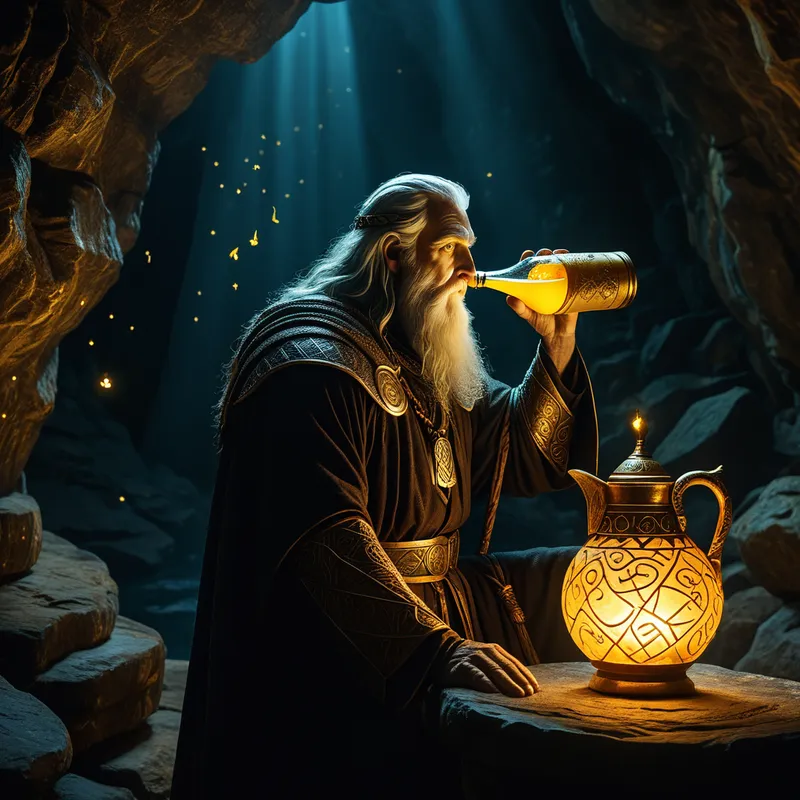
He emerged into the chamber where Gunnlöð kept her lonely vigil. For three nights, the god and the giantess sat together. He spoke not of theft, but of longing; not of power, but of the loneliness of guardianship. He offered not force, but presence. Moved, perhaps by his words, perhaps by a deeper fate, she allowed him to drink. For three draughts he drank, and in three draughts he drained the three vessels—Óðrerir, Són, and Bodn—dry.
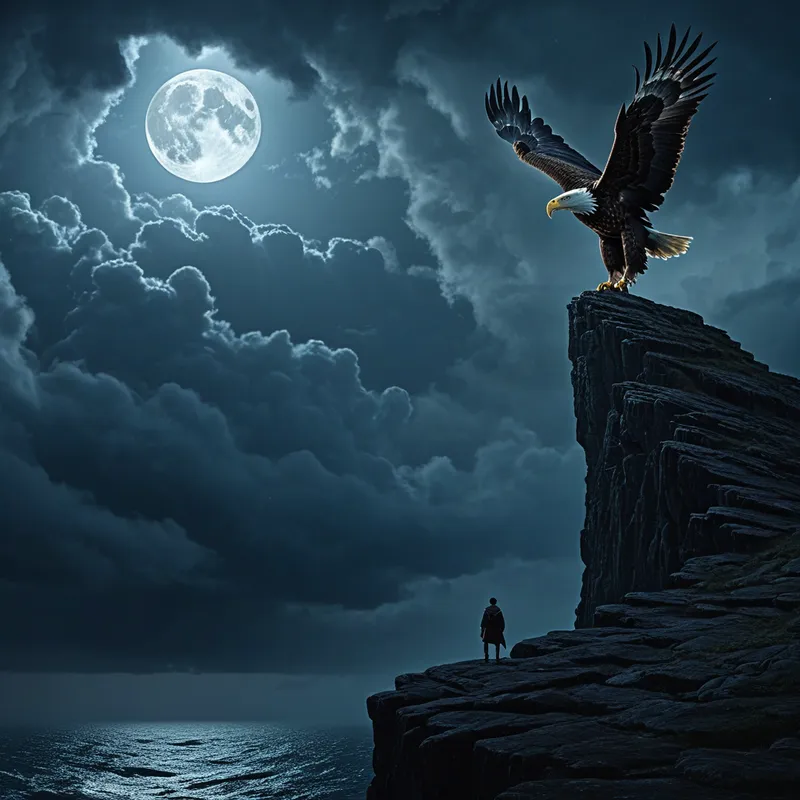
The mead, the stolen blood-wisdom, was now within him. He transformed again, into a mighty eagle, and burst from the mountain, his feathers heavy with the weight of [the world](/myths/the-world “Myth from Tarot culture.”/)’s poetry. Suttungr saw the escape and took his own eagle-form, giving furious chase across [the sky](/myths/the-sky “Myth from Persian culture.”/). The gods, watching from the walls of Ásgarðr, saw the two great birds approaching, one fleeing, one in vengeful pursuit. They rushed out vessels of every kind. As Odin the eagle crossed the wall, he vomited the precious mead into the waiting containers.
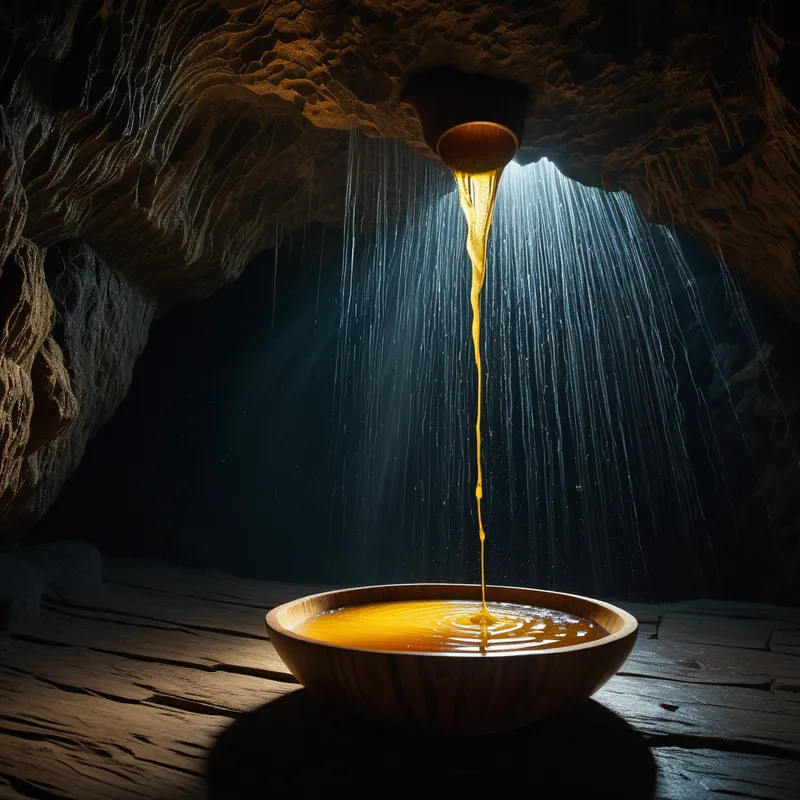
But the chase was close, so close. In his panic, some of the mead sprayed backwards, falling to the world below. This was the poets’ portion, the flawed and scattered inspiration given to bad poets and clumsy skalds. But what was saved, what was caught in the gods’ own vats, that was the true [Mead of Poetry](/myths/mead-of-poetry “Myth from Norse culture.”/). And thus, the Allfather won it, and he gives it to those he chooses, and with it, they can shape reality itself with a word.
Cultural Origins & Context
This myth is preserved primarily in two key sources: the Prose Edda of Snorri Sturluson and the Hávamál. Snorri, a Christian scholar in 13th-century Iceland, was systematizing and explaining the complex skaldic poetry of his ancestors. The myth of the mead served as an etiological tale—an origin story for the intoxicating, seemingly divine power of poetic inspiration. It explained why some verse was sublime and some was mediocre (the split portion), and it rooted the skald’s art directly in the sacrifice and cunning of the highest god.
In a pre-literate society like the Norse world, the poet (skald) was not merely an entertainer but a historian, a diplomat, a magical practitioner, and a shaper of reputation. A well-composed poem could immortalize a king or curse an enemy. The myth thus functioned to sacralize this profession, placing the skald under the direct patronage of Odin. To receive inspiration was to partake, symbolically, in Odin’s own hard-won prize. It framed poetry not as a gentle muse, but as something won through ordeal, risk, and a touch of necessary deceit—a fitting metaphor for the often brutal, politically charged world of the Viking Age court poet.
Symbolic Architecture
At its core, this is a myth about the [transmutation](/symbols/transmutation “Symbol: A profound, alchemical process of fundamental change where one substance or state transforms into another, often representing spiritual evolution or personal metamorphosis.”/) of substance and the price of [consciousness](/symbols/consciousness “Symbol: Consciousness represents the state of awareness and perception, encompassing thoughts, feelings, and experiences.”/). The raw [material](/symbols/material “Symbol: Material signifies the tangible aspects of life, often representing physical resources, desires, and the physical world’s influence on our existence.”/) begins as spit—a base, bodily fluid of truce. It becomes Kvasir (consciousness, wisdom), which is then violently rendered back into fluid ([blood](/symbols/blood “Symbol: Blood often symbolizes life force, vitality, and deep emotional connections, but it can also evoke themes of sacrifice, trauma, and mortality.”/)). This blood is mixed with [honey](/symbols/honey “Symbol: A sweet, viscous substance produced by bees, symbolizing natural sweetness, reward, and nourishment.”/) (the natural, sweet, fermentable substance of the [earth](/symbols/earth “Symbol: The symbol of Earth often represents grounding, stability, and the physical realm, embodying a connection to nature and the innate support it provides.”/)), and through this [alchemical process](/symbols/alchemical-process “Symbol: A symbolic transformation of base materials into spiritual gold, representing inner purification, integration, and the journey toward wholeness.”/), it becomes mead—a fermented, intoxicating [spirit](/symbols/spirit “Symbol: Spirit symbolizes the essence of life, vitality, and the spiritual journey of the individual.”/) that elevates the mind.
The journey of the soul is the distillation of chaos into song, of suffering into sigils. Inspiration is not found; it is stolen from the guarded caverns of the unconscious, paid for with a piece of the self.
Odin’s [quest](/symbols/quest “Symbol: A quest symbolizes a journey or search for purpose, fulfillment, or knowledge, often representing life’s challenges and adventures.”/) models this psychic process. His sacrifice of his eye at the Well of [Mimir](/myths/mimir “Myth from Norse culture.”/) was for wisdom. His ordeal for the mead is for inspiration—the [ability](/symbols/ability “Symbol: In dreams, ‘ability’ often denotes a recognition of skills or potential that one possesses, whether acknowledged or suppressed.”/) to articulate and disseminate that wisdom. Each transformation—into [worker](/symbols/worker “Symbol: The symbol ‘Worker’ represents effort, productivity, and the role of individuals within a broader societal framework.”/), [serpent](/symbols/serpent “Symbol: A powerful symbol of transformation, wisdom, and primal energy, often representing hidden knowledge, healing, or temptation.”/), [eagle](/symbols/eagle “Symbol: The eagle is a symbol of power, freedom, and transcendence, often representing a person’s aspirations and higher self.”/)—represents a necessary descent into different states of being: the laborer, the cunning [underworld](/symbols/underworld “Symbol: A symbolic journey into the unconscious, representing exploration of hidden aspects of self, transformation, or confronting repressed material.”/) [creature](/symbols/creature “Symbol: Creatures in dreams often symbolize instincts, primal urges, and the unknown aspects of the psyche.”/), the transcendent, all-seeing [bird](/symbols/bird “Symbol: Birds symbolize freedom, perspective, and the connection between the earthly and spiritual realms, often representing the soul’s aspirations or personal growth.”/). The serpentine [journey](/symbols/journey “Symbol: A journey in dreams typically signifies adventure, growth, or a significant life transition.”/) into the [mountain](/symbols/mountain “Symbol: Mountains often symbolize challenges, aspirations, and the journey toward self-discovery and enlightenment.”/) is a classic nekyia, a descent into the belly of the [whale](/symbols/whale “Symbol: Whales symbolize emotional depth, intuition, and communication, representing a profound connection to the subconscious mind.”/), the [womb](/symbols/womb “Symbol: A symbol of origin, potential, and profound transformation, representing the beginning of life’s journey and the unconscious source of creation.”/) of [the earth](/myths/the-earth “Myth from Hindu culture.”/), to retrieve a [treasure](/symbols/treasure “Symbol: A hidden or valuable object representing spiritual wealth, inner potential, or divine reward.”/). Gunnlöð is not merely a guard; she is the [anima](/symbols/anima “Symbol: The feminine archetype within the male unconscious, representing soul, creativity, and connection to the inner world.”/) figure, the [soul](/symbols/soul “Symbol: The soul represents the essence of a person, encompassing their spirit, identity, and connection to the universe.”/)-[guardian](/symbols/guardian “Symbol: A protector figure representing safety, authority, and guidance, often embodying parental, societal, or spiritual oversight.”/) of the [treasure](/symbols/treasure “Symbol: A hidden or valuable object representing spiritual wealth, inner potential, or divine reward.”/), who must be related to, not conquered, for the treasure to be released.
The Dreamer’s Resonance
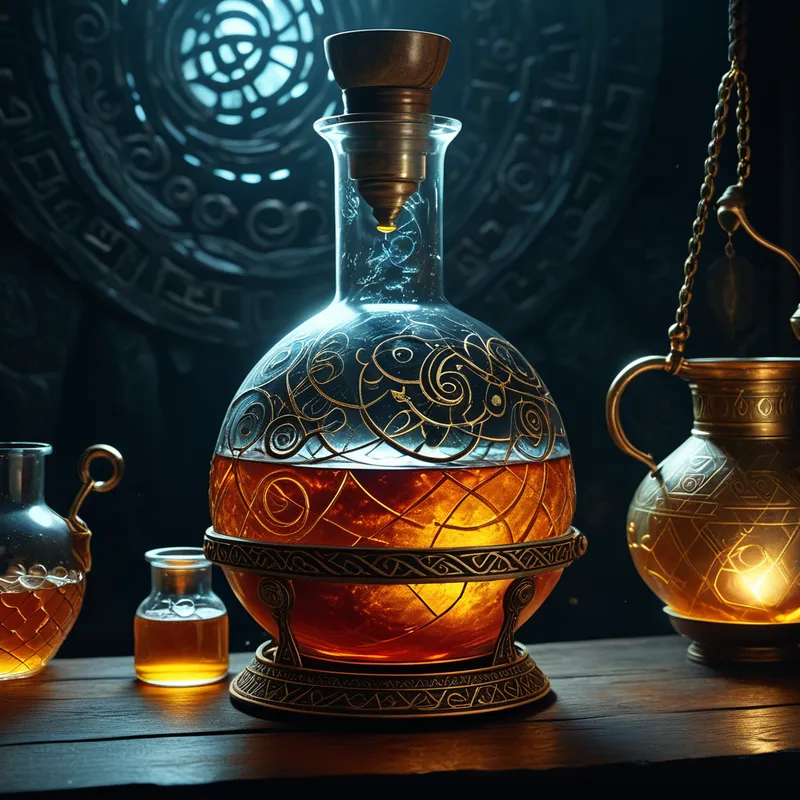
When this myth stirs in the modern [psyche](/myths/psyche “Myth from Greek culture.”/), it often manifests in dreams of forbidden knowledge, hidden chambers, and transformative fluids. A dreamer might find a hidden room in their house containing a glowing vial of liquid. They may dream of being a thief, stealing a precious book or artifact from a powerful, sleeping figure. They might transform into an animal to escape a pursuer. The somatic feeling is often one of intense anxiety mixed with exhilaration—the thrill of the heist, the terror of the chase.
Psychologically, this signals a process of extracting latent potential from the unconscious. The “mead” is a dormant talent, a repressed memory, a creative insight, or a piece of personal truth that has been “buried alive” (like Kvasir’s wisdom in his blood) by the “dwarves” of our psyche—our pragmatic, sometimes murderous, efficiency-oriented complexes. The giant Suttungr represents the defensive, possessive ego-structure that hoards this potential, fearing its release. The dream is the psyche initiating Odin’s quest: it is preparing to outwit the inner guards, to relate to the lonely guardian (often a neglected aspect of the feminine or the feeling function), and to daringly reclaim what is inherently yours, but at a cost.
Alchemical Translation
The myth is a perfect map for the Jungian process of individuation. The [prima materia](/myths/prima-materia “Myth from Alchemical culture.”/) is the chaotic, conflicted stuff of our unexamined life—the “spit of the truce,” the uneasy compromises and unresolved tensions. [The first stage](/myths/the-first-stage “Myth from Alchemical culture.”/) is the formation of Kvasir (the nascent, fragile ego-consciousness that seeks understanding). Its murder is the inevitable “death” of this naive consciousness as it encounters [the shadow](/myths/the-shadow “Myth from Jungian culture.”/) (the dwarves: cunning, envious, violent aspects of the psyche).
To drink the mead is to consciously integrate the shadow’s blood with the honey of life, fermenting personal history into intoxicating meaning.
The hero’s journey is not undertaken by the conscious ego in its royal robes, but by Odin as Bölverk—the disguised, cunning, and ruthless aspect of [the Self](/myths/the-self “Myth from Jungian culture.”/) that is willing to get its hands dirty. The labor for Baugi is the necessary, often tedious, work of analysis and life-repair. Drilling into the mountain is the focused, penetrating effort of therapy, meditation, or artistic discipline to breach the defenses of [the personal unconscious](/myths/the-personal-unconscious “Myth from Jungian Psychology culture.”/). The encounter with Gunnlöð is the crucial, feeling-based relationship with the soul-image, where coercion fails but relatedness succeeds.
Finally, the flight and partial loss represent the difficulty of bringing a profound unconscious content fully into consciousness. Some of it is always lost, spilled, or imperfectly integrated (our failed projects, half-understood insights). But what is successfully contained becomes the true Mead—a permanent alteration of the personality. The individual gains the poetic function: the ability to speak their own truth, to name their reality, to transform the lead of experience into the gold of authentic, creative expression. They become, in a sense, a skald of their own soul.
Associated Symbols
Explore related symbols from the CaleaDream lexicon: