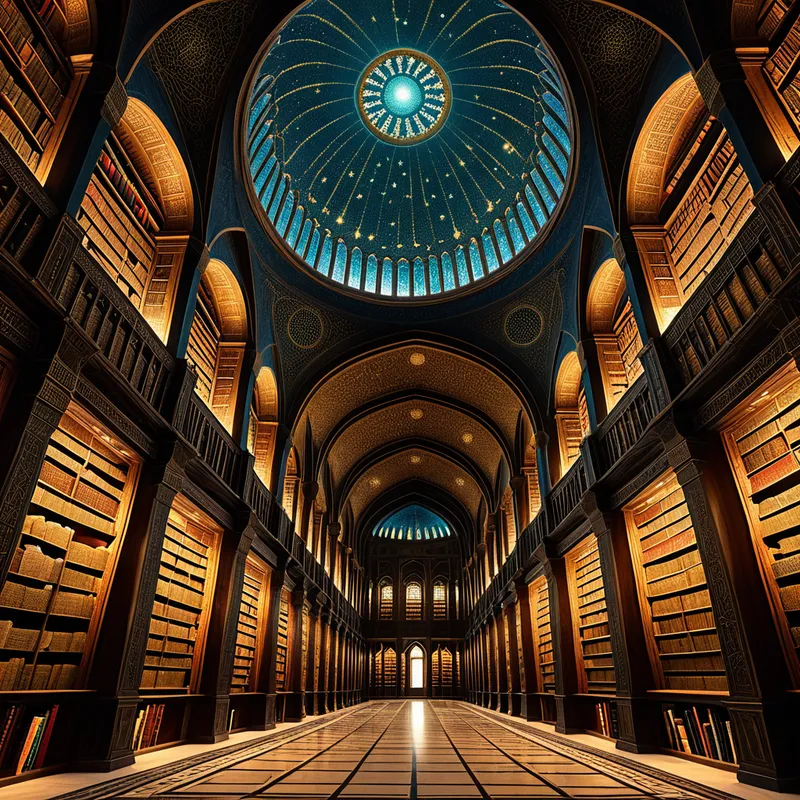
Number 19 Myth Meaning & Symbolism
A mystical narrative of a number that holds the universe's secret architecture, challenging seekers to decode the divine signature within creation and themselves.
The Tale of Number 19
In the beginning, before time was measured, the cosmos was a silent, unlettered page. Then, the Kun was spoken, and existence burst forth in a symphony of forms and names. But within that first, thunderous utterance, a signature was woven—a subtle, recurring rhythm, a whisper within the roar. It was the whisper of a number.
This was not a number for counting camels or measuring grain. This was the number that held the loom upon which the tapestry of reality was strung. The angels knew it as the secret harmony of the spheres. The Rasul, in the still hours of the night, would feel its pulse in the revealed verses, a coded heartbeat beneath the sacred text. It was said that if you listened to the falling rain, or traced the veins of a leaf, or counted the breaths between heartbeats in a state of pure awe, you would begin to sense its pattern.
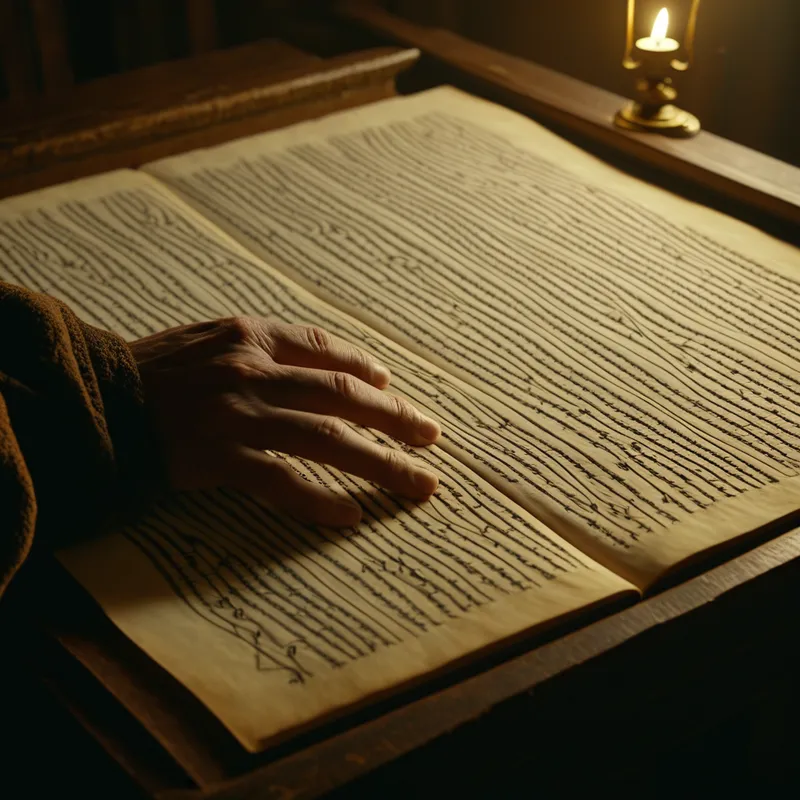
The great conflict was not of clashing armies, but of perception. [The world](/myths/the-world “Myth from Tarot culture.”/) appeared chaotic, a flood of events without order, a book written in a cipher too vast to comprehend. Humanity wandered, seeing the ink but blind to the message. The seeker, the true Talib, felt this dissonance as a thirst. In the quiet of the mosque, by the light of a single lamp, they would pore over the Qur’an, not just reading the stories of Nuh and Musa, but feeling the texture of the letters themselves—the swoop of the Ba, the upright dignity of the Alif.
And then, the revelation. Not with trumpets, but with a quiet, dawning certainty. The seeker would discover that the very foundation of the Book, its opening invocation—the Basmala—was not merely a phrase. It was a key. Its letters, its composition, whispered the secret. Nineteen. It was the guardian, the underlying code. They found it in the counts of certain words, in the structural symmetry of chapters, a golden thread stitched through the entire revelation. To find it was to hear the universe shift from noise to music. The chaotic world resolved into a breathtaking, intricate design—a cosmos signed, sealed, and delivered with a divine, mathematical grace. The seeker did not conquer a beast, but silenced the chaos within, replacing it with the hum of a perfect, eternal equation.
Cultural Origins & Context
The narrative of Number 19 finds its roots not in folk tale, but in the intersection of Islamic mysticism, theology, and the classical sciences. It emerges from the deep Islamic tradition of <abbr title="The science of the extraordinary rhetorical and inimitable nature of the Qur'an">I'jaz al-Qur'an</abbr>, the inimitability of the Qur’an, which holds that the divine revelation evidences its origin through layers of meaning beyond human composition.
While patterns and numerical values (Abjad) have long been studied in <abbr title="Islamic esotericism and mysticism">Tasawwuf</abbr> and <abbr title="Islamic philosophy and theosophy">Hikmah</abbr>, the specific, comprehensive focus on 19 as a foundational code gained significant modern attention in the 20th century. It was presented as a discoverable, objective miracle—a bridge between ancient faith and the modern, scientific mind that seeks verifiable order. This myth is passed down not around campfires, but in study circles, online forums, and through dense manuscripts of analysis. Its societal function is dual: for the believer, it is a powerful bolster to faith, a “proof” accessible to reason; for the critic or skeptic, it presents an intellectual puzzle of staggering complexity. It serves as a cultural touchstone for the idea that divine communication is layered, containing a signature for those who look with both heart and mind.
Symbolic Architecture
At its core, the myth of [Number 19](/symbols/number-19 “Symbol: A number symbolizing transition, completion of cycles, and spiritual awakening, often associated with endings that precede new beginnings.”/) is a profound [symbol](/symbols/symbol “Symbol: A symbol can represent an idea, concept, or belief, serving as a powerful tool for communication and understanding.”/) of <abbr title="Divine order and harmony in creation">Mizan</abbr>, the [cosmic balance](/symbols/cosmic-balance “Symbol: The ‘Cosmic Balance’ signifies the equilibrium of forces in the universe, highlighting the interplay of opposites such as light and dark, creation and destruction.”/). It represents the hidden [architecture](/symbols/architecture “Symbol: Architecture in dreams often signifies structure, stability, and the framing of personal identity or life’s journey.”/) beneath the apparent [chaos](/symbols/chaos “Symbol: In Arts & Music, chaos represents raw creative potential, uncontrolled expression, and the breakdown of order to forge new artistic forms.”/) of [life](/symbols/life “Symbol: The symbol of ‘Life’ represents a journey of growth, interconnectedness, and existential meaning, encompassing both the joys and challenges that define human experience.”/).
The seeker does not find a new truth, but recognizes the ancient grammar of reality that was always there, waiting to be read.
Psychologically, [Number](/symbols/number “Symbol: Numbers in dreams often symbolize meaning, balance, and the quest for understanding in the dreamer’s life, reflecting their mental state or concerns.”/) 19 symbolizes the [archetype](/symbols/archetype “Symbol: A universal, primordial pattern or prototype in the collective unconscious that shapes human experience, behavior, and creative expression.”/) of the hidden [pattern](/symbols/pattern “Symbol: A ‘Pattern’ in dreams often signifies the underlying structure of experiences and thoughts, representing both order and the repetitiveness of life’s situations.”/). It is the [human](/symbols/human “Symbol: The symbol of a human represents individuality, complexity of emotions, and social relationships.”/) [psyche](/myths/psyche “Myth from Greek culture.”/)‘s innate drive to find meaning, order, and coherence in the raw data of existence. The “chaos” of the world mirrors our own internal [confusion](/symbols/confusion “Symbol: A state of mental uncertainty or disorientation, often reflecting internal conflict, lack of clarity, or overwhelming choices in waking life.”/); the [discovery](/symbols/discovery “Symbol: The act of finding something previously unknown, hidden, or lost, often representing personal growth, new opportunities, or hidden aspects of the self.”/) of the “code” symbolizes the [integration](/symbols/integration “Symbol: The process of unifying disparate parts of the self or experience into a cohesive whole, often representing psychological wholeness or resolution of internal conflict.”/) of the [psyche](/myths/psyche “Myth from Greek culture.”/), where disparate thoughts, emotions, and experiences suddenly reveal a coherent narrative of [the Self](/myths/the-self “Myth from Jungian culture.”/). The [number](/symbols/number “Symbol: Numbers in dreams often symbolize meaning, balance, and the quest for understanding in the dreamer’s life, reflecting their mental state or concerns.”/) itself becomes a <abbr title="A symbol that unites opposites">coniunctio</abbr> symbol, marrying the tangible (mathematics, [language](/symbols/language “Symbol: Language symbolizes communication, understanding, and the complexities of expressing thoughts and emotions.”/)) with the intangible (divine will, meaning). It asserts that the [universe](/symbols/universe “Symbol: The universe symbolizes vastness, interconnectedness, and the mysteries of existence beyond the individual self.”/) is not random but authored, and therefore, every individual life is part of a legible, intentional text.
The Dreamer’s Resonance
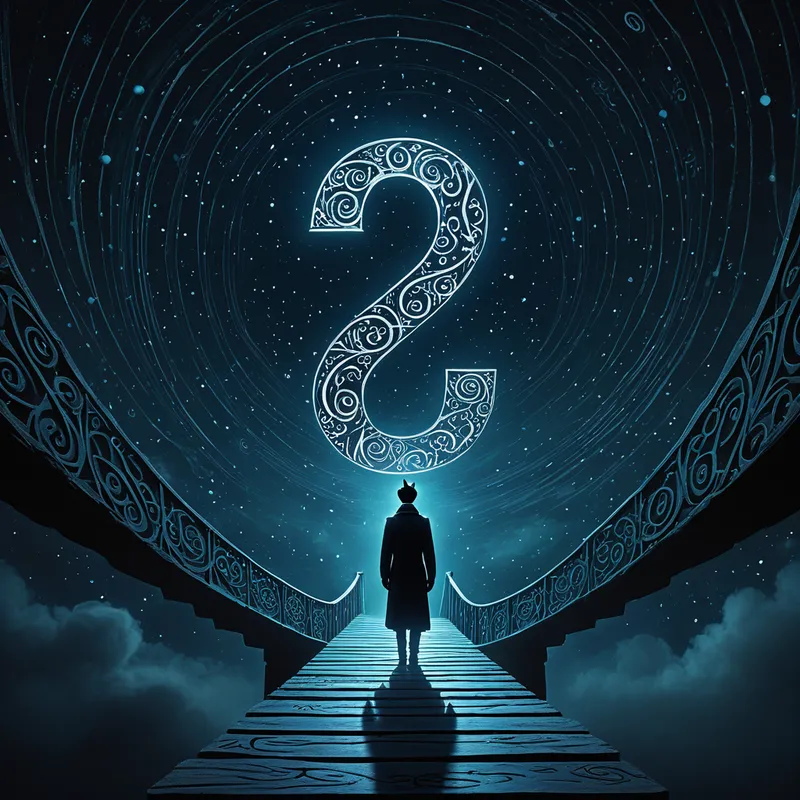
When the motif of Number 19 appears in modern dreams, it rarely manifests as a simple numeral. It appears as a recurring pattern: nineteen steps on a staircase that appears and disappears, a lock that requires nineteen turns, a chorus of nineteen voices speaking in unison, or a vital document where every nineteenth word is highlighted.
This dream signals a psychological process of decoding and integration. The dreamer is likely in a phase of life where events feel random, painful, or meaningless—a “chaotic narrative.” The psyche is actively working to find the underlying logic, the hidden lesson, or the personal “code of conduct” that will make sense of their experience. Somatically, this may coincide with a feeling of tension or seeking, followed by moments of sudden insight or “aha!” clarity. The dream is an assurance from the deep unconscious: there is a pattern to your life, a coherence to your struggles. You are in the process of discovering your own personal <abbr title="The Basmala, the foundational formula">Basmala</abbr>, the foundational equation of your being.
Alchemical Translation
The alchemical journey modeled by this myth is the transmutation of confusion into cosmos, and data into revelation. It maps perfectly onto the individuation process.
The initial state is the massa confusa—the leaden, chaotic experience of a life without perceived meaning (the unlettered page). The seeker’s work—the careful study, the longing, the attention to detail—is the [nigredo](/myths/nigredo “Myth from Alchemical culture.”/), [the dark night of the soul](/myths/the-dark-night-of-the-soul “Myth from Christian Mysticism culture.”/) where one confronts the puzzle of oneself. The discovery of the pattern is the albedo, the whitening, a moment of brilliant, illuminating insight that washes away the obscuring dust from the perception.
The final gold is not the number itself, but the transformed consciousness that can perceive the signature of meaning in all things.
The number 19, as the discovered code, acts as the <abbr title="The philosopher's stone, the goal of alchemy">[Lapis Philosophorum](/myths/lapis-philosophorum "Myth from Alchemical culture."/)</abbr>. It is the agent of transmutation. It does not change the outer world, but it radically changes the inner lens through which the world is viewed. The final stage, the [rubedo](/myths/rubedo “Myth from Alchemical culture.”/) or reddening, is the lived result: a life imbued with a sense of sacred order, where coincidence becomes synchronicity, and random events are seen as letters in a personal, divine missive. The individual becomes the sage who has decoded the first and greatest mystery: that the search for outer proof inevitably leads back to the inner revelation of one’s place within a meaningful whole.
Associated Symbols
Explore related symbols from the CaleaDream lexicon: