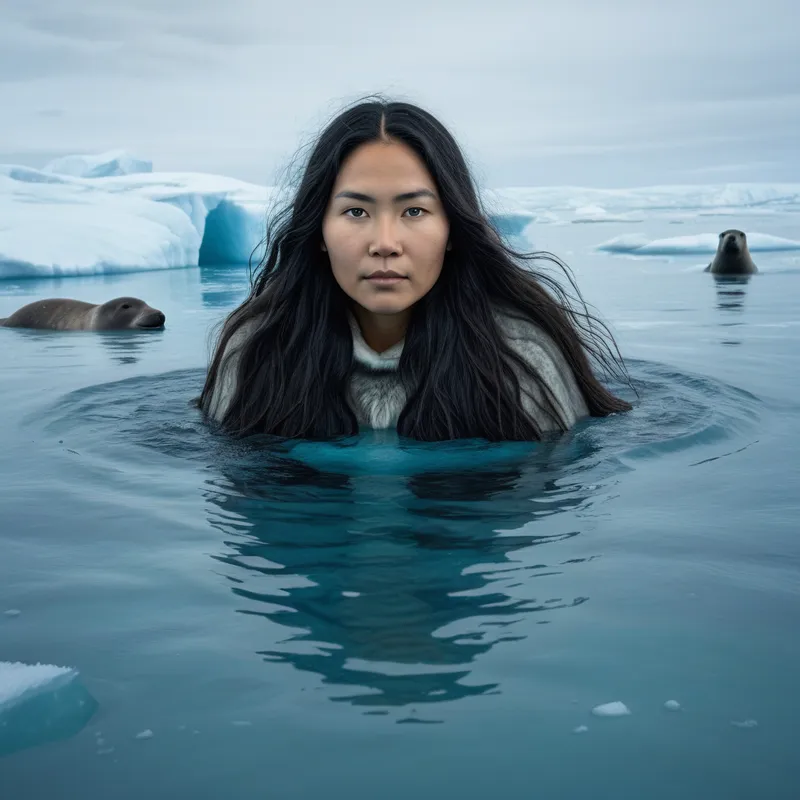
Nuliajuk Myth Meaning & Symbolism
A betrayed woman becomes the powerful, ambivalent Sea Mother, governing the life and death of all marine creatures from the depths of the ocean.
The Tale of Nuliajuk
Listen. In the time when the world was raw ice and the breath of the caribou hung in the air, there lived a woman. She was not like the others. Some say she was an orphan, cast out. Others whisper she was willful, her spirit too vast for the land. Her name was Nuliajuk.
She lived with her father, a great hunter, but her heart was a lonely igloo. She longed for a companion, for a life of her own making. One day, a hunter from a distant camp came. He saw her strength, the fire in her gaze that others called strangeness, and he promised her a home. Trusting, she went with him across the frozen sea.
But promises are like snowflakes on a warm hand. The hunter was not a good man. His words were lies, his heart a stone. He treated her not as a wife, but as a slave. He gave her scraps, scorned her work, and his family joined in the cruelty. Nuliajuk’s spirit, once a steady flame, began to gutter in the wind of their contempt.
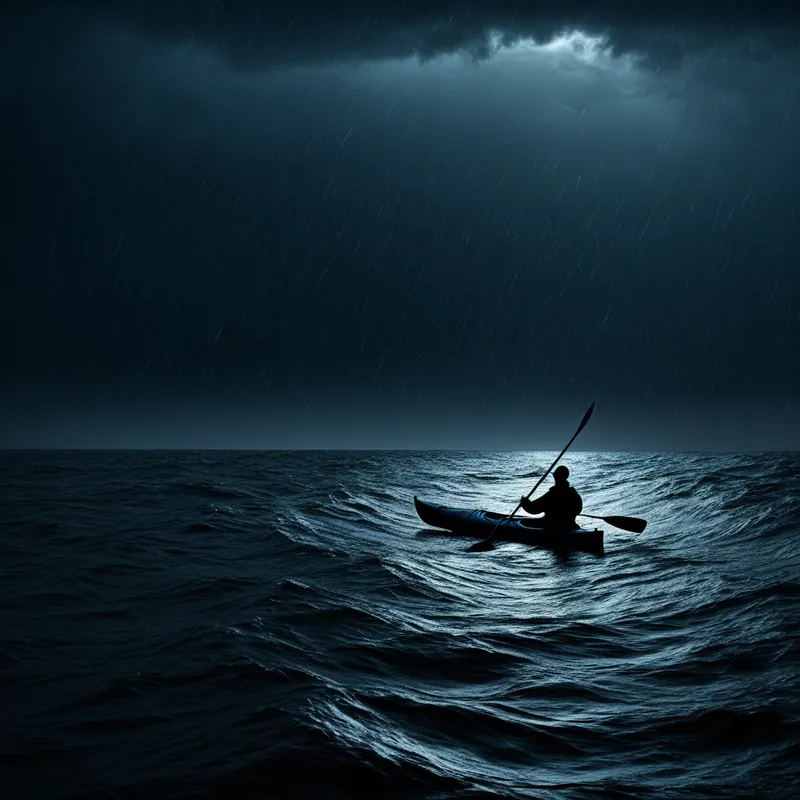
The final betrayal came on the ice. They were traveling by umiak, the family laughing while she paddled, weary to her bones. A storm gathered, a great anger in the sky. “She is bad luck!” they cried, their fear turning to malice. “The storm is her fault!” In their terror and their hatred, they conspired. They grabbed her—strong hands on her arms, her legs—and they threw her over the side.
The cold was a shock that stole her breath. The dark water swallowed her. She grasped desperately for the boat, her fingers finding only the smooth, wet hide of the hull. But they were merciless. Her father-in-law raised his paddle, a weapon of final cruelty, and brought it down upon her hands. Again. And again. The bones broke. The grip failed.
Nuliajuk sank.
Down she fell, through the silent, freezing darkness. Down past the world of light and air, down where the great creatures move in eternal night. Her broken hands, her betrayed heart, her entire being filled with a grief and rage as vast and cold as the ocean itself. She did not die. She transformed.
Her hair became long, flowing kelp forests. Her parka, tattered, became the home for all the swimming things. The wounds on her hands became the seals, the walruses, the whales—creatures born from her pain. She settled on the ocean floor, and the sediment of her sorrow became the sand. She became Sedna, the mistress of Adlivun. The one who holds all the animals of the sea in her tangled hair. The mother who gives life, and the wrathful goddess who withholds it.
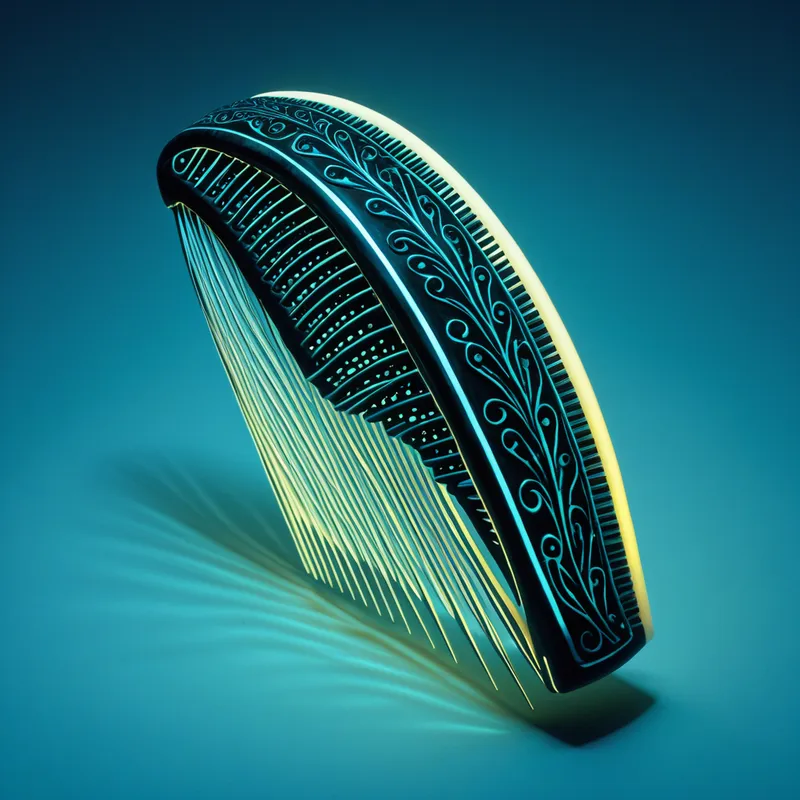
Now, when the seals grow scarce and the hunters return empty-handed, the angakkuq, the shaman, must undertake a perilous journey. He must dive in spirit, down through the crushing dark, to find her dwelling. There, he must kneel before the great goddess. He must comb the tangles from her hair—the hair that holds the souls of the animals—soothing her anger, singing songs of apology for the sins of humanity. Only when her hair is smooth, only when her heart is momentarily appeased, will she release the creatures so her children on the ice may eat and live.
Cultural Origins & Context
The myth of Nuliajuk/Sedna is the foundational narrative of the Inuit peoples across the Arctic, from Greenland to Alaska. It is not a mere story but an operating system for survival in one of the planet’s most demanding environments. Passed down through generations by elders and shamans around the seal-oil lamp in the qarmaq, its telling was a sacred act, reinforcing the fragile covenant between humanity and the natural world.
Its primary societal function was ecological and ethical. It explained the capricious bounty of the sea: periods of plenty and famine were directly tied to the moral state of the community. If taboos were broken—if animals were disrespected, if sharing laws were ignored—Nuliajuk’s anger would stir, and she would clutch her animals tight. The myth placed the responsibility for survival squarely on communal behavior. It was a story that taught profound interdependence, not with a distant, benevolent god, but with a powerful, emotional, and deeply wronged entity who required constant psychological and ritual maintenance.
Symbolic Architecture
At its core, Nuliajuk’s [story](/symbols/story “Symbol: The symbol of ‘Story’ represents the narrative woven through our lives, embodying experiences, lessons, and emotions that shape our identities.”/) is a profound map of the betrayed feminine and the [birth](/symbols/birth “Symbol: Birth symbolizes new beginnings, transformation, and the potential for growth and development.”/) of raw, creative power from profound wounding. She represents the [aspect](/symbols/aspect “Symbol: A distinct feature, quality, or perspective of something, often representing a partial view of a larger whole.”/) of the [Anima](/symbols/anima “Symbol: The feminine archetype within the male unconscious, representing soul, creativity, and connection to the inner world.”/) or the Great [Mother](/symbols/mother “Symbol: The symbol of ‘Mother’ represents nurturing, protection, and the foundational aspect of one’s emotional being, often associated with comfort and unconditional love.”/) that is not gentle and nourishing, but fierce, sovereign, and implacably connected to the [life](/symbols/life “Symbol: The symbol of ‘Life’ represents a journey of growth, interconnectedness, and existential meaning, encompassing both the joys and challenges that define human experience.”/)-and-[death](/symbols/death “Symbol: Symbolizes transformation, endings, and new beginnings; often associated with fear of the unknown.”/) cycles of [nature](/symbols/nature “Symbol: Nature symbolizes growth, connectivity, and the primal forces of existence.”/).
The greatest creative power is often forged in the crucible of the deepest betrayal. What is cast out and sunk to the depths does not perish; it becomes the foundational law.
Her descent is not a defeat but an awful [apotheosis](/symbols/apotheosis “Symbol: The transformation of a mortal into a divine or godlike state, representing ultimate spiritual elevation and transcendence of human limitations.”/). The [community](/symbols/community “Symbol: Community in dreams symbolizes connection, support, and the need for belonging.”/) that sought to destroy her instead created the very deity upon whom their survival depends. Her [tangled hair](/symbols/tangled-hair “Symbol: Tangled hair in dreams often symbolizes confusion, entanglement in emotions, or complexities in personal relationships.”/) symbolizes the complex, knotted state of the unconscious when it is wounded and unaddressed—a place where life (animals) becomes trapped and inaccessible. The [shaman](/symbols/shaman “Symbol: A spiritual mediator who bridges the human and spirit worlds, often through altered states, healing, and guidance.”/)’s combing [ritual](/symbols/ritual “Symbol: Rituals signify structured, meaningful actions carried out regularly, reflecting cultural beliefs and emotional needs.”/) is an act of profound psychological hygiene: untangling the complexes, listening to the rage and [grief](/symbols/grief “Symbol: A profound emotional response to loss, often manifesting as deep sorrow, yearning, and a sense of emptiness.”/), and restoring flow to the psyche and, by extension, to the [community](/symbols/community “Symbol: Community in dreams symbolizes connection, support, and the need for belonging.”/) and the environment.
The Dreamer’s Resonance
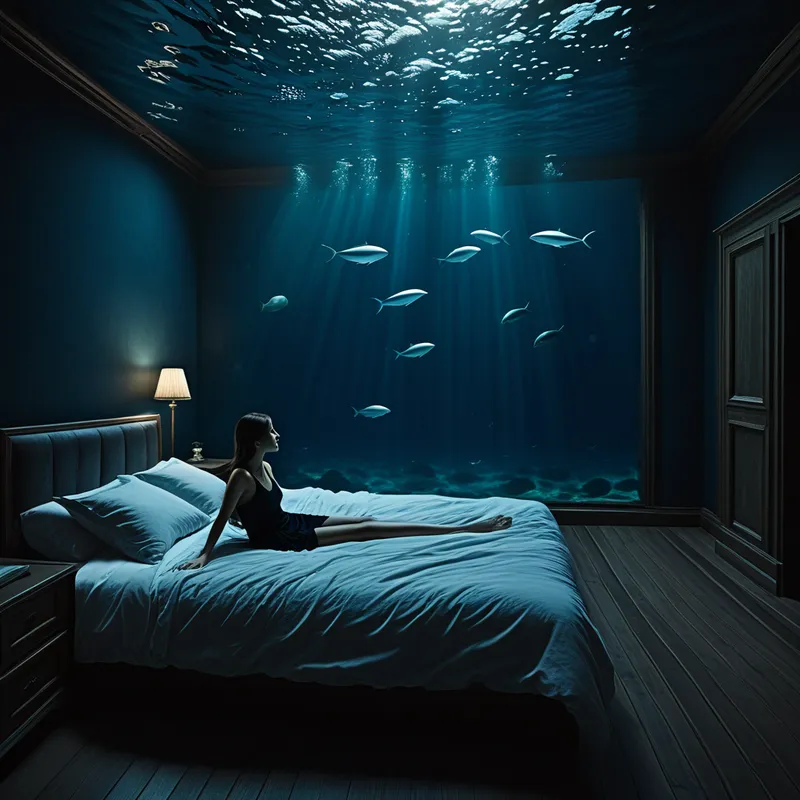
When this myth stirs in modern dreams, it often signals a profound encounter with the Shadow and the betrayed parts of the Self. To dream of drowning in a cold, dark sea, of being cast out by one’s family or community, or of having one’s hands broken as one grasps for safety, points to a deep somatic memory of betrayal, abandonment, or the suppression of one’s authentic nature.
The dreamer may be processing a time when their vulnerability was met with cruelty, forcing a part of them to “sink” into the unconscious for survival. The figure of Nuliajuk in a dream—a powerful, submerged feminine presence who is both terrifying and sorrowful—calls the dreamer to acknowledge this sunken self. The psychological process is one of descent: willingly going down into the cold, emotional depths one was once forced into, not to drown, but to reclaim sovereignty. The dream asks: What life-giving potential have you trapped in the tangles of old wounds? What part of you, deemed “too much” or “bad luck,” holds the key to your own creative and sustaining power?
Alchemical Translation
The individuation journey modeled by Nuliajuk is the transmutation of victimhood into sacred responsibility. It is the alchemy of taking the base lead of betrayal and neglect and turning it into the gold of profound, life-governing authority.
The modern individual’s “hunter father-in-law” may be a toxic family system, a crushing corporate culture, or a societal expectation that seeks to break one’s grasp on autonomy. The “throwing overboard” is the moment of psychological collapse or exile. The alchemical work begins with the descent: the conscious, willing entry into depression, grief, and rage—the “ocean floor” of the psyche. Here, one must not seek immediate escape, but must sit with the transformed self.
To comb the hair of the Sea Mother is to patiently, lovingly attend to the snarled, neglected, and painful parts of our own history, understanding that within those tangles are the very sources of our vitality.
This is the shaman’s task internalized. We become our own angakkuq. We descend in meditation, therapy, or creative practice to the place of the wound. We listen to its story. We apologize to ourselves for our own self-abandonment. We comb out the tangles of shame and resentment through acknowledgment and compassion. This ritual of self-attendance is what releases the “animals”—our instincts, our creativity, our capacity for love and sustenance—back into the conscious world. We cease begging an external goddess for mercy and realize we are stewards of the goddess within. The one who was betrayed becomes the foundational, powerful source of one’s own ethical and creative life.
Associated Symbols
Explore related symbols from the CaleaDream lexicon:
- Ocean — The vast, unconscious depths of the psyche where profound transformation occurs, representing both the womb of rebirth and the grave of the old self.
- Mother — The archetypal feminine source of all life who, in this myth, embodies the terrifying and nourishing duality of nature and the psyche.
- Betrayal — The foundational wound that catalyzes the descent, representing broken trust and the violent severing from community or self.
- Sacrifice — The forced offering of the innocent self, which ultimately becomes the sacred bargain that sustains the entire world.
- Journey — The shaman’s spirit-voyage to the depths, modeling the modern individual’s necessary descent into the unconscious to retrieve wholeness.
- Wound — The broken hands of Nuliajuk, the literal and psychological site of trauma that paradoxically becomes the source of new creation (the sea animals).
- Shadow — The rejected, betrayed, and sunk parts of the self that gather power in the darkness and must be integrated.
- Death — Not an end, but a metamorphosis; the death of the mortal woman is the birth of the immortal, governing goddess.
- Rebirth — The emergence from the watery depths as a new, more powerful form of being, sovereign over a vast domain.
- Ritual — The act of combing the hair, representing the conscious, repetitive practices needed to maintain psychological and spiritual balance.
- Spirit — The non-physical essence, represented by the shaman’s traveling soul, that can navigate between worlds to perform healing.
- Water — The element of emotion, intuition, and the deep feminine, here shown in its frozen and fluid states as both barrier and medium.