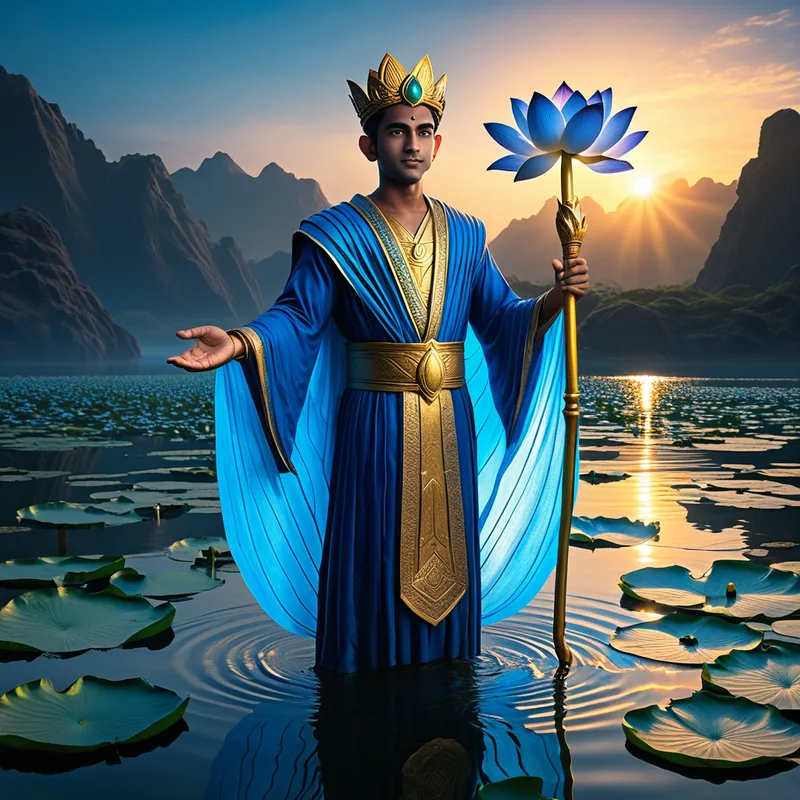
Nefertem Myth Meaning & Symbolism
A child of the primal waters, born from a blue lotus at the dawn of creation, bringing the healing sun to a world in darkness.
The Tale of Nefertem
In the time before time, there was only Nun. An endless, silent ocean of dark, potential waters, without light, without form, without a single word to break the stillness. From within this boundless deep, a stirring began. Not a sound, but an intention. A desire for being.
And from that desire, the first mound of earth, the Benben, pushed its way upwards, a solitary island in the infinite black. Upon this sacred mound, a miracle occurred. A bud, tight and closed, broke the surface of the receding waters. It was a blue lotus, its stem reaching down into the abyss of Nun, its heart holding a secret.
The waters held their breath. The darkness pressed close. Then, a tremor. A faint, golden glow began to emanate from within the sealed petals, growing stronger, pushing against the blue confines. With a grace that defied the surrounding void, the lotus began to open. Petal by petal, it unfurled, and as the final layer fell away, the glow burst forth.
It was not just light. Seated in the very heart of the flower was a child, radiant and perfect. This was Nefertem. His skin held the warmth of the glow, his eyes the clarity of the first dawn. In his hand, he did not grasp a weapon, but the very stem of the lotus from which he was born. And as he breathed his first breath, the light from his being did not simply illuminate—it became. It stretched across the face of the waters, banishing the primal cold, defining the boundaries of the sky. It was the first sunrise, born from fragrance and beauty, a healing balm poured onto the wounds of chaos. The world had its first morning, and its name was Nefertem.
Cultural Origins & Context
The myth of Nefertem finds its roots in the Heliopolitan creation narrative, one of Egypt's oldest cosmological systems centered at Iunu (Heliopolis). Here, he was integrated into the great Ennead as the son of Sekhmet and Ptah, and the grandson of the supreme creator Atum-Ra. This familial link is a theological evolution, connecting him to both the fierce power of healing (Sekhmet) and the artistry of creation (Ptah).
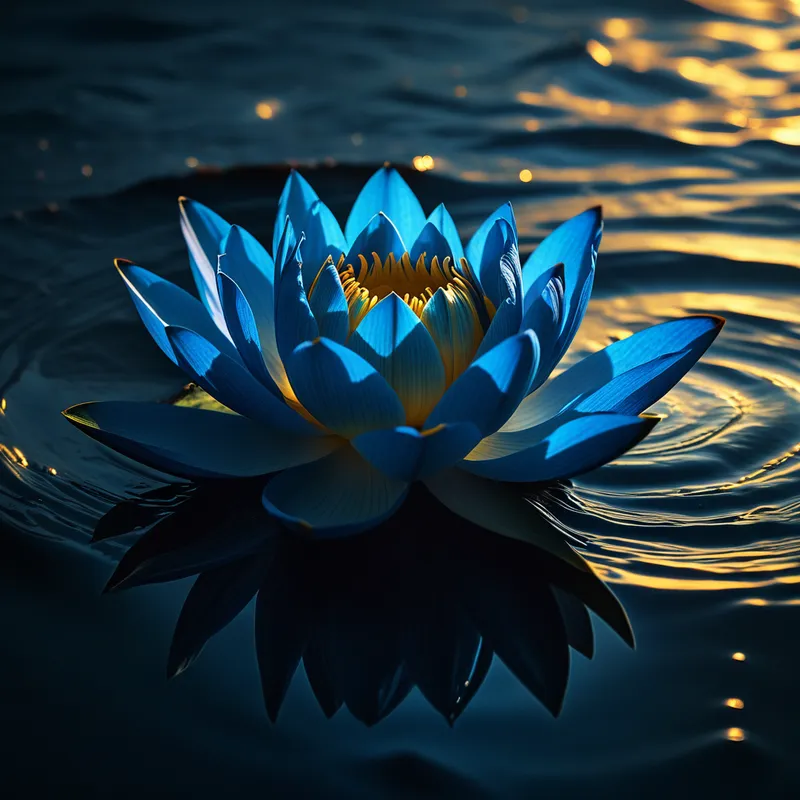
His primary, most ancient identity, however, is pre-familial and autonomous: he is the "Lord of the Perfumes," the lotus-born sun child. This origin story was not merely a priestly tale but a living, sensory truth experienced daily. The blue lotus (Nymphaea caerulea) opens each morning with the sunrise and closes at dusk, a perfect natural mirror of the myth. Egyptians observed this and saw not a coincidence, but a revelation—the flower was the sun’s cradle. His myth provided a tangible, beautiful explanation for the world's most fundamental daily miracle: the return of light. He was invoked in healing rituals, his name and fragrant symbol used to soothe and cure, linking the sun’s life-giving power directly to physical and spiritual wellness.
Symbolic Architecture
Nefertem is the archetype of the primordial, healing dawn. He is not the mature, blazing sun of midday (Ra), nor the weary, aging sun of evening (Osiris). He is the moment of becoming, the fragile yet invincible first light that insists upon itself against the overwhelming dark.
The most profound healing often begins not with a battle cry, but with the silent, inevitable opening of a flower.
His symbol, the blue lotus, is a masterclass in Egyptian symbolism. Rooted in the muddy, chaotic Nun, it rises through the waters to bloom, pristine, in the air and light. It embodies the journey from unconsciousness (the waters) to consciousness (the sun), from potential to actualization, from illness to health. The lotus closes at night, sinking below the surface, only to be reborn at dawn—a perfect symbol of cyclical renewal, resurrection, and the promise that darkness is never permanent.
Psychologically, Nefertem represents the nascent Self. He is that first, authentic spark of individuality that emerges from the undifferentiated waters of the personal unconscious. He is the initial, often beautiful and frightening, moment of self-awareness, the "I am" that dawns after a period of inner chaos or depression. He carries no armor because his essence is healing itself; his presence alone dispels the inner shadows of confusion and despair.
The Dreamer's Resonance
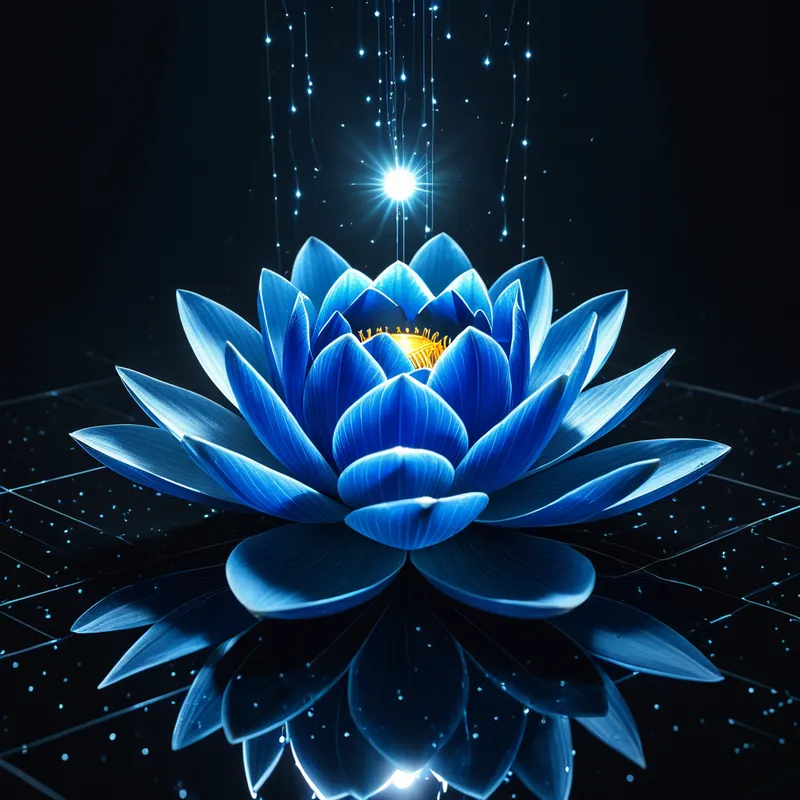
To dream of Nefertem's pattern is to experience a dream of somatic awakening. One might dream of being submerged in dark, warm water, feeling a profound pressure in the chest or forehead that is not painful but potent. This pressure blossoms into light, or one finds themselves breathing underwater, not drowning, but drawing sustenance from it. The dreamer may see or become a flower, particularly a lotus or water lily, opening in a dark place, its center glowing.
These dreams often visit during periods of convalescence—after illness, heartbreak, or a long season of psychological "night." They signal the body and psyche's innate movement toward regeneration. The somatic process is one of unwinding and unfolding; a tight, protected bud of pain or withdrawal beginning to relax its grip, allowing a new, tender sense of self to emerge. It is the dream equivalent of taking the first deep, easy breath after a long illness. The conflict here is not against a monster, but against the inertia of remaining closed, of staying in the comfortable, familiar dark.
Alchemical Translation
The alchemical journey modeled by Nefertem is the solutio and coagulatio—dissolution and coagulation—perfected. The prima materia, the lead of the soul, is first dissolved in the aqua permanens, the eternal waters of Nun. This is the necessary phase of breakdown, of returning to the primal, chaotic state where all distinctions are lost in grief, crisis, or deep introspection.
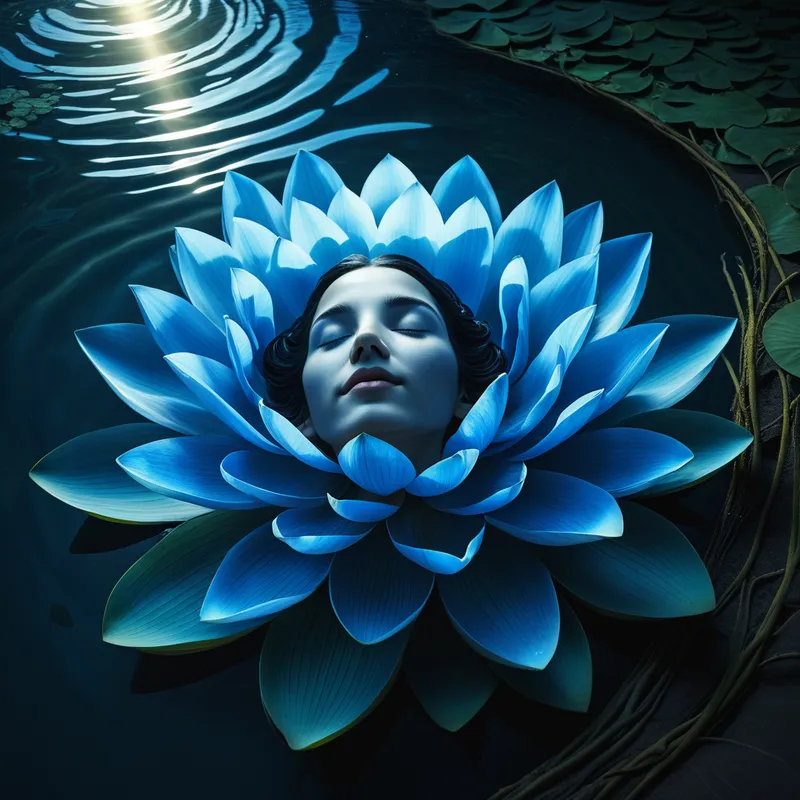
From this black, fertile soup, the lapis, the philosopher's stone, begins to form. Not as a hard gem, but as a living flower. The coagulation is not a hardening, but a gentle, organic unfolding.
Individuation is not about forging an armored self, but about having the courage to bloom from the very depths that seem destined to drown you.
For the modern individual, Nefertem's path is one of healing through beauty and essence. It asks: What is the pristine, authentic core of you that has been sleeping in the dark waters of your struggles? The triumph is not an explosive victory, but the quiet, daily act of allowing that core to rise, to open, and to offer its inherent light. It is the recognition that our most profound healing and creative power often lies not in aggressively fighting our darkness, but in nurturing the fragile, luminous bud of awareness that grows from its very soil. We are asked to be both the sacred mound that provides footing, and the lotus child that brings the dawn.
Associated Symbols
Explore related symbols from the CaleaDream lexicon: