
Muspelheim Myth Meaning & Symbolism
The primordial realm of fire, home to the fire giant Surtr, whose flaming sword will cleanse the world at Ragnarök, ending one cycle to begin another.
The Tale of Muspelheim
Listen, and hear of the First Fires. Before the worlds were shaped, before the gods drew breath, there was the Yawning Void, Ginnungagap. And from the south, a searing wind began to blow, carrying not dust, but sparks. It was the breath of a land unborn, a realm of pure, unthinking force: Muspelheim.
Its borders were not of stone or ice, but of a roaring, golden haze. Rivers did not flow with water, but with liquid light that hissed and spat. The ground was a crust over a heart of endless flame, and the sky was a furnace dome, forever twilight in its burning glow. And in that land of consuming brilliance, forms began to stir. Not creatures of flesh, but of living cinder and walking conflagration. They were the fire-giants, and their king was Surtr.
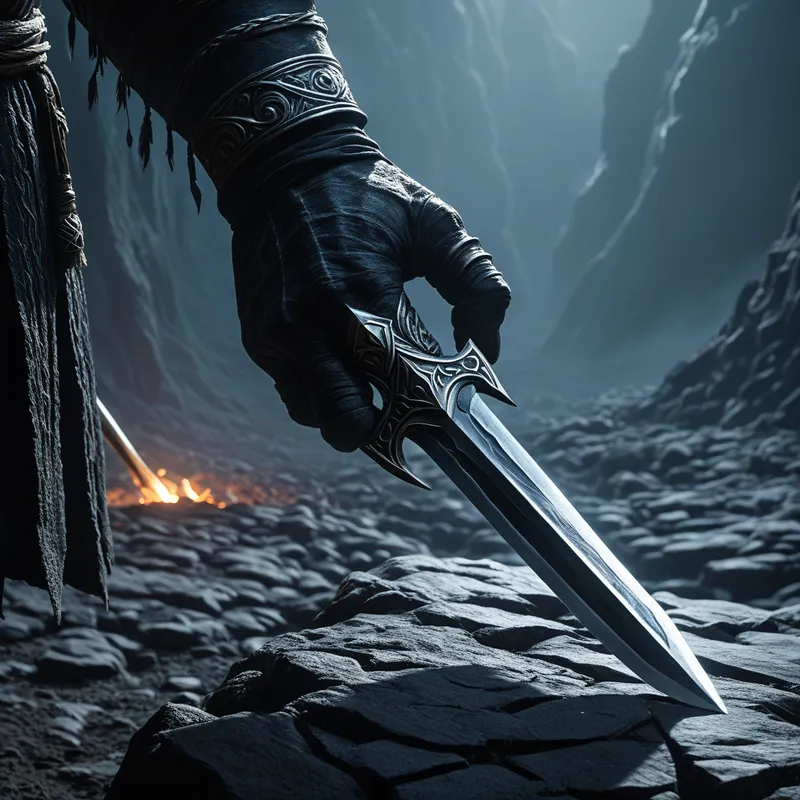
He was older than memory, a being of such immense, silent potency that the very light bent around him. In his hand, he held not a forged blade, but a weapon born of his realm's essence: a sword brighter than a hundred suns, a tongue of the world-fire itself. He did not rule; he simply was, a sentinel at the edge of creation, waiting. The prophecies whispered in the crackle of his realm spoke of a day when the great tree, Yggdrasil, would tremble to its roots. On that day, the bonds would break. The Fenrir would slip his chain, the Jörmungandr would rise from the sea, and the ship of nails, Naglfar, would sail on a tide of blood.
And Surtr would move.
He would lead his legions of flame, a blazing host that would turn the Bifrost to slag and march upon the fields of Vígríðr. There, in the cacophony of the world's ending, he would meet the gods in their final, glorious stand. His fire would clash with the ice of ancient foes, his light would duel with the shadow of monsters. And in the culmination of all things, his sword would sweep in a final, cleansing arc. It would not merely defeat; it would unmake. The nine worlds would drown in a conflagration so total it would lick the stars from the sky. The earth would sink beneath the boiling sea, and silence would follow the roar.
But from that silence—from the steam rising where fire met the drowned world—the prophecies tell of something green and new. The fire of Muspelheim does not end the story. It burns the page so a new one can be written.
Cultural Origins & Context
The myth of Muspelheim reaches us primarily through the Poetic Edda and the later Prose Edda. These texts, compiled in medieval Iceland, preserve fragments of a much older, oral tradition. This was not a theology of comfort, but a cosmology of stark, dramatic cycles, born from a people intimately acquainted with the brutal, beautiful, and transformative powers of nature: the volcanic fire that both destroys farmland and creates new, fertile soil; the winter that must die for the summer to be born.
The myth served as a foundational pillar in the Norse spatial and moral universe. Muspelheim, situated in the fiery south, stood in eternal tension with the icy, northern realm of Niflheim. Their interaction in the Ginnungagap birthed the first being, Ymir. Thus, creation itself was born from the clash of opposites. The story of Surtr’s final march was not a tale of evil, but of destiny—a necessary, cataclysmic reset woven into the very fabric of reality. It provided a framework for understanding fate (ørlög), courage in the face of inevitable ends, and the paradoxical truth that creation is inseparable from destruction.
Symbolic Architecture
Muspelheim is not merely a place of destruction; it is the archetypal symbol of the primordial, uncontained creative force. It represents the raw, undifferentiated energy that exists before form, the brilliant, dangerous potential that must be harnessed or confronted. Surtr is the personification of this force—not a villain, but an agent of cosmic law.
The fire that ends the world is the same fire that began it. To fear Surtr is to fear the foundational energy of one's own soul.
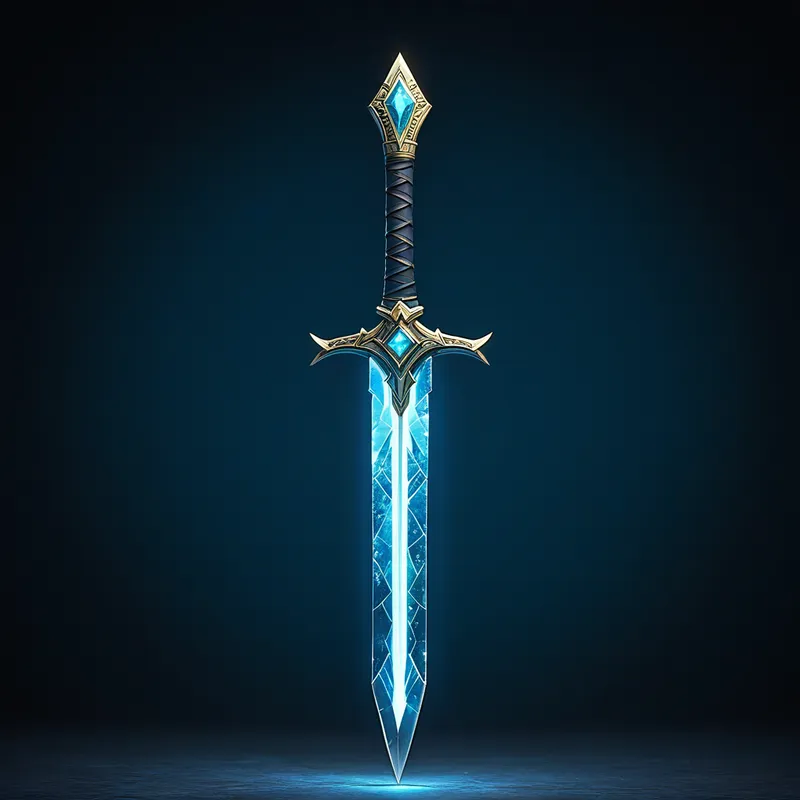
Psychologically, Muspelheim symbolizes the unconscious in its most potent, volcanic state. It is the reservoir of libidinal energy, fierce passions, repressed rage, and the brilliant, disruptive insights that can shatter a stagnant psyche. The sword Lævateinn is the focused, cutting edge of this energy—a will or a truth so potent it cannot be integrated without causing a fundamental rupture. The myth tells us that this force cannot be forever kept at the border; it will erupt. The question is whether that eruption will be a catastrophic Ragnarök or a necessary, if painful, initiation.
The Dreamer's Resonance
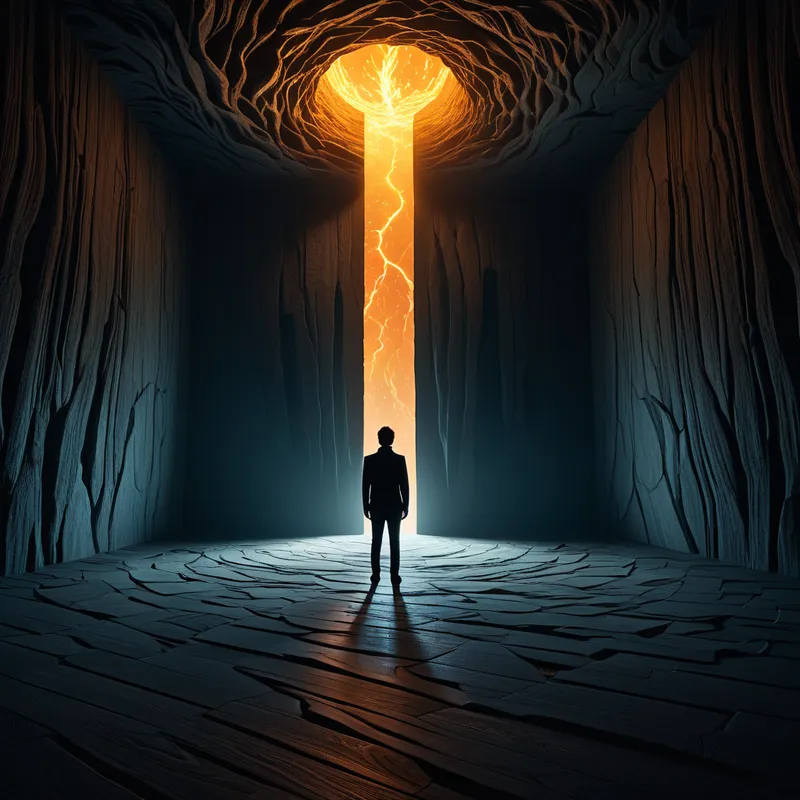
When the imagery of Muspelheim erupts in modern dreams, it signals a profound somatic and psychological process. It is the psyche's alarm bell, signaling that a contained, smoldering energy is demanding release. One might dream of a house fire that cannot be extinguished, of volcanoes erupting in familiar landscapes, or of feeling an intense, internal heat that threatens to consume from within.
This is not a call for literal destruction, but a manifestation of what psychologist James Hillman called the "archetypal fire" of the soul. The dreamer may be undergoing a process where an old identity, a long-held belief, or a life structure has become a dead shell, and the primal, creative Self is burning it away. The somatic experience is one of pressure, heat, agitation, or anxiety—the body feeling the "rising temperature" of a psychic conflict that can no longer be ignored. The dream of Surtr is an encounter with the ultimate Rebel archetype within, the part of the Self that says "this ends now," regardless of the consequences.
Alchemical Translation
The journey of individuation, the process of becoming psychologically whole, is mirrored perfectly in the myth of Muspelheim. In alchemical terms, the prima materia—the base, chaotic substance—is often depicted as a dragon of fire. The alchemist's task is not to slay the dragon, but to harness its fire for the transformative work.
The goal is not to avoid Ragnarök, but to undergo it consciously, to allow the old king within to meet his destined end at the flaming sword, so the new land can rise from the waters.
For the modern individual, this translates to the courageous act of facing one's own "Muspelheim." It is the willingness to descend into the core of one's most fiery, disruptive emotions and drives—the repressed anger, the forbidden desires, the brilliant but terrifying ambitions. This is the nigredo, the blackening, where the old ego-structure is burned. Surtr's march is the moment of total, voluntary surrender to this inner conflagration, trusting the process not as an annihilation of self, but as the annihilation of a limiting version of self.
The promise of the myth is that this fire is ultimately creative. It forges nothing less than a new relationship to life itself. One emerges not "rebuilt," but fundamentally alchemized—able to hold the creative and destructive forces within as aspects of a single, dynamic totality. The individual who has integrated their inner Surtr does not fear endings, for they know them as the inseparable counterpart to all true beginnings. They carry not a sword of destruction, but the sober, powerful knowledge of the fire at the heart of all things.
Associated Symbols
Explore related symbols from the CaleaDream lexicon: