Mulungu Sky God East African Myth Meaning & Symbolism
The myth of Mulungu, the Sky God who retreated from humanity, exploring themes of divine distance, human responsibility, and the sacredness of the natural world.
The Tale of Mulungu Sky God East African
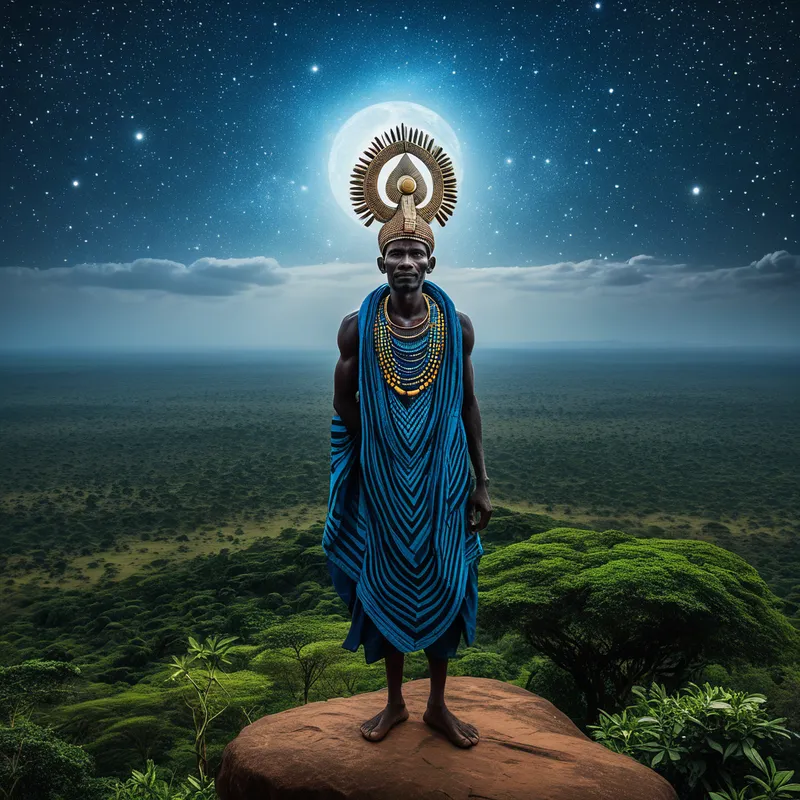
Listen. In the time before time, when the world was soft and new, the sky was not a distant ceiling. It was a living presence, a great Mulungu, who breathed with the rhythm of the rains and whose thoughts were the shifting of the clouds. His voice was the low rumble that promised life, and his gaze was the gentle light that warmed the soil. In those days, the distance between the realm of God and the realm of Earth was but a whisper. Moon and Sun were his children, playing in the courtyard of the heavens.
Humanity lived in a state of blessed innocence. They did not toil, for the Earth offered her fruits freely. They did not build shelters, for the weather was ever-kind, a direct gift from Mulungu. There was no death, only a gentle turning of seasons within a single, long Circle of existence. The connection was palpable, a golden thread between the heart of the people and the heart of the sky.
But the human Spirit is a restless one. A woman, pounding grain with her mortar, grew weary. In a moment of frustration, she raised her pestle high and struck not the grain, but the very vault of the sky. Thump. The sound was a sacrilege, a sharp, discordant note in the harmony of creation. On another day, a child, bathing in a River, splashed water carelessly upward, drenching the clouds. The water was not an offering, but an insult.
These small acts of irreverence accumulated like storm clouds. The final straw came from an old woman. She was scraping the charred remains of a meal from the bottom of her pot with a sharp stone. Annoyed by the stubborn soot, she looked up and, in a fit of pique, she scraped her tool against the sky itself, scratching the luminous blue.
A great silence fell. Then, a sigh that became a wind, stirring the tops of the tallest Trees. Mulungu had endured the noise, the wetness, the disrespect. But this act of defilement, this scratching of the sacred canvas, was too much. The connection had been frayed by carelessness.
The Sky God began to withdraw. The air grew thicker, the light grew colder. Panic seized the people. They cried out, but their voices seemed to fall back to earth, unheard. They watched in despair as the heavens receded, becoming a remote and beautiful dome.
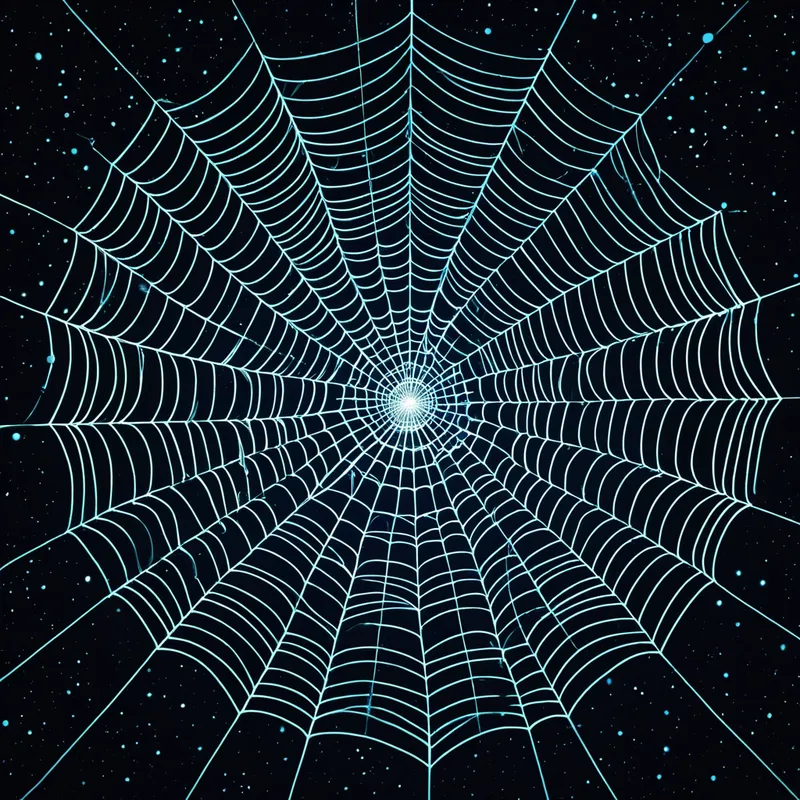
In his compassion, even in his departure, Mulungu did not abandon them utterly. He sent a messenger: a great, patient Spider. The spider began to spin. From the highest branch of the world Tree, it spun a thread, then a cord, then a vast, glistening ladder—a web of breathtaking intricety that reached up, up, towards the retreating divinity.
"Climb," the people were told. "Climb this ladder of connection, and you may still speak with him."
But as the first among them placed their hands on the silken rungs, fear took hold. The height was dizzying. The web, though strong, seemed so fragile against the immense gulf that had opened. They hesitated. They argued. And in their hesitation, a foolish, frightened man took a brand of Fire and set the bottom of the sacred ladder alight, severing the last physical tie to prevent what he feared.
The web burned away in a shower of sparks that became the first distant Stars. Mulungu was now truly gone, dwelling in a realm of pure sky, accessible only through memory, ritual, and the silent language of the natural world he once touched directly. The age of innocence was over. The age of human responsibility had begun.
Cultural Origins & Context
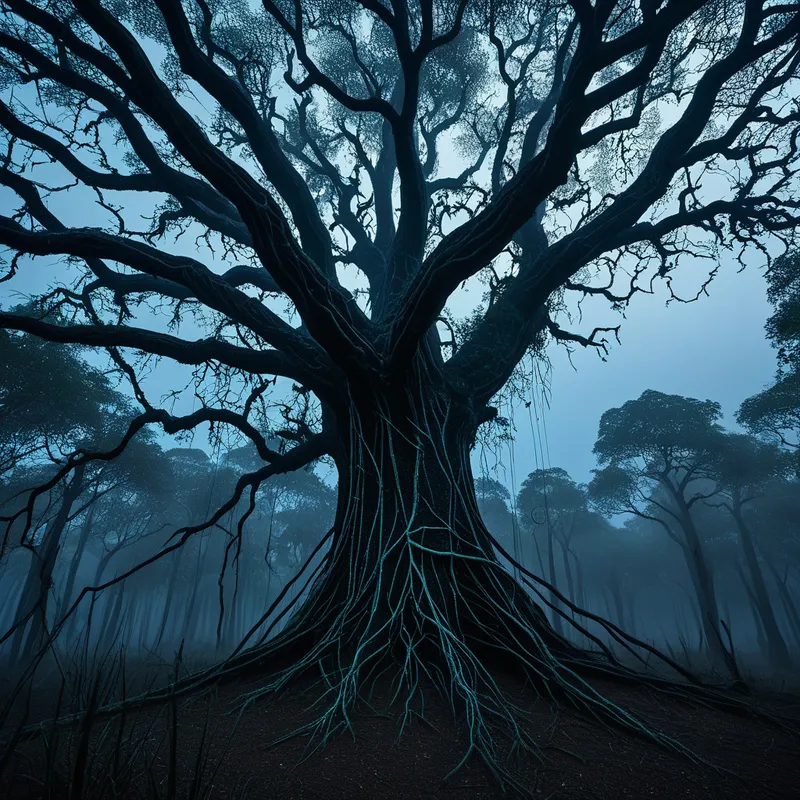
The myth of Mulungu is found among numerous Bantu-speaking peoples across East and Central Africa, including the Yao, Kamba, Kikuyu, and others. It is a foundational "divine withdrawal" or deus otiosus myth, a narrative explaining why the supreme being, once intimately involved in creation, is now distant and not worshipped in daily ritual. This story was not written but lived, passed down orally by elders and storytellers around evening fires, its performance a ritual in itself.
Its societal function was profound. It was not merely a "just-so" story but a philosophical cornerstone. It explained the human condition: why we must labor for food, why we experience suffering and death, and why we feel a yearning for a connection that seems just out of reach. It placed the responsibility for this state squarely on human actions, teaching lessons of respect, reverence, and the consequences of taking the sacred for granted. The myth established a cosmic order where God is not dead, but respectfully distant, leaving the management of the earthly realm to intermediary spirits, ancestors, and humanity itself.
Symbolic Architecture
At its core, the myth maps a profound psychological and spiritual transition: the end of psychic infancy and the dawn of conscious individuality. Mulungu represents the original, unconscious unity with the source—the parental archetype that provides everything without asking. The human acts of pounding, splashing, and scratching are not evil, but emblematic of emerging ego-consciousness: clumsy, assertive, and inevitably disruptive to the primal unity.
The withdrawal of the god is not a punishment, but a necessary step for the creation of a world where choice, and therefore meaning, can exist.
The Spider's web is the critical symbol. It is the fragile, self-made structure of consciousness—myth, religion, art, language—that we spin in an attempt to reconnect with the transcendent. It is the psyche's own connective tissue. The burning of the web by fear is the tragic but universal human tendency to destroy the very bridges to the deep Self (Soul) out of terror of the heights and depths it reveals. We choose the manageable misery of separation over the terrifying responsibility of a direct relationship with the divine.
The Dreamer's Resonance
When this myth stirs in the modern Dream, it often manifests as a profound sense of existential loneliness or a yearning for lost guidance. One might dream of a wise, authoritative figure (a parent, teacher, or leader) turning away and leaving. One might find themselves at the base of an immense, fragile ladder or bridge, paralyzed, unable to climb as it disintegrates.
Somatically, this can feel like a hollow ache in the chest, a literal "heartache" for connection. Psychologically, it signals a critical juncture in the process of individuation: the point where one must internalize the authority and wisdom that was once projected onto external figures (parents, gods, ideologies). The dreamer is being called to stop waiting for salvation from the sky and to begin the arduous task of spinning their own web of meaning—to become their own Sage.
Alchemical Translation
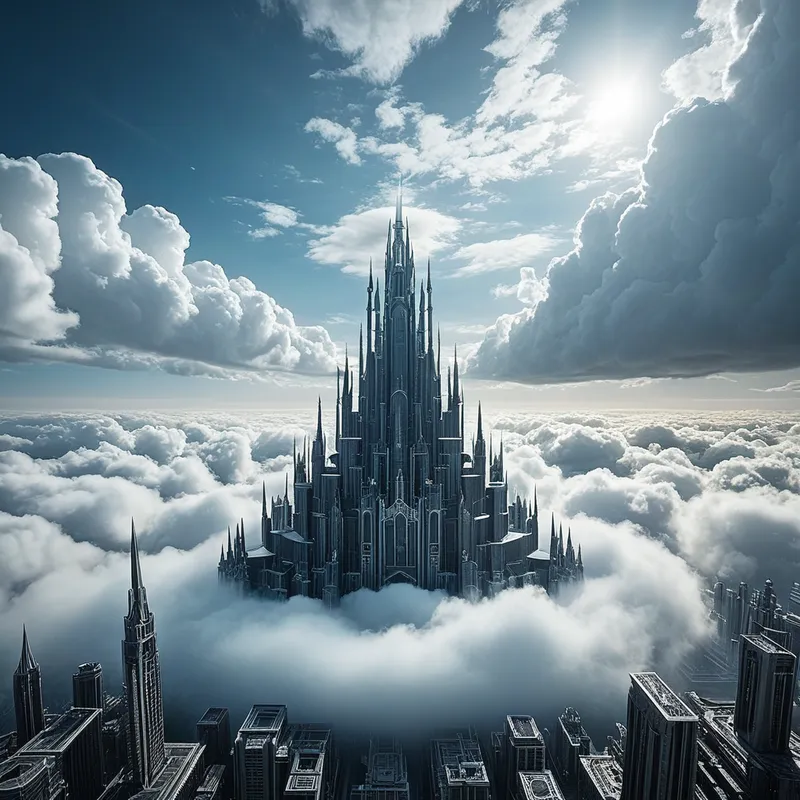
The alchemy modeled here is the transmutation of passive longing into active creation. The initial state is unio naturalis—natural unity with the unconscious. The "nigredo," or blackening, is the withdrawal, the feeling of abandonment and the dawn of existential anxiety. The burning of the web is a moment of despair, a willing destruction of the old, insufficient means of connection.
The work is not to rebuild the old ladder, but to learn the spider's art: to spin from one's own substance a new web anchored in the reality of one's own life.
The "albedo," or whitening, is the realization that Mulungu did not vanish; he translated. His presence is now immanent in the very fabric of the world he left behind—in the cycle of the Moon and Sun, in the growth of the Tree, in the fall of the Rain. The individuation task is to perceive the divine not "up there," awaiting a reunion, but "in here," as the deep structure of one's own psyche and "out there," as the numinous quality of the lived world. The final stage is taking full Responsibility for one's Journey on an earth that is now truly one's own to tend, having matured from a child of the sky to a steward of the earth.
Associated Symbols
Explore related symbols from the CaleaDream lexicon:
- Sky — The realm of the transcendent, the distant father, and the origin point from which consciousness feels separated, representing both infinite possibility and aching absence.
- Spider — The master weaver and connector, symbolizing the psyche's ability to spin fragile but intricate structures of meaning, myth, and consciousness to bridge the gap between the human and the divine.
- Ladder — The direct but perilous path to transcendence, representing spiritual ambition and the terrifying verticality of seeking a direct connection with the source.
- Fire — The element of both destructive fear and transformative energy; it burns the bridge of dependency, forcing the self to generate its own inner light and warmth.
- Earth — The realm of responsibility, immanence, and grounded reality that humanity is left to tend, representing the physical world where the divine is now to be sought and honored.
- Tree — The world axis and connector of realms, often the anchoring point for the spider's web, symbolizing stable, growing life that reaches both downward into tradition and upward toward the sky.
- Rain — The primary blessing from the withdrawn sky god, representing grace, nourishment, and the ongoing, indirect communication between the divine and the earthly.
- Circle — The original, unbroken state of unity with the divine, and the cyclical nature of the seasons and life that continues after the god's withdrawal, implying a different kind of wholeness.
- Journey — The new human condition after the withdrawal: a life path that is no longer pre-ordained or divinely managed, but a personal voyage requiring courage and choice.
- Responsibility — The core lesson and burden bestowed by the myth; the psychic weight of self-governance and stewardship that falls upon humanity when external divine management recedes.
- Star — The sparks from the burned web become distant, guiding lights, symbolizing fragmented memory of the connection, hope, and the order that remains in the cosmos even from afar.
- Dream — The modern, internalized realm where the myth now actively lives and operates, providing nightly narratives of separation, yearning, and the search for reconnection within the psyche.