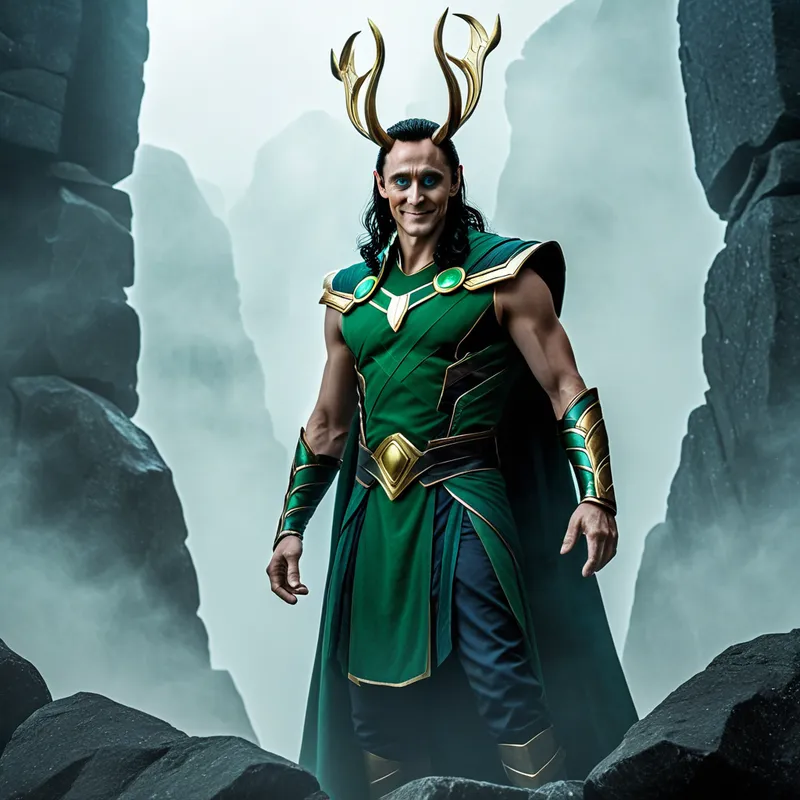
Loki's Disguises Myth Meaning & Symbolism
The trickster god Loki's many disguises weave chaos and creation, forcing the gods to confront the fluid, deceptive, and essential nature of their own shadows.
The Tale of Loki's Disguises
Listen, and hear a tale not of straightforward heroism, but of cunning, necessity, and the slippery nature of truth itself. In the high halls of Asgard, where the mead flows like rivers and the boasts of gods echo from golden rafters, a shadow walks among the light. His name is Loki, blood-brother to Odin, a creature of fire and quick thought, whose loyalty is as fluid as his form.
The story begins with a grave insult. The master builder, a Jotun of immense strength, has come to Asgard and made a wager: he will build an impregnable wall around the gods' realm in one winter, and his price is the sun, the moon, and the goddess Freyja. The gods, arrogant in their security, agree, adding the cruel condition that he must work alone. But the builder has a secret: his mighty stallion, Svadilfari, who moves mountains of stone with his breath. As winter deepens, the wall rises with impossible speed, and the gods watch in dawning horror. Their realm will be saved, but at a cost that will unravel the heavens.
Panic, cold and sharp, settles in the council of the Æsir. They have been outwitted. Their oaths bind them. It is then that Loki, who proposed the fatal clause, feels the heat of their accusing stares. "Only you," they say, their voices like grinding ice, "who brought this trouble, can find a way out. Or face a wrath most dire."
So Loki slips away, a ripple in the twilight. As the last crimson bleeds from the sky, he becomes not himself. His bones soften, his shape flows. The sharp, angular features of the god melt into a softer, wilder beauty. He becomes a sleek, spirited mare, her coat the colour of dusk, her eyes holding a familiar, cunning light. She appears near the building site, whinnying into the frozen air. The great stallion Svadilfari smells her and is lost. He breaks his harness, his vital labour forgotten, and charges after this phantom into the dark, deep forest. The builder roars in futile rage, his time runs out, and the wager is broken. The gods are saved.
But Loki does not return for many months. And when he does, he leads a strange colt by his side—an eight-legged foal, grey as a storm cloud, eyes intelligent and ancient. This is Sleipnir, the greatest of horses, whom he gives to Odin. The solution was also a creation, born of deception and desire. The wall stands unfinished, a monument to averted disaster, and the gods breathe again, though they look at their saviour with new, uneasy eyes. For who can trust a being who is never quite what he seems?
Cultural Origins & Context
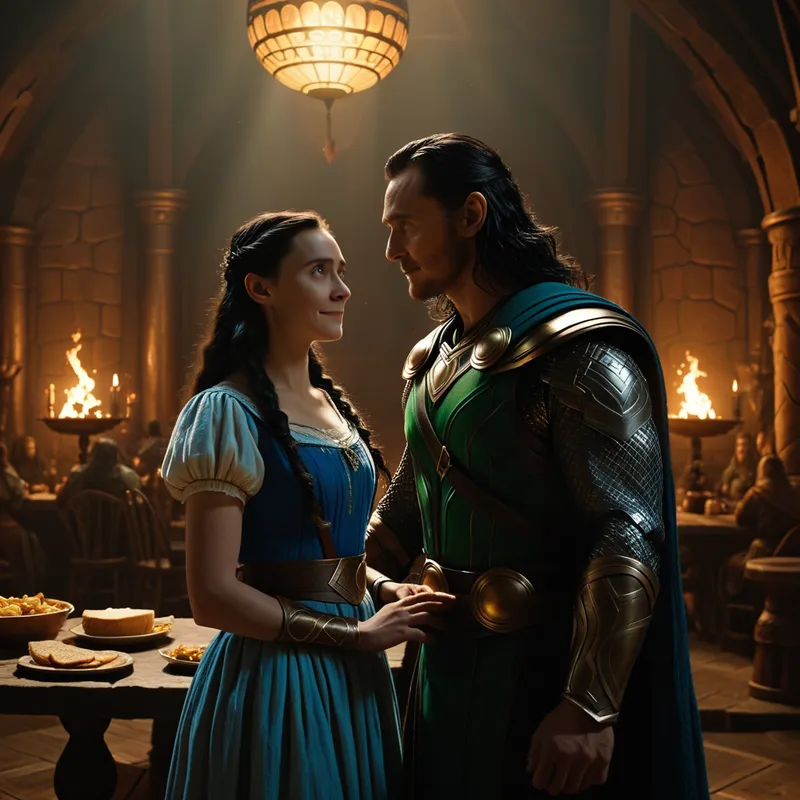
This myth, like most of Norse mythology, survives in the 13th-century texts of the Prose Edda by Snorri Sturluson. It is a story from a world where survival was precarious, where the harsh climate and political realities demanded both brutal strength and clever pragmatism. The myths were not mere entertainment; they were a cognitive map for navigating a cosmos filled with capricious forces—frost giants, chaotic beasts, and even the fickle gods themselves.
Loki’s tales would have been told in longhouses, the firelight dancing on intent faces. The storyteller, perhaps a skald (poet), wielded these narratives to explain the nature of obligation, the consequences of poor bargains, and the ambiguous value of the trickster. Loki embodies a necessary principle in that world: pure, unadulterated craft (craft in both senses—skill and guile). He is the embodiment of the lateral solution, the loophole-finder, the one who gets his hands dirty so the hallowed gods of order (Thor) and wisdom (Odin) can remain ostensibly clean. His disguises are not just magic; they are the ultimate psychological tool in a universe bound by fatalistic laws and unbreakable oaths.
Symbolic Architecture
Loki is the archetypal shape-shifter, and his disguises are the central symbol of his being. He represents the psyche’s fluid, uncommitted potential—the part of us that is not fixed to a single identity, role, or moral code.
The disguise is not a lie to the self, but a truth the self is not yet ready to wear openly.
When Loki becomes the mare, he engages in a profound act of symbolic sacrifice and creation. He temporarily surrenders his godly, masculine identity to embody the receptive, animal feminine. This is not a diminishment but an expansion of capability. He uses attraction, desire, and distraction—forces often dismissed or relegated—to solve a problem that sheer force (Thor) or wisdom (Odin) could not. The resulting offspring, Sleipnir, symbolizes the unexpected, transcendent product that can only be born from the union of chaos (Loki) and instinctual power (Svadilfari). It is a creature that transcends ordinary boundaries (eight legs moving between worlds), gifted to Odin, the seeker of knowledge. Thus, the shadow’s action ultimately serves the consciousness’s journey.
Loki’s disguises force the other gods to confront their own limitations and hypocrisies. They need him, are saved by him, yet despise him for the methods that save them. He is the embodied shadow of the Æsir pantheon—the repressed cunning, amorality, and fluidity they must disown to maintain their self-image as righteous rulers.
The Dreamer's Resonance
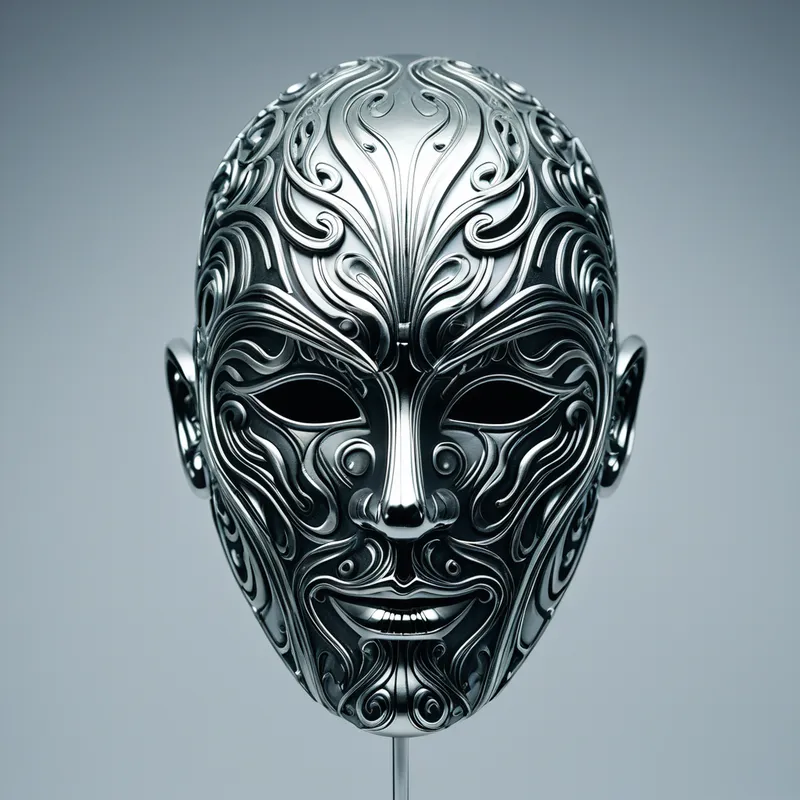
To dream of shifting identities, of wearing masks that feel both alien and intimately true, is to walk in Loki’s realm. Such dreams often surface during life transitions, role changes, or when we feel compelled to hide aspects of ourselves to fit in or survive a situation.
The somatic feeling is often one of unease, a literal fluidity or instability in the dream body—melting, stretching, or looking in a mirror to see a stranger’s face. Psychologically, this is the psyche working through the tension between the persona (the social mask) and the shadow (the disowned self). Loki’s energy in dreams asks: What role are you playing out of obligation? What vital, instinctual part of you (the mare) are you being asked to embody to solve an impossible problem? What creative power (Sleipnir) might be born if you dared to do so? The dream is not a warning against deception, but an initiation into the complexity of the self. It signals a process of disintegration necessary for a more authentic, albeit more complicated, reintegration.
Alchemical Translation
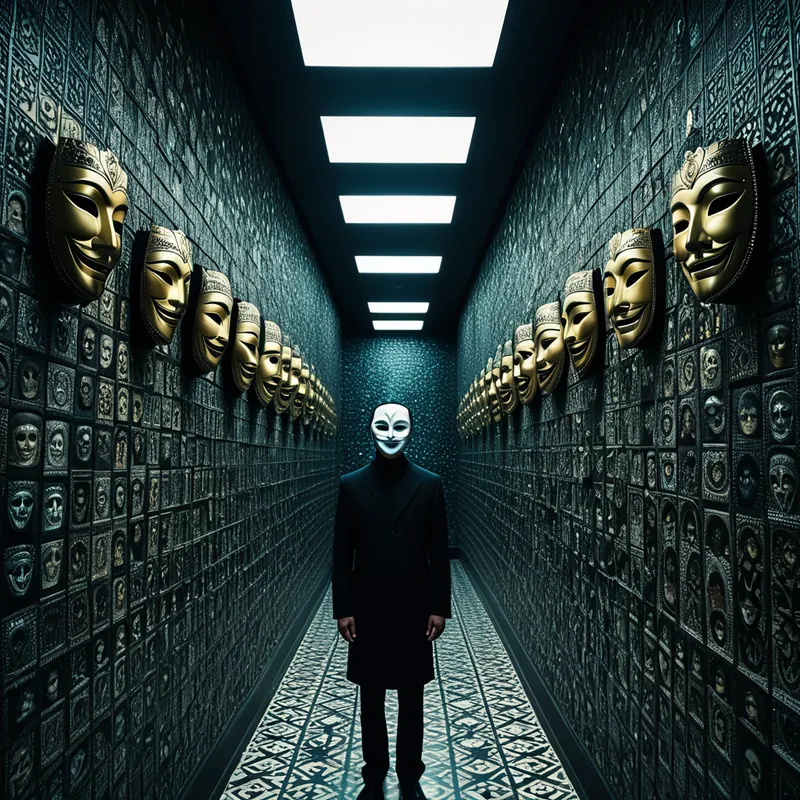
The alchemical process mirrored in this myth is solve et coagula—dissolve and coagulate. Loki is the mercurial agent, the quick-silver that dissolves fixed forms. His disguises are the solve stage, where the rigid identity of "the god Loki" is dissolved into something else—a mare, a milkmaid, an old woman. This is the psychic stage of deconstruction, where our ego’s certainties are broken down.
Individuation requires the courage to be, for a time, nobody in particular, in order to become somebody true.
The modern individual undergoes this when a life structure (a career, a relationship, a self-concept) becomes a "wall" threatening to entrap them. The Loki-within urges a radical, perhaps socially questionable, shift. It might be embracing a neglected talent (the feminine creative), using unconventional means, or temporarily adopting a new role to bypass an obstacle. The key is that this is not an end in itself. The coagula stage is the birth of Sleipnir—the new capacity, insight, or life direction that is forged in the strange, fertile darkness of that transformation.
To integrate Loki is to accept that wholeness is not moral purity, but functional complexity. It is to acknowledge the part of us that can and must adapt, deceive if necessary, and cross boundaries to serve a greater need—not for chaos’s sake, but so that a new, more resilient consciousness may ride forth. We are asked not to become the trickster, but to make peace with his residence within our own hall, recognizing that our walls of security are often built by him, and can only be preserved or transcended by his mercurial, indispensable art.
Associated Symbols
Explore related symbols from the CaleaDream lexicon: