Locked Chests Myth Meaning & Symbolism
A universal tale of a sealed container holding a profound secret, guarded by taboos, and the fate of those who dare to open it.
The Tale of Locked Chests
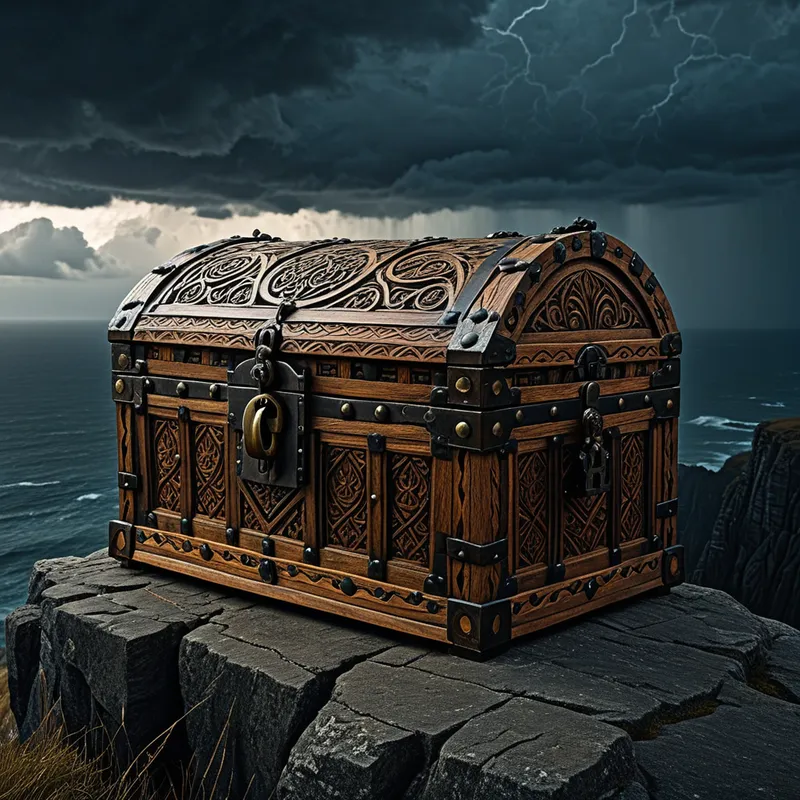
Listen, and I will tell you of the thing that is shut. In the beginning of things, or at the end of a great labor, there it sits. It is not always a chest of wood and iron. Sometimes it is a basket woven tight with rushes, a clay jar sealed with wax, a cave-mouth blocked by a stone placed by giants. But its nature is always the same: it is a boundary. Inside rests a breath held for an age—a sigh, a scream, a song that could remake the world.
The one who made the lock is often a demiurge, a weary king, or a cunning spirit. They placed within the vessel something too potent for the open air: the last ember of the sun, the bottled voice of chaos, all the diseases of mankind, or the very soul of the summer. Then came the warning, spoken in a voice that made the stones tremble: "This is not for you. This must remain shut."
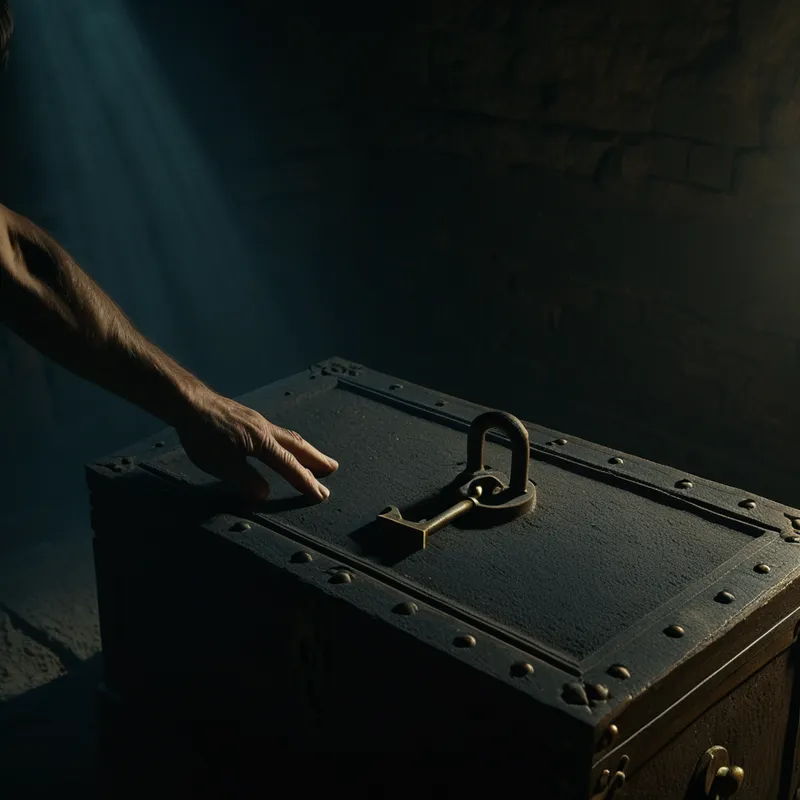
But the air around a locked thing grows thick with whispers. It calls to the one with restless hands and a heart hungry for more—the youngest child, the clever servant, the curious wife, the bold thief. They come in the dead of night or in the glaring light of defiance. The lock is a puzzle that sings to their fingers; the hasp is a challenge that burns in their blood.
They do not heed the old stories. With a stolen key, a whispered spell, or the sheer strength of desperate hope, they work at the seal. The moment stretches, the world holds its breath. Then—a click, a groan, a shattering of wax. The lid lifts, not with a bang, but with a sigh of released pressure.
And what comes out? It is never what was expected. The stolen fire scorches the thief's hand even as it gifts light to the people. The beautiful spirit, once freed, becomes a whirlwind of destruction. The shimmering hope transforms into a flock of biting cares that scatter to the four winds. The treasure is always true to its nature, but that nature is too vast, too raw, for the one who merely opened a box. The act of opening is itself the catalyst that changes everything. The world is different now. It is louder, brighter, darker, truer. And the opener stands in the center of the new storm, their simple curiosity transformed into the weight of a cosmic consequence.
Cultural Origins & Context
The motif of the forbidden, locked container is perhaps one of the most ubiquitous in world folklore, appearing in forms as diverse as the Greek myth of Pandora, the numerous "forbidden chamber" tales in the One Thousand and One Nights, and the Slavic stories of Koschei the Deathless sealed in an egg within a duck. It is not the property of a single culture but a human inheritance, told at hearthsides from Anatolia to the Arctic.
These stories were the province of elders and storytellers, serving as foundational ethical and cautionary narratives. They were not mere entertainment but societal software. They encoded vital lessons about the dangers of unchecked curiosity, the importance of taboo, and the profound responsibility that comes with accessing powerful knowledge or objects. The teller would watch the wide eyes of the children, knowing the story was planting a seed of understanding about the invisible boundaries that hold the community—and indeed, the cosmos—together. To hear the tale was to be reminded that some doors exist to remain closed, not out of malice, but out of a hard-won wisdom about the fragile balance of things.
Symbolic Architecture
Psychologically, the locked chest is the ultimate symbol of the Shadow and the Anima or Animus—the contents of our own inner unknown. It represents all we have been told not to explore, both within ourselves and in the world: repressed trauma, forbidden desires, innate talents we fear, or the raw, unintegrated power of our own psyche.
The lock is not merely a barrier; it is the tension between the conscious ego and the unconscious totality. To seek the key is to initiate the perilous, essential journey of self-discovery.
The act of opening is the critical, irreversible moment of insight or confrontation. It is the breakdown of repression. The "gift" inside is ambivalent because the contents of the unconscious are ambivalent—they hold both our greatest creative potentials and our most destructive complexes. The diseases, spirits, or blessings that fly out symbolize the inevitable and often chaotic consequences of bringing unconscious material into the light of consciousness. You cannot simply peek; once opened, the contents integrate with your world, for better and for worse.

The Dreamer's Resonance
When this myth pattern surfaces in modern dreams, the dreamer is at a psychic threshold. Dreaming of a locked box, safe, or room signifies a deep, intuitive knowing that there is something vital—and potentially disruptive—ready to be accessed within. The somatic experience is often one of intense anticipation mixed with dread: a racing heart, a feeling of being watched, the weight of a key in the hand.
The psychological process is one of preparation for a revelation the conscious mind may be resisting. The dream rehearses the confrontation. Is the dreamer trying countless keys? They are searching for the right perspective or tool to understand a hidden part of themselves. Is the chest empty when opened? This can reflect a fear of inner emptiness or the shocking realization that a long-held secret or trauma has lost its power. Is something magnificent but terrifying emerging? The psyche is signaling that a major content is moving from the unconscious to the conscious realm, and integration, while necessary, will change the dreamer's self-concept. The dream is the inner storyteller, whispering the ancient warning and the irresistible invitation in the same breath.

Alchemical Translation
In the alchemical journey of individuation—becoming one's whole, unique self—the myth of the locked chest models the Nigredo and Albedo. The locked chest is the prima materia, the unworked, hidden self. The conscious ego lives in a world of "shoulds" and taboos (the warning). But the Self, the total psyche, demands wholeness. The curiosity that drives one to the chest is the call of the Self, the urge toward integration.
The act of picking the lock is the difficult, often shadowy work of analysis, introspection, and confronting repressed material. It is messy, frightening, and feels transgressive. The opening of the chest is the moment of illuminatio, a shocking insight that cannot be unseen. The chaotic release of its contents represents the unavoidable period of disorientation and emotional turmoil that follows a major psychological breakthrough. The old order of the psyche is shattered.
The goal is not to leave the chest spewing its contents forever, but to undergo the final alchemical stage: to consciously, wisely, integrate what has been released. The thief must become the steward.
The modern individual's triumph is not in avoiding the chest, nor in being destroyed by its contents, but in surviving the eruption and learning to live with the new reality it has birthed. The once-forbidden knowledge becomes digested wisdom; the chaotic spirit becomes a familiar, navigable force; the scattered evils become understood as parts of one's own nature to be managed. The chest, now open and empty as a vessel, transforms. It is no longer a prison for a secret, but a sacred space within the psyche, a testament to the courage it took to look inside. The lock, forever broken, marks the threshold between who you were and who you have become.
Associated Symbols
Explore related symbols from the CaleaDream lexicon: