
Leza Sky God Bantu Myth Meaning & Symbolism
A Bantu myth of a distant Sky God, Leza, whose withdrawal teaches humanity self-reliance, weaving a tale of cosmic separation and the search for connection.
The Tale of Leza Sky God Bantu
Listen. In the time before memory, when the earth was soft and the first breath was still warm in the lungs of the first people, the sky was not a ceiling. It was a floor. The great dome of the heavens rested gently upon the hills, and Leza walked among us. His footsteps were the soft thunder that brings the first, fat drops of rain. His voice was the wind in the tall grass. His breath was the morning mist that clung to the valleys. In that time, there was no asking, for all was given. The honey was sweeter, the millet grew without tilling, and the children knew no fear, for the face of God was as familiar as the face of their own mother.
But the people, in their comfort, grew careless. They took the gifts of Leza for granted. They spilled the grain and let it rot. They quarreled over the best shade of the baobab. They forgot the songs of gratitude. And in their noise, they began to annoy the Great One. The constant clamor, the petty disputes—it was like a swarm of gnats buzzing at the ear of eternity.
So, Leza began to withdraw. Not in anger, but in a profound, silent sorrow. He lifted the hem of his sky-garment, and the firmament began to rise. Slowly, slowly, it ascended. At first, the people did not notice. Then, one day, a child pointed and cried, “The sky is farther!” The elders looked up. The intimate blue had become a vast, distant vault. The soft thunder of his step was now a remote rumble from a world away. The direct touch was gone.
Panic, thin and sharp, pierced the community. How would they know when to plant? How would they beg for rain? They built towers of clay and stone, stacking them high, trying to reach the retreating Leza. But the sky receded faster than they could build. They took the tallest trees and lashed them together, but it was no use. Finally, in desperation, they gathered all the animals of the land. The elephant, the giraffe, the lion—they stood upon one another’s backs, a living ladder stretching towards the heavens. The tiny Ant was at the very top, straining with all its might.
But as the Ant reached its final, trembling limb towards the now-infinite blue, Leza spoke one last time. His voice was not a wind, but the sound of space itself. “It is enough. You cannot bring me down, nor can you climb to me. I have gone so that you may learn to stand. The rain will come, but you must learn to read the signs in the leaves and the behavior of the Bird. The food will grow, but you must learn to turn the earth with your own hands. I am not gone. I am watching. But now, you must begin your own Journey.”
And with that, the sky settled into its permanent, majestic distance. The people stood on the plain, feeling a new emptiness in the world, a silence where divine conversation once lived. They looked at their hands, at the seeds, at the horizon. The age of direct grace was over. The age of seeking had begun.
Cultural Origins & Context
This myth of Leza is not a single, fixed story but a profound thematic pattern found across numerous Bantu-speaking peoples of Central, Eastern, and Southern Africa, including the Lamba, Ila, and others. Unlike the structured pantheons of some mythologies, the Bantu conception of the divine often centers on a single, remote Supreme Creator. Leza is known by many names—Mulungu, Nyambe, Nzambi—but his characteristic is consistent: he is the Sky God who, after creating the world, withdrew from its daily affairs.
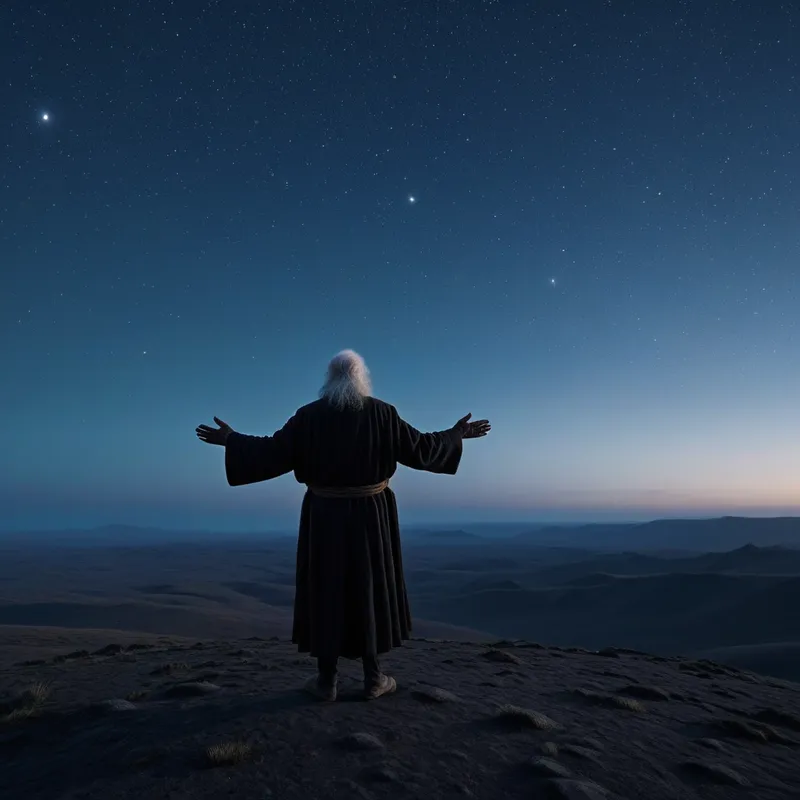
The myth was not written but breathed. It was passed down in the evening circle, told by elders (Sages) under the vast, starry sky that was the very subject of the tale. Its function was multifaceted: it was a cosmological explanation for the palpable distance between humanity and the divine, a pedagogical tool to teach self-reliance and environmental observation, and a philosophical framework for understanding suffering and hardship. If Leza is so distant, why do we experience drought or misfortune? The myth answers: not because he is cruel or absent, but because the world is now ours to navigate. Our struggle is not punishment; it is the condition of our maturity.
Symbolic Architecture
The myth’s power lies in its stark, beautiful symbolism of separation as the birthplace of consciousness. Leza’s withdrawal is not an abandonment, but a divine act of severing the umbilical cord. The intimacy of the primal world is the unconscious unity of infancy, where needs are met without asking. The rising sky represents the necessary rupture that forces the psyche into a state of awareness, of questioning, of self-discovery.
The wound of divine distance is the cradle of human soul-making. We are born into longing, and that longing becomes the compass for our deepest journey.
The futile towers and the animal ladder are not mere folktale whimsy. They represent humanity’s initial, desperate attempts to regain lost paradise through external, collective effort—through technology (the tower) and through harnessing all of nature’s power (the animal ladder). All fail. The message is that the connection cannot be rebuilt outwardly; it must be rediscovered inwardly, through wisdom and adapted relationship with the Earth. The tiny Ant at the pinnacle signifies that even the greatest collective effort culminates in the striving of the individual spirit.

The Dreamer's Resonance
When this myth pattern stirs in the modern Dream, it often manifests as dreams of profound separation or inaccessible guidance. You may dream of a beloved figure—a parent, a mentor, a Goddess—standing on a far shore, turning away, or receding into mist. You may dream of frantically dialing a phone number that is always disconnected, or calling out in a vast house to an absent authority. The somatic feeling is one of hollow yearning in the chest, a gravitational pull towards something irrevocably gone.
Psychologically, this signals a critical transition. The dreamer is experiencing the end of a psychological state where answers, security, or identity were externally sourced. The “Leza” of their personal cosmos—be it a parent’s approval, a dogma, a societal blueprint for success—has “withdrawn.” This is not a catastrophe, though it feels like one. It is the psyche initiating its own maturation sequence, forcing the ego to relinquish its dependency and begin the true work of building an inner authority.
Alchemical Translation
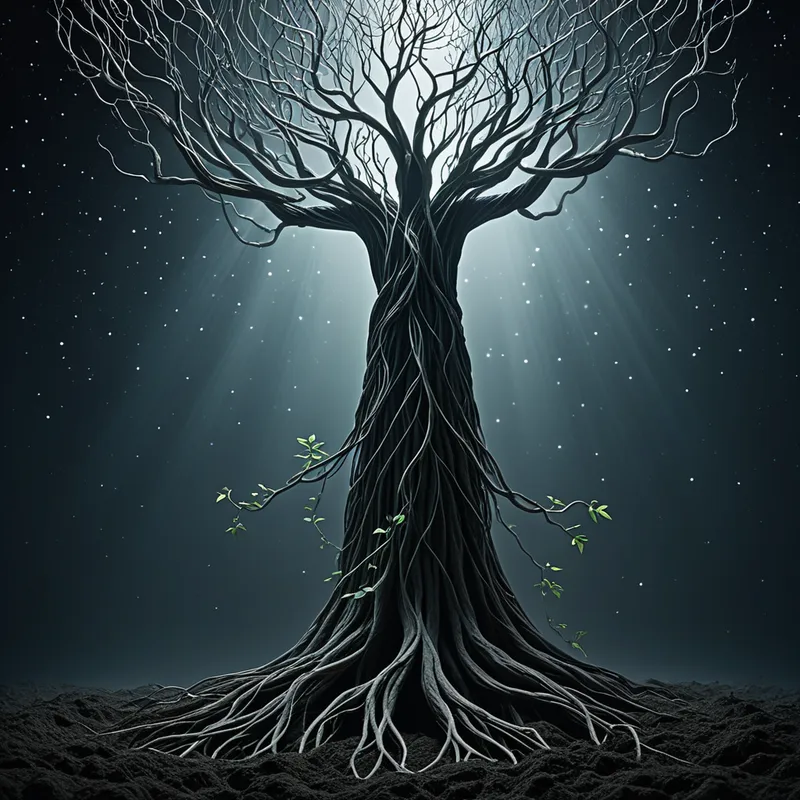
The individuation process modeled here is the alchemy of transforming longing into wisdom, and separation into conscious relationship. The first stage is Recognizing the Withdrawal: feeling the painful absence of old certainties. The second is the Futile Ascent: attempting, through old methods (people-pleasing, overwork, intellectualization) to reclaim that lost state. This failure is essential.
The true Sacrifice demanded by Leza is the sacrifice of our hope to be saved from without. In that surrender, we find the tools to save ourselves from within.
The third stage is Hearing the Distant Voice: internalizing the myth’s final message. The guidance is not gone; it has changed form. It is no longer a voice telling you what to do, but a presence that asks you to learn the language of your own life—to “read the leaves.” This means turning attention inward to intuition, to the body’s wisdom, to the patterns of your own emotions and dreams. You must “turn the earth with your own hands”—engage in the gritty, personal work of shaping your character and your path.
The final translation is understanding that Leza, the distant one, becomes internalized as the Self, the inner guiding center. The vast sky you gaze upon in longing becomes the infinite space of your own potential consciousness. The search for God becomes the journey to your own depths, where the divine spark was within you all along, waiting for you to grow tall enough—in spirit—to perceive it.
Associated Symbols
Explore related symbols from the CaleaDream lexicon:
- Sky — The domain of Leza, representing the transcendent, the infinite, and the painful, beautiful distance that inspires all spiritual seeking.
- Journey — The core human condition post-withdrawal; the lifelong process of seeking meaning, wisdom, and a new relationship with the divine through experience.
- Earth — The realm left to humanity, symbolizing the practical world, embodiment, and the necessity of grounding spiritual longing in tangible work and life.
- Ant — The persistent, collective effort that reaches its limit, signifying that ultimate understanding transcends sheer effort and requires a different quality of being.
- Rain — The blessing from the distant sky, now indirect and requiring interpretation, symbolizing grace that comes on its own terms, often through struggle.
- Bird — A messenger between realms, representing intuition, omens, and the new language of signs humanity must learn to decipher after direct communication ends.
- Mountain — The futile tower and the aspiration it represents; the human ambition to reach the divine through sheer height, a necessary but incomplete endeavor.
- Sage — The elder who tells the tale, embodying the wisdom earned through accepting the distance and learning to live within the question.
- Dream — The internal landscape where the longing for Leza is felt most acutely, and where new, symbolic forms of guidance may emerge.
- Separation — The fundamental wound and catalyst of the myth, the necessary space that allows for individual consciousness and responsibility to grow.
- Root — The connection to the earth and to tradition that must be strengthened once the connection to the sky becomes indirect, providing stability for the search.
- Star — The distant, constant lights in Leza's domain, serving as guides and reminders of an ordered cosmos, even in the absence of its maker.