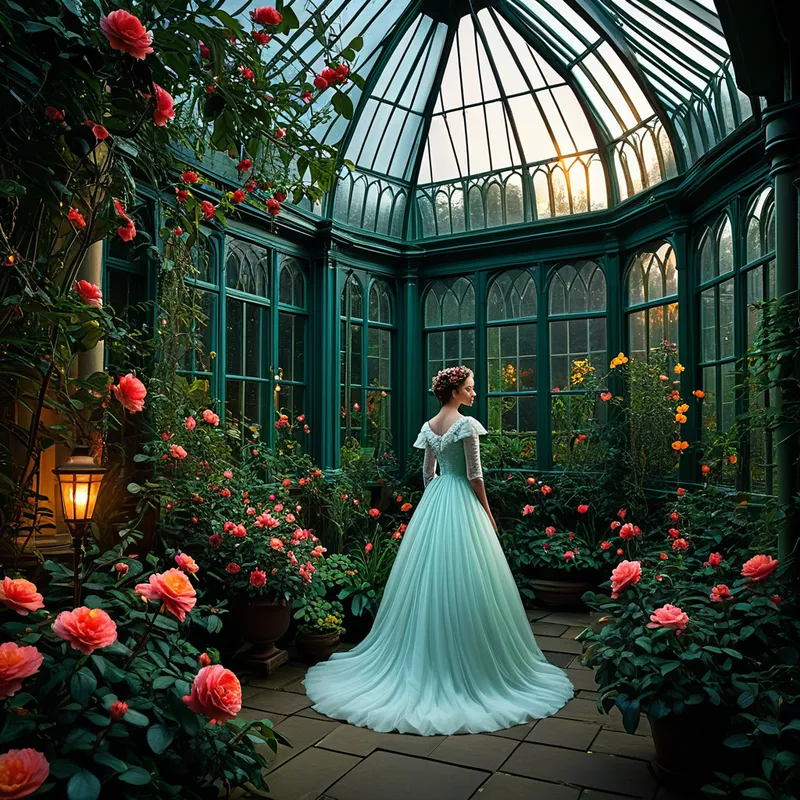
Language of Flowers Myth Meaning & Symbolism
A silent lexicon blooms in the Victorian garden, where every petal and thorn carries a coded message for the heart, a myth of constrained expression and profound feeling.
The Tale of the Language of Flowers
Listen, and hear the story not spoken, but bloomed. In an age of stone and soot, of rigid corsets and stricter manners, the human heart did not beat less fervently. It merely learned to speak in a new tongue. The myth begins not with a thunderclap, but with a sigh—a collective, stifled sigh that settled over the drawing rooms and gardens of an empire.
It is said that in this world of surfaces, the unconscious of the culture itself began to weep. Its tears, however, were not of saltwater, but of sap and pollen. From the damp earth of repressed longing and the hothouse of unspoken feeling, a silent lexicon was born. No single deity crafted it; it was a pact made between every constrained soul and the green world.
The protagonists are not gods, but you and I, clad in the garments of the time: the young heir whose fortune dictates his marriage, his heart yearning elsewhere; the governess whose station forbids her voice, but not her gaze; the widow shrouded in black, whose memories are a garden she tends in secret. Their battlefield is the ballroom, the parlor, the path through the park. Their weapons are not swords, but posies.
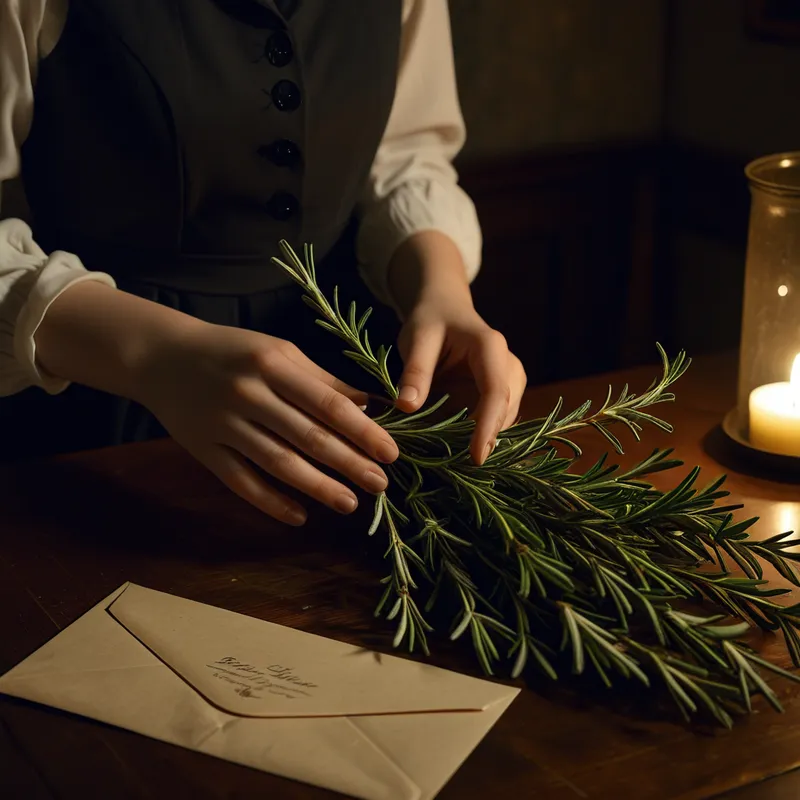
The conflict is the chasm between what is felt and what can be said. A suitor cannot declare, “You consume my every thought,” but he can send a bouquet of red tulips. A lady cannot refuse an advance with words that would cause scandal, but she can return a gentleman’s gift with a single, potent yellow carnation. The air in the room thickens not with speech, but with the scent of messages: the peppery warning of rosemary, the sweet peril of red roses, the melancholy of weeping willow sprigs woven into a wreath.
The rising action is a dance of terrible precision. A misidentified bloom is a declaration of war; an omitted flower, a devastating insult. A hydrangea placed carelessly can shatter a friendship. A hidden sprig of ivy within a bouquet can be a secret vow. The entire social order becomes a living cryptogram, a garden of forking paths where every turn, every gift, is fraught with meaning. The resolution is never final. It is the quiet understanding in a lover’s eye as they receive a spray of forget-me-nots. It is the crushing weight of a bouquet of lavender delivered after a quarrel. The myth does not end; it whispers on the wind, carried by the scent of petals pressed between the pages of a diary, a silent testament to all that was felt but never uttered.
Cultural Origins & Context
This was no ancient folklore passed down by firelight, but a meticulously constructed social technology of the 19th century. Its “bibles” were floriography dictionaries, popularized by works like Le Langage des Fleurs (1819) by Charlotte de Latour. It flourished in the specific soil of Victorian England—a culture characterized by intense social rigidity, religious piety, and a romantic, sentimental view of nature. In a society where direct expression of emotion, particularly around courtship, grief, or conflict, was heavily policed, the Language of Flowers provided a sanctioned outlet.
It was a language primarily wielded by women, for whom avenues of expression were most limited. Through the selection and arrangement of blooms—in tussie-mussies (tight, symbolic nosegays), in pressed-flower albums, or in the wreaths adorning everything from hats to graves—they could navigate the complex web of social relations. It was taught, discussed, and practiced in parlors and gardens. Its societal function was dual: it maintained the facade of propriety while creating a powerful, covert channel for the very passions and criticisms that facade was meant to suppress. It was a collective dream, a shared code that allowed the persona to remain intact while the soul sent its telegrams.
Symbolic Architecture
At its core, the myth of the Language of Flowers is a profound symbol of the psyche’s irrepressible need for expression. When the primary channels of communication are blocked by societal or internal censors, the libido—the psychic energy of life and desire—finds another way.
The flower is the soul’s metaphor, a delicate organ of speech grown where the tongue has been silenced.
Each blossom becomes a symbolic archetype. The rose is not merely a flower; it is the archetypal symbol of love, beauty, and the heart’s blood. The thorn is the necessary shadow, the protection and the potential for pain inherent in connection. The lily of the valley embodies the hope for renewal and innocence. This lexicon externalized the internal landscape. To give a bouquet was to offer a map of one’s own emotional state; to interpret one was to practice a form of intuitive psychology.
The garden itself symbolizes the cultivated Self. The careful selection of which “emotions” to plant and display reflects the conscious curation of the persona. Yet, as in any garden, weeds (repressed feelings) could sprout, and desired blooms could wither, telling their own silent, tragic story.

The Dreamer's Resonance
When this myth activates in the modern dreamer, it signals a somatic and psychological process of constrained communication seeking release. To dream of giving or receiving specific flowers, of being in a suffocatingly beautiful but silent greenhouse, or of trying desperately to arrange a bouquet whose meaning keeps shifting, is to dream from the place where feelings are stuck in the throat.
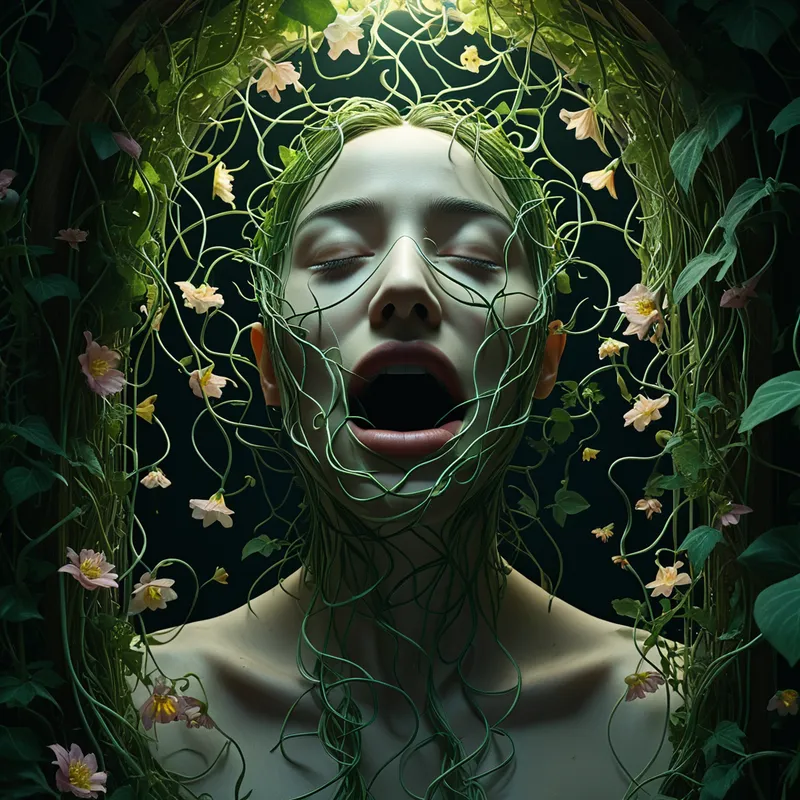
The somatic experience is often one of constriction—a tight chest, a sense of breathlessness, or a literal feeling of being gagged or mute. Psychologically, the dreamer is likely navigating a situation where they feel unable to speak their truth directly. This could be in a relationship, a workplace, or within their own internal family system, where old rules (“don’t be angry,” “don’t need too much”) still enforce silence. The dream’s floral code is the psyche’s attempt to bypass the inner censor, to express the inexpressible through the symbolic language of the unconscious. A dream of poisonous flowers might point to unexpressed resentment; a dream of offering wilting blooms may speak of a fear that one’s love or efforts are not enough.
Alchemical Translation
The alchemical process modeled here is the transmutation of raw, often forbidden, emotion into a vessel of beauty and meaning—without breaking the vessel of the social self or the conscious ego. It is a path of individuation through sublimation.
The Victorian garden was a crucible where the leaden weight of unsaid things was patiently transformed into the gold of symbolic meaning.
The modern individual undergoes a similar alchemy. We all have our “Victorian” constraints: internalized critics, familial expectations, professional personas that demand certain silences. The myth teaches that the first step toward wholeness is not always the explosive, heroic declaration. Sometimes, it is the subtle, patient work of naming our inner states to ourselves, of finding a private, symbolic language for them—be it through art, journaling, dance, or yes, even the mindful arrangement of objects. This is the nigredo—the acknowledgment of the dark, unspoken matter.
The careful selection and arrangement of the “flowers” (our acknowledged feelings) is the albedo, the purification. We order our chaos into a meaningful composition. Finally, the act of offering this symbolic arrangement—whether to another through indirect communication, or to our own awareness through integration—is the rubedo. It achieves connection and understanding, not by shattering the container, but by filling it with a deeper, more resonant truth. We learn to speak the language of the soul, which often blooms first in silence.
Associated Symbols
Explore related symbols from the CaleaDream lexicon: