Lancelot and Guinevere Myth Meaning & Symbolism
A knight's perfect love for his queen shatters the perfect kingdom, revealing the tragic cost of honor, passion, and the divided heart.
The Tale of Lancelot and Guinevere
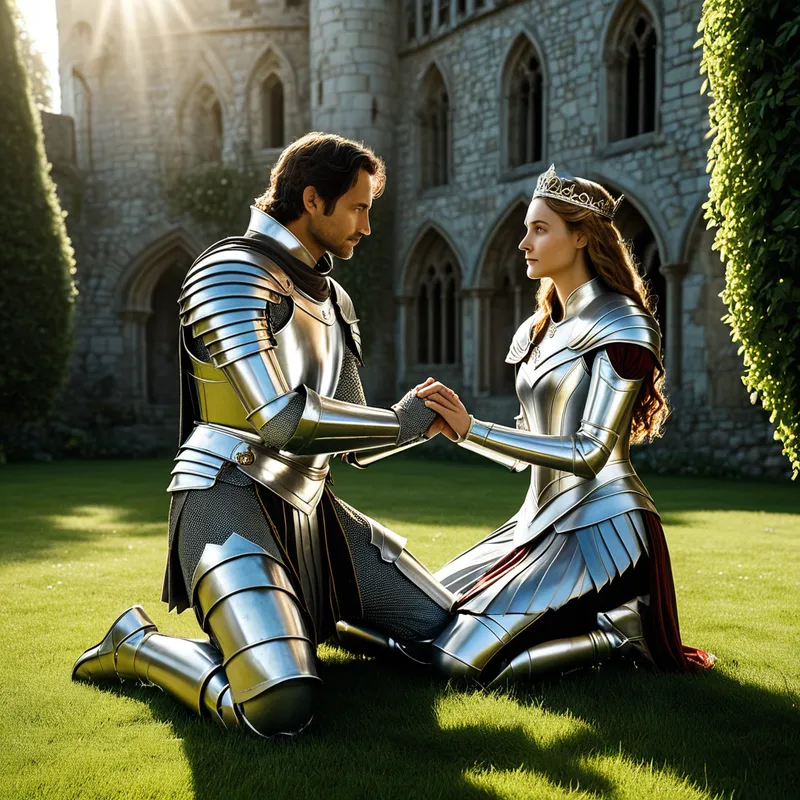
Listen, and hear the tale that cracks the foundation of the world. In the high hall of Camelot, where the light of a just king made the very stones gleam, there sat a queen. Guinevere, her beauty not of mere flesh but of an ideal, was the living heart of the kingdom, the promise made manifest beside Arthur, the Pendragon. The air smelled of beeswax, hearth-smoke, and the cold, clean scent of justice.
Then came the knight. He did not ride from the mist; he emerged from the lake, fostered by the Lady of the Lake, and his name was Lancelot du Lac. His armor was a second skin of silver, his skill in arms a kind of terrible poetry. He was the flawless instrument of the king’s peace, the pinnacle of the Round Table. When his eyes first met the queen’s across the crowded hall, it was not a meeting, but a recognition—a silent, seismic shock that resonated in the marrow. Here was a love born not of convenience, but of a mirrored soul, a perfect alignment of spirit that existed outside the law they both served.
For years, it was a secret fire banked beneath the cold marble of duty. Glances held a heartbeat too long in the tiltyard. A hand lingering over a offered cup of wine. Whispers in shadowed garden walks where the roses seemed to bloom too red. Their love was a second kingdom, invisible and vast, built on stolen hours and the exquisite agony of restraint. It was the flaw in the perfect diamond of Camelot, a hairline crack through which chaos whispered.
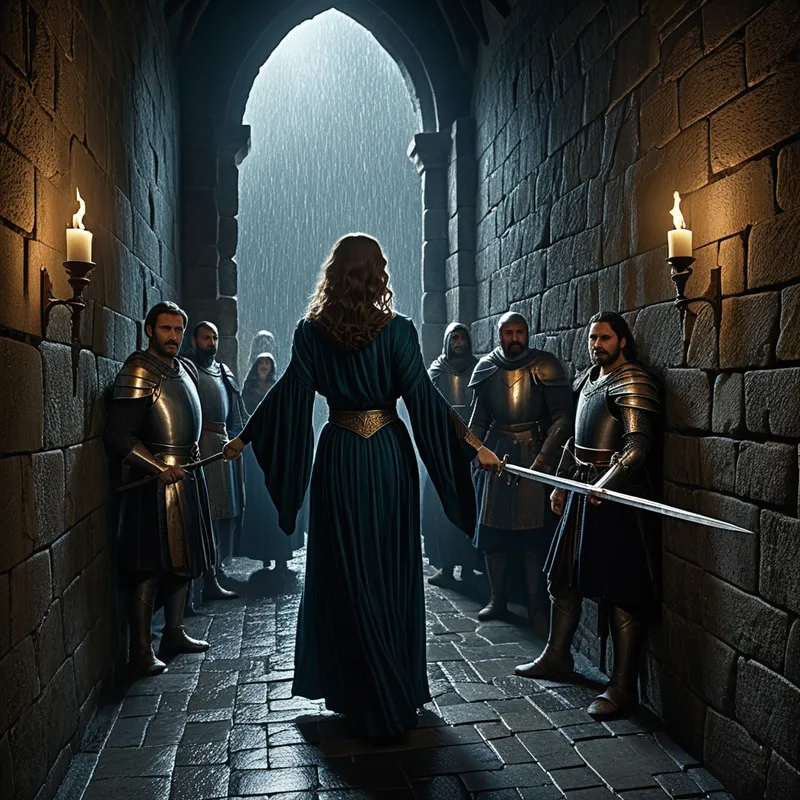
The whisper became a roar through the venom of Mordred. The secret, so long and so poorly kept, was dragged into the brutal light. The king’s justice, that very ideal Lancelot had sworn to uphold, demanded the queen’s death for treason. The perfect knight faced the ultimate chivalric rupture: loyalty to his king or love for his queen. In a storm of grief and fury, Lancelot fought his way to her pyre, a one-man army against the world he helped build, and rescued her. In that act of salvation, he enacted the destruction. The fellowship of the Round Table shattered like glass. Brothers-in-arms now faced each other across bloody fields.
The resolution was not victory, but a vast, echoing silence of loss. Arthur fell at Camlan. Guinevere, cloaked in remorse, entered a nunnery at Amesbury, seeking a love divine to replace the human one that broke a world. Lancelot, finding her there, could only share in her penance from afar, becoming a hermit and a holy man. They died apart, their great love the engine of their ruin and their final, separate quests for grace. The golden age was over, drowned in the sea of its own impossible ideals.
Cultural Origins & Context
The myth of Lancelot and Guinevere is not a single, ancient folktale but a literary accretion, a story that grew in the telling. Its roots are in the Welsh and Breton oral traditions surrounding Arthur, a possibly historical Romano-British warlord. However, the passionate, tragic affair we know is primarily the invention of 12th-century French poet Chrétien de Troyes in his Lancelot, the Knight of the Cart. He transplanted the nascent Arthurian legend into the soil of Courtly Love, a cultural and literary movement where love was an ennobling, often adulterous, and always secretive force.
The story was then massively expanded in the vast 13th-century prose cycles, like the Lancelot-Grail or Vulgate Cycle. Here, it was told by monks and scribes, who infused the pagan and chivalric material with Christian morality and tragedy. Its societal function was multifaceted: it was a thrilling romance for courts, a cautionary tale about the conflict between personal desire and public duty, and a theological exploration of sin, grace, and redemption. It asked the unbearable question of what happens when the highest earthly love comes into fatal conflict with the highest earthly vow.
Symbolic Architecture
At its core, this is not a simple love story, but a profound map of a psychic civil war. Lancelot represents the Ego at its most accomplished—the conscious self, perfected in skill and honor. Guinevere symbolizes the Anima, the soul-image, the inner life of feeling, beauty, and connection that gives the ego its deepest meaning. Arthur and Camelot embody the Self and its manifestation—the integrated, lawful, perfect kingdom of the psyche.
The tragedy occurs when the Ego falls in love with the Anima, but this sacred union is forbidden by the ruling order of the Self.
The love affair is the irresistible, numinous connection between the conscious personality and its own soul. Yet, in the psychic structure of duty, law, and collective identity (the Round Table oath, the king’s trust), this union is treason. Lancelot’s divided loyalty is the agony of the individual torn between the inner call of the soul and the outer demands of the persona and the collective. The shattered Round Table is the fragmentation of a once-unified consciousness. Mordred is not merely a villain, but the embodiment of the Shadow—the denied truth, the inevitable consequence of a repressed conflict, which rises to destroy the entire psychic order.
The Dreamer’s Resonance
When this mythic pattern stirs in the modern dreamer, it signals a profound interior conflict between sacred vows and a sacred calling. To dream of being a knight bound by an iron oath while yearning for a forbidden queen is to feel the somatic tension of a life lived at cross-purposes. The body may speak through a constricted chest, a knotted stomach, or a profound fatigue—the physical cost of upholding a persona that has betrayed the soul’s deeper truth.
Psychologically, this is the process of a necessary, yet terrifying, disillusionment. The dreamer is often at a point where the “perfect kingdom” of their life—a career, a relationship, an identity—has been built on the suppression of a core passion or authenticity (the Guinevere within). The dream is the unconscious staging the inevitable confrontation. It is not a prescription for adultery, but a powerful metaphor for the soul’s rebellion against any structure that denies its essential nature. The grief, guilt, and chaos in the dream are the birth pangs of a more authentic, if more broken and complex, self.
Alchemical Translation
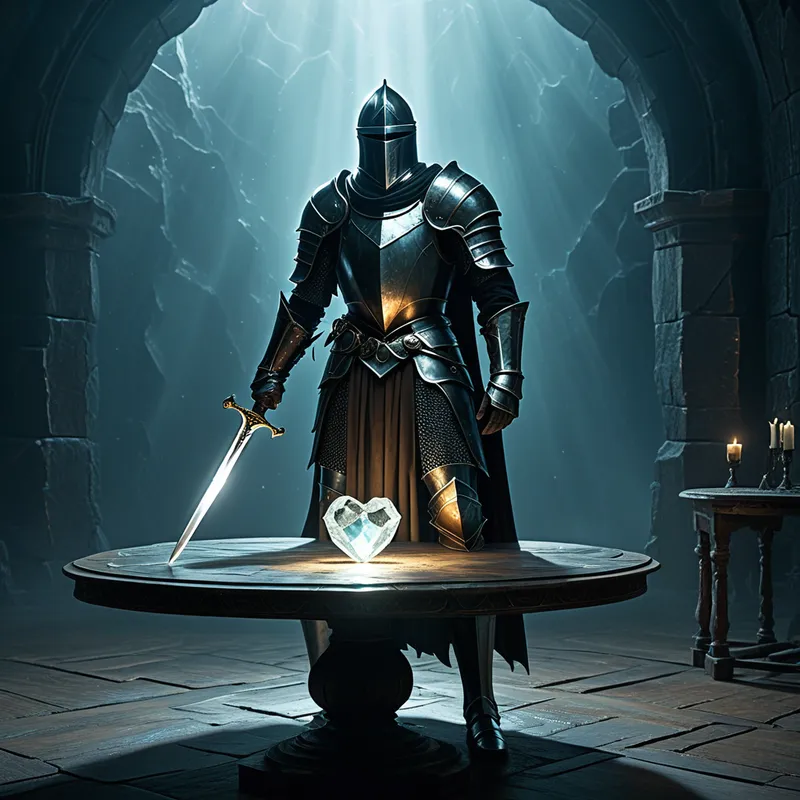
The alchemical journey modeled here is the Nigredo—the blackening, the putrefaction, the necessary death of the old, perfect form. Camelot, the golden vessel of the idealized Self, must be shattered so that a more conscious, redeemed Self can eventually be sought. Lancelot’s path is one of brutal, humbling transmutation: from the flawless knight (the lead of idealized persona) to the traitor and rescuer (the chaotic, mixed state of dissolution), and finally to the penitent hermit (the ash, the prima materia from which new life can grow).
The alchemical gold is not the regained kingdom, but the earned consciousness that comes from surviving the ruin of one’s own ideals.
Guinevere’s retreat to the nunnery and Lancelot’s turn to holiness represent the Albedo—the whitening, the washing in the waters of remorse and introspection. Their separation is crucial; the union of ego and anima, having proven destructively potent in the worldly realm, must be spiritualized and internalized. The myth shows that sometimes the sacred marriage cannot be lived outwardly without catastrophic cost. Instead, it must be completed inwardly, through individual contrition and the search for a higher, integrative principle (symbolized by their turn to God). The triumph is not in a happy ending, but in the depth of understanding purchased by their suffering. They carry the memory of the golden age and its fall within them, transformed from a political reality into a permanent, poignant part of the soul’s landscape—the foundation for whatever fragile, truthful kingdom comes next.
Associated Symbols
Explore related symbols from the CaleaDream lexicon: