Kaveh the Blacksmith Myth Meaning & Symbolism
A blacksmith's leather apron becomes the banner of rebellion, overthrowing a serpent-king and restoring the rightful sovereign in this foundational Persian myth.
The Tale of Kaveh the Blacksmith
Hear now the tale of the forge-fire that birthed a kingdom. In the land of Eran, a shadow fell, long and cold. It was the shadow of Zahhak, a king whose shoulders sprouted two serpents, fed each day on the brains of two young men, chosen from the people to sate their monstrous hunger. The land groaned under this curse. The smithies, once alive with the song of hammers shaping plowshares, now fell silent, their fires banked in mourning. Fear was the only law.
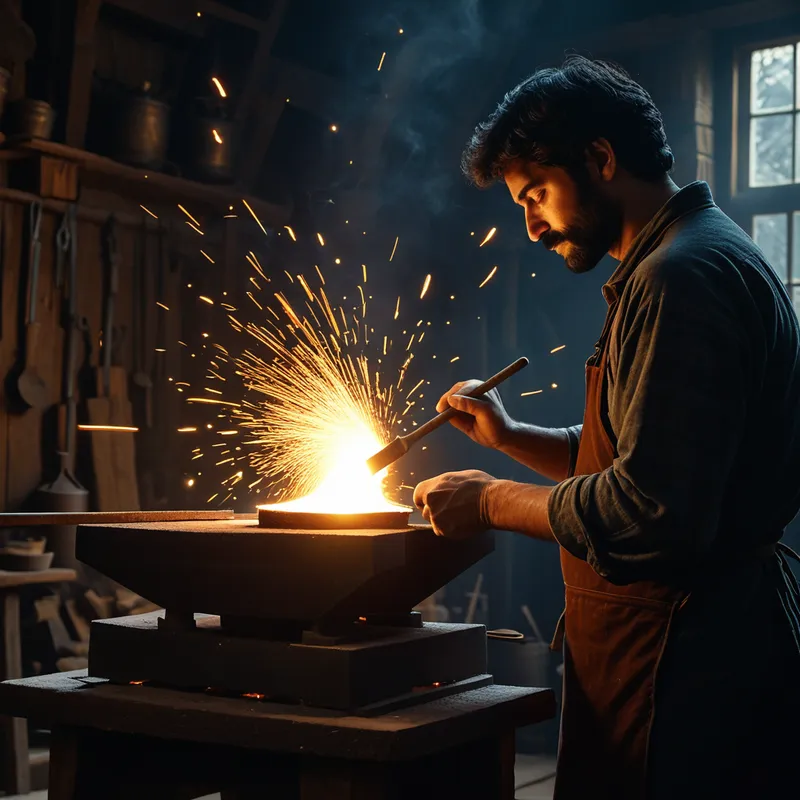
In the city of Isfahan, there lived a blacksmith named Kaveh. His hands were broad and scarred from a lifetime of wrestling fire and iron into useful form. He had seventeen sons. Sixteen had been taken, one by one, to feed the serpents of Zahhak. The last, his youngest, whose laughter once rang in the workshop, now stood in the dread line.
On the day of the choosing, the air was thick with the scent of despair. Kaveh watched as the king’s officers moved through the crowd like reapers. He saw his son’s face, pale but unbroken. And in that moment, the fire that slept in Kaveh’s heart—the same fire that tempered steel—erupted. It was not a roar, but a silence that cut deeper than any blade. He turned from the square.
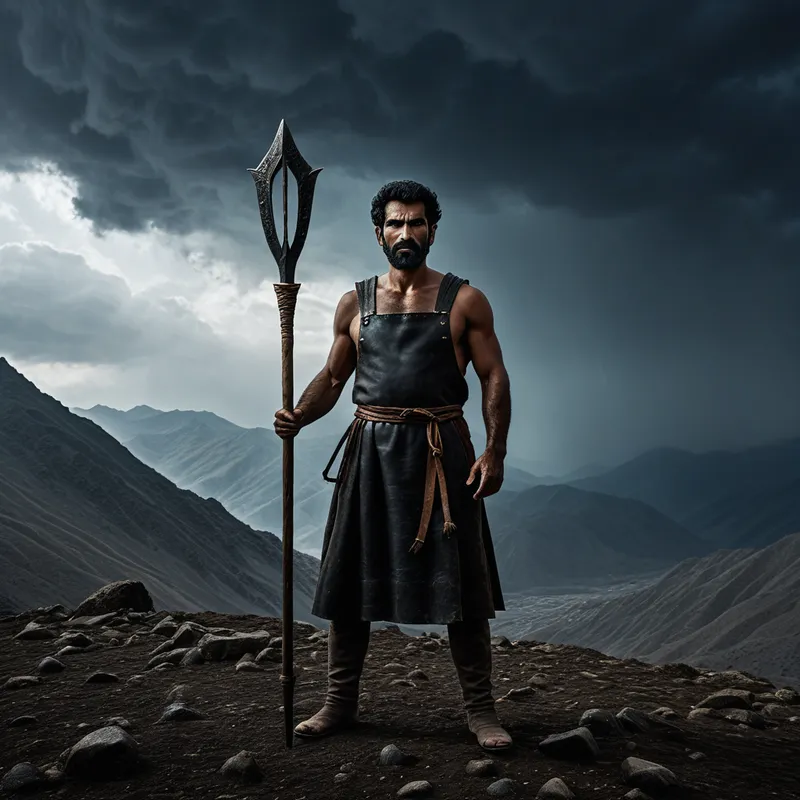
He did not go home. He went to his forge. He did not pick up a sword or a hammer of war. He took down his leather apron—stiff with soot, scarred by sparks, the very skin of his labor. He fastened it to the end of a long spear. This was his banner. Not silk, not gold, but hide and honest toil.
He walked back to the royal palace, this simple man with his simple standard. The people, seeing him pass, a solitary figure of grim resolve with that strange flag held high, began to stir. A whisper became a murmur, a murmur a tide. They fell in behind him, not as an army, but as a people waking from a long nightmare. They picked up stones, tools, whatever was at hand. The clatter of their gathering was the sound of chains breaking.
Kaveh stood before the gilded throne of Zahhak. He did not bow. He held his apron-banner aloft and spoke not of conquest, but of justice. He demanded his son. The serpents on Zahhak’s shoulders hissed, but they hissed against a wall of human will they had never faced. Cowed by the uprising swelling at his gates, the tyrant released the boy.
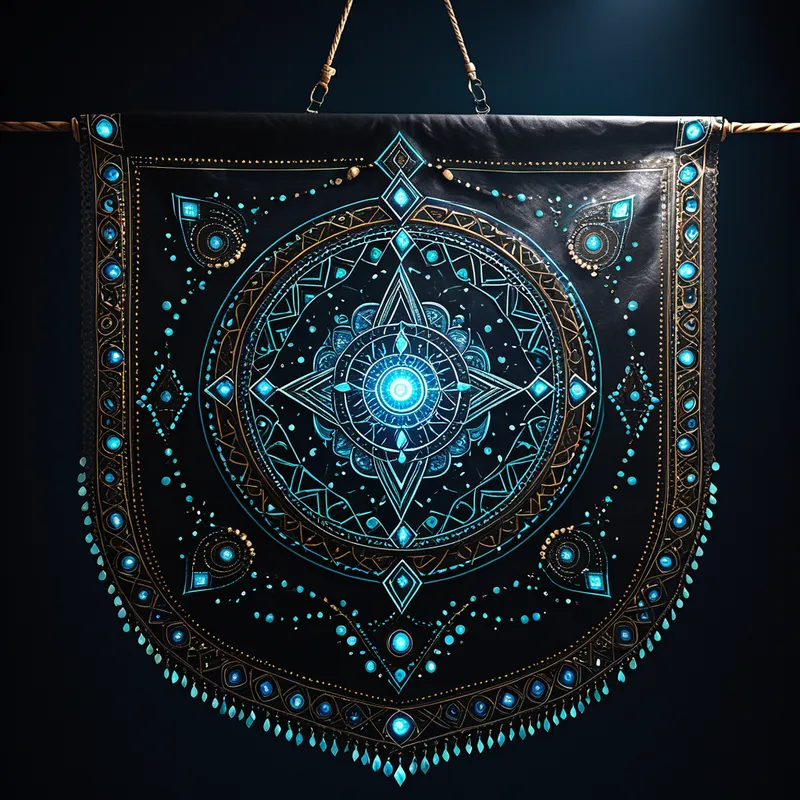
But the fire was lit. Kaveh and the swelling host marched from Isfahan, the Derafsh Kaviani—the Banner of Kaveh—catching the wind. They sought out Fereydun, the noble scion in hiding, the true seed of the land. They presented him with the banner. And with that leather apron as their standard, the people and their rightful king rode forth. The reign of the serpent was ended. The blacksmith’s apron, adorned then with silks and jewels by a grateful nation, became the eternal symbol of the kingdom’s soul, forged not in a crown, but in the defiant heart of a common man.
Cultural Origins & Context
This myth is the fiery core of the Iranian national epic, the Shahnameh, composed by the poet Ferdowsi in the 10th century CE. While Ferdowsi gave it its immortal poetic form, the story of Kaveh reaches back into the deep, pre-Islamic Zoroastrian past of Persia. It functions as a foundational myth of legitimacy and rebellion.
Passed down for millennia, first by oral storytellers (naqqals) and then enshrined in the Shahnameh, its societal function was multifaceted. It defined the ideal of a just ruler (Fereydun) against a tyrannical usurper (Zahhak). More radically, it established the concept of popular sovereignty—that the mandate of a king is granted and can be revoked by the will of the people, symbolized by Kaveh. It is a myth that equates national identity not solely with royalty, but with the courageous integrity of the common citizen.
Symbolic Architecture
Kaveh is the archetype of the Self arising from the common clay of the shadow. He is not a prince, but a producer; his power comes from his connection to the elemental: Fire, Earth (in the form of metal), and the raw material of his apron.
The revolution does not begin with a sword, but with the refusal to offer up one more piece of your soul.
Zahhak, with his serpentine appendages, represents the corrupt, alien psyche that feeds on the vitality (the "brains") of the young and the future. He is the parasitic complex, the internalized tyranny that demands constant sacrifice of our potential. The Derafsh Kaviani is the ultimate symbol. It is the transformation of the personal (Wound and toil) into the transpersonal standard. It is not a pristine flag but a used apron—the symbol of one man’s grief and labor becomes the banner for a collective Journey back to wholeness.
The Dreamer's Resonance
When this myth stirs in modern dreams, it signals a profound somatic rebellion against a psychic tyranny. The dreamer may be experiencing the "Zahhak complex": a feeling that something alien within or without is systematically consuming their vitality, their ideas, their future (symbolized by sacrificed sons).
Dreaming of a forge, a Fire that must be lit, or a simple, powerful tool (like a hammer or spear) points to the awakening of the inner Kaveh. The dream ego is being called to its workshop—not to craft a weapon of aggression, but to reclaim the tool of its own authority. The act of raising a banner in a dream, especially one made of humble, personal material (like leather, cloth), is the psyche’s declaration of independence from a draining job, a toxic relationship, or a crippling self-doubt. It is the moment the Life force says "no more" and turns to face the source of the predation.
Alchemical Translation
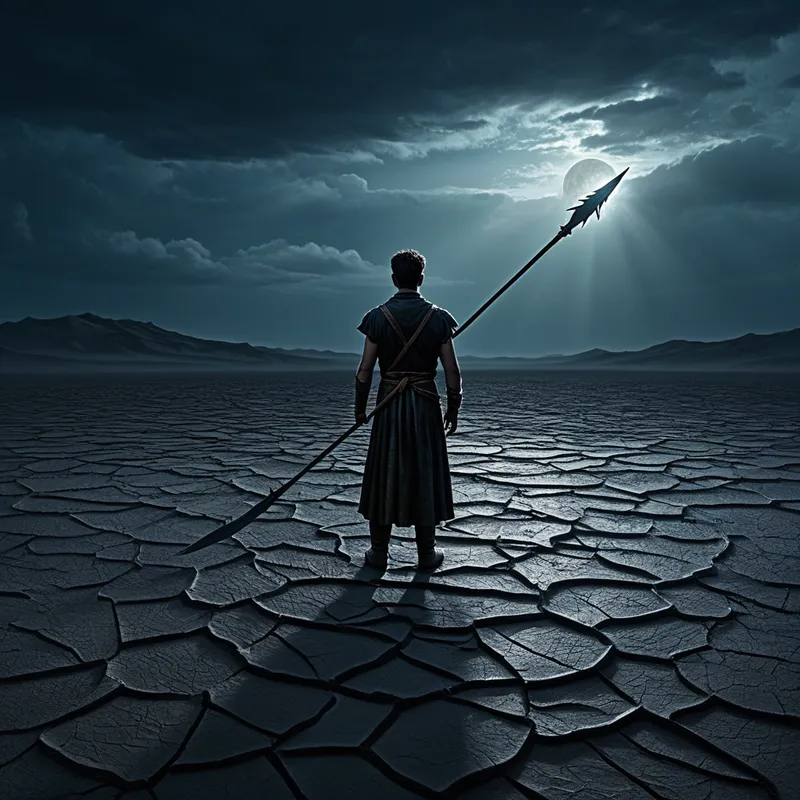
The process Kaveh models is the alchemy of righteous indignation into conscious sovereignty. It is the individuation path of the Rebel archetype, which is not destruction for its own sake, but destruction in service of a deeper, truer order.
- Stage 1 (The Sacrifice): The conscious ego has been complicit, offering up its "sons" (creative projects, personal boundaries, joy) to appease an internal or external tyrant (the demanding parent complex, the perfectionist animus, societal expectations).
- Stage 2 (The Descent to the Forge): The breaking point. The ego withdraws from the collective drama into the interior "forge"—the place of intense feeling (Fire) and re-forming. This is often a period of depression or anger, which holds the transformative heat.
- Stage 3 (Crafting the Banner): Here, the ego does not try to become the hero (Fereydun). It integrates its own shadow material—its grief (Grief), its rage (Rage), its sense of victimhood (Lack)—and transforms it into a symbol of identity. The leather apron is the accepted Wound made sacred.
- Stage 4 (The Restoration): Raising this authentic symbol attracts the support of other psychic forces (the "people") and allows for the crowning of the true inner ruler—the Self, or Fereydun. The tyrannical complex is overthrown, not by killing a part of oneself, but by withdrawing its food source—our compliance and fear.
The king is restored only when the blacksmith remembers his own name and the weight of his hammer.
The myth teaches that liberation is not about finding a savior, but about becoming the one who forges the standard to which the savior can rally. Our deepest authority is hammered out on the anvil of our most personal suffering, and raised high for all our inner kingdom to see.
Associated Symbols
Explore related symbols from the CaleaDream lexicon:
- Fire — The transformative element of Kaveh’s forge, representing righteous rage, purifying will, and the catalytic spark of rebellion that melts oppression.
- Wound — The personal grief of Kaveh, the loss of his sons, which becomes the sacred, stained center of the banner that mobilizes a nation.
- Banner — The Derafsh Kaviani itself, symbolizing the transformation of personal suffering into a transpersonal, unifying symbol of identity and purpose.
- Rebel — The core archetype embodied by Kaveh, who defies illegitimate authority not for chaos, but to restore a deeper, natural order.
- Tyrant — Represented by Zahhak, the parasitic psychic complex or external force that consumes life and demands endless sacrifice.
- Forge — The interior psychological workshop where raw emotion and experience are hammered into conscious form and will.
- Leather — The humble, durable material of the apron, symbolizing the embodied self, resilience, and the dignity of labor made sacred.
- Spear — The pole that lifts the banner, representing directed will, the penetrating truth that supports the new standard, and the axis of revolution.
- Son — Symbolic of the future, potential, and creative life force that is sacrificed to the tyrant until the protective father-self awakens.
- Restoration — The ultimate goal of the myth, the return of the rightful sovereign (the integrated Self) after the overthrow of the usurping complex.
- Rage — The hot, motivating force that fuels Kaveh’s action, distinct from blind anger, it is the fire of justice that forges change.
- Shadow — Kaveh arises from the common, overlooked populace (the collective shadow) to become the catalyst for light, integrating the denied power of the ordinary.