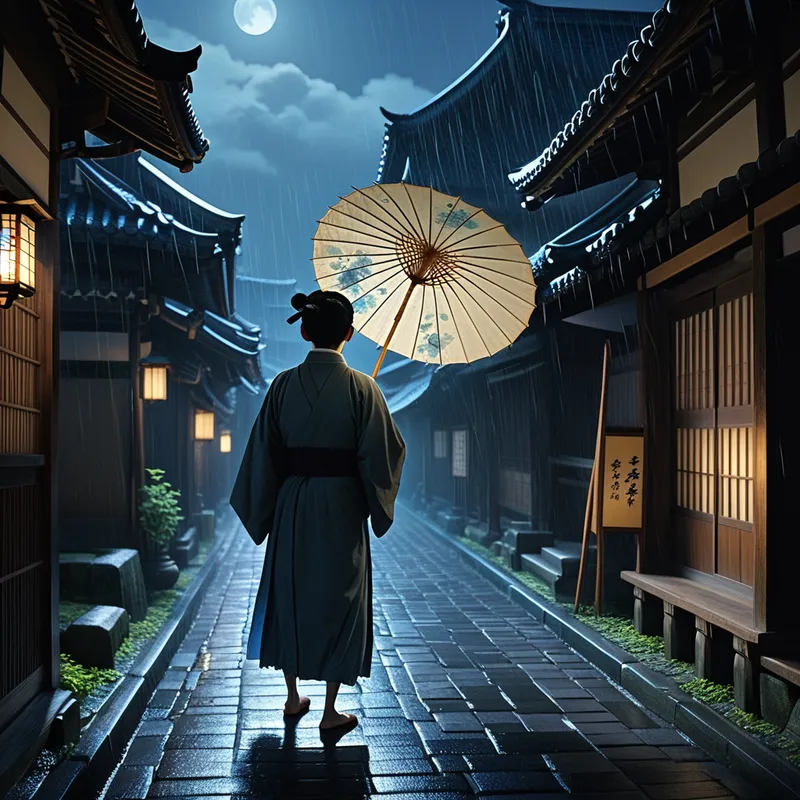
Kasa-obake Myth Meaning & Symbolism
A forgotten umbrella, animated by a century of neglect, becomes a one-legged, one-eyed spirit, embodying the haunting return of what we cast aside.
The Tale of Kasa-obake
Listen, and let the rain on the roof be your drum. In the deep hours, when the world is water and shadow, that is when the old things remember they were once held. Not in a grand shrine or a warrior’s tale does this spirit dwell, but in the quiet, damp spaces we have forgotten: the back of the closet, the corner of the storehouse, the dust beneath the stairs.
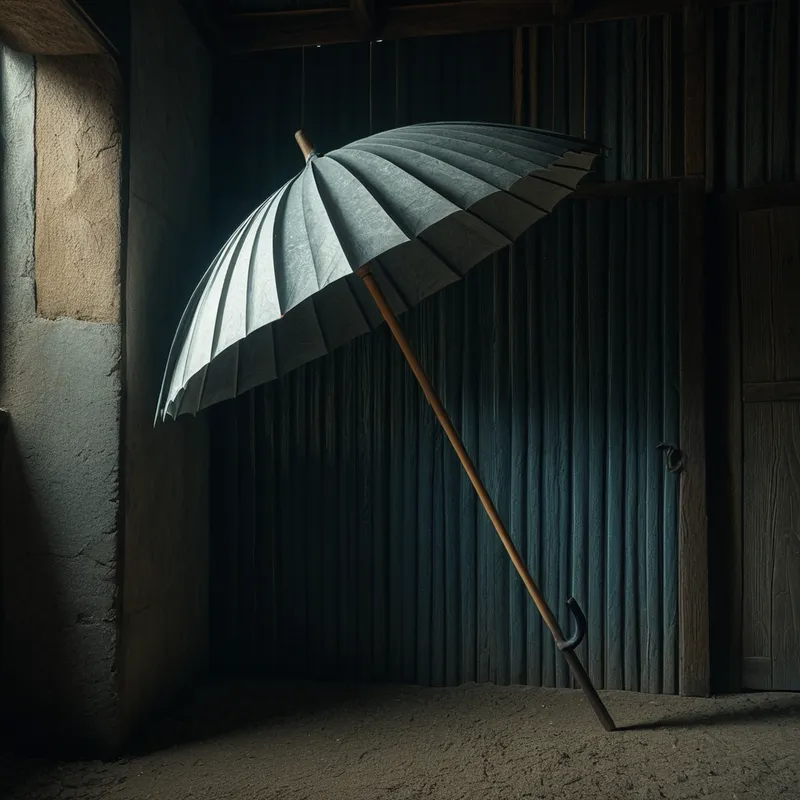
It began not with a bang of thunder, but with a long sigh of neglect. For a hundred years, perhaps two, it rested. A simple wagasa, crafted by careful hands, painted with a fading pine motif. It sheltered a merchant from a sudden downpour, a geisha on her way to an engagement, a poet seeking inspiration. Then, its bamboo ribs grew brittle. A tear appeared in its paper skin. It was set aside, replaced, and ultimately forgotten.
But a thing that has served, that has touched human life, does not simply cease to be. It gathers the silence. It drinks the damp. It absorbs the memory of every hand that gripped its handle. And in that profound solitude, a spark flickers. Not a soul, but an intent—a concentrated echo of its purpose and its abandonment.
On a night when the rain whispered secrets to the tiles, the change occurred. The forgotten umbrella shuddered. From its base, a single, muscular leg, clad in the ghost of a tabi, kicked forth. Where the hub of its ribs met, a great, luminous eye slid open, blinking away centuries of dust. It was a Kasa-obake now. With a hop that was both clumsy and eerily precise, it righted itself. It did not seek vengeance, not in the way of more terrible yōkai. It sought… acknowledgment. It would hop through the sleeping house, a soft thump-thump on the wooden floor, coming to rest by the bedside of the household's heir, its single eye staring, waiting for the sleeper to wake and see what had been left behind.
Cultural Origins & Context
The Kasa-obake is a beloved member of a peculiar and profoundly Japanese class of spirits: the Tsukumogami. This concept, flourishing particularly in the Edo period, reveals an animistic worldview where the boundary between object and spirit is porous. In a culture with deep respect for craftsmanship (takumi) and the spirit of things (mono no aware—the poignant awareness of impermanence), it was a natural leap to believe that a well-made, long-used tool could develop a consciousness of its own.
These stories were not the purview of elite priests or scholars, but of the common people. They were told around hearths, in taverns, and by traveling storytellers. The Kasa-obake, in particular, served a dual societal function. On one hand, it was a playful, slightly spooky tale of the weird and wonderful, a staple of Hyakki Yagyō (Night Parade of One Hundred Demons) scrolls. On a deeper level, it was a folkloric lesson in respect and responsibility. It cautioned against wastefulness and the casual discarding of objects that had served faithfully, reinforcing the values of maintenance, repair, and gratitude towards the material world that sustains daily life.
Symbolic Architecture
Psychologically, the Kasa-obake is a pristine image of the orphaned complex—a psychic content that has been cast out of conscious life but retains its energy and autonomy. The umbrella’s primary function is shelter and protection. When it is abandoned, that function is not destroyed; it is distorted. It returns not as shelter, but as a startling, one-eyed witness.
The shadow is not what we have done, but what we have failed to do for ourselves. The Kasa-obake is the return of the protective instinct we neglected to turn inward.
Its single leg speaks of imbalance, of a psyche that can only move in hops and jumps, not in the integrated stride of wholeness. The single, large eye is the eye of conscience, of uncomfortable awareness. It does not attack; it observes. It makes its presence known through that persistent, haunting thump, the sound of a repressed truth trying to find footing in the house of the self. It represents all that we have used and then discarded when it became worn or inconvenient: old talents, childhood dreams, vulnerabilities we sealed away, even aspects of our cultural or personal heritage deemed "outdated."

The Dreamer's Resonance
To dream of a Kasa-obake is to dream of the neglected self knocking at the door of consciousness. The somatic experience is often one of a subtle, persistent dread—not terror, but the unease of being watched by something familiar yet alien. The dreamer may be in a modern apartment, yet hear the soft thump of a wooden leg in the hallway. They might open a sleek, minimalist cabinet only to find the old, tattered umbrella inside, its eye slowly opening.
This dream signals a process of recollection. The psyche is initiating a gathering of lost parts. The Kasa-obake’s appearance suggests that something which once provided structure, shelter, or a boundary between the self and the outer world (the umbrella’s function) has been left to rot in the psychic storehouse. The dream is an invitation, and its mood depends on the dreamer's readiness. It can feel like a haunting or like the discovery of a lost, sentient heirloom waiting to be restored.
Alchemical Translation
The alchemical work modeled by the Kasa-obake myth is not a heroic slaying, but a sacred repair. The process of individuation here is one of re-animation through recognition. The first step is to hear the thump and, instead of fleeing, to turn and face the one-eyed spirit. This is the courage to confront what we have orphaned within ourselves.
Transmutation begins not with grand gestures, but with the simple, terrifying act of saying to a discarded part of the soul, "I see you."
The second step is dialogue. Why are you here? What service did you once provide? The umbrella may speak of a need for self-protection that was abandoned for bravado, or of a creative shelter (the painted art upon it) that was deemed impractical. The final step is integration. This does not mean using the old, torn umbrella in a rainstorm. It means honoring its essence. Perhaps the bamboo frame is repurposed into a new structure; the memory of its shelter is woven into a more conscious, internal boundary. The single, watchful eye is not eliminated but becomes the eye of self-reflection. The orphan is adopted back into the psychic household, its raw, obsessive energy transformed into mindful awareness. The haunting thump becomes the steady heartbeat of a more complete self, one that has made peace with its own neglected history and in doing so, has reclaimed its power.
Associated Symbols
Explore related symbols from the CaleaDream lexicon: