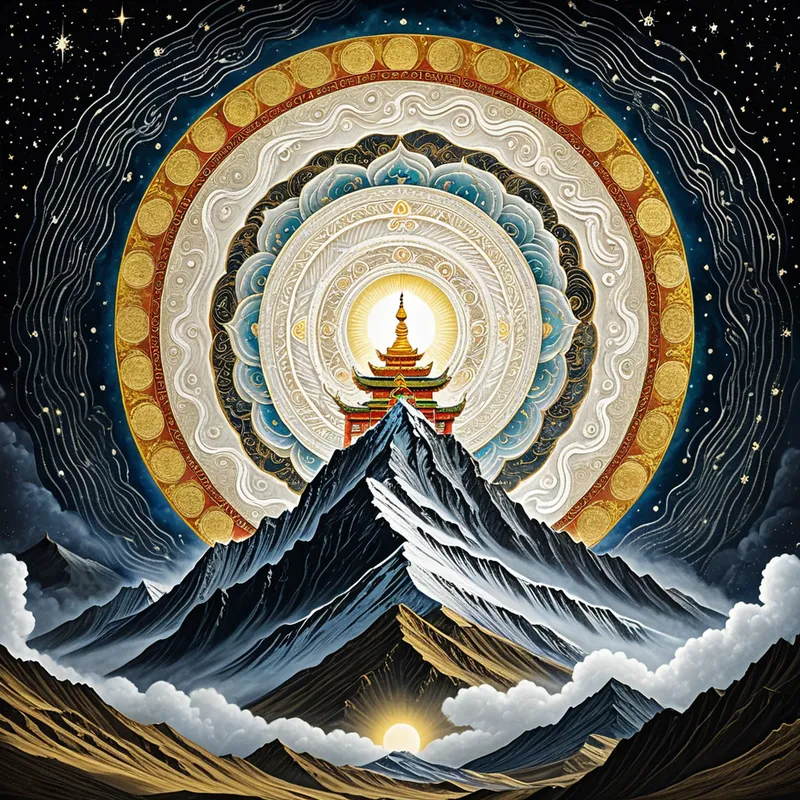
Kangling Myth Meaning & Symbolism
A cosmic entity of shadow and bone battles celestial forces, forging a pact that binds destruction to liberation in the high Himalayan winds.
The Tale of Kangling
Listen, child of the present age, to the whisper that rides the wind from the roof of the world. Before the first monastery was built upon the rock, when the sky was a deeper blue and the mountains still whispered their ancient names, there existed a being of pure, untamed potential. It was not a god, nor a demon, but a raw force born from the silence between breaths and the echo in the hollow of a bone. They called it Kangling.
It dwelled not in a palace, but in the liminal spaces: in the howl that funnels through a high pass, in the sudden chill that descends at twilight, in the memory of mortality that flashes behind the eyes of a laughing child. Its form was that of a shifting tempest—a coalescence of the unresolved, the feared, the cast-off shadows of all living things. It was the embodiment of Anicca made manifest, a chaotic symphony of dissolution.
This formless dread began to sing. Its song was not melody, but the vibration of ending itself—the cracking of glacier ice, the sigh of a last breath, the crumbling of stone to dust. Where its shadow passed, living things felt a profound, unnamable sorrow; flowers would close their petals not at night, but at noon. The celestial protectors, the Dharmapalas, perceived this dissonance. A great warrior among them, whose compassion was as fierce as his wrath, descended. His form blazed with the light of unwavering awareness, a stark contrast to the Kangling's swirling darkness.
Their meeting was not upon a field of battle, but on a windswept plateau where reality itself felt thin. The Dharmapala did not draw a sword. Instead, he stood within the heart of the Kangling's mournful song. He did not resist the vibration of ending; he absorbed it, understood it, and mirrored it back—not as terror, but as truth. For seven days and nights, a silent struggle ensued. The Kangling, used to inspiring flight, found itself seen, its essence fully confronted by a consciousness that would not look away.
In that ultimate confrontation, a miraculous alchemy occurred. The formless shadow, pressed against the diamond-like clarity of the Dharmapala's mind, began to take a definitive shape. From the chaos of its being, a structure emerged: the curve of a femur, the hollow of a conduit. The warrior, with a gesture of unimaginable compassion, reached into the storm and grasped it. The chaotic force was not destroyed, but bound, transformed, and given purpose. Its song of pure ending was tuned. Now, its voice would not merely signify death, but would cut through the illusion of permanence, liberating the mind from fear. The howl became a trumpet call to awakening. The raw entity of shadow and bone was forged into the sacred instrument, the kangling, its voice forever pledged to the path of liberation.
Cultural Origins & Context
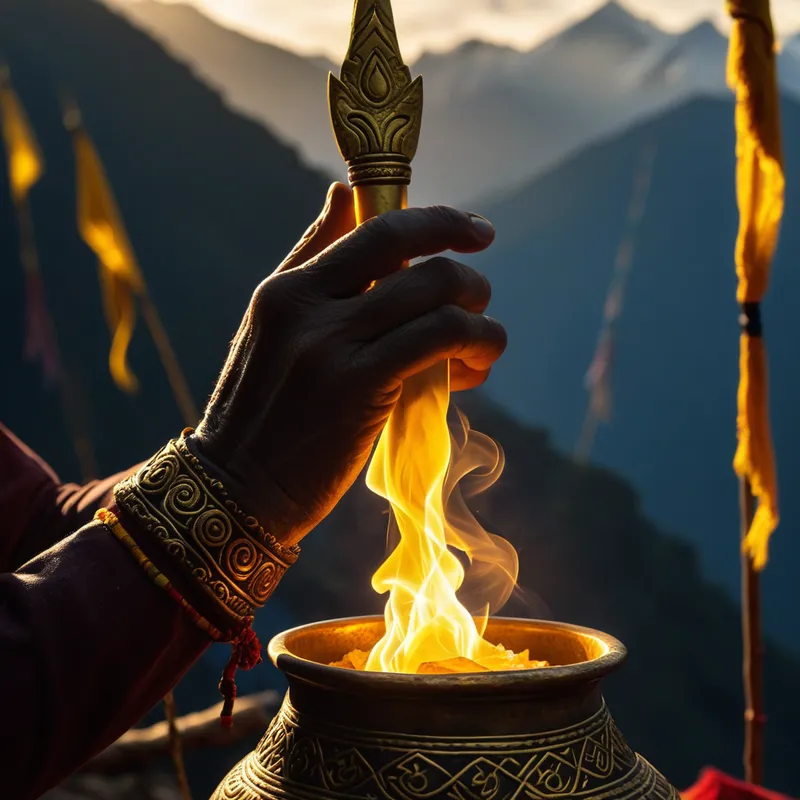
This myth, woven into the fabric of Vajrayana Buddhism, is not a children's fable but a Dharma teaching encoded in narrative form. It originates from the Bön and early Buddhist tantric cycles, transmitted orally by yogis and siddhas in the caves and high retreats of the Himalayas. The story was passed down not to entertain, but to instruct—a core component of the "skillful means" used by teachers to explain complex philosophical truths about the nature of mind, reality, and the path to enlightenment.
Its societal function was multifaceted. For the monastic community, it provided a mythological framework for the use of the actual ritual kangling instrument, transforming a potentially macabre object (a human thighbone trumpet) into a symbol of profound victory. It served as a potent reminder that the tools of practice often incorporate the very things we fear most. For the wider culture, living in an environment where mortality was a constant, intimate companion, the myth offered a way to reframe death. It presented dissolution not as a final terror, but as a raw material for spiritual artistry, a necessary note in the music of liberation.
Symbolic Architecture
At its heart, the myth of Kangling is a masterclass in the psychology of integration. The Kangling entity represents the untamed, unconscious shadow—not just personal fears, but the collective, existential dread of impermanence and annihilation. It is the part of the psyche we spend our lives avoiding, the "sound" of our own inevitable ending.
The shadow cannot be banished by daylight; it must be invited to sing its true note, so its power can be harnessed for the journey.
The Dharmapala symbolizes the disciplined, conscious ego that has aligned itself with a higher principle (in this context, enlightened awareness or Shunyata). The confrontation is the essential process of shadow-work: not a war of annihilation, but a profound engagement. The Dharmapala's victory lies in his capacity to contain the shadow's energy without being destroyed by it. The transformation of the entity into an instrument is the ultimate symbol of psychic alchemy—the recalibration of destructive, paralyzing fear into a tool for piercing ignorance.
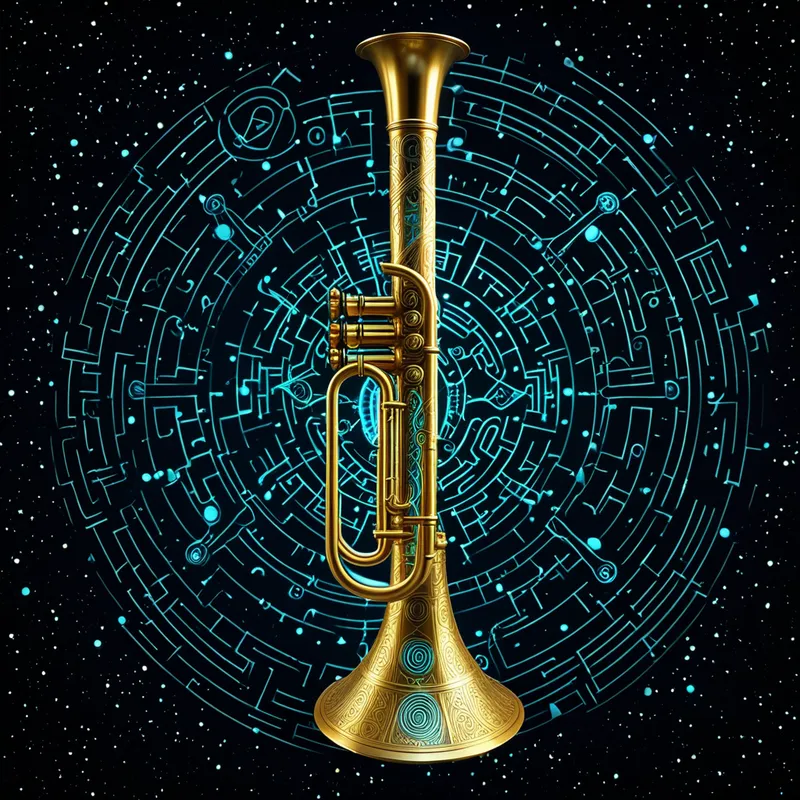
The resulting kangling instrument is thus a symbol of the integrated psyche. It is a testament that what was once deemed monstrous and other can become a source of sacred power and clarity. Its music is the sound of conscious transformation, a call that reminds us that liberation is found not in escaping the facts of existence, but in blowing the trumpet of awareness through the very bone of them.
The Dreamer's Resonance
When this myth stirs in the modern unconscious, it often manifests in dreams of confronting a formless, overwhelming anxiety or a shape-shifting monster. The dreamer may find themselves in a vast, empty landscape (the plateau of the psyche) facing a presence that is more atmospheric than physical—a chilling wind, a pervasive sense of dread, a deafening silence that feels predatory.
The somatic experience is key: a tightening in the chest, a coldness in the limbs, the instinct to flee. This is the "song of Kangling" vibrating through the dreamer's nervous system. The psychological process underway is the initial, often terrifying, emergence of a major shadow complex—perhaps around mortality, a repressed grief, or a deep-seated fear of personal dissolution or failure. The myth pattern activates when the psyche is ready to begin a fundamental negotiation with this material, not just to repress it again. The resolution in the dream, if it follows the myth, would not be slaying the monster, but a sudden change in the dream-ego's stance: turning to face it, listening to it, or even, in a moment of profound courage, reaching out to touch the swirling darkness.
Alchemical Translation
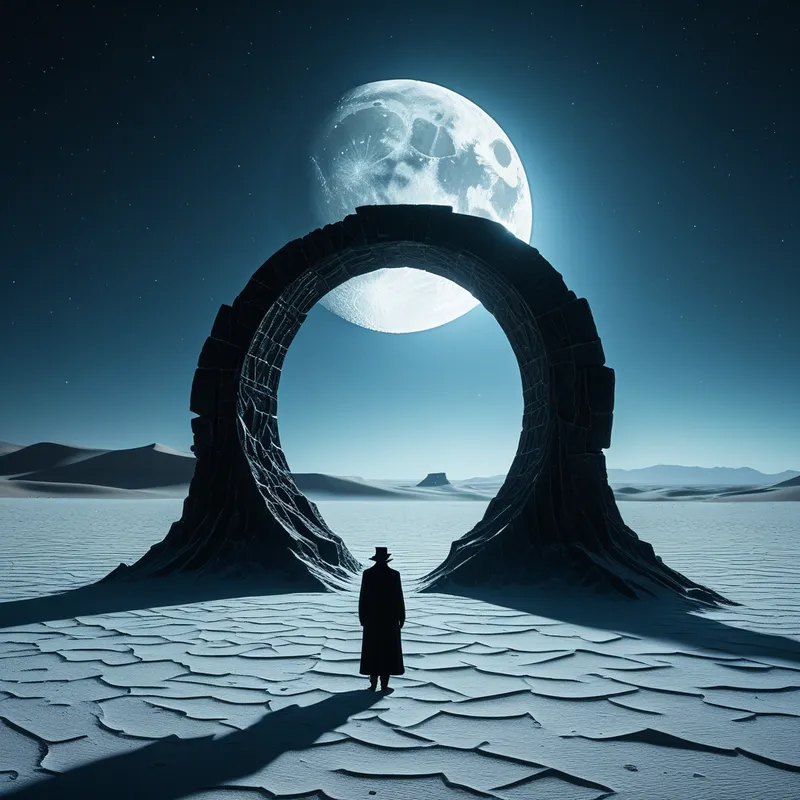
For the modern individual navigating the path of individuation, the Kangling myth provides a precise map for psychic transmutation. The first step is Confrontation. We must cease our automatic flight from the "howl" of our personal and existential shadows—our anxieties, depressions, rages, and fears of meaninglessness. This requires the Dharmapala's discipline: developing a mindful awareness that can stand firm in the presence of discomfort.
The second is Containment and Comprehension. This is the deep listening. Instead of analyzing the shadow to death, we allow ourselves to feel its texture, its vibration, its message. What ancient pain is singing this song of dread? This stage is the crucible where raw emotion is held in the vessel of conscious attention.
The goal is not to silence the inner chaos, but to conduct it; to become the hollow bone through which the storm becomes a signal.
The final, alchemical stage is Instrument-Making. This is the active integration. The energy bound up in fear is immense. The myth teaches us to reclaim that energy and reform it into a tool for our development. The fear of mortality becomes a clarion call to live authentically. The pain of old grief becomes a deeper capacity for compassion. The raw, chaotic emotion becomes focused passion and creativity. We forge our own inner kangling. Its music is our unique voice in the world, a voice that does not deny darkness but has learned to sound a note of truth through it, transforming personal history into a song of liberation.
Associated Symbols
Explore related symbols from the CaleaDream lexicon: