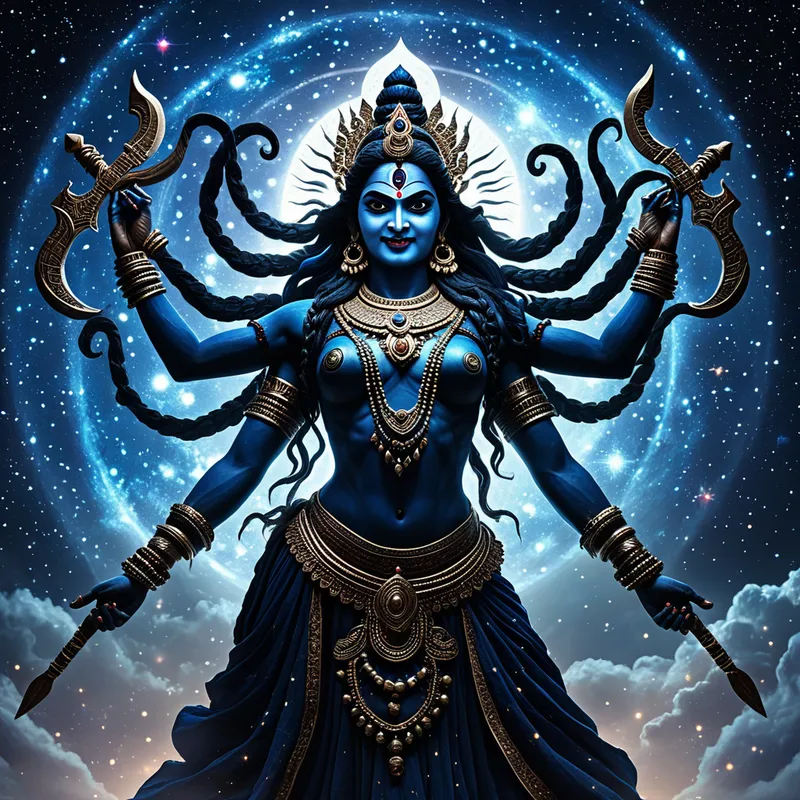
Kali's Dance Myth Meaning & Symbolism
A myth of divine fury and grace, where the goddess Kali's world-ending dance is calmed only by the ultimate surrender of her consort, Shiva.
The Tale of Kali's Dance
Listen, and let the story unfold in the space between heartbeats.
The world was drowning in a tide of blood. The demon Mahishasura, born of arrogance and granted a boon of near-invincibility, had cast the heavens from their thrones. His armies, a seething mass of fury, choked the earth and sky. The gods, wounded and despairing, gathered their remaining light. From the collective fire of their rage and desperation, a new presence coalesced. She was not born; she erupted. She was the roar of the void given form—the goddess Durga, riding her lion, a symphony of weapons in her ten hands.
The battle was a cataclysm. Mountains became dust, and oceans boiled. Durga fought with divine strategy, but from her brow, as her fury at the demon’s deceit and the suffering of creation peaked, a darker eminence emerged. A form of pure, uncontainable wrath stepped forth. This was Kali. Her skin was the blue-black of a midnight storm, her eyes pools of infinite night. A girdle of severed arms swung at her hips, a garland of fifty-one skulls—the letters of the Sanskrit alphabet, the building blocks of illusion—adorned her neck. Her tongue lolled out, thirsty for the demon’s blood.
Where Durga wielded strategy, Kali embodied annihilation. She fell upon Mahishasura’s armies not as a warrior, but as a force of nature. Her dance was not of grace, but of eradication. With each swing of her scimitar, legions vanished. She drank the blood of the demon Raktabija, whose every drop could spawn a new clone, swallowing his essence whole before it could touch the earth. The battlefield grew quiet, save for the jangle of her ornaments and the wet sound of her feast.
But the dance did not stop. The adrenaline of destruction, the ecstatic fury of having purged the cosmos of a cosmic poison, still coursed through her. The demon was dead, but Kali’s dance of dissolution continued. It turned on the world itself. The earth trembled, threatening to shatter. The stars in their courses wavered. The gods, who had summoned this power, now cowered before it. Their savior had become the ultimate threat.
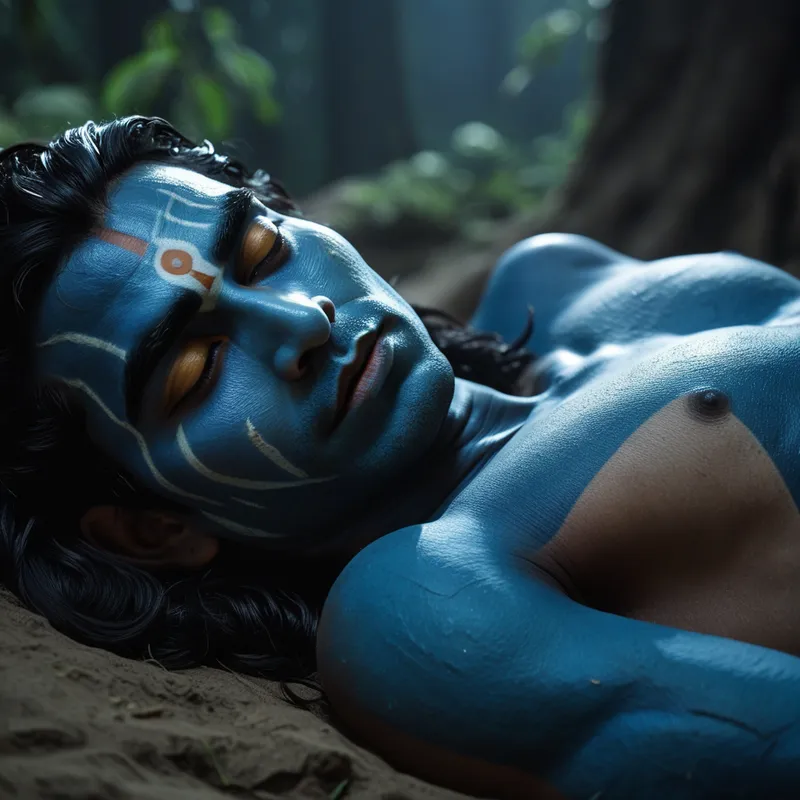
In this moment of cosmic panic, all eyes turned to Shiva, the great ascetic, her consort. He understood what others could not. He did not raise a weapon. He did not chant a mantra to bind her. Instead, with infinite compassion and the stillness of a mountain, he walked onto the ravaged plain. He lay down among the corpses, directly in the path of her frenzied dance.
Kali, lost in the trance of destruction, did not see him—until her foot came down upon his chest. The contact was electric. The feel of his still, warm flesh beneath her bare foot, the utter vulnerability of his posture, shattered her trance. Her wild, rolling eyes looked down. She saw him, her beloved, the source of all consciousness, lying prostrate beneath her. Her tongue, outstretched in fierce delight, snapped back into her mouth in a gasp of shock and shame. The dance ceased.
In that absolute silence, the universe held its breath. Kali’s fury dissolved, not into nothingness, but into a profound, trembling stillness. The destroyer was restored to herself, not by force, but by the ultimate surrender of the one she loved. The world, saved from the demon, was now saved from salvation’s own unchecked fury.
Cultural Origins & Context
The myth of Kali’s dance is primarily woven into the tapestry of the Devi Mahatmya, a seminal text within the Markandeya Purana, dated to around the 5th-6th century CE. This period saw the flourishing of the Shakta tradition, which venerates the Divine Feminine, or Shakti, as the ultimate source of creation, preservation, and destruction.
The story was not merely theological entertainment; it served a vital societal and psychological function. Told by sages and priests, it modeled a worldview where chaos and order, destruction and creation, are not opposites but interdependent phases of a single cosmic cycle. In a culture that deeply understood the impermanence (Anitya) of all things, Kali’s dance provided a terrifying yet necessary image of the force that ensures this cycle continues. She was the embodiment of Time (Kala) itself, which consumes all. The myth instructed devotees that to truly live, one must first make peace with the reality of dissolution, not as an end, but as a prelude to renewal.
Symbolic Architecture
Kali represents the raw, unprocessed power of the unconscious—the Shadow in its most potent, transpersonal form. She is not evil, but she is utterly untamed. Her garland of skulls symbolizes the conquered letters of the alphabet, the structures of language and ego that create the illusion (Maya) of a separate self. Her lolling tongue and blood-drinking depict a primal, incorporative energy that consumes all differentiated forms back into the undifferentiated source.
Shiva, as the silent, witnessing consciousness (Purusha), represents the still center of the self. His act of lying down is the ultimate spiritual gesture.
The ego does not integrate the shadow by fighting it, but by surrendering to its necessary function. Consciousness must willingly become the ground for the dance of the unconscious.
The dance itself is the chaotic, creative-destructive process of psychic transformation. It only becomes pathological when it has no "ground" upon which to dance—when our conscious identity is too rigid to accommodate the upheaval. Kali’s halted step on Shiva’s chest is the moment of integration, where raw instinct meets conscious awareness, and fury transmutes into transformative power.
The Dreamer's Resonance
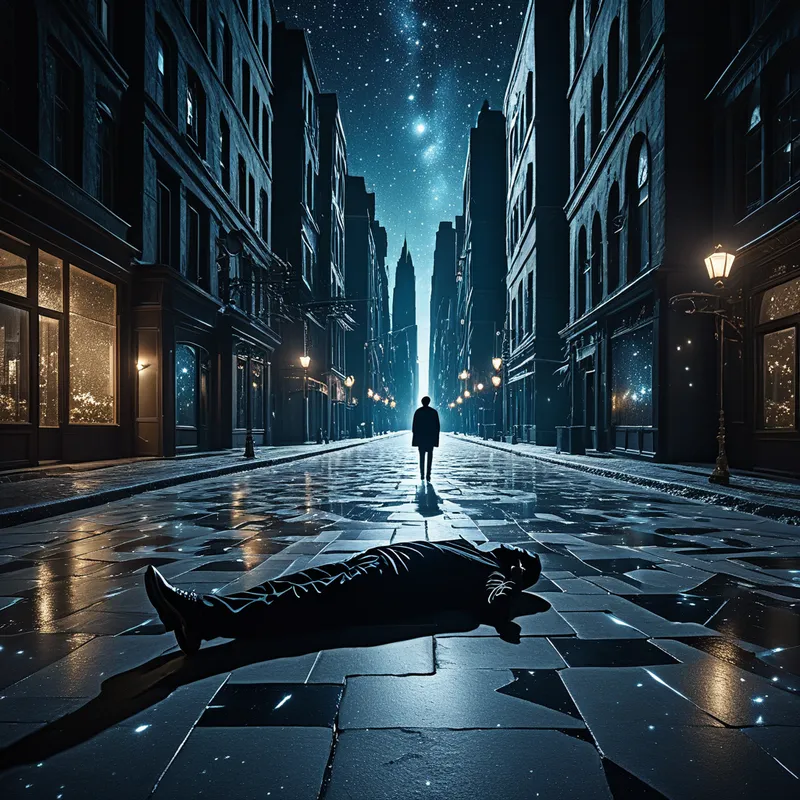
When this myth patterns a modern dream, it signals a profound somatic and psychological upheaval. The dreamer may not see Kali, but they will feel her climate: dreams of uncontrollable rage, of cities crumbling, of wild, ecstatic dancing, or of being pursued by a terrifying yet fascinating dark feminine figure. Somatic experiences might include waking with a racing heart, feeling an explosive energy in the limbs, or a tightness in the chest—the very place where Shiva received Kali’s foot.
This is the psyche’s attempt to dance out a toxicity that the conscious mind has been forced to swallow—a long-repressed trauma, a fury at personal injustice, or a lifetime of conforming to a persona that has become a prison. The dream is not a warning of madness, but evidence of a necessary, if terrifying, self-purification. The psyche is playing the role of Kali, attempting to destroy the internalized "demons" (oppressive beliefs, stagnant patterns) that, like Raktabija, regenerate from every unaddressed drop of pain.
Alchemical Translation
The alchemical journey modeled here is the Nigredo—the blackening, the descent into the chaotic prima materia—followed not by an escape, but by a sacred marriage (Coniunctio) with the very source of the darkness. For the modern individual, the process unfolds in three stages.
First, the Eruption of the Shadow: A life crisis, a breakdown, a surge of "unacceptable" emotion shatters the carefully maintained persona. This is Kali’s birth on the battlefield. The individual feels taken over by a destructive force.
Second, the Dance of Dissolution: Old identities, relationships, and life structures that were built on false premises begin to fall apart. This feels like chaos and loss. The key is to understand, as the gods initially did not, that this destruction has a purpose. It is clearing space.
The alchemical fire does not destroy the essence; it liberates it from the form that can no longer contain it.
Finally, the Surrender of the Conscious Self: This is the most challenging and crucial stage. It is the internal equivalent of Shiva lying down. It involves stopping the struggle against the upheaval. It means consciously turning toward the pain, the rage, the fear, and saying, "Here I am. Do what you must." This is not passivity, but the ultimate active receptivity. It is allowing the chest of one’s ego to be the ground upon which the unconscious does its work.
The resolution is not the elimination of Kali, but her integration. The fierce, boundary-destroying energy becomes a source of incredible power, creativity, and liberation. The individual who has weathered this dance no longer fears their own depth or darkness. They understand that true stability is not a rigid fortress, but the dynamic, loving tension between the dancing force of transformation and the still, witnessing core of the Self. They have learned that to be whole, one must first allow the parts that no longer serve to be utterly destroyed.
Associated Symbols
Explore related symbols from the CaleaDream lexicon: