Jataka Tales Myth Meaning & Symbolism
A vast collection of stories depicting the Buddha's past lives, each a parable of selfless virtue, karmic consequence, and the gradual perfection of compassion.
The Tale of Jataka Tales
Listen. Before the great awakening, before the stillness beneath the Bodhi tree, there were the lives. Countless lives, a river of forms flowing through the sands of time. He was not yet the Buddha, but the Bodhisattva, the one whose essence is awakening, and his journey was written in the flesh of the world.
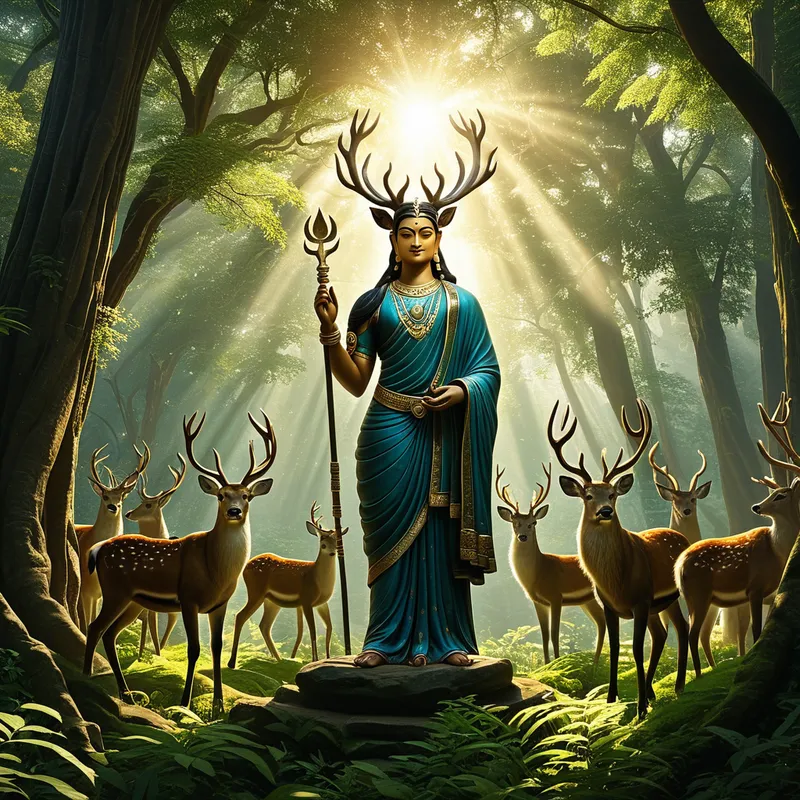
In one life, he was a magnificent stag, a king of the herd with horns like polished antler and eyes holding the peace of the deep forest. A human king, hunting for sport, cornered him. Instead of fleeing, the great stag stepped forward and spoke with a voice like wind through leaves, offering his own life if the hunter would spare the herd. The king’s arrow fell from his hand, his heart pierced not by weapon, but by this selfless grace.
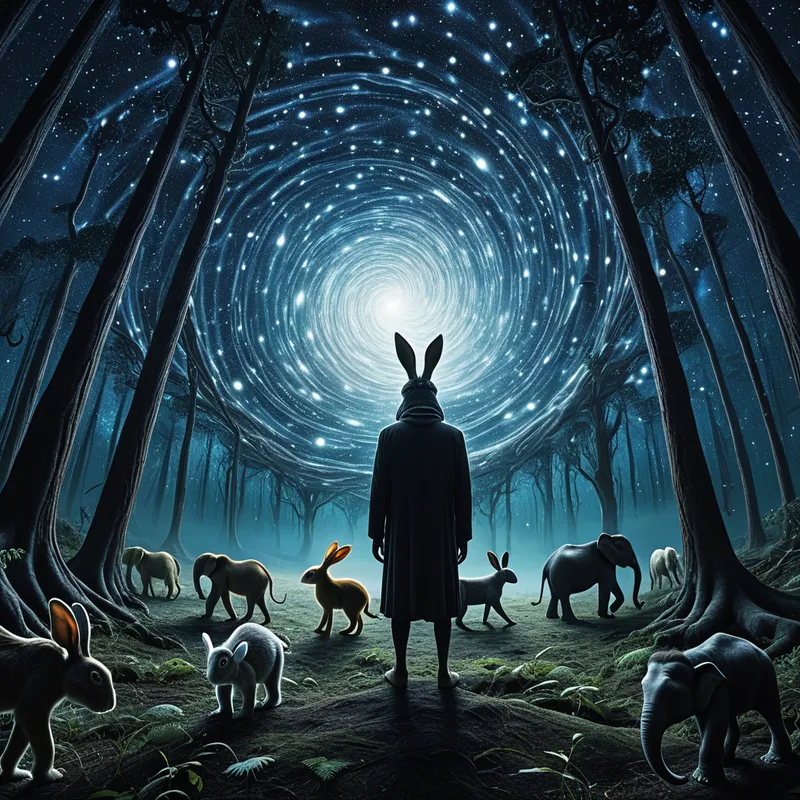
In another turn of the wheel, he was a small, quick hare, living simply with his friends—an otter, a jackal, and a monkey. When a weary old brahmin came begging for food, each friend brought what they could. The hare, having only the grass he ate, declared he would offer his own body. He built a fire and, without hesitation, leapt into the flames. But the fire was cool, for the brahmin was the god Sakra in disguise, testing the depth of his sacrifice. The hare was lifted to the moon, his silhouette etched there as a testament to ultimate giving.
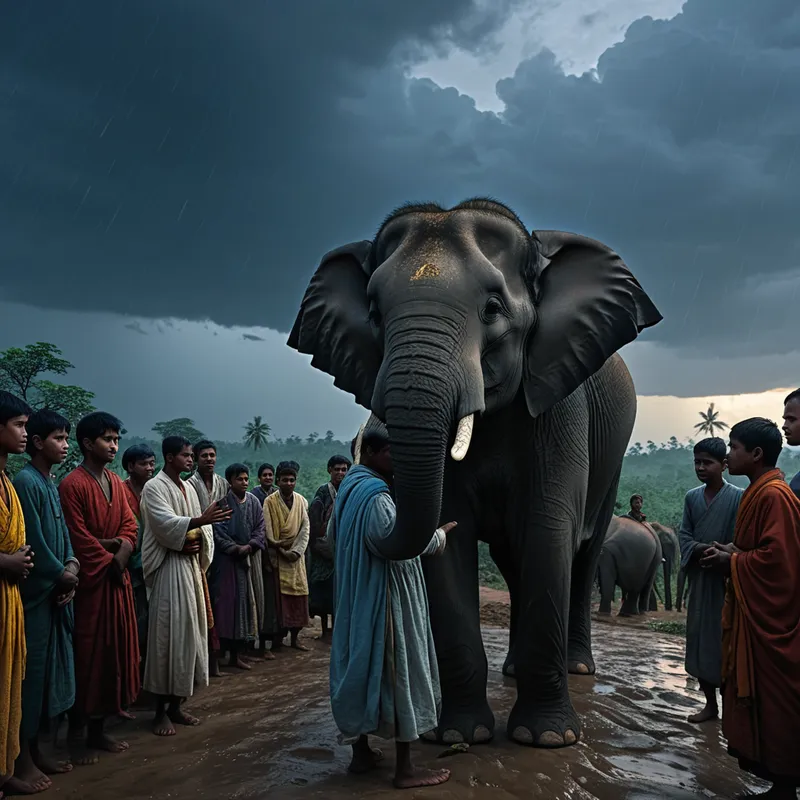
He was a noble prince, Vessantara, whose compassion knew no bounds. He gave away the kingdom’s sacred white elephant, a bringer of rain, to a drought-stricken rival land. Banished for this, he retreated to the forest with his family, only to be tested again. When a cruel brahmin demanded his beloved children as servants, Vessantara, his heart a cavern of anguish, consented. The earth itself trembled at the act, and the gods, witnessing this pinnacle of detachment, intervened to restore the children, crowning the tale with the hard-won lesson that true giving clings to nothing, not even to love’s most precious forms.
Through each life—as monkey king, merchant, elephant, and sage—the same essence struggled, learned, and chose. The conflict was never merely beast against hunter or prince against fate; it was the eternal struggle within the heart: the grasping "I" against the liberating "thou." The resolution was always the same, a quiet victory where compassion outshone fear, where wisdom dissolved attachment, stitch by karmic stitch, weaving the robe of enlightenment.
Cultural Origins & Context
The Jataka Tales are not a single myth but a vast narrative ocean, estimated at 547 stories in the canonical Pali tradition. They emerged from the oral storytelling cultures of ancient India, around the 4th century BCE onward, and were later compiled by monastic communities. These tales were the foundational folklore of early Buddhism, told by monks not merely as scripture, but as vibrant, accessible teaching tools for laypeople and novices alike.
Their societal function was multifaceted. For the monastic order, they provided ethical parables and justified monastic rules, with many tales ending in, "The treacherous minister was Devadatta," linking past karma to present community strife. For the laity, they were moral instruction wrapped in enchanting fable, teaching karma, the virtues of generosity (dana), morality (sila), and wisdom (panna). They democratized the path to enlightenment, showing that spiritual perfection was a gradual accumulation, life by life, accessible even in the form of an animal. Passed down through chant, artwork, and village performance, they embedded Buddhist ethics into the very fabric of daily life, making the cosmic journey of the Bodhisattva intimately relatable.
Symbolic Architecture
At its core, the Jataka corpus is a grand symbolic map of the psyche’s evolution. The Bodhisattva represents the nascent Self, the totality of the psyche, in its raw, unfinished state, cycling through the archetypal dramas of existence.
The animal forms are not lesser states, but profound expressions of the instinctual psyche. The noble stag is the dignified Self in harmony with nature; the clever monkey is the adaptable intellect; the loyal elephant is the strength of memory and steadfastness. Each life is an encounter with a specific shadow—greed, hatred, delusion—personified as hunters, cruel kings, or deceptive brahmins.
The central, recurring symbol is the act of giving against all instinct for self-preservation. This is the alchemy of the tales: the transformation of base, survival-driven consciousness into transcendent compassion. The hare’s leap into the fire is the ultimate sacrifice of the ego. Prince Vessantara’s giving away of his children represents the painful but necessary relinquishment of our most cherished psychic attachments—our identities, our complexes, our "precious" sufferings.
The narrative structure itself is symbolic: each tale is a complete karmic cycle. A choice (often of selfless virtue) is made, a consequence unfolds, and the Bodhisattva is reborn, carrying the accrued merit forward. This models the psychological process of integrating experiences, where each conscious confrontation with a complex leaves the psyche subtly more whole, more aligned with its deeper, compassionate nature.

The Dreamer's Resonance
When the pattern of the Jataka Tales stirs in the modern dreamer, it often signals a profound engagement with the process of individuation. One may not dream of a literal talking hare, but of recurring scenarios of impossible choice or voluntary sacrifice.
To dream of giving away something utterly vital—a child, one’s voice, one’s home—mirrors Vessantara’s test. Somatically, this may be preceded by feelings of constriction or over-identification ("This is me"). The dream is the psyche’s dramatic enactment of the need to relinquish an outgrown identity, a toxic loyalty, or a comforting victimhood. The anguish felt in the dream is the ego’s protest, but the act itself is the Self insisting on growth.
Dreams of transforming into or caring for animals connect to the Bodhisattva’s myriad forms. To dream of protecting a herd, like the stag, may surface when one is integrating a role of leadership or ethical responsibility. To dream as a small creature offering its all speaks to a moment of humble, ego-less giving in one’s life, where a simple, authentic act carries immense spiritual weight. These dreams ask: What instinctual wisdom are you embodying? What are you willing to give, not from your surplus, but from your essence?
Alchemical Translation
The alchemical process modeled by the Jatakas is not a sudden enlightenment, but the path of the perfections. It is the soul’s slow fermentation. For the modern individual, this translates to the understanding that psychological wholeness is built incrementally, through countless small, ethical choices.
Each time we choose patience over reactivity, generosity over scarcity, and clarity over blame, we are the Bodhisattva in that life. We are the merchant giving water to the thirsty, the elephant pulling his brother from the mud. These are not grand gestures, but the daily satipatthana of the heart.
The "alchemical translation" is the recognition that our personal history—our past "lives" in the form of childhood experiences, former identities, and repeated patterns—is not a chain of failures, but a Jataka cycle. Each relationship that ended in betrayal was a lesson in discernment. Each time we acted from fear was a future story where we might choose courage. The goal is not to escape the cycle by denying it, but to infuse it with conscious virtue, to slowly transmute the lead of selfish reaction into the gold of compassionate response.
The ultimate triumph in the myth is Buddhahood—the fully realized, integrated Self. The Jatakas assure us that this state is not a foreign destination, but the cumulative result of every moment we see beyond the "I." Our daily life is the forest, the palace, the dusty road. Every interaction is a character from our tale. And in every choice to extend beyond ourselves, we write another verse in the endless, beautiful story of awakening.
Associated Symbols
Explore related symbols from the CaleaDream lexicon: