
Jantar Mantar Myth Meaning & Symbolism
A myth of a celestial architect who built instruments to measure the cosmos, bridging the divine and human realms through sacred geometry and time.
The Tale of Jantar Mantar
Listen, and let the silence between the stars speak. In an age when the sky was not a ceiling but a conversation, there lived a being known as Mayasura. He was not a god of thunder or love, but of measure. His realm was the interval—the breath between sunrise and sunset, the arc of a planet’s wanderlust, the precise tilt of the Earth’s sleepy head.
The world then was lush, teeming, and beautifully wild, but it lived in the throes of cosmic uncertainty. Seasons arrived as surprised guests. Navigators looked to the stars and saw a brilliant, indecipherable poem. Time was a river without banks, and humanity, though pious, felt adrift in a vastness they could not comprehend. A silent plea rose from the earth, not for riches or power, but for understanding. For a way to find their place in the great dance.
Mayasura heard this plea in the whispering of the solar winds. He descended not on a chariot of fire, but with the quiet footfall of one entering a library. His tools were not weapons, but mind and stone, geometry and shadow. He chose a plain, a vast emptiness under the open eye of the heavens, and began his work. He did not build a temple for prayer, but an instrument for listening.
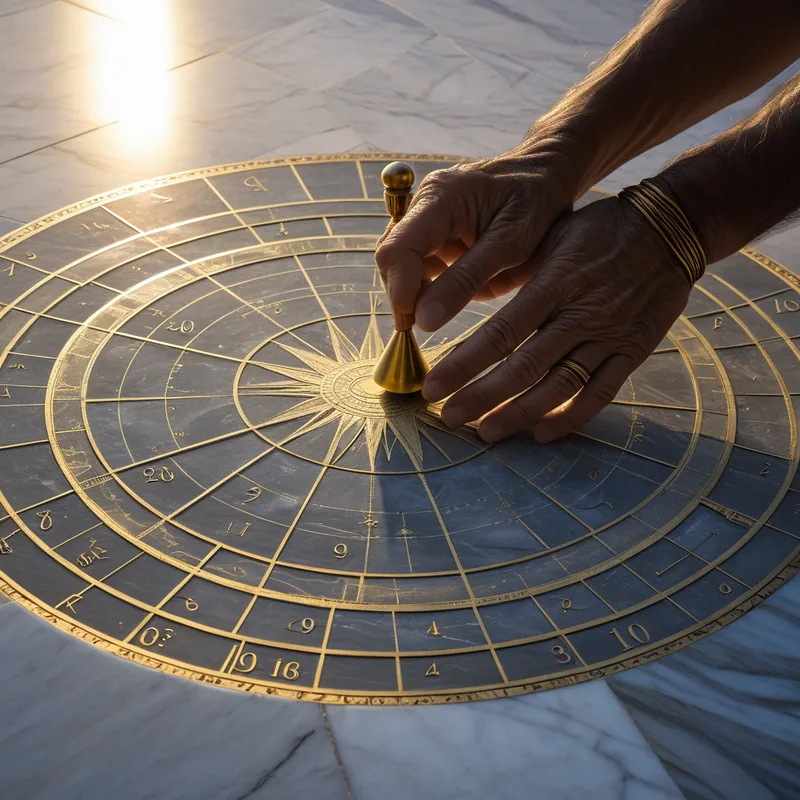
First, he raised the Samrat Yantra, a gnomon of such height it seemed to scratch the belly of the sun. Its shadow was not mere darkness, but a blade of precise truth, sweeping across meticulously carved arcs that told the hour, the minute, the very second of the day’s passing. Then came the Rashivalaya Yantra, twelve sculpted forms, each waiting to capture the sun only when it moved through its specific celestial mansion. He built bowls to cup starlight, hemispheres to map the sky’s dome, and complex webs of stone that could predict the moon’s blush during an eclipse.
The work was a silent symphony. The conflict was not against a demon, but against chaos and ignorance. The rising action was the sun’s journey, the moon’s swing, the patient movement of a shadow across stone. The resolution came not with a bang, but with a realization. One morning, a priest-astronomer stood before the Samrat Yantra, watched the sharp-edged shadow fall exactly upon the mark for the solstice, and wept. He was not weeping for joy, but for the profound intimacy of it. The cosmos was no longer a distant ruler; it was a partner in a measurable, knowable dance. Mayasura had not given them answers written in stone. He had given them the question, perfectly framed, in stone. And in learning to ask, they found their place in the universe.
Cultural Origins & Context
While the name Jantar Mantar is historically attached to the magnificent 18th-century observatories built by Maharaja Jai Singh II of Jaipur, the myth of Jantar Mantar speaks to a far more ancient and profound stratum of Hindu thought. It is a narrative crystallization of the Vedic and Brahmanical obsession with rita and dharma—the inherent, measurable order of the universe.
This myth likely lived in the oral traditions of the Jyotisha, the keepers of astronomical and astrological science. It was not a popular epic for the masses, but a foundational story for the intellectual and spiritual elite, explaining the sacred origin of their science. Its societal function was dual: it legitimized the profound science of astronomy as a divine vocation (svadharma of the Jyotisha), and it provided a cosmological model where human intellect, through disciplined observation (pratyaksha), could actively participate in and align with the cosmic mind. The observatory was thus a tirtha, a pilgrimage site where one crossed from temporal confusion to cosmic clarity.
Symbolic Architecture
At its core, the myth of Jantar Mantar is not about astronomy, but about the architecture of consciousness. The observatory is a massive, externalized model of an inner, psychic necessity.
The first act of consciousness is not to speak, but to measure. To draw a line between self and other, light and shadow, then and now. This is the sacred geometry of the soul.
Mayasura represents the archetypal Atman-as-scientist, the aspect of the Self that seeks order, pattern, and intelligibility. He is the internal architect who builds structures of meaning. The chaotic, unmeasured world symbolizes the undifferentiated psyche—the unconscious in its raw, potent, but overwhelming state. The various yantras are not mere tools but psychic organs: the Samrat Yantra is the function of discernment (dividing the day of life into conscious moments); the Rashivalaya Yantra is the capacity to see one’s own character (the zodiac) from different angles of illumination.
The central symbol is the gnomon. It is the axis of the Self, the immutable central truth (the atman) around which the shifting shadows of personality, circumstance, and time (maya) play out. By observing the shadow’s movement against the fixed scale, one comes to know not the shadow, but the light’s source and its path.
The Dreamer's Resonance
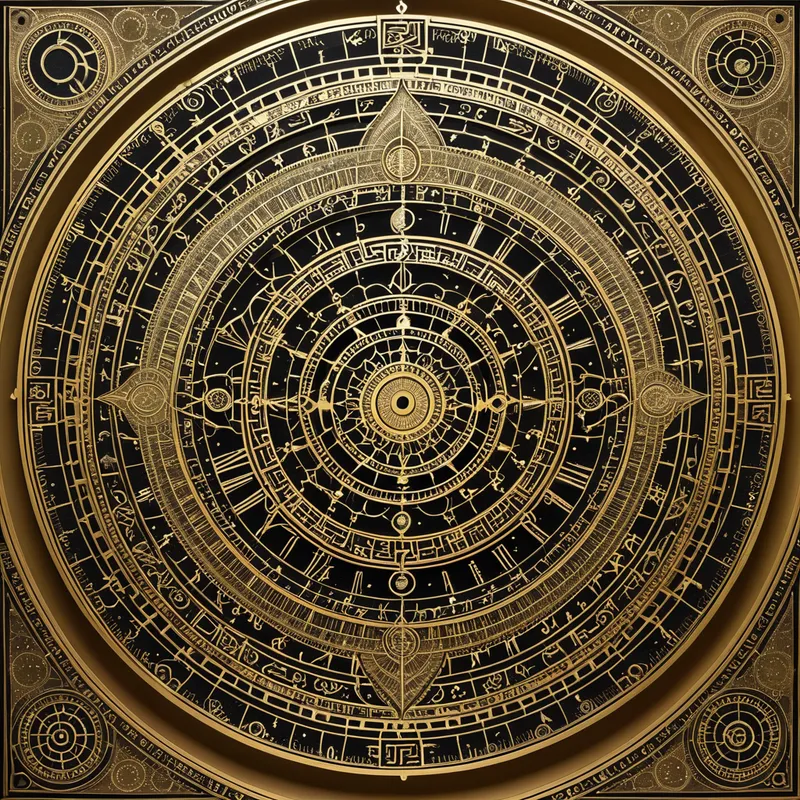
When the pattern of Jantar Mantar arises in modern dreams, it signals a profound psychological process: the psyche’s attempt to build structures for self-observation and inner alignment. The dreamer may find themselves in vast, empty plazas with strange, monolithic geometric structures. They may be trying to read inscriptions they don’t understand, or frantically trying to adjust an instrument as a crucial celestial event approaches.
Somatically, this can feel like a pressure in the third eye or a heightened, almost anxious awareness of the passage of time (“I’m running out of time to understand!”). Psychologically, it is the ego confronting the need for a new, more accurate internal framework. The old, subjective ways of measuring one’s life—through emotion, habit, or others’ opinions—are failing. The dream is an eruption of the Sage archetype, pressing for a calibration based on something more objective, more cosmic: one’s own true nature and destiny. The frustration in the dream is the friction between the chaotic content of life and the soul’s innate desire for an orderly, meaningful narrative.

Alchemical Translation
The myth models the alchemical process of individuation as a precise, observational science. The prima materia, the leaden chaos of the unexamined life, is subjected not to fire, but to the steady, patient light of consciousness.
The transmutation occurs in the moment the observer realizes they are both the instrument and the sky being measured. The separation collapses, and one becomes the observation itself.
The first step (calcinatio) is the creation of the empty, sacred space—the plain. This is the difficult work of clearing mental clutter and creating inner silence. The building of the instruments (coagulatio) is the conscious construction of tools for self-reflection: journaling, therapy, meditation, artistic practice—any disciplined method that “catches” the shadow of the unconscious as it moves. The act of taking a measurement (sublimatio) is the moment of insight, where a pattern of behavior (a shadow) is seen in relation to the fixed scale of the Self, revealing its source and trajectory.
The ultimate alchemical gold is not a final answer, but the capacity for perpetual, precise questioning. The individual becomes their own Jantar Mantar. Their life is the observatory; their experiences, the celestial movements; their consciousness, the gnomon. They no longer have a life; they measure it, and in that sacred act of measurement, they find their immutable place in the cosmic order, simultaneously utterly unique and perfectly aligned. The myth concludes that enlightenment is not a blinding light, but a perfectly cast shadow, falling exactly where it should, on a scale you built with your own hands.
Associated Symbols
Explore related symbols from the CaleaDream lexicon: