Inner Light Myth Meaning & Symbolism
A journey into the heart of darkness to discover the primordial, uncreated light that is the true nature of mind and the universe.
The Tale of the Inner Light
Listen. Before the world was named, before the first thought stirred in the mind of a god, there was a light. Not a light that shines upon things, but a light that is things. It is the oldest story, whispered not in temples of gold, but in the silent cavern of the heart.
In a time when the earth was young and mountains were still dreaming of their shape, there lived a seeker named Bodhisattva. He was not a king, nor a warrior, but a man haunted by a simple, devastating question: What is the source of this ceaseless suffering? He saw it in the cry of a newborn, in the grip of an old man’s hand, in the hunger of all beings. He left his palace, his silks, his name, and walked into the wilderness of the world.
For years, he wandered. He sat at the feet of great sages who spoke of fire and breath, of stars and cycles. He practiced austerities until his body was a skeleton wrapped in skin, thinking that by crushing the flesh, he would free the spirit. But the light did not come. Only a deeper, colder darkness settled within him—the darkness of despair.
One night, beneath the ancient, spreading limbs of a Bodhi tree, he made a final vow. He would not rise from this spot of earth until he had seen the truth, even if his bones turned to dust. The world fell away. The sounds of the forest hushed. The demons of his own mind arose—Mara, the tempter, sent armies of fear, desire, doubt, and distraction. Visions of terrifying monsters and seductive pleasures swirled around him. The Bodhisattva did not move. He simply touched the earth, calling it as his witness.
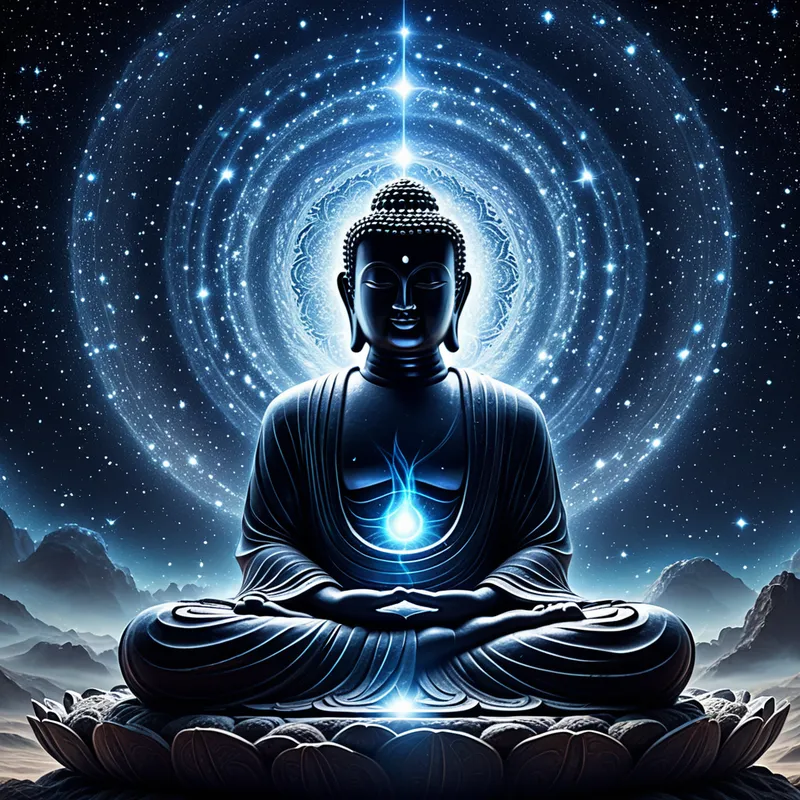
And in that moment of ultimate stillness, when all striving ceased, the last barrier shattered. Not with a sound, but with a silent, inward turn. He did not look out, but in. Deep, deeper than memory, deeper than the sense of "I," he plunged. And there, in the profound, velvet blackness at the core of his being, he did not find emptiness. He found a sun.
It was a light without flame, a radiance without source. It did not illuminate; it was illumination itself. It was clear, boundless, and intimately familiar—the fundamental ground from which all thoughts, all sensations, all the world itself, arose like ripples on a pond. He saw the entire cosmos, every galaxy and grain of sand, as a dance of this same inner light, momentarily condensed into form. The seeker was gone. Only the seeing remained. The Buddha had awakened, not to something new, but to what had always, eternally been.
Cultural Origins & Context
This is not a myth of a distant, external deity, but the foundational narrative of direct experience within the Buddhist tradition. It originates from the biographical accounts of Siddhartha Gautama’s enlightenment in the 5th century BCE, as preserved in the Pali Canon. However, the metaphor of the "inner light" (pabhassara citta) transcends any single story. It is a core ontological and epistemological principle.
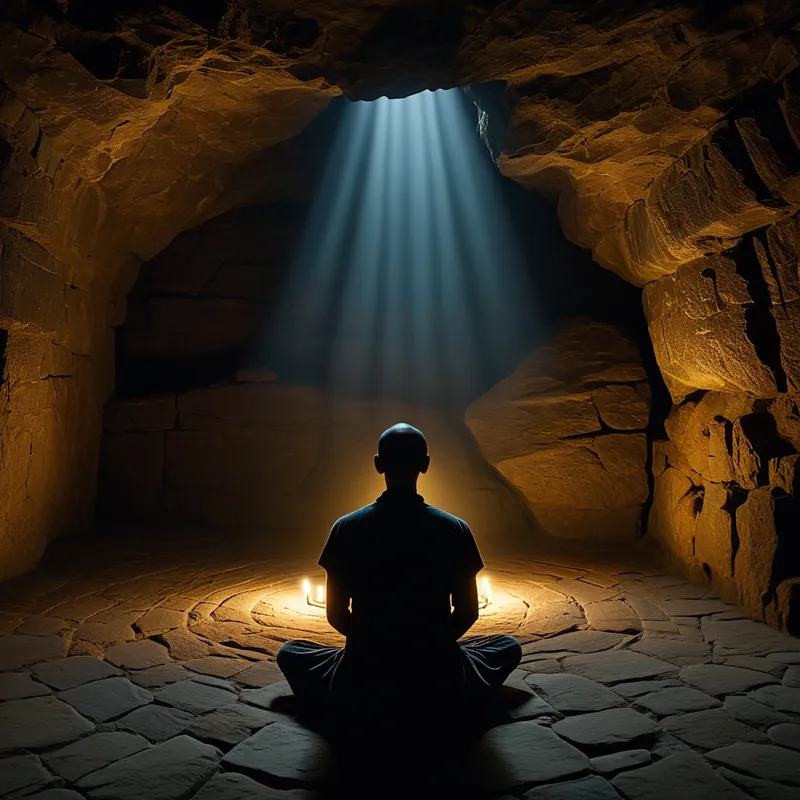
The tale was passed down orally for centuries by monks and nuns, not as mere history, but as an operating manual for consciousness. Its societal function was radical: it democratized the sacred. It stated that the pinnacle of reality was not in a heaven to be reached after death, but in the depths of the human mind, accessible here and now through disciplined introspection (samadhi) and insight (prajna). It served as both a map for the meditator’s journey and a guarantee of the destination’s existence—a light waiting in the cave of every heart.
Symbolic Architecture
The myth’s symbols form a perfect mandala of psychic transformation. The Bodhi tree is the axis mundi, the still point where the personal psyche aligns with the cosmic order. The temptations of Mara are not external demons but the projected contents of the personal and collective shadow—our repressed fears, unresolved desires, and the entire psychological apparatus of the ego fighting for its survival.
The journey is not toward light, but away from everything that obscures it. The light is not acquired; it is recognized as the fundamental condition of awareness itself.
The pivotal act of “touching the earth” (bhumisparsha mudra) is profoundly symbolic. It represents grounding, embodiment, and the integration of spirit with matter. Enlightenment is not an escape from the world, but a profound reconciliation with it. The “inner light” itself is the ultimate symbol: it represents pure, unconditioned consciousness—the nous or the Self in Jungian terms—prior to its contamination by identification with thoughts, emotions, and the personal narrative.
The Dreamer's Resonance
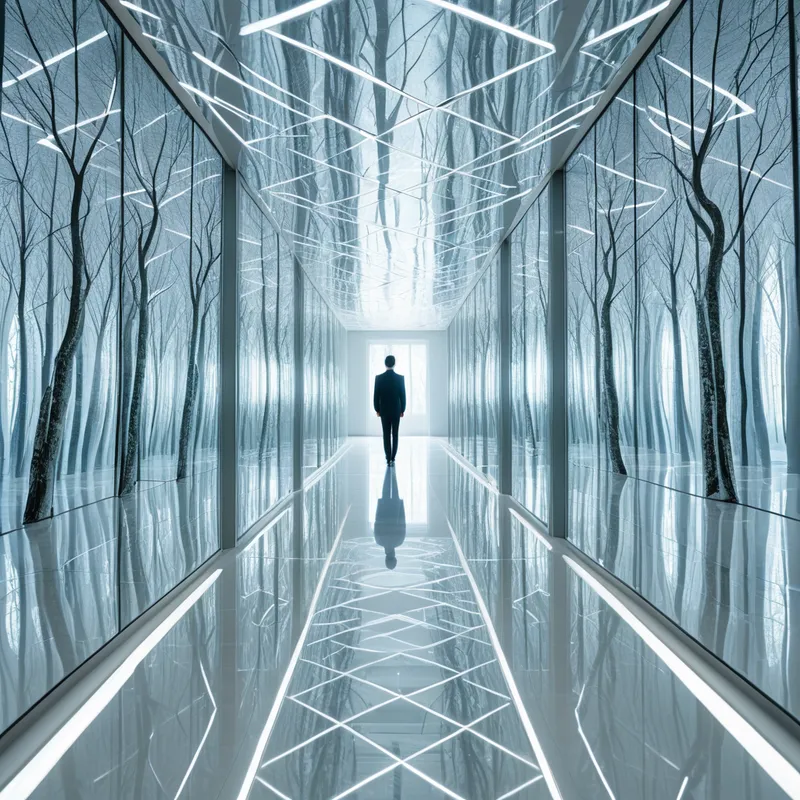
When this myth stirs in the modern unconscious, it often manifests in dreams of discovering hidden rooms, turning inward down long corridors, or finding a source of light in a dark, enclosed space (a basement, a cave, a closet). The dreamer may be cleaning out an attic of the psyche, symbolizing the necessary purification (sila) before the light can be perceived.
Somatically, this process can feel like a tightening in the chest or solar plexus—the cave of the heart—followed by a sudden release or expansion, sometimes accompanied by dream sensations of warmth or effulgence. Psychologically, it marks a critical shift from introspection (analyzing the contents of the mind) to apperception (becoming aware of the awareness itself). It is the dream-ego’s first, tentative encounter with the larger, luminous substrate of the Self. The dream is an invitation to stop seeking externally for validation, salvation, or identity, and to endure the “dark night” of letting go, trusting that clarity is the nature of mind itself, not an achievement of it.
Alchemical Translation
The alchemy modeled here is the opus contra naturam—the work against the ego’s natural, outward-grasping tendency. The first stage is the nigredo: the Bodhisattva’s confrontation with suffering and his futile austerities, a descent into the blackness of despair and the dissolution of old identities. The assaults of Mara represent the mortificatio, the killing of the ego’s attachments.
The turning point is the solutio: the surrender, the touching of the earth, which is a dissolution into the ground of being. From this, the albedo emerges—the dawning of the inner light, the whitening, the illumination. This is not the end, however.
The final alchemy is the rubedo: the return of the awakened one to the world of form. The light, having been realized as the essence of the void (sunyata), now radiates as compassion (metta) in the marketplace. The gold is not kept in the vault of personal bliss; it is minted into the currency of empathetic action.
For the modern individual, this translates to the process of individuation. One must first exhaust the project of the persona (the palace life), then consciously engage with the shadow (Mara’s armies), and endure the loneliness of the journey (the Bodhi tree). The discovery of the inner light is the experience of the Self, the central, unifying archetype of the psyche. The triumph is not in becoming a Buddha “out there,” but in realizing that the capacity for awake, luminous, and compassionate presence is the very core of one’s being. The myth assures us that the darkness is not the enemy; it is the necessary canvas upon which the innate, uncreated light of consciousness paints the masterpiece of an authentic life.
Associated Symbols
Explore related symbols from the CaleaDream lexicon: