
Hyacinth Myth Meaning & Symbolism
A beautiful youth loved by Apollo is accidentally slain. From his blood springs a flower, a symbol of grief transformed into eternal, fragrant remembrance.
The Tale of Hyacinth
Hear now the story written not on parchment, but in petals and in blood. In the sun-blessed lands of Sparta, where the Eurotas River sang its clear song, there lived a youth whose beauty was a hymn unto itself. His name was Hyacinth. He was a prince, but his true royalty was of form and spirit—so radiant that he seemed a fragment of the sun given mortal flesh.
His splendor did not go unnoticed by the heavens. Apollo, lord of the golden lyre and the unerring arrow, he who drives the sun-chariot across the sky, beheld Hyacinth. And the god, in whom all light resides, was captivated by a light not his own. He descended from Olympus, laying aside his divinity to walk as a companion in the mortal realm. Their days were a idyll of competition and camaraderie—archery, music, and the athletic games that pleased both god and man.
But the west wind, Zephyrus, watched this communion with a heart grown dark and jealous. He too had loved the Spartan youth, but his sighs were met with indifference, his caresses overlooked for the blazing attention of the Sun God. A bitter seed took root in the wind’s essence.
On a day when the air was still and heavy with the scent of pine, Apollo and Hyacinth took to the meadow for a contest of the discus. Apollo, with effortless, divine strength, sent the bronze disc singing through the air. It flew like a second sun, a perfect arc against the azure sky. Hyacinth, eager and laughing, ran to retrieve it, his eyes fixed on its glorious flight.
And in that moment, Zephyrus exhaled. It was not a gentle breeze, but a directed, spiteful gust. It caught the discus in its descent, twisting its path. The gleaming circle of metal, a moment ago a symbol of sport, became an instrument of fate. It struck Hyacinth’s temple with a sickening sound.
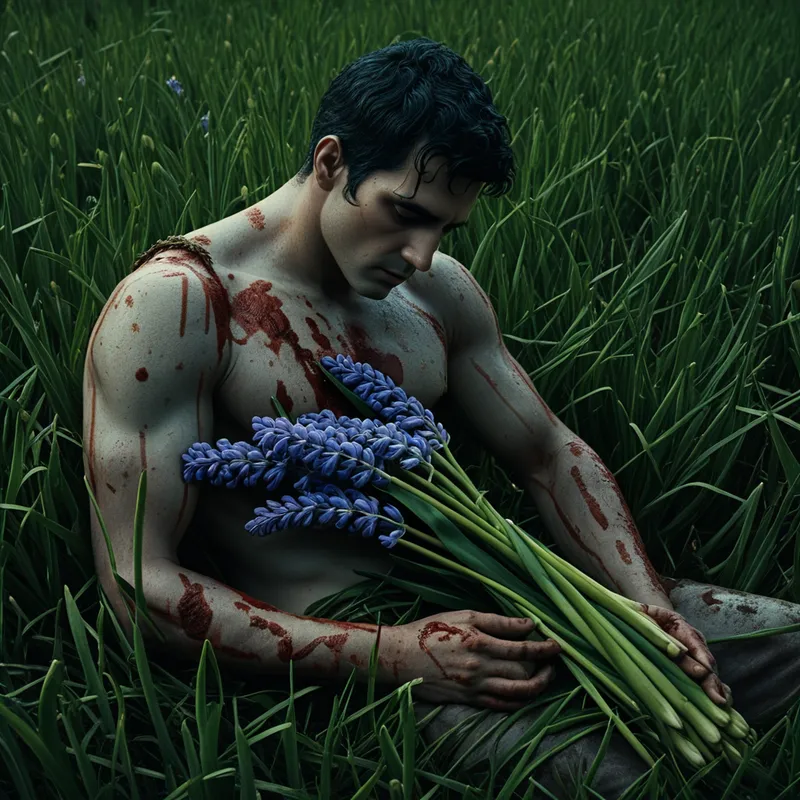
The laughter died. The sun seemed to dim. Apollo was at his side in an instant, cradling the collapsing youth. The god’s hands, which could heal plagues and grant prophecies, pressed against the wound, but the lifeblood, dark and insistent, seeped through his fingers. Hyacinth’s light was fading, like a flower closing at dusk. Apollo’s anguished cry—"AI, AI!"—a god’s lament for a mortal loss, echoed across the silent meadow.
He could not stop death, but he could defy oblivion. As Hyacinth’s blood soaked into the earth, Apollo spoke a promise into the stillness. Where the crimson drops fell, the earth did not merely absorb them; it answered. A new life pushed forth—slender, green, and urgent. It grew, and from its stem burst a cluster of exquisite flowers, their petals a deep, mournful purple, and upon them, as if inscribed by a god’s grieving finger, the letters A I A I—the eternal cry of lament.
The beautiful youth was gone. But in his place, and from the very substance of his ending, arose the hyacinth, a blossom of haunting fragrance and sorrowful beauty, a living memorial born from divine love and mortal tragedy.
Cultural Origins & Context
The myth of Hyacinth is not a singular, fixed tale but a resonant pattern woven into the fabric of early Greek culture. Its most famous telling comes from the Roman poet Ovid in his Metamorphoses, but its roots are far older, reaching back into the pre-classical, likely Mycenaean, world of the Peloponnese. Hyacinth was almost certainly not merely a fictional character but a local deity or hero of Amyclae, near Sparta, whose worship was subsumed and reinterpreted by the incoming Mycenaean and later Greek cultures.
His story was central to the Hyacinthia, a three-day festival that blended profound mourning with vibrant celebration—a ritual embodiment of the myth’s core theme. The first day was dedicated to lamentation for the dead hero, with offerings of hair and solemn hymns. The following days erupted into a joyous celebration of Apollo, featuring music, dances, and a grand procession. This ritual structure served a vital societal function: it modeled the human experience of catastrophic loss followed by the difficult, necessary return to life. It taught that grief and joy are not opposites but part of a single, sacred cycle, a lesson a martial society like Sparta would know intimately.
Symbolic Architecture
At its heart, the myth is a profound allegory of the collision between the eternal and the ephemeral. Hyacinth represents the pinnacle of mortal beauty, vitality, and potential—all that is brilliant and doomed. Apollo represents the immortal realm of form, art, and consciousness that seeks to capture and preserve that fleeting beauty.
The tragedy is not that beauty dies, but that consciousness loves it, and must witness its passing.
The fatal discus is the agent of fate, the unpredictable, sudden blow that shatters a perfect moment. Zephyrus, the jealous wind, symbolizes the unconscious, shadowy forces of envy and chaos that can disrupt even the most divine connections. The transformation is the alchemical key: the mortal body fails, but its essence is not lost. It is transmuted.
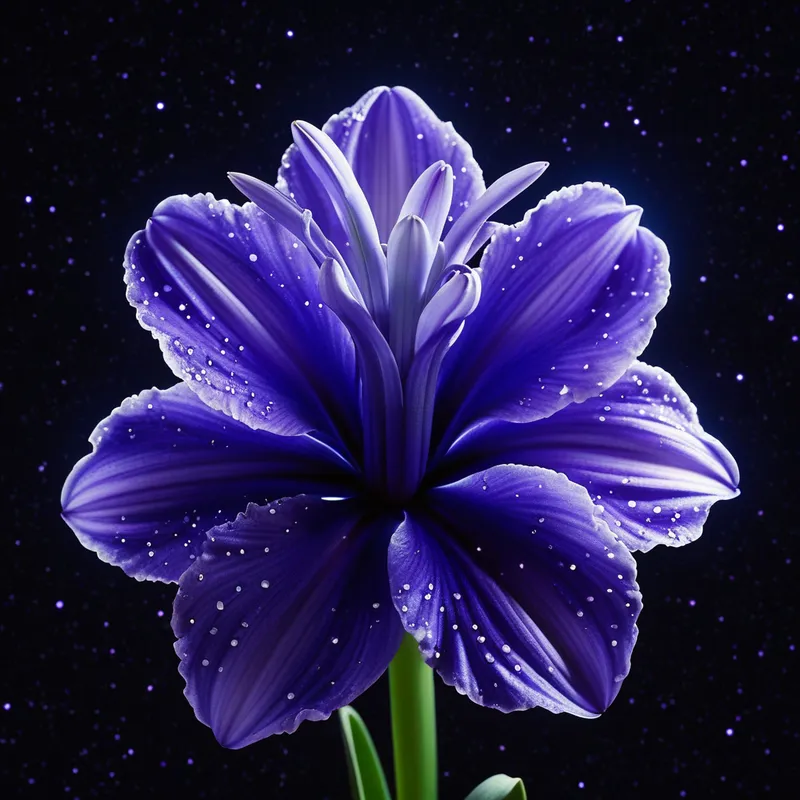
The hyacinth flower is the symbol of this psychic alchemy. It is grief made tangible, memory given form and fragrance. The letters AIAI etched upon it are not just a cry of pain; they are a sacred inscription, a word made flesh (or rather, made flower), ensuring the story—the love, the loss, the lament—is remembered every time the blossom is seen or smelled.
The Dreamer's Resonance
When this myth stirs in the modern unconscious, it often manifests in dreams of sudden, beautiful, and devastating loss. One might dream of a cherished object shattering inexplicably, a luminous figure turning a corner and vanishing forever, or finding a breathtaking flower that withers upon touch. The somatic sensation is often one of a piercing in the heart or a gasp of breath stolen—a direct echo of the discus strike.
Psychologically, this dream pattern signals a profound encounter with the limits of the ego’s control. The dreamer is processing an experience where something precious—a relationship, a phase of life, an ideal, a sense of self—has been abruptly and tragically altered or ended by forces beyond their command (the "Zephyrus gust"). The dream is not merely about the loss itself, but about the initial, raw stage of psychic reorganization that must follow. It asks the pivotal question: What, if anything, can be created from this ruin?
Alchemical Translation
The individuation process modeled here is the transformation of catastrophic personal history into meaningful personal myth. We all have our "Hyacinth" moments—experiences of radiant beauty or potential that are suddenly, violently taken. The instinct is to become Apollo in his first moment of grief: frozen, lamenting, trying in vain to hold back the irreversible tide.
The alchemical work is to become Apollo in his next moment: the god who acts as a psychopomp for the lost essence.
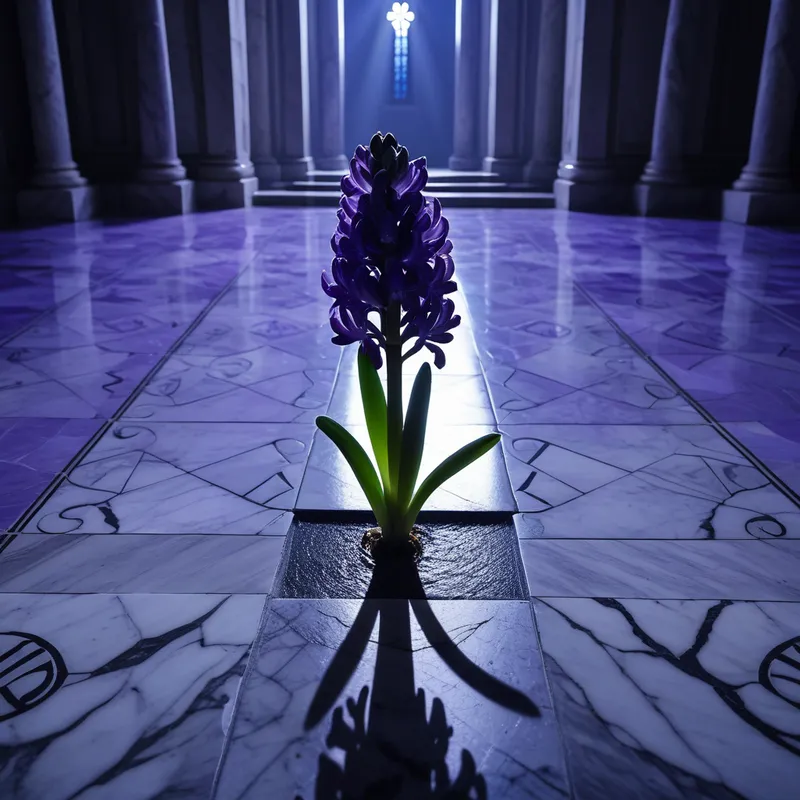
Individuation requires we learn the art of sacred burial, planting the blood of our wounds in the soil of the soul so that something new may grow.
This means consciously engaging with our grief, not to wallow, but to inscribe it. We must find our "AIAI"—the creative act that translates our pain into a new form. This could be a work of art, a deepened compassion, a commitment, a new understanding. The "hyacinth" that grows is the symbol of the Self integrating a profound loss. It is the part of us that knows fragility and mortality intimately, yet, by acknowledging it, gives it a permanent, fragrant place in the architecture of our being. The flower does not replace the youth; it is his continued life in another, more resilient form. It is the triumph of remembrance over oblivion, the proof that what is truly loved can never fully die, but is forever metamorphosed.
Associated Symbols
Explore related symbols from the CaleaDream lexicon: