
Heliotropes of Clytie Myth Meaning & Symbolism
A nymph's unrequited love for the sun god Apollo turns her into a heliotrope, eternally turning her face toward the sun she can never possess.
The Tale of Heliotropes of Clytie
Hear now a tale not of glorious battle or cunning trickery, but of a love so vast and consuming it remade the very earth. It begins not with a thunderclap, but with a sigh—the sigh of Clytie, daughter of the titan Oceanus. She dwelt where fresh water meets the whispering reeds, a creature of cool shadows and liquid depths. Yet her heart was set ablaze by a fire from the heavens: Apollo, the Sun himself.
Each morning, she would forsake her watery home. While her sister Naiads laughed and danced in the pools, Clytie would climb to a barren hillock, her bare feet pressing into the dry, warm soil. She would sit, a statue of devotion, as Apollo’s golden chariot crested the horizon. The world would ignite. Dew would burn away in his gaze, colors would sing, and Clytie would feel her very soul stretch toward that radiant presence. She lived for that moment of his arrival, and she died a little with his departure, tracing the arc of his journey until he vanished in a blaze of crimson in the west. She drank no water, ate no food, sustained only by light.
For a time, the god noticed her. Perhaps he was flattered by such pure, unwavering adoration. He would shine a little brighter on her hill, a personal caress of warmth. In that light, Clytie bloomed. But the heart of a god is a fickle star. Apollo’s gaze turned elsewhere, to a mortal princess, Leucothoe. He pursued her with the same intensity Clytie directed at him. And Clytie watched. From her lonely perch, she witnessed the god’s new passion, a secret affair conducted in stolen beams of light. A cold jealousy, sharper than any winter stream, froze her burning heart.
Betrayed and desperate, Clytie committed the ultimate transgression against love: she revealed the secret. She told Leucothoe’s stern father of the divine intrusion. The punishment was swift and brutal—Leucothoe was buried alive. Apollo, in his grief and rage, could not undo the mortal deed, but he could transform her, granting her a gentler end as a frankincense tree. And for Clytie, the teller of tales, the betrayer? He granted no such mercy. He simply turned away. The personal warmth vanished. The god’s light became universal, impartial, and utterly indifferent.
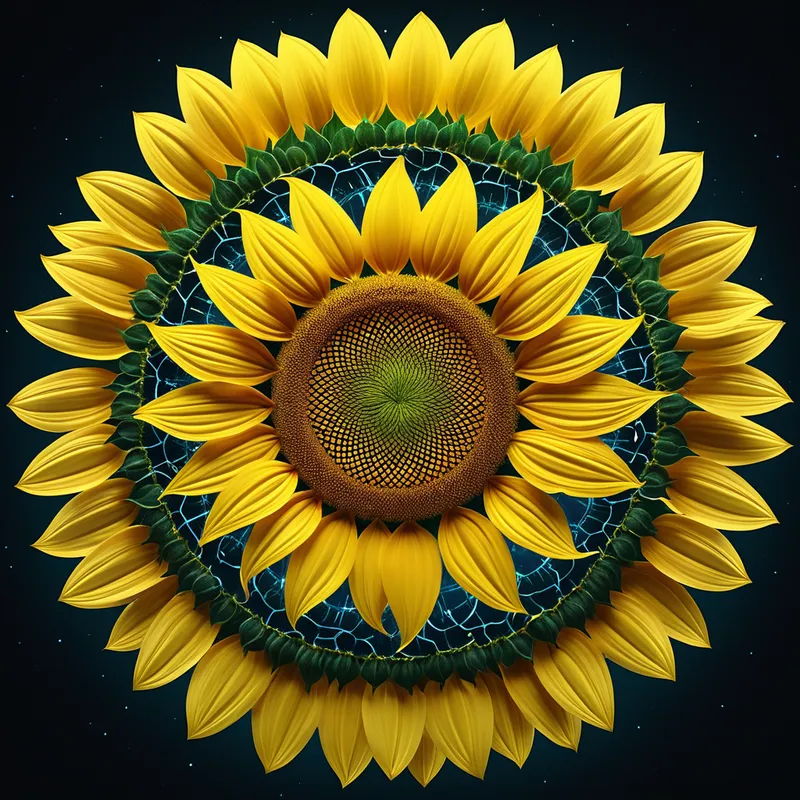
Now began Clytie’s true metamorphosis. Still, she climbed the hill. Still, she gazed. But the light that had once nourished now scorched. The love that had once lifted now anchored her to the spot. Days bled into nights, seasons wheeled above her. Her nymph’s vitality seeped into the ground. Her skin, once dewy and soft, grew pale and tight, then tinged with green. Her limbs stiffened, rooting themselves to the earth. Her flowing hair became a crown of green leaves. Her lovely face, forever upturned, hardened and broadened, transforming into a golden disk surrounded by rays of yellow petals. She became the first heliotrope, a flower of pure fixation. No longer a woman, yet not wholly a plant, she achieved her tragic union: forever bound to the earth, forever turning her face to follow the sun she could never touch, a silent monument to love’s most beautiful and terrible prison.

Cultural Origins & Context
The story of Clytie is preserved for us primarily in the Latin poet Ovid’s Metamorphoses, a grand tapestry of transformation myths. While filtered through Roman sensibility, its core is deeply Greek, belonging to the vast body of aetiological tales that explained the world. This myth answers a simple, observable natural truth: why does the sunflower turn to follow the sun?
In the Greek worldview, the natural world was alive with consciousness—every tree, river, and flower could be the result of a divine or semi-divine being’s passion, error, or punishment. Clytie’s story served as a poignant lesson on the dangers of obsessive love (eros) and the hubris of expecting reciprocity from a god. It was a narrative caution, especially for women, about the perils of stepping outside one’s ordained nature (a water nymph becoming a creature of the desiccating sun) and the catastrophic results of jealousy. Told in symposia and by hearths, it was a reminder of the cosmic order: gods love, but on their own terms, and mortal (or nymph) hearts are fragile clay in the kiln of their attention.
Symbolic Architecture
At its core, Clytie’s myth is an archetypal map of identification with the object of desire. She does not simply love Apollo; she attempts to become him by proxy, aligning her entire being with his rhythm and light. Her fixation is so complete that her own essence—her watery, nurturing, fluid nature—is utterly consumed.
The psyche, when it fixates, does not merely admire the light; it seeks to reorganize its entire substance around that light, becoming a satellite to a star that does not know its name.
The sunflower is the perfect symbol of this psychic state. It is not the sun, but its entire existence is defined by the sun’s trajectory. It is beautiful, radiant, and life-giving in its own right, yet its orientation is forever determined by an external source. Clytie’s transformation is thus not a punishment in the simple sense, but the literalization of her inner state. Her obsession becomes her ontology. The myth presents the ultimate end of unrequited love: a beautiful, static eternity of yearning, where the lover is frozen in the moment of regard, forever becoming the monument to their own devotion.
The Dreamer’s Resonance
When this myth pattern stirs in the modern dreamer, it rarely appears as a literal nymph or sunflower. Instead, one may dream of being physically rooted to the spot, unable to move toward a desired person or goal that remains just out of reach. There may be dreams of staring at a brilliant, warming light that provides no sustenance, or of one’s body slowly turning to wood, stone, or earth.
Somatically, this signals a process of psychic immobilization. The dreamer is likely caught in a real-life dynamic of one-sided devotion, obsessive focus on an ideal (a person, a career, a status), or a creative project that has consumed their identity to the point of atrophy elsewhere. The body in the dream encodes the feeling of being “stuck,” of pouring all one’s energy into a source that does not replenish. It is the psyche’s cry that the current orientation, however beautiful the object, is leading to a petrification of the self.

Alchemical Translation
The alchemical journey implied in Clytie’s tale is not one of union, but of liberation from identification. The prima materia is obsessive, devouring love. The nigredo, or blackening, is her betrayal and Apollo’s abandonment—the crushing realization that the source of one’s life-meaning is indifferent. Her nine days of fasting on the rock are the mortificatio, the necessary dissolution of the old identity.
The transmutation occurs not when the sunflower gets the sun, but when it realizes it is, and has always been, a sunflower—a complete entity with its own golden center, not merely a reflector.
The albedo (whitening) and rubedo (reddening) are subsumed into her final, golden form. The alchemical gold here is not possession, but self-contained radiance. Clytie, as the flower, achieves a paradoxical victory. She is freed from the torment of unmet human desire and granted a new, stable form. Her lesson for the modern soul is the necessity of the turn within. The individuation process demands we withdraw our projections from the dazzling “other”—the perfect partner, the ultimate achievement, the divine savior—and recognize that the light we chase is also a light we can embody. We must root in our own earth, and from that grounded place, generate our own bloom, turning not from desperation, but in a harmonious rhythm with the larger cycles of life, of which we are a sovereign part. The heliotrope’s tragedy is its fixation; its hidden wisdom is its perfect, silent, self-sufficient flowering.
Associated Symbols
Explore related symbols from the CaleaDream lexicon: