Hand-in-Glove Myth Meaning & Symbolism
A myth of a sentient glove seeking its destined hand, exploring the sacred terror and ecstasy of becoming one with a greater purpose.
The Tale of Hand-in-Glove
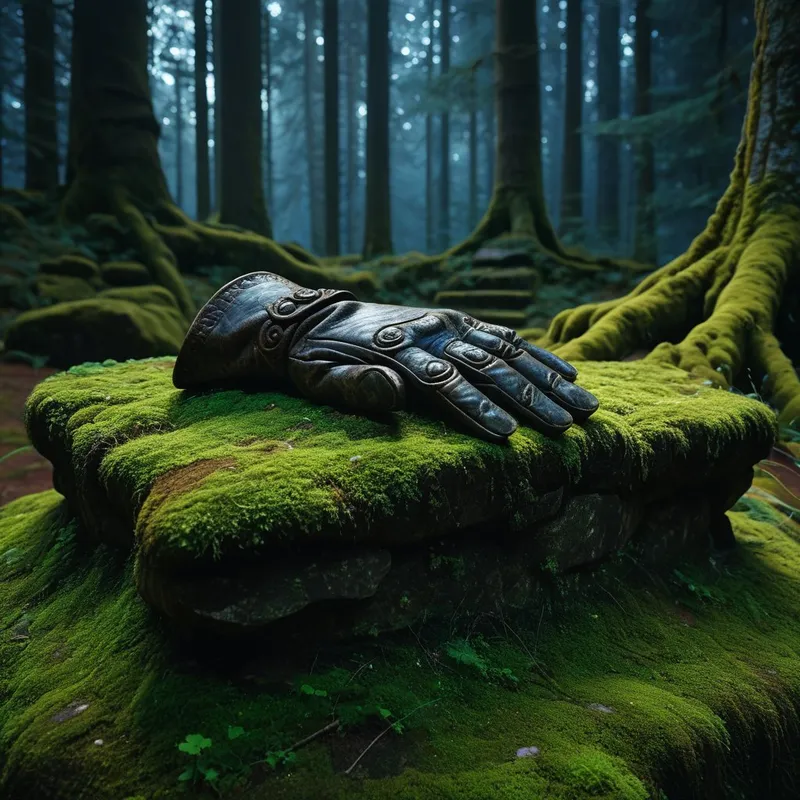
Listen, and let the hearth-fire grow low. In the time when the world was younger, and the boundaries between thing and spirit were thin as morning mist, there existed a being known as The Glove. It was not born of hide and thread alone. It was crafted under a gibbous moon by hands that knew the songs of the Green, stitched with sinew from a stag that gave itself willingly, and dyed with the juice of twilight berries. From its first moment, it held a profound, silent knowing: it was incomplete. It was a vessel, a potential, waiting for its other half.
For generations untold, it rested in a sacred grove upon a stone altar grown over with soft moss. Animals did not disturb it. The elements wore at it only to add character, deepening its grain like the rings of an ancient tree. It was whole in its purpose, yet hollow in its being. It waited.
Then came the One. Not a king or a warrior, but a woodcutter’s child, a person of calloused palms and a quiet heart, named Elara. From her earliest memory, she felt a tug, a phantom sensation of something fitted perfectly against her skin. In her dreams, she saw the grove. She felt the cool, supple leather. She heard the whisper of the leaves saying come.
Her journey was not of miles, but of unlearning. She had to leave behind the known path, the expectations of hearth and home, and follow the map written in her own longing. When she finally pushed through the final veil of hawthorn into the grove, the air stilled. There it lay. Not glittering, but true. A deep terror rose in her—the terror of losing oneself. To take up The Glove was to surrender her solitary hand forever, to bind her fate to an ancient pattern she did not fully comprehend.
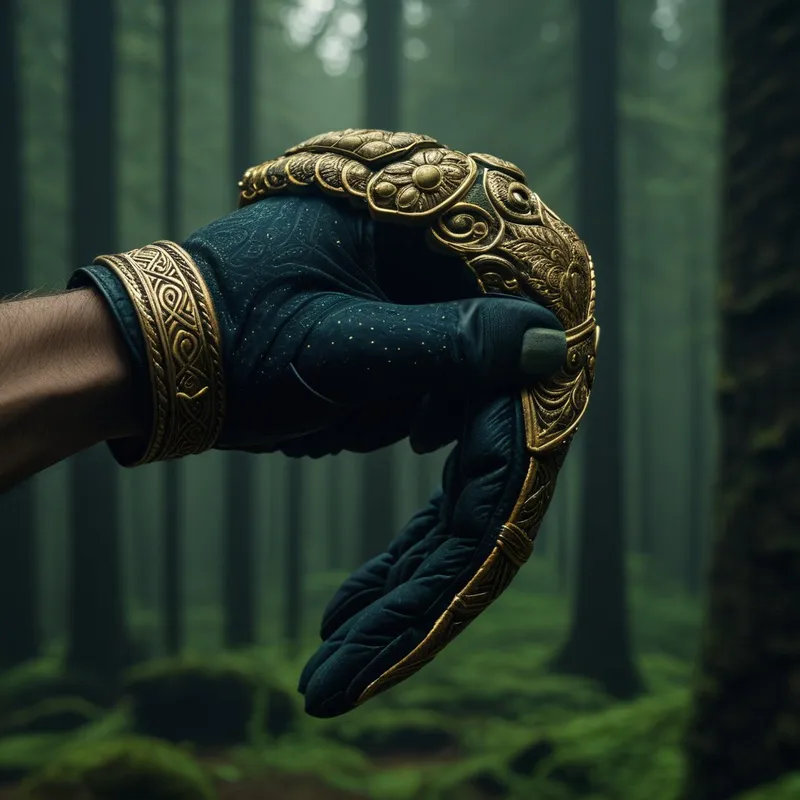
With a breath that was both a goodbye and a hello, she reached out. As her fingertips brushed the cuff, a shock, sweet and sharp, raced up her arm. The Glove did not slide on; it awoke. It moved to meet her, leather flowing like liquid shadow over her skin, stitching itself not to her hand, but to her very life-force, her will, her destiny. In that moment, Elara was no longer just a woodcutter’s child, and The Glove was no longer a waiting relic. Together, they became The Guided Hand. Where she pointed, trees bent to give better wood. Where she touched, blight receded. She did not wield power; she and the power were one. The sacrifice of individual autonomy was transmuted into the grace of perfect, destined function.
Cultural Origins & Context
The myth of Hand-in-Glove is a cornerstone of oral tradition among the dispersed, agrarian communities collectively referred to as Folk culture. It was not a tale for grand halls, but for the intimate space of the cottage, told by grandmothers or traveling Spinners during the long nights of deep winter. Its primary function was not entertainment, but ontological education.
It served as a narrative framework for understanding vocation and destiny in a world where one’s life path was largely predetermined by birth and trade. For the blacksmith’s son who felt the iron sing to him, or the midwife’s daughter who understood the herbs without being taught, this myth provided a sacred context. It legitimized the profound, often unsettling, inner pull toward a specific life. It taught that such a calling (The Pull) was not a personal whim, but a fragment of a larger, pre-existing pattern waiting for its human counterpart. The myth ritualized the anxiety and terror of stepping into one's role, framing it not as a fear of failure, but as the sacred dread of transformation.
Symbolic Architecture
At its core, the myth is a profound allegory for the discovery and embodiment of the True Self. The Glove represents the archetypal form, the latent potential, the "destiny" or vocation that exists in the collective unconscious as a perfect pattern. It is pre-made, waiting. The human hand represents consciousness, will, and the individual psyche with its fears and desires.
The great terror is not that the pattern does not exist, but that it does, and it demands the surrender of the smaller self to fulfill it.
The crucial, often overlooked, symbol is the empty space within The Glove. This is not a void, but a sacred negative—a shaped potential. It is the Fated Hollow. It signifies that destiny is not a force that overpowers, but an invitation that requires a specific shape of soul to fill it. The moment of union is not an act of domination by either party, but a mutual recognition and completion. The resulting Guided Hand symbolizes the individuated person: where instinct (the glove) and consciousness (the hand) operate in seamless unison, creating a power that is neither purely human nor purely archetypal, but a unique third thing.
The Dreamer's Resonance
In the modern dreamscape, the myth of Hand-in-Glove manifests not as a literal narrative, but as a somatic and emotional pattern. To dream of desperately trying to fit into a glove that is too rigid or too formless speaks to the anxiety of societal or professional roles that do not match the soul's shape. The glove may be made of cold metal (rigid duty) or crumbling paper (false identities).
Conversely, the dream of finding a glove that fits perfectly, often in an unexpected place, signals a profound psychological moment: the unconscious is presenting the dreamer with the felt-sense of their own archetypal pattern. The accompanying emotion is key—a mix of awe, rightness, and deep fear. This is the somatic signature of the ego confronting the Self. The dreamer may wake with a tingling in their hands, a literal embodiment of the psyche's readiness to "grasp" its destiny. These dreams often cluster around life transitions—career changes, creative awakenings, or spiritual crises—marking the threshold of a calling.

Alchemical Translation
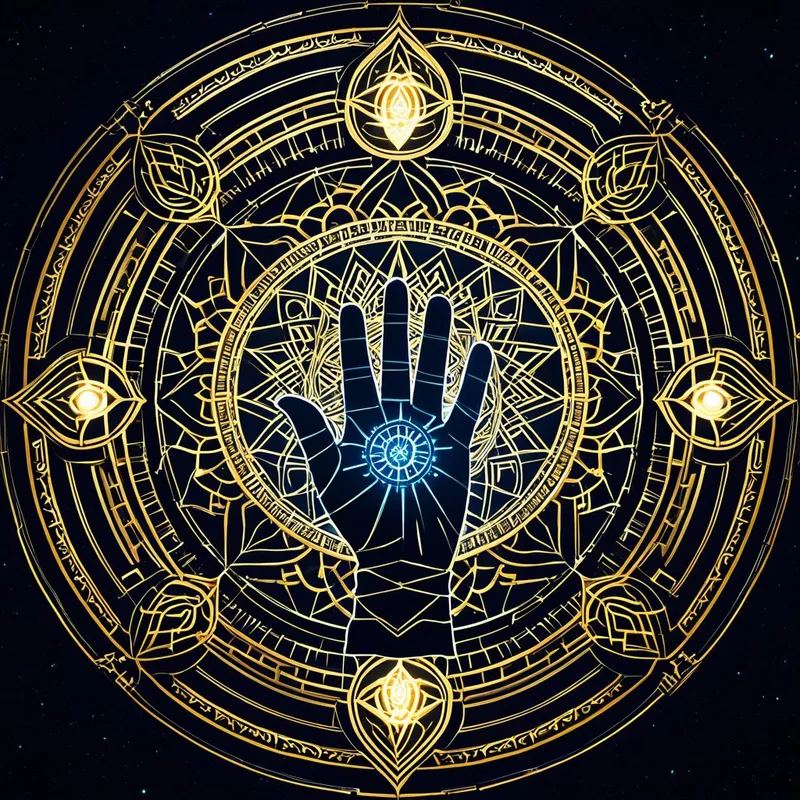
The alchemical process mirrored in Hand-in-Glove is the Coniunctio, the sacred marriage. For the modern individual pursuing individuation, the myth models the final, terrifying stage of synthesis.
The first stages—Nigredo (the confusion and longing of Elara) and Albedo (her journey to the grove)—prepare the psyche. The moment before contact is the Rubedo, the reddening, the peak of tension and passion. The union itself is the creation of the Lapis Philosophorum, the Philosopher's Stone—in psychological terms, the realized Self.
Individuation is not about creating a new self from nothing, but about discovering the ancient, tailored garment of your own soul and having the courage to wear it, stitch to skin.
The modern seeker's "Glove" is their innate talent, their deepest values, their archetypal pattern—often felt as a nagging, non-negotiable pull toward a certain mode of being. The "sacrifice" is the abandonment of the persona, the comfortable, socially-approved identity. The terror is real, for it is a death. But the myth assures us that on the other side of that death is not obliteration, but a more potent form of life: a life where action and essence are unified. One no longer has a calling; one is the calling, a Guided Hand moving with the grace of a destiny finally embraced.
Associated Symbols
Explore related symbols from the CaleaDream lexicon: