Hades / The Underworld Myth Meaning & Symbolism
The story of the unseen god Hades, his realm of shades, and the descent of heroes and goddesses into the land of the dead to confront ultimate truths.
The Tale of Hades / The Underworld
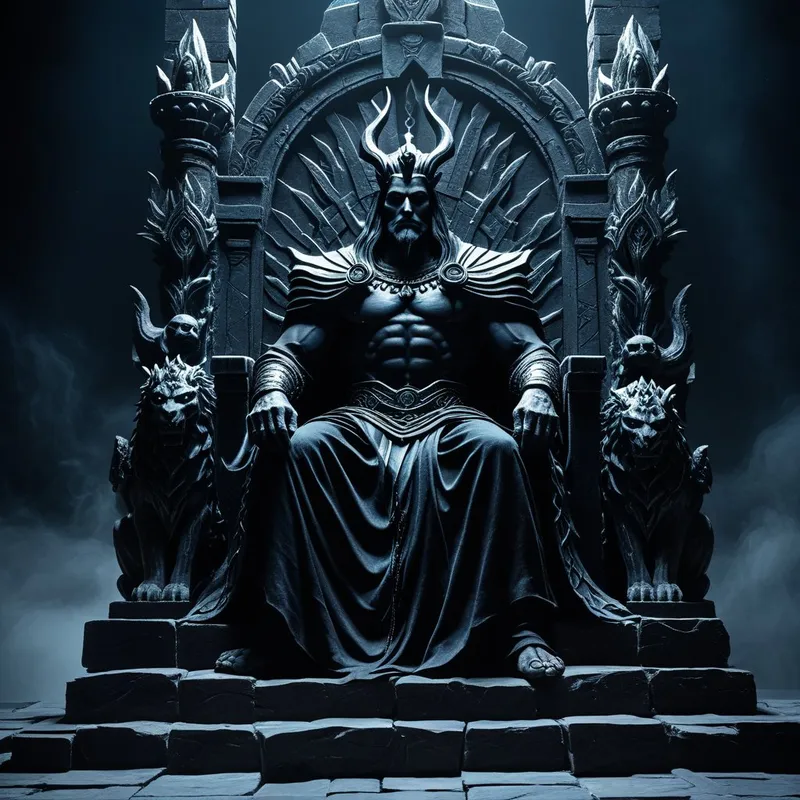
Listen. There is a world beneath your feet, deeper than the roots of the oldest oak, colder than the heart of a mountain. This is the realm of Hades, the Unseen One, the Rich One. He does not dwell on Olympus with his thunderous brother Zeus or his stormy brother Poseidon. His kingdom is here, in the everlasting dusk, where the rivers Cocytus and Acheron whisper with the voices of the dead.
The air does not move. It hangs, a perfumed stillness of dust and asphodel. Here walk the shades, murmuring and fluttering like dry leaves, their memories of life fading like a distant echo. At the gate, the three-headed hound Cerberus watches with six burning eyes, ensuring none leave who have crossed the final threshold. The aged ferryman Charon poles his skiff across the Styx, his palm open for the coin placed on the tongue of the buried.
But this silent order was once broken by a cry that shook the roots of the world. It came from Demeter, whose daughter, the radiant Kore, was gone. She had been gathering flowers in a sunlit meadow when the earth cracked open. From the abyss came a chariot of black adamant, drawn by immortal steeds, and Hades himself, clad in shadow. He took her, not in malice, but in a fierce, silent claiming, down to his sunless halls to be his queen. The world above withered with Demeter’s grief; no seed sprouted, no child laughed.
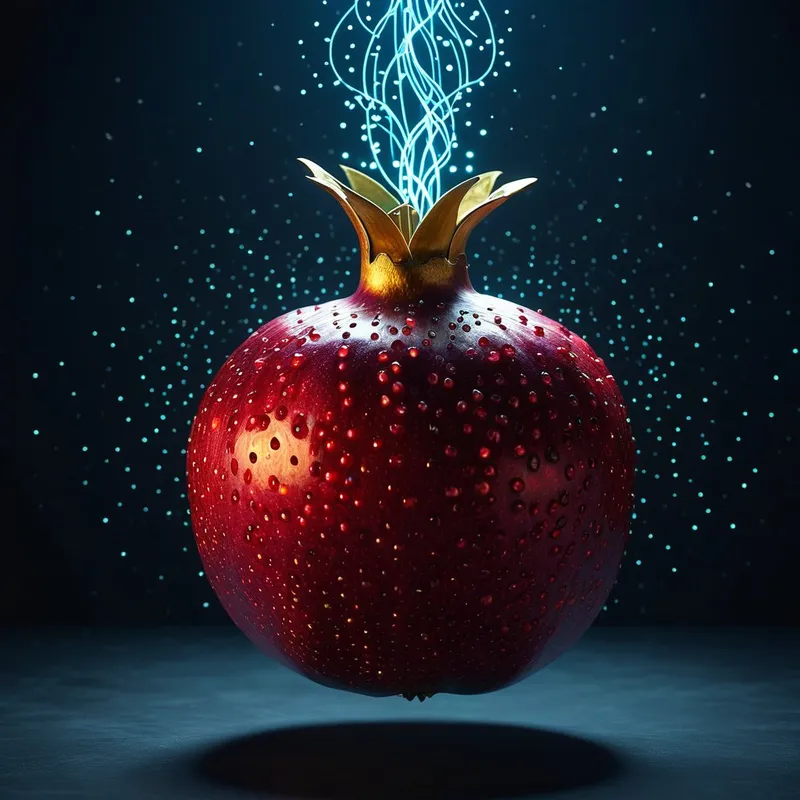
Only the cunning Hermes, sent by a concerned Zeus, could traverse the path between the worlds. He found Persephone seated beside Hades, no longer a girl but a woman, a queen in a crown of dark jewels. She had eaten. Not a feast, but a few seeds—six or four—from a blood-red pomegranate offered in the loneliness of the throne room. That simple act was a contract written in the substance of the soul. Because she had consumed the food of the dead, a part of her belonged to the land below forever.
So a compromise was struck in the cold halls of destiny. For each seed eaten, a month of the year she must reign beside Hades in the deep earth. And for the rest, she could walk again in the light with her mother. Thus, the wheel of the world turned: the barren winter of her descent, the explosive spring of her return. The Unseen One was no longer just a king of ghosts, but a husband, a part of the great cycle. And the dead, forever after, had a queen who knew both sunlight and eternal night.

Cultural Origins & Context
This was not a story confined to temple scrolls. It was the central mystery of the Eleusinian Mysteries, the most sacred and revered initiatory cult of the ancient Greek world. For nearly two thousand years, from Mycenaean times to the end of antiquity, initiates—from slaves to emperors—made the pilgrimage to Eleusis. They participated in rituals so secret that revealing them was punishable by death. The myth of Demeter and Persephone’s separation and reunion was not merely told; it was experienced through sacred drama, fasting, and likely a powerful psychoactive brew called the kykeon.
The function was profound. In a world where death was a gray, uncertain prospect, the Mysteries promised something more—not immortality in a Christian sense, but a blessed lot in the afterlife for the initiated. The myth, through ritual, provided a map for the ultimate transition. It gave cultural and psychological container for the terror of mortality, transforming the bleak Homeric Hades into a realm with a logic, a queen of compassion, and a promise of cyclical return mirrored in the seasons. The storytellers were the hierophants, the priests and priestesses of Demeter, and their stage was the torch-lit Telesterion, where the boundaries between myth and the participant’s soul dissolved.
Symbolic Architecture
The Underworld is not a place of punishment, but of truth. It is the ultimate shadow realm, the psychic basement where everything forgotten, repressed, or ended resides. Hades himself symbolizes the principle of necessary containment—the unseen force that holds what is no longer in the light. He is not evil; he is absolute. His abduction of Persephone is the inevitable descent of life (the maiden) into the realm of death and the unconscious, a non-negotiable fact of existence.
The pomegranate seed is the alchemical grain of commitment to the depths; once tasted, one can never again be wholly of the surface world.
Persephone’s transformation is the core. She is taken as Kore (the Maiden) and emerges as Persephone, the Queen who carries authority in both worlds. Her consumption of the pomegranate seeds is the critical act of assimilation. She does not just visit the underworld; she integrates a part of it into her very being. The rivers—Styx (oath), Phlegethon (fire), Lethe (forgetfulness)—represent the processes of the soul’s journey: binding, purgation, and the release of personal identity before potential renewal.
The Dreamer's Resonance
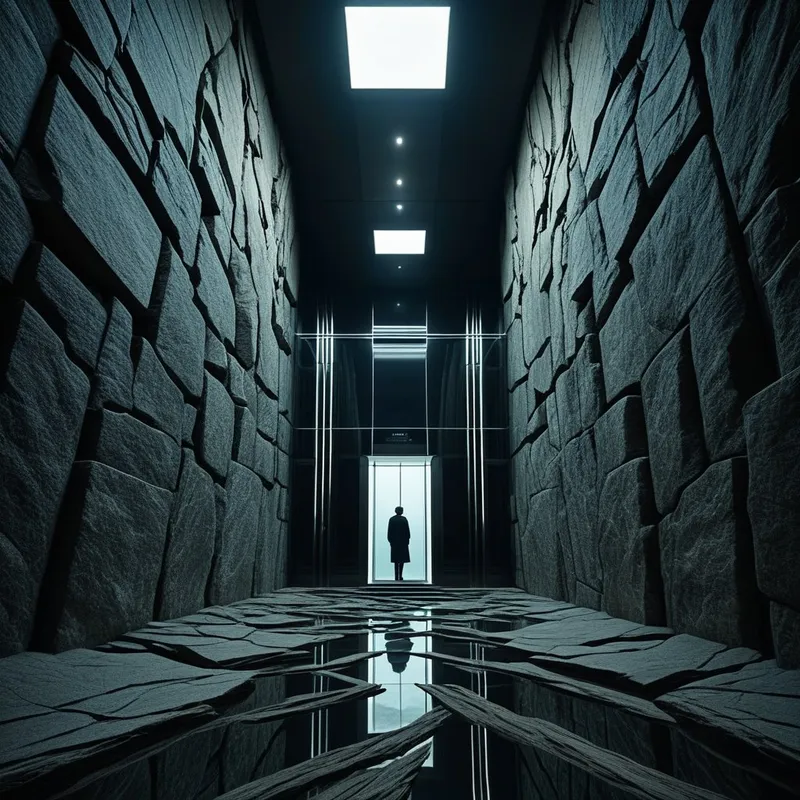
When this myth stirs in modern dreams, it announces a necessary descent. Dreaming of abandoned subway tunnels, descending elevators into bedrock, finding hidden basements in one’s own home, or encountering a solemn, authoritative figure in a dark place—these are all manifestations of the Hades archetype activating. The somatic process is often one of heaviness, inertia, or depression—a literal feeling of being pulled downward. Psychologically, it is a call to confront what has been “buried”: a grief that hasn’t been wept, a rejected aspect of the self, a forgotten talent, or the cold facts of one’s own mortality.
The dream may present a version of the pomegranate—a forbidden fruit, a contract, a small, potent object that, if accepted, changes everything. This is the dream-ego’s confrontation with the point of no return in a psychological process. To eat the seed is to accept that this journey will change you permanently. The figure of Hades in a dream is rarely a villain; more often, he appears as a stern guide, a psychiatrist, a silent king, or the director of a vast archive—the keeper of all you have ever been and forgotten.
Alchemical Translation
The myth models the individuation process—the soul’s journey toward wholeness—with stunning precision. The conscious, sunlit identity (Kore) must be ruptured and drawn down into the unconscious (Hades’ realm). This is not a chosen “shadow work” exercise but often a crisis: a loss, a depression, a failure—the cracking open of the meadow.
The throne in the underworld is not a prison, but the seat of sovereignty earned by facing what the surface world denies.
The alchemical operation occurs in the stillness of the throne room. The mourning (Demeter’s rage and grief) happens above, but the transformation happens below, in the quiet assimilation of the dark nourishment (the pomegranate seeds). This is the nigredo, the blackening, where the old ego-state dies. One does not conquer the underworld; one learns its laws and claims authority within it. The return is not to the old innocence, but to a new capacity: to live in the world of action and relationship (the upper world) while being irrevocably grounded in the truths of the deep self (the underworld). The modern individual undergoing this transmutation moves from being a victim of circumstance (the abducted maiden) to a person of depth and cyclical resilience (the Queen who travels between the poles of experience), able to hold both life and death within a unified psyche.
Associated Symbols
Explore related symbols from the CaleaDream lexicon: