Four Rivers of Eden Myth Meaning & Symbolism
A primal map of consciousness, where a single sacred source divides into four rivers, defining the world and the soul's journey from unity into manifestation.
The Tale of Four Rivers of Eden
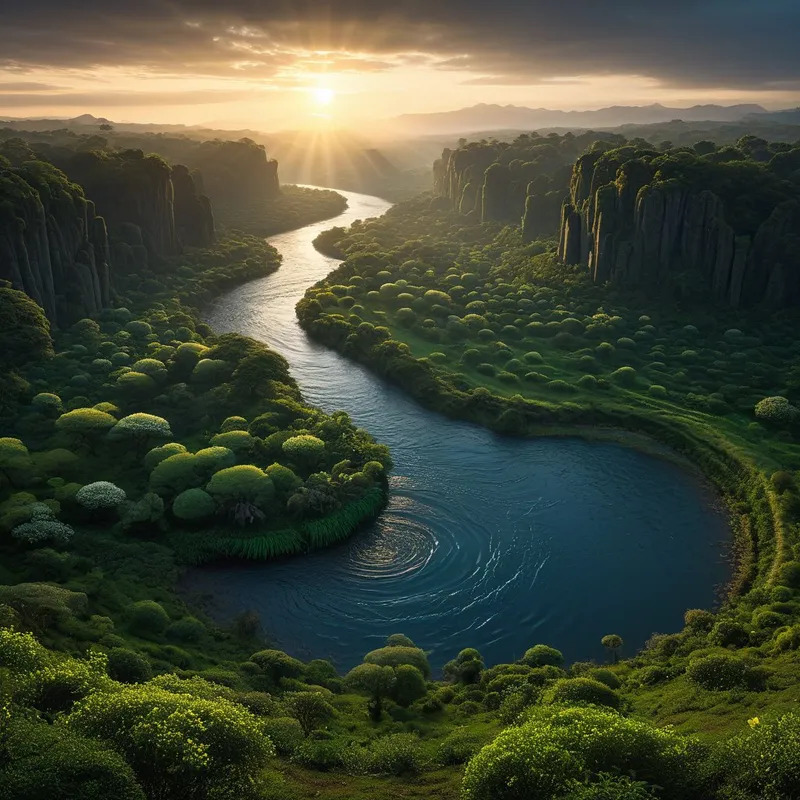
Before time was counted, before the first name was spoken, there was a garden. Not a garden as we know it, of tended rows and boundaries, but a place of such profound harmony that the very air hummed with the breath of the Elohim. In the east, where the sun is born, this garden was planted, a sanctuary woven from light, soil, and divine intention. And at its heart, pulsing with the rhythm of creation itself, was not a temple or a throne, but a source: a spring of living water rising from the deep places of the earth.
This was no ordinary spring. Its waters were clarity itself, holding the memory of the formless void and the promise of all forms to come. From this one font, this singular origin, the waters did not merely pool. They awoke, and they began to journey. They divided, not with a crack of division, but with the graceful, inevitable branching of a thought becoming speech.
The first to find its path was the Pishon. It wound like a serpent of molten sunlight through the land of Havilah, where the gold was not buried but born, and the bdellium wept from the trees, and the shoham stone lay open to the sky. Its course was generous, encircling the whole land, a river of bounty and radiance.
Then flowed the Gihon, with a different spirit. It was the river of the south, of the land of Cush, a deep and vital current. Its waters were the pulse of life, strong and nurturing, carrying the fertile black silt that would make the desert bloom. It was the sustainer, the hidden strength.
The third river, the Hiddekel, ran with purpose to the east of Asshur. Its waters were swift and knowing, cutting a clear path through the landscape. This was the river of direction, of conscious movement, the arrow shot from the bow of the garden towards the rising sun and the works of humankind.
And the fourth was the mighty Euphrates, the great river, the known world. It carried the weight of kingdoms yet to be, the silt of civilizations, the broad, patient flow of history itself. It was the foundation, the bearer of all that would be built upon its banks.
From one heart, four journeys. They watered the garden, this perfect center where the first man and woman walked in a state of unbroken connection, and then flowed outward, becoming the arteries of the world, defining its lands, its riches, its very shape. The garden remained, cradling the source, while its children, the rivers, went forth to give the formless earth its name and its nature.
Cultural Origins & Context
This myth is embedded in the opening chapters of Genesis, a text that functions as the foundational prologue for the entire Biblical narrative. Its origins are in the oral and written traditions of ancient Israel, a people defining their identity and their understanding of the cosmos in relation to a sovereign creator. The storytellers were priests, scribes, and wisdom-keepers, weaving cosmology, theology, and ethnogeography into a sacred history.
The societal function was multifaceted. Primarily, it established a theological point: the entire known world, even its most powerful and distant rivers (like the Tigris and Euphrates, familiar to the audience), originates from and is sustained by the creative act of the God of Israel. It roots sacred history in a real, though lost, geographical ideal. The myth also served an etiological purpose, explaining the origin and character of the world's great waters and the lands they nourished, placing the familiar geography of Mesopotamia within a divine, ordered blueprint that began in a state of perfect harmony.
Symbolic Architecture
The myth is less a story of characters and more a symbolic map of consciousness and creation. The Garden represents the state of psychic wholeness, the Self before differentiation. The single spring is the primordial source, the undivided wellspring of life, spirit, and psychic energy—what we might call libido or life-force in its purest state.
The One becomes Many not as a tragedy, but as the necessary language of creation. Differentiation is how the source learns to speak the world into being.
The four rivers represent the process of this differentiation. They are the core faculties or directions of the manifested psyche and world flowing from the central unity:
- Pishon (Gold, Bdellium, Shoham): Symbolizes value, radiance, and the soul's inherent wealth. It is the psychic function of feeling—what we cherish, what we find beautiful and precious. It encircles and defines the inner "land of Havilah," the territory of our intrinsic worth.
- Gihon (Cush, Vitality): Represents the life force, instinct, and the nourishing, often hidden, depths of the unconscious. It is the function of sensation—the raw, embodied experience of being alive, the fertile ground from which all growth springs.
- Hiddekel/Tigris (East of Asshur): Embodies directed thought, clarity, and conscious action. It is the function of thinking—the river that cuts a logical path, that moves with purpose and definition toward goals and understanding.
- Euphrates (The Great River): Signifies the foundation, the broad context of history, culture, and the collective. It is the function of intuition—the sense of the larger patterns, the flow of time and possibility that carries individual existence.
Together, they model a quaternity, a symbol of completeness and order (like the four cardinal directions, seasons, or elements) emanating from a unified center.
The Dreamer's Resonance
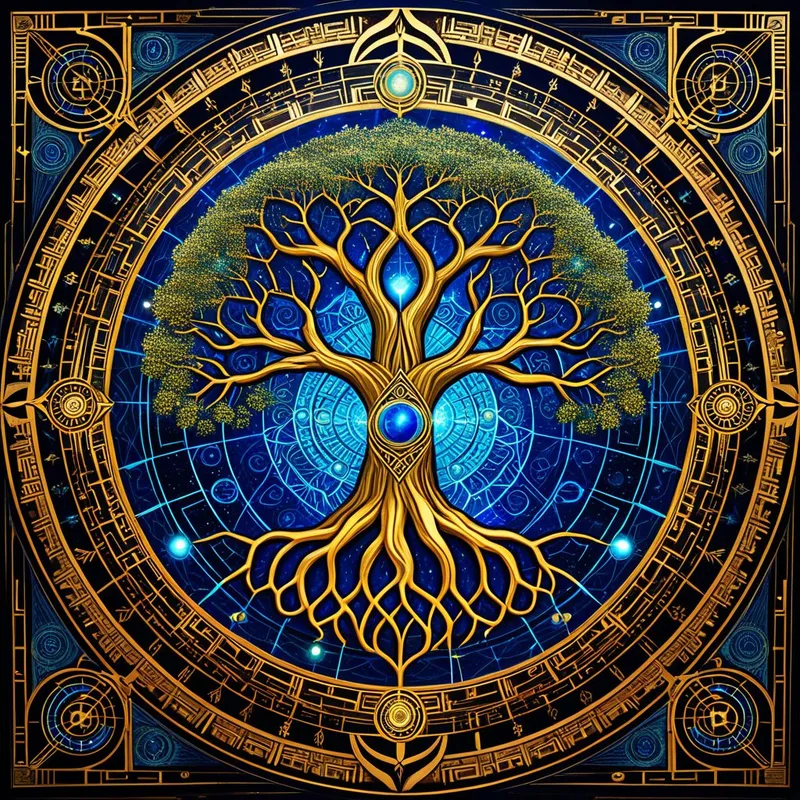
When this mythic pattern surfaces in modern dreams, it often signals a process of psychic re-orientation or a search for origin. A dreamer might find a secret, lush garden within a familiar place, or discover a mysterious fountain in their basement. The critical element is the division of one water source into several distinct streams.
This dream imagery suggests the dreamer is contacting the core, undifferentiated source of their own energy (the spring). The emergence of the rivers indicates a conscious differentiation of that energy into its component parts. Perhaps the dreamer is learning to distinguish their raw emotional vitality (Gihon) from their clear intellectual judgments (Hiddekel), or is discovering their innate sense of value (Pishon) separate from the broad flow of societal expectations (Euphrates). The somatic experience can be one of release, flow, or sometimes anxiety at the branching—a fear of losing the primal unity. The dream is a map of the psyche's innate structure becoming conscious, a reminder that our diverse talents and drives all spring from a single, sacred inner source.
Alchemical Translation
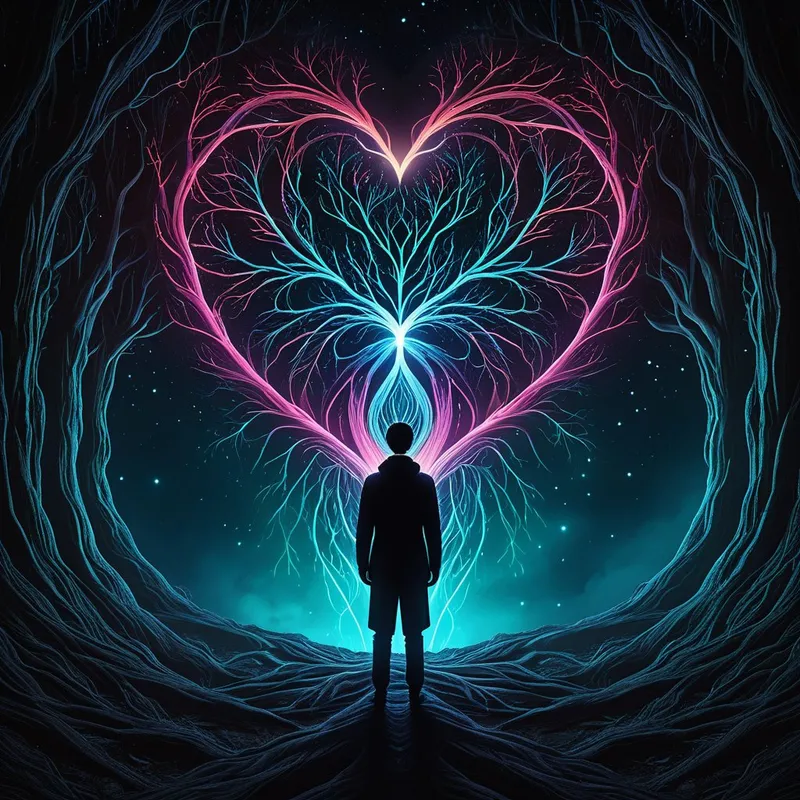
The alchemical process modeled here is not a heroic quest but a contemplative return to the origin and a conscious recognition of the emanations. The modern journey of individuation often begins in a state of confusion—a muddy delta where the rivers of feeling, thought, sensation, and intuition are hopelessly commingled. We feel our thinking, think our feelings, and lose touch with the nourishing underground stream of instinct.
Individuation is the labor of tracing the mighty, confused rivers of our life back to their singular source in the soul's garden.
The "work" is to follow each river upstream, to differentiate the functions. This means consciously developing the underused ones (e.g., the thinker learning to feel, the intuitive learning to sense) and bringing order to the overdeveloped ones. We trace the Tigris of our sharp intellects, the Euphrates of our broad visions, the Pishon of our cherished values, and the Gihon of our bodily wisdom back to their common origin.
The goal of this psychic transmutation is not to return to the undifferentiated spring and stay there—that would be unconsciousness. The goal is to become the garden itself: the conscious, grounded space where the source resides and from which the four rivers flow forth in harmony. It is to achieve a differentiated wholeness, where one acts from a center that knows and wisely directs its own diverse energies out into the world. The individual becomes a true microcosm: a centered self from which the four rivers of a complete life consciously water their own world.
Associated Symbols
Explore related symbols from the CaleaDream lexicon: