Elysian Fields Myth Meaning & Symbolism
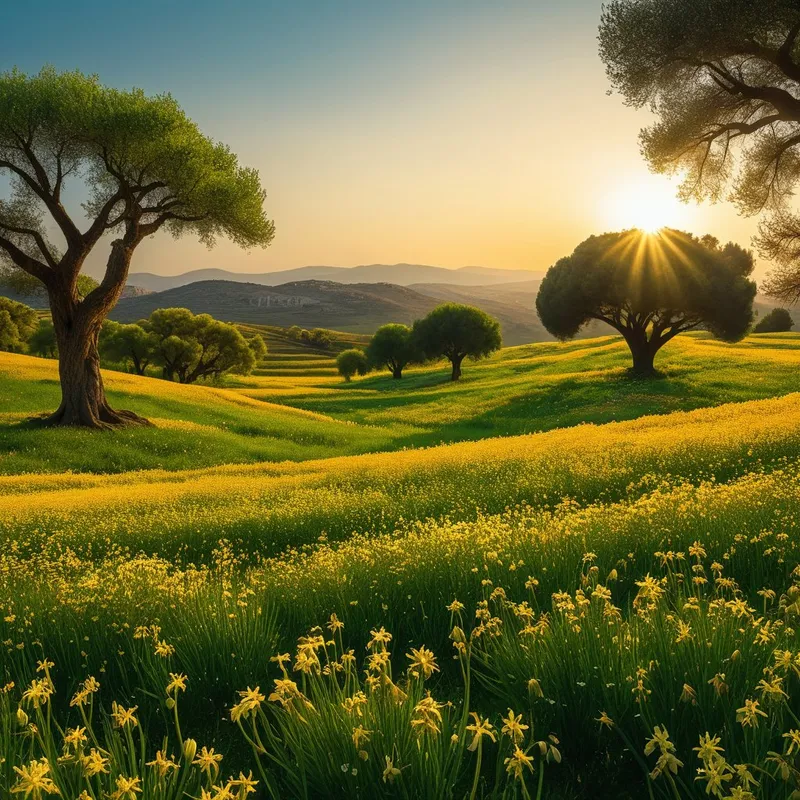
The blessed afterlife realm for heroes and the virtuous, a paradisiacal meadow of perfect peace, promised by the gods as the ultimate reward.
The Tale of Elysian Fields
Listen, and let the breath of the west wind carry you beyond the sun’s setting, past the swirling, grey mists of the Acheron, to a shore where sorrow dares not land. This is not the realm of Hades, lord of the silent multitude, nor the sunless meadows where shades flit like whispers. No. This is the Elysian Fields, the Fortunate Isles, where the air itself is a balm and the light has no source, yet is everywhere.
It was promised by the gods themselves, a covenant written in starlight and fate. When a hero’s mortal thread was cut—not by age or quiet sickness, but in the glorious, terrible furnace of honor—the messenger Hermes would not lead his shade to the common ferry. Instead, a gentler path unfolded. Perhaps it was Eos with her rosy fingers who lifted him, or a west wind sent by Poseidon himself, carrying the soul over the world-encircling river Okeanos, to the very edge of the earth.
Here, the hero would awaken. Not to memory, but to presence. The ache of old wounds faded, replaced by the scent of perpetual spring—wild thyme, crushed underfoot, and the sweet, haunting perfume of the white asphodel. The sun was gentle, the breeze cool. There was no toil. The earth offered its fruits freely. Games of strength and skill were played on grassy fields, laughter echoing without malice, contests where the only prize was the joy of motion. In some tellings, blessed mortals, those loved by the gods or living lives of perfect piety, walked here too, their forms radiant and whole.
This was the resolution, the final cadence in the symphony of a heroic life. No conflict raged here, no rising action—only the eternal, gentle resolution of a soul come home. It was a land of perfect arete—excellence—fulfilled, where the struggle was over, and the essence of the hero could simply be, forever bathed in a light that cast no shadow.
Cultural Origins & Context
The vision of Elysium evolved within the rich tapestry of Greek thought, reflecting a deep cultural negotiation with mortality. Its earliest mentions are found in the epic poetry of Homer, where it is a distant paradise for a select few, like the hero Achilles. It was not a democratic afterlife; it was an exclusive reward, a divine endorsement of the aristocratic heroic ideal. Later poets, like Pindar, and playwrights expanded its accessibility to include the virtuous and the initiated, particularly those connected to the Eleusinian Mysteries.
This myth functioned as a powerful social and psychological anchor. For the warrior, it promised meaning beyond the brutal finality of the battlefield. For the common person, through mystery cults, it offered hope for a blessed existence based on piety and ritual knowledge, not just birth or martial prowess. It was a story told by bards at feasts, inscribed by poets, and whispered in sacred rites—a collective dream of a just reward, answering the human heart’s rebellion against the bleakness of the common Greek conception of the underworld as a joyless, shadowy existence.
Symbolic Architecture
At its core, the Elysian Fields is not merely a geographical location, but a profound symbol of the psyche’s yearning for integration and rest after immense effort. It represents the state of being where inner conflicts are resolved, and one’s essential nature is allowed to exist in harmony.
Elysium is the psychic landscape where the war within the soul has ended, and the constituent parts—the warrior, the poet, the child—are reconciled under a sun that does not burn.
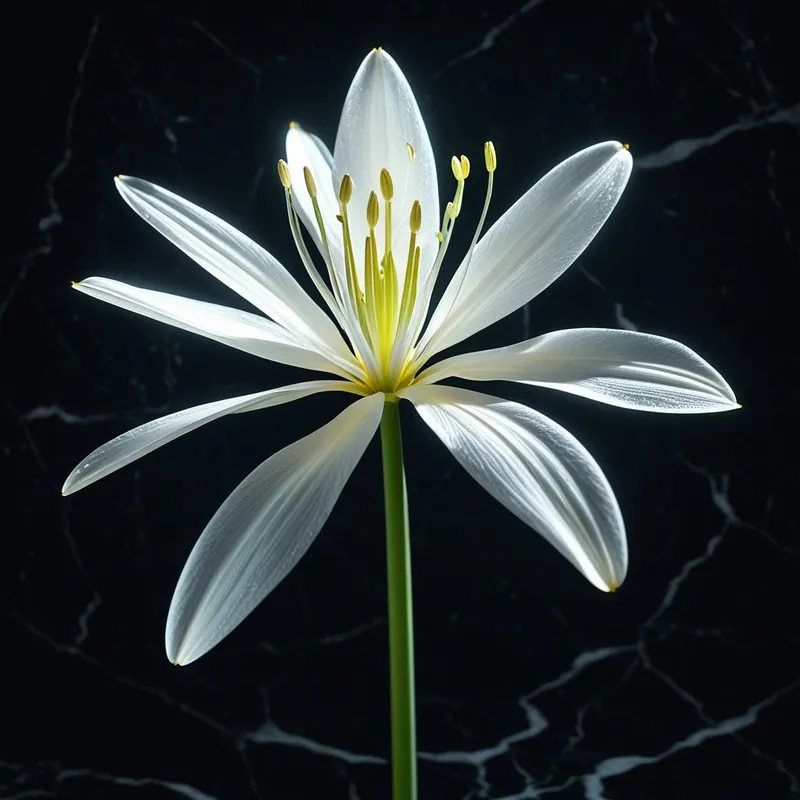
The hero’s journey to Elysium symbolizes the ultimate success of the ego’s struggle: to live a life of such definitive meaning and alignment with one’s deepest values (honor, courage, loyalty) that one earns a permanent state of psychic wholeness. The asphodel, blooming in this deathless meadow, is a key symbol. In the common underworld, it signifies the bland sustenance of the forgotten dead. In Elysium, it is transformed—its pale beauty becomes the flower of remembrance and eternal peace, showing that the same substance (a life) can lead to vastly different states based on the quality of the living.
The absence of toil and the gentle climate symbolize liberation from the burdens of the persona and the relentless striving of the ego. It is the self, finally at peace with itself.
The Dreamer's Resonance
When the imagery of Elysium arises in modern dreams, it seldom appears as a literal classical meadow. Instead, it manifests as a profound somatic and emotional experience of arrival and resolution. The dreamer may find themselves in a place of breathtaking, serene beauty—a quiet library with endless light, a secluded forest glade where time stands still, or a childhood home rendered in perfect, peaceful detail.
The psychological process at work is one of completion and reward from the deep unconscious. This dream pattern often surfaces after a period of intense struggle, sacrifice, or moral crisis—the modern equivalent of the hero’s trials. The psyche is signaling that a major chapter of inner work has concluded. The feeling is not of excitement, but of deep, soul-level rest. There is no task to perform, no enemy to face. The dream ego is simply present, whole, and accepted. This can be a compensatory message for a life currently experienced as chaotic or unrewarding, or a genuine reflection of an inner achievement. The somatic resonance is typically one of lightness, warmth, and released tension—a literal feeling of “resting on one’s laurels” at a profound level.
Alchemical Translation
The myth of Elysium provides a powerful map for the alchemical process of individuation—the journey toward psychic wholeness. The hero’s life of struggle and fateful choice represents the nigredo and albedo stages: the confrontation with shadow, the burning away of impurities, and the hard-won clarity of purpose. Elysium itself symbolizes the final stages of citrinitas (yellowing) and rubedo (reddening)—the integration and radiant, stable embodiment of the true self.
The alchemical gold is not a prize to be held, but a state of being to inhabit. Elysium is the vessel where the transformed soul rests, permanently gilded by its own essence.
For the modern individual, the “Elysian Fields” are not an external destination to be earned posthumously, but an internal state to be cultivated. The “heroic deeds” are the daily acts of integrity, the courage to face one’s personal shadows, and the perseverance to live authentically against external pressures. The promise of Elysium translates to the psychological truth that a life lived in deep alignment with the Self (Jung’s term for the central, unifying archetype of the psyche) leads to an inner condition of peace that is independent of external circumstance.
The ultimate alchemical translation is this: we do not go to Elysium. We become it. When the battles of the persona are over, and the contraries of the psyche are reconciled, the soul discovers it has been standing in its own blessed meadows all along. The eternal spring is the perennial flow of life from a source that is no longer at war with itself. This is the myth’s deepest offering—a vision of the peace that passes understanding, earned not by chance, but by the quality of a life fully lived.
Associated Symbols
Explore related symbols from the CaleaDream lexicon: