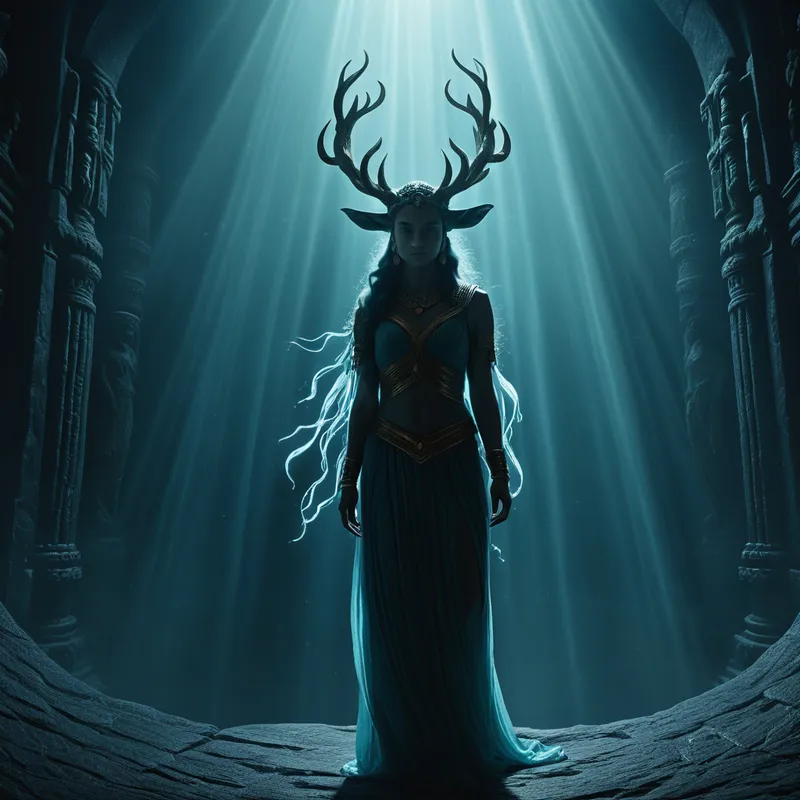
Elijah and the Whirlwind
The prophet Elijah is taken to heaven in a whirlwind, a dramatic biblical event symbolizing divine intervention and prophetic legacy.
The Tale of Elijah and the Whirlwind
The sun beat down on the banks of the Jordan, a river that had borne witness to the parting of waters and the crossing of a nation into promise. Now, it would witness a crossing of a different order. The prophet Elijah, a man of fire and solitude, whose very name meant “Yahweh is my God,” walked with his devoted successor, Elisha. A heavy silence, thick with unspoken knowledge, hung between them. Three times, Elijah urged Elisha to stay behind, and three times Elisha refused, swearing by the life of the Lord and his own soul that he would not leave his master’s side.
They came to the river’s edge. Elijah took his mantle, the rough-hewn cloak that was the skin of his prophetic office, and folded it. He struck the waters of the Jordan, and they parted to the left and the right, as they had for Joshua long before. The two men crossed on dry ground. On the other side, in the liminal space beyond the river, Elijah turned to Elisha. The air grew still, charged with a pressure that was not of the earth.
“Ask what I shall do for you, before I am taken from you.”
Elisha, his heart laid bare, did not ask for wealth or power. He asked for a double portion of Elijah’s spirit—the inheritance of a firstborn son, the continuity of the prophetic fire. It was a request for destiny itself. Elijah replied that it was a hard thing, yet if Elisha saw him as he was taken, it would be granted.
Then, as they walked and talked, the fabric of the world began to fray. A chariot of fire appeared, drawn by horses of fire. It was not an arrival from a distant place, but a sudden irruption of a fiercer reality into their own. The celestial cavalry drove between them, and in that moment of blazing separation, Elijah was taken up.
But not by the chariot. A great whirlwind, a sa’ar—a storm-wind of God—swept down from the heavens. It was not mere air in motion; it was a visible spiral of divine agency, a funnel of purpose connecting earth and sky. Into this swirling column of power Elijah ascended. Elisha watched, his eyes wide, his cry of “My father, my father! The chariots of Israel and its horsemen!” torn from his lips. He saw, and the mantle of Elijah, falling from the whirlwind’s grasp, fluttered down to meet him. Elisha took it up, struck the Jordan once more, and the waters parted for him alone. The spirit rested. The successor had crossed over.
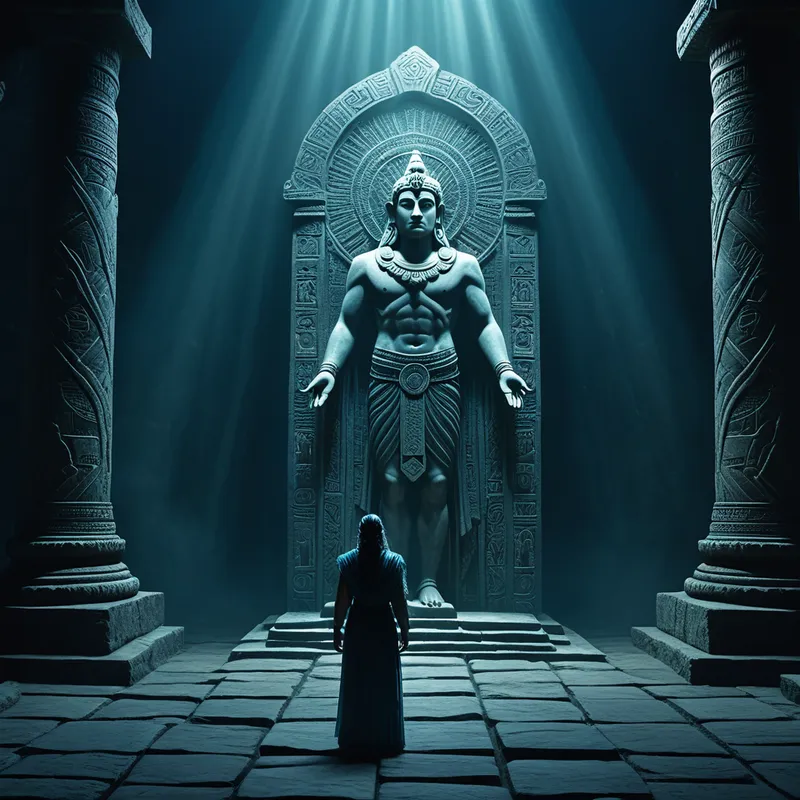
Cultural Origins & Context
The story is recorded in the second book of Kings (2:1-18), a text concerned with the turbulent political and spiritual history of the divided kingdoms of Israel and Judah. Elijah’s ministry was a solitary bulwark against the rampant syncretism and idolatry of King Ahab and Queen Jezebel’s reign. He was the defender of Yahweh’s exclusive sovereignty, a role enacted dramatically on Mount Carmel where he called down fire from heaven.
His departure, therefore, is not a death but a translation. In a culture where death was a descent to Sheol, Elijah’s ascent shattered the paradigm. He joined the rare company of Enoch, who “walked with God, and he was not, for God took him.” This bypassing of death cemented Elijah’s status as a unique figure in Hebrew thought—a mortal who did not see corruption, taken directly into the divine presence. It established a powerful eschatological hope: Elijah would one day return “before the great and terrible day of the Lord” (Malachi 4:5), to turn hearts and restore order. He became the prophet of the not-yet, the eternal forerunner.
Symbolic Architecture
The myth’s power lies in its layered symbols, each a facet of a profound psychological and spiritual event.
The whirlwind is not destruction but a vehicle of radical translation. It represents the point where individual consciousness is utterly reorganized by a force greater than itself—the psyche caught in the vortex of the Self.
The journey from Gilgal to Bethel to Jericho and finally across the Jordan traces a sacred circuit, a final pilgrimage through sites laden with Israel’s memory. Each “stay here” from Elijah is a test of Elisha’s commitment; the true disciple must follow the path to its inexplicable end, even through the waters of dissolution.
The mantle is the visible token of the invisible spirit. Its transfer is not a handing over of power, but the catching of a falling cloak—an act of reception. The inheritance is not seized but witnessed and then taken up by the one prepared to wield it.
The chariot and horses of fire signify the martial, organizing power of the divine breaking into human perception. They are the numinous threshold guardians, creating the necessary rupture in the ordinary world so the extraordinary transition can occur.
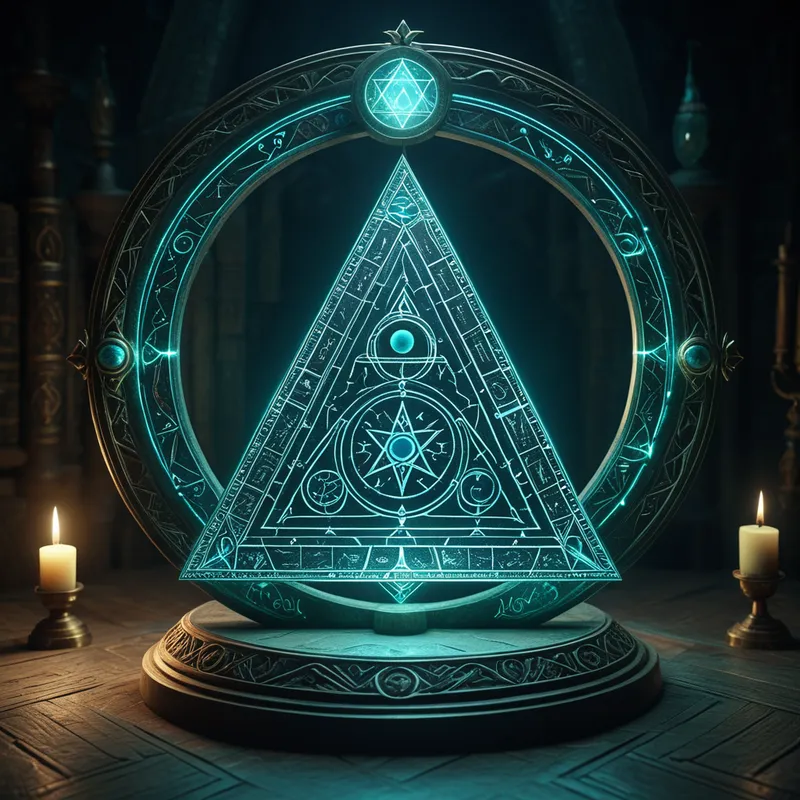
The Dreamer's Resonance
For the individual psyche, Elijah’s ascent speaks to the mystery of inner transformation that feels like a violent grace. It is the moment when a central, guiding complex of the personality—a lifelong attitude, a foundational belief—is suddenly and irrevocably taken up into a new arrangement. The old prophet, the old way of being, must depart for the new consciousness (Elisha) to fully come into its authority.
We all have our “Jordan” moments, crossings where we must leave familiar territory for an unknown shore. The myth assures us that such crossings are presided over by a transpersonal power. The anguish of Elisha, watching his “father” vanish, mirrors the grief of the ego losing a cherished identification, even if that identification is with a spiritual master or a former stage of life. The gift, however, lies in the witnessing itself. To “see” the departure is to comprehend its necessity, and in that comprehension, to receive the capacity to part the waters on one’s own.

Alchemical Translation
In the alchemical opus, Elijah’s journey is the sublimatio—the process of making the volatile fixed and the fixed volatile, of elevating base matter to a higher spiritual state. The fiery prophet, whose earthly ministry was one of confrontation and purification, undergoes a final, glorious distillation.
The whirlwind is the alembic of God. The prophet, as the raw prima materia of human devotion and will, is placed within this cosmic vessel. The heat is not of flame but of divine urgency; the product is not a residue but a transmuted being, taken whole into the realm of spirit.
The entire narrative is an alchemical ritual. The repeated journeys are circulations. The parting of the Jordan is the solutio, the dissolution of boundaries. The appearance of the fiery chariot is the separatio, the crucial division of spirits. And the ascent is the final, unrepeatable coniunctio—the marriage of the human soul with its divine source, leaving only the discarded “body” of the mantle, the physical husk of the work, for those who remain to use as a tool.
Associated Symbols
Explore related symbols from the CaleaDream lexicon:
- Whirlwind — The visible spiral of divine will, a vortex of transformation that lifts the earthly to the heavenly without intermediary death.
- Fire — The purifying and transcendent element, representing both divine judgment and the unquenchable spirit of prophecy.
- Mantle — The outer garment of office and identity, whose transfer symbolizes the conscious inheritance of spiritual authority and legacy.
- Chariot — A vehicle of celestial power and swift transition, marking the boundary between earthly and divine realms.
- Jordan — The river of crossing and threshold, a flowing boundary that must be parted to move from one state of being to another.
- Ascension — The vertical movement of a mortal directly into the sphere of the divine, bypassing decay and symbolizing ultimate validation.
- Prophecy — The disruptive voice of the eternal speaking into time, a force embodied in a person and destined for continuation.
- Wind — The invisible breath and spirit of God, which in its most intense form becomes the whirlwind of radical change.
- Bridge — The implicit connection between heaven and earth made manifest in the moment of crossing, embodied in the path over the parted river.
- Succession — The sacred and often fraught process by which spiritual power and responsibility are transmitted from one generation to the next.
- Divine — The ultimate, numinous reality that intervenes, calls, tests, and ultimately receives the devoted human spirit.
- Witness — The crucial act of seeing and acknowledging the numinous event, which itself becomes the condition for receiving its power.