
Ein Sof the Infinite Myth Meaning & Symbolism
The myth of the unknowable, boundless divine source that precedes all creation, whose withdrawal makes finite existence and consciousness possible.
The Tale of Ein Sof the Infinite
Before the Beginning, there was no before. Before the first word, the first thought, the first point of light, there was only Ein Sof. It was not a thing, but the absence of all things. It was not a being, but the ground of all being. It was a boundless, undifferentiated ocean of pure potential, a light so absolute it had no opposite, a presence so complete it had no need to be present.
This was the Infinite, perfect in its solitude, whole in its unity. There was no space within it, for it was space. There was no time within it, for it was time. It was the ultimate, silent is-ness, the great "I Am" before the "I" was spoken. To imagine it is to fail, for imagination itself is a child of the finite.
Yet, within this perfect, boundless plenitude, a question arose not from a mind, but from the very nature of existence. A divine yearning, a desire to be known. But how can the Infinite be known? Knowledge requires an other, a knower and a known. And in the Infinite, there was no other, only the One.
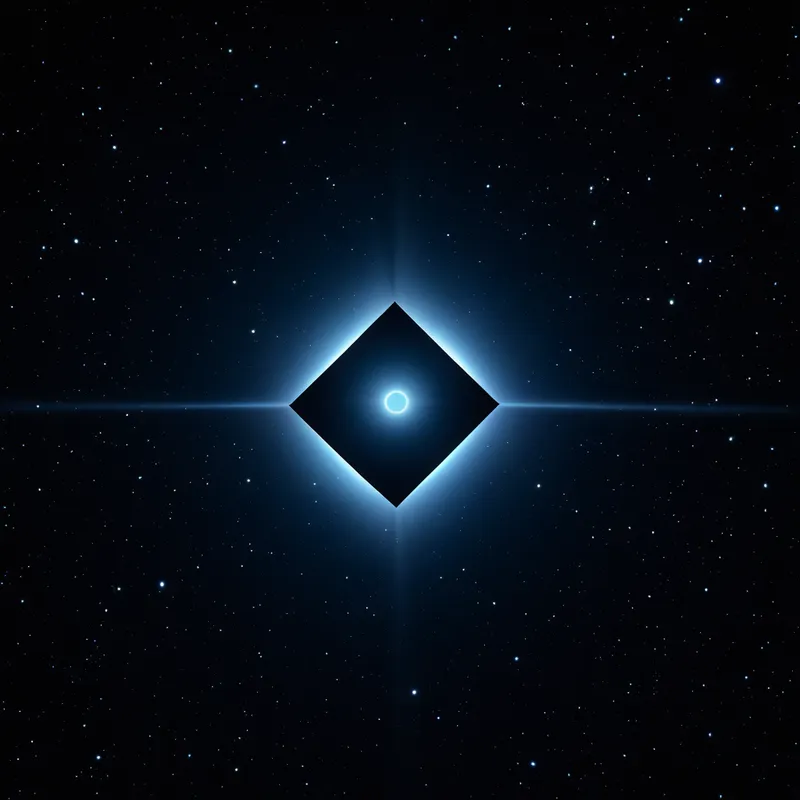
So, the Unthinkable occurred. Ein Sof performed the first and ultimate act of love: it withdrew. It contracted into itself, creating at its heart a hollow, a void, a womb of absence. This was the Tzimtzum. Not a movement in space, but the creation of the possibility of space. From the absolute fullness, a sacred emptiness was carved.
Into this primordial vacuum, a single, slender ray of the Infinite Light extended. This was the Kav. It was not the Infinite itself, but its emissary, its first utterance. And as this ray streamed into the void, it began to crystallize into vessels—ten vessels of light, the Sefirot. They were to be channels, filters, through which the boundless light could flow into the world-to-be, giving it form and structure: Keter, Chokhmah, Binah, down to the final vessel, Malkhut.
But the light was too pure, too potent. The vessels, unprepared for the sheer force of the Infinite, shattered. The Shevirat HaKelim. Sparks of divine light scattered and fell, trapped in fragments of the broken vessels, which became the husks of matter, the shells of a fractured reality. The world was born from this cataclysm—a world of separation, of pain, of distance from the source, yet a world glittering with imprisoned divine sparks.
And so the great work began, not of creation, but of gathering. The task of all souls, of all existence, became Tikkun Olam—to sift the light from the shells, to raise the sparks, to mend the shattered vessels. The story of Ein Sof is not a tale with an ending, but the opening of a cosmic sentence we are all still speaking, word by sacred word, act by loving act, in the long journey back toward the hidden, waiting Infinite.
Cultural Origins & Context
This is not a myth from the biblical canon, but from the deep, secret heart of Jewish mystical thought, known as Kabbalah. Its most elaborate formulation comes from the 16th-century sage Isaac Luria, in the Galilean town of Safed. Here, in the wake of the Spanish expulsion, a community sought not just historical but cosmic meaning for their exile and suffering. Lurianic Kabbalah provided a grand, metaphysical narrative that transformed catastrophe into purpose.
The myth was transmitted orally from master to carefully prepared disciple, often through dense, poetic texts like the Zohar. It was never meant for public consumption; it was a map of the soul and the cosmos for those undertaking a perilous inner journey. Its societal function was profound: it framed all of reality—including exile, evil, and human action—as part of a divine drama of rupture and repair, giving ultimate significance to every ethical deed and ritual act as a step in healing the world and the Godhead itself.
Symbolic Architecture
The myth of Ein Sof is a profound symbolic blueprint for the psyche's relationship with the ultimate ground of being. Ein Sof represents the unconscious in its purest, most undifferentiated state—the pleroma of potential from which consciousness itself emerges.
The birth of the ego is a necessary catastrophe, a Tzimtzum of the soul that creates the space for a separate "I" to exist, at the cost of exiling itself from the oceanic whole.
The Tzimtzum symbolizes the fundamental act of differentiation that makes consciousness possible. It is the psychological "big bang," the separation of subject and object. The Shevirat HaKelim is the inevitable trauma of this emergence—the fragmentation of the psyche into complexes, defenses, and personas (the "shells" or Kelipot) that contain but also conceal our innate wholeness (the "sparks"). The entire cosmic process mirrors the individuation journey: from unconscious unity, through necessary fragmentation and suffering, toward a conscious, hard-won re-integration.
The Dreamer's Resonance
When this myth stirs in the modern dreamer, it often manifests as dreams of vast, empty spaces—endless deserts, starless skies, or silent, expansive rooms. One may dream of a light so bright it blinds, or of precious, glowing fragments scattered in mud or debris. There is a somatic quality of both profound awe and profound loneliness, a sense of being at the edge of something too large to comprehend.
This is the psyche processing its own origin and exile. The dreamer is confronting the ground of their own being, the "I" before the "I." It can feel like a dissolution of identity, which the ego may experience as terrifying. The process at work is the soul's deep memory of its source and its current state of separation. The dream invites the dreamer to hold the tension between the infinite self and the finite self, to begin the inner work of Tikkun—gathering the scattered, neglected, or wounded parts of the psyche back into a more conscious whole.

Alchemical Translation
The alchemical process modeled here is the opus contra naturam—the work against nature, which in psychological terms is the work against unconscious identification. The prima materia is the unconscious, unified Ein Sof state. The Tzimtzum is the separatio, the crucial first separation that allows for discernment. The shattering of the vessels is the mortificatio or nigredo, the necessary dark night and fragmentation of the old, rigid structures of the personality.
The goal is not to return to the unconscious unity of Ein Sof, but to achieve a unio mentalis—a conscious unity where the differentiated ego relates to the infinite ground, having gathered and redeemed the scattered sparks of its own potential.
The long labor of Tikkun Olam is the alchemical coagulatio and albedo, the slow, meticulous work of integration, bringing light to shadow, meaning to trauma, and order to chaos. The final stage is not a dissolution, but a sacred marriage between the finite and the infinite, where the individual, fully realized, becomes a clear vessel—a repaired Sefirah—through which the boundless can consciously flow into the world. The individual becomes an active participant in the divine process, a co-creator in the mending of the soul and the cosmos.
Associated Symbols
Explore related symbols from the CaleaDream lexicon:
- Infinite — The core symbol of Ein Sof itself, representing the boundless, undifferentiated ground of all being that exists beyond all categories of thought and perception.
- Light — The divine emanation that flows from the Infinite, symbolizing consciousness, wisdom, and the pure essence of the soul that becomes scattered in creation.
- Circle — Represents the perfect, unified wholeness of Ein Sof before the Tzimtzum, as well as the ultimate goal of the repaired and integrated cosmos.
- Vessel — The Sefirot, the structures that attempt to contain the divine light, symbolizing the forms of the psyche and the world that are necessary yet fragile.
- Shattering — The Shevirat HaKelim, representing the necessary trauma of differentiation, the fragmentation of wholeness that creates the possibility for growth and conscious repair.
- Spark — The scattered divine essence trapped in matter, symbolizing the core of value, potential, and soul in every fragment of existence and within every complex of the psyche.
- Gathering — The act of Tikkun, the lifelong process of collecting the sparks, representing psychological integration, healing, and the conscious reclamation of lost parts of the self.
- Withdrawal — The Tzimtzum, the primordial act of divine self-limitation, symbolizing the creation of psychic space, the birth of the ego, and the necessity of boundaries for relationship.
- Jewish Star — The Magen David, often interpreted in Kabbalah as representing the interlocking of the divine (descending) and the earthly (ascending), mirroring the dynamic flow between Ein Sof and creation.
- Door — The threshold created by the Tzimtzum, the passage from the Infinite to the finite, symbolizing the point of transition between the unconscious and consciousness.
- Shadow — The Kelipot, the shells that conceal the sparks, representing the defensive, unintegrated, and often painful aspects of the psyche that must be penetrated to find the inner light.
- Journey — The entire cosmic process from Ein Sof through Tzimtzum, Shattering, and Gathering, modeling the soul's individuation path from unconscious unity to conscious, redeemed wholeness.