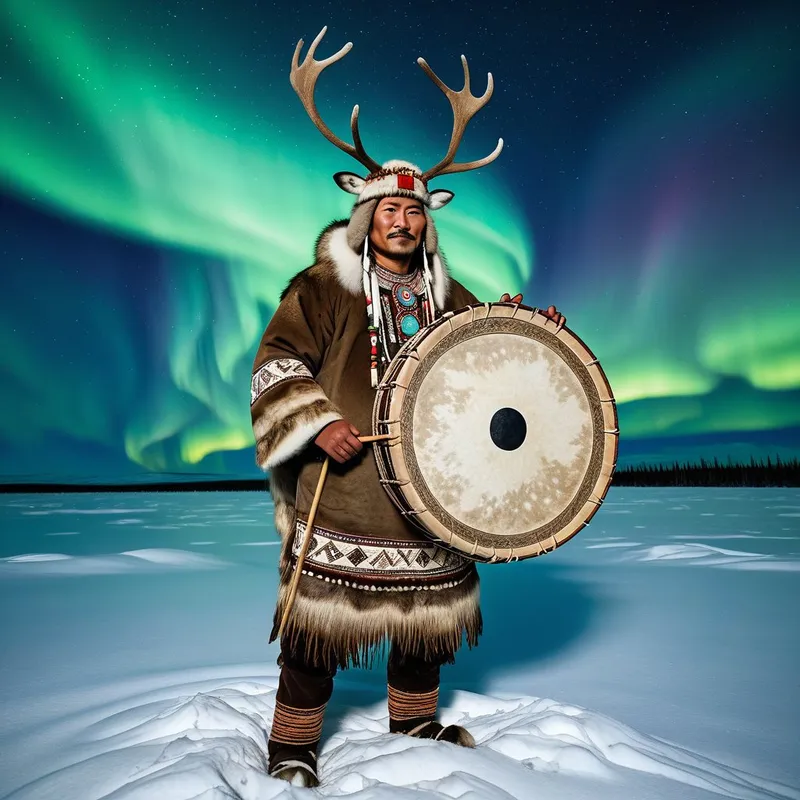
Drum Skins Myth Meaning & Symbolism
A myth of sacrifice and transformation where a skin becomes a sacred drum, a vessel for journeying between worlds to restore cosmic balance.
The Tale of Drum Skins
Listen. In the time before time, when the world was raw and the spirits walked as plainly as the wind, there was a silence so deep it threatened to swallow all things. The people were sick with a forgetting. They could no longer hear the whisper of the river’s source, nor understand the language of the wolf’s howl. The World Tree seemed a distant dream, its roots and branches lost in fog.
In this silence lived a woman named Ana. She walked the edge-lands, between the village and the wild, feeling the ache of the disconnect in her own bones. One night, a great white Stag came to her in a dream. Its eyes held the light of both sun and moon. “The bridge is broken,” it said, its voice the sound of cracking ice. “The heart-beat of the world is fading. To mend it, you must make a vessel that can hold thunder and whisper at once.”
Ana woke with the vision burning. She went to the elders and spoke of the Stag. An old hunter, his face a map of sorrow, understood. “The vessel,” he said, “requires a skin. Not just any skin. It requires a willing skin.” He looked to his companion, a loyal reindeer who had borne him through countless winters. The animal met his gaze, and in that silent exchange, a pact older than speech was made. It was not a death of violence, but a surrender—a giving over of form so that connection could be reborn.
With sacred prayers, the transition was made. Ana, guided by the dream, took the hide and the wood of a fallen birch from the foot of the World Tree. She worked for three days and three nights at the shore of the Dark Water. As she stretched the skin over the hoop, pulling the sinew tight, she felt the tension of the world itself. She painted the surface with symbols: the path of the sun, the coil of the serpent, the flight of the eagle.
When the last knot was tied, she held the frame in her trembling hands. She took the beater, carved from the antler of the dream-Stag. She closed her eyes, thinking not of rhythm, but of the lost heartbeat. She struck.
BOOM.
The sound was not just in the air. It was in the rock beneath her, in the water, in the marrow of the listening pines. The first beat was a call. The second was an answer. With each strike, the painted symbols began to glow. The drum was no longer an object, but a doorway. Through its skin, Ana saw—and then was—soaring over mountain ranges, diving into subterranean rivers, climbing the branches of the star-lit World Tree. She retrieved lost fragments of soul for the sick, parleyed with storm spirits, and heard the ancient songs of the earth once more.
She returned, the drum humming against her palm. The silence was broken. The people gathered, and as she played, they remembered. They remembered the stories in the fire, the names of the winds, the taste of their own belonging. The bridge was remade, not of stone, but of sound and sacrifice. And it was said that every true drum that followed carried within its skin the echo of that first, willing surrender, and the heartbeat of the mended world.
Cultural Origins & Context
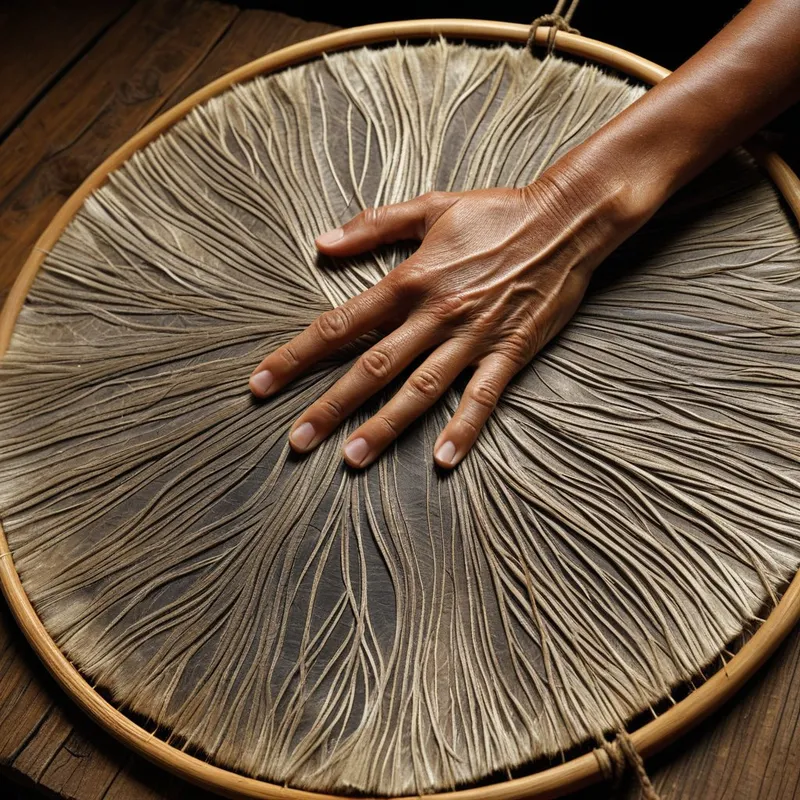
The myth of the drum’s origin is not a single story from one culture, but a profound archetypal narrative woven through the shamanic traditions of Siberia, Central Asia, Mongolia, and among many Indigenous peoples of the Americas. It was not a tale for entertainment, but a sacred etiology—a story of cosmic cause—recited during the very making of the shaman’s primary tool. Elders or practicing shamans would narrate it during the laborious, ritualized process of constructing a drum, binding the physical act to the primordial template.
Its societal function was multifaceted. It established the drum not as a mere instrument, but as a living entity, a vehicle born from a sacred exchange. This legitimized the shaman’s power and framed their practice within a cosmology of reciprocity and sacrifice. It also encoded an entire ecological and spiritual ethics: the materials (wood, hide, sinew) were not taken, but given through relationship and ritual, transforming the drum into a microcosm of the interconnected world. The story served as direct instruction, embedding the symbolic map of the cosmos (the painted designs) and the technique of its use (the journey) into the collective memory.
Symbolic Architecture
At its core, the myth is about the creation of a sacred vessel. The drum is the central symbol, a paradox made manifest.
The drum is the tension where opposites meet: skin and sky, death and vehicle, the individual heartbeat and the pulse of the cosmos.
The skin is the most potent symbol. It represents the boundary between self and other, the mortal and the eternal. In its sacrifice, it undergoes an alchemical change: from a limiting, individual form (the animal’s body) to a limitless, mediating membrane. It becomes the liminal space itself. The hoop is the structure of the known world, the wheel of life, the circle of community and cosmos. The act of stretching the skin over the hoop symbolizes the immense tension required to hold the spiritual reality taut against the frame of ordinary reality, creating the necessary surface for interaction.
The first strike is the moment of ignition, where potential becomes actual. It is the creative Word, the Big Bang of the shaman’s universe. The journey that follows represents the dissolution of ego-bound consciousness (Ana’s ordinary self) and its reformation into a traveling consciousness, capable of navigating the non-ordinary realms of the Otherworld to retrieve what is fragmented, lost, or sick.
The Dreamer's Resonance
When this myth pattern stirs in the modern dreamer, it often signals a profound somatic and psychological process: the call to create an inner vessel. Dreams of stretching skins, of tense membranes, or of a resonant, booming sound emanating from one’s own body point to this.
Somatically, one might feel a literal tension in the chest or diaphragm—the body preparing to “hold” a new frequency of being. Psychologically, the dreamer is in the phase of containment. They are gathering the disparate, often painful or chaotic elements of their experience (the “raw hide” of life events, emotions, traumas) and are being called to stretch them over the “hoop” of their emerging consciousness. This is not about releasing tension, but about learning to hold a sacred tension. The dream may evoke feelings of being sacrificed (the willing animal) or of being the maker (Ana), because the psyche is both the material and the artisan in this inner work. It is the process of building a capacity—a psychic drum—strong enough to resonate with one’s own depths and translate those vibrations into healing insight.
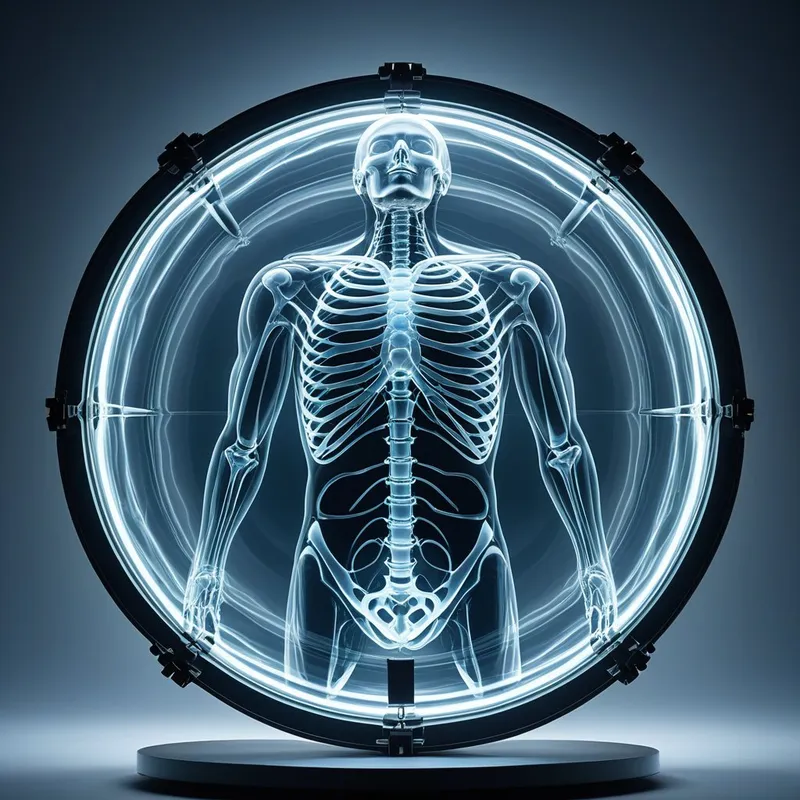
Alchemical Translation
For the modern individual navigating the path of individuation, the myth of the Drum Skins is a master metaphor for psychic transmutation. Our lives provide the raw materials: our wounds, our gifts, our relationships, our losses. These are the “skin”—the specific, personal substance of our existence.
Individuation is not about escaping one’s skin, but about transforming it into a vessel for journeying.
The sacrifice is the voluntary relinquishment of an old identity. It is the “willing surrender” of seeing oneself only as the isolated animal (the ego) to serve a larger, connecting function. The stretching is the often painful period of integration, where we pull these raw materials over the larger structure of the Self (the Jungian archetype of wholeness). This creates the necessary tension between who we were and who we are becoming.
The painting of symbols is the act of finding personal meaning—engaging with therapy, art, journaling, or ritual to map our unique psychic territory onto this new vessel. Finally, the first strike is the moment of active engagement with the unconscious. It is the first truly honest interpretation of a dream, the courageous confrontation with a shadow aspect, or the decision to express one’s truth. This strike initiates the journey. The drum we have built from our own lived experience becomes the vehicle that allows us to travel into our own inner World Tree, retrieve lost soul-parts (complexes), and return to the “community” of our own integrated psyche, restoring inner balance. We become, in essence, both the shaman and the drum—the journeyer and the sacred vessel that makes the journey possible.
Associated Symbols
Explore related symbols from the CaleaDream lexicon: