Dragon-Horse Myth Meaning & Symbolism
A celestial beast emerges from the river, bearing the sacred map of cosmic order, heralding the union of heaven and earth within the human soul.
The Tale of Dragon-Horse
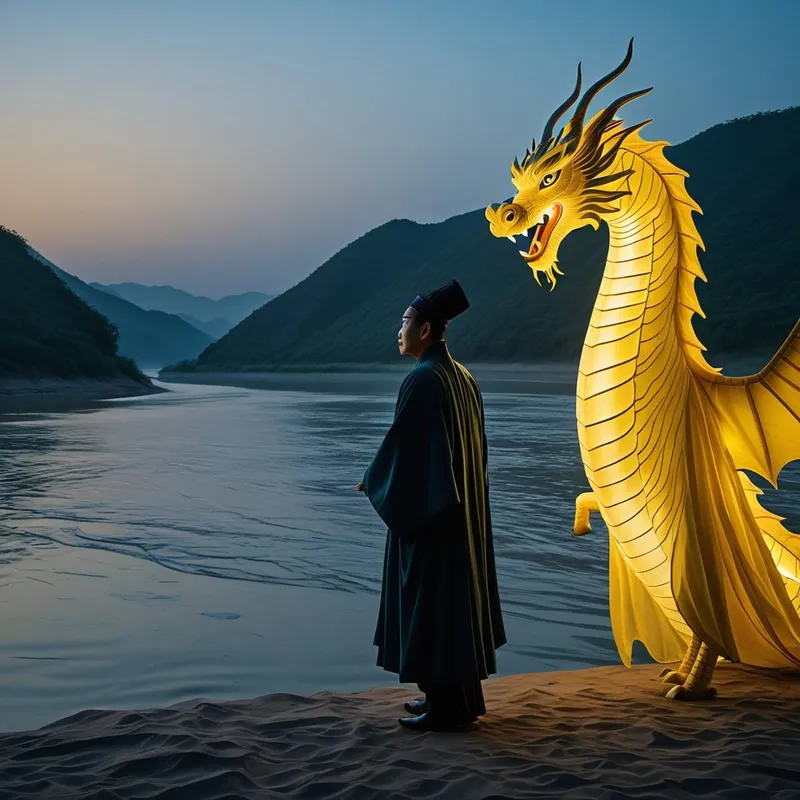
In the time before time was measured, when [the world](/myths/the-world “Myth from Tarot culture.”/) was a canvas of primal chaos, the great Huang He flowed with the memory of the stars. Its waters were dark, deep, and whispered secrets to the mud and the reeds. On its banks stood a man who listened not with his ears, but with his bones. He was Fuxi, the first of the Three Sovereigns, who walked [the earth](/myths/the-earth “Myth from Hindu culture.”/) with the quiet purpose of one trying to read a book written in fog.
One evening, as the sun drowned itself in the western hills and the first cold star pricked the violet sky, [the river](/myths/the-river “Myth from Buddhist culture.”/)’s whisper became a roar. The waters did not churn with storm, but with a profound, luminous agitation. A light, not of fire or moon, swelled from the river’s heart. The reeds bowed, not from wind, but from a presence. Then, the waters parted like a curtain.
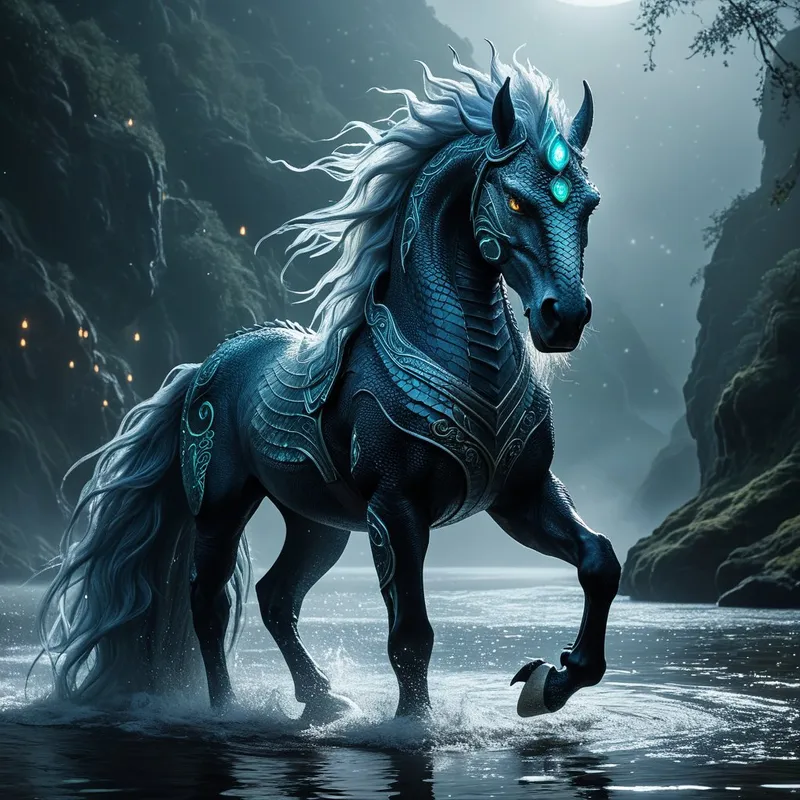
It rose. Not with a splash, but with the silent, inevitable grace of a mountain breaching a cloud. Its form was a paradox made flesh. It had the powerful, arched neck and flowing mane of the noblest stallion, a creature of earth and wind. Yet, from its shoulders flowed the sinuous, scaled body of a long, a [dragon](/myths/dragon “Myth from Chinese culture.”/) of the watery depths and the celestial vaults. Its eyes were pools of liquid intelligence, holding the patience of the riverbed and the fire of distant suns. This was the Longma, [the Dragon](/myths/the-dragon “Myth from Chinese culture.”/)-Horse.
It stood upon the [water](/myths/water “Myth from Chinese culture.”/) as if it were solid jade, steam rising from its glistening coat where river met air. And upon its back, glowing with an [inner light](/myths/inner-light “Myth from Buddhist culture.”/), was a pattern. Not carved, not painted, but born into its very hide—a arrangement of swirling dots, some dark as [the void](/myths/the-void “Myth from Buddhist culture.”/), some bright as the pole star, connected by lines of fate. This was the Hetu.
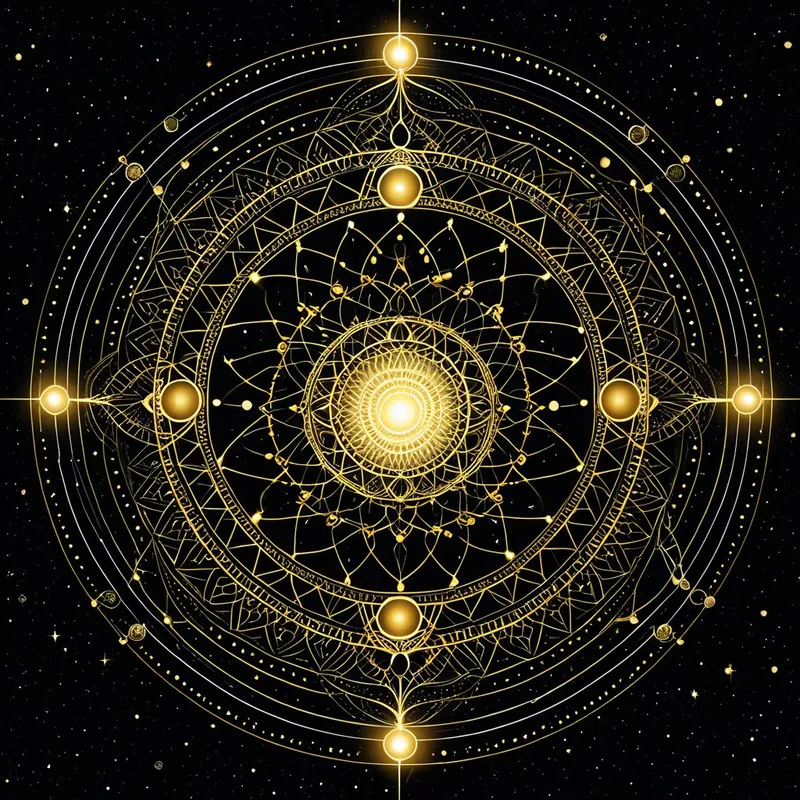
Fuxi felt the pattern imprint itself upon his mind before his eyes fully comprehended it. It was a map, but not of lands. It was the architecture of the San Cai, the blueprint of the cosmos itself—the dance of [Yin and Yang](/myths/yin-and-yang “Myth from Chinese culture.”/), the order of the five phases, the music of the eight trigrams. In that silent communion on the misty bank, as the Dragon-Horse regarded the awestruck sovereign, civilization was not built. It was remembered. The beast, its celestial delivery complete, gave a sound that was neither whinny nor roar, but a deep hum that vibrated in the stones. Then, it turned and descended back into the embracing darkness of the Huang He, leaving Fuxi alone with the sacred diagram now burning in his soul, the first key to unlocking the order of all things.
Cultural Origins & Context
The myth of the Dragon-Horse is not a folktale of the village hearth, but a foundational narrative of Chinese cosmogony and statecraft. It originates from the deepest strata of Chinese philosophical and historiographical tradition, recorded in texts like the Shangshu and commentaries on the Yijing. This was a story told by scholars, historians, and court philosophers to explain the very origin of Chinese civilization’s intellectual and moral order.
Its primary function was to sanctify and legitimize. The revelation of the Hetu to the sage-king Fuxi provided a divine, non-human origin for the core systems—the trigrams, the calendar, the principles of governance—that ordered society. It answered the profound question: “How do we know [the way](/myths/the-way “Myth from Taoist culture.”/) of Heaven?” The answer: Heaven itself revealed its pattern through a numinous, hybrid creature. The myth established the Tianming as something tangible, delivered in the form of a sacred text written on a living being. It positioned the ideal ruler not as a conqueror, but as a receptive vessel for cosmic wisdom, much like Fuxi on the riverbank.
Symbolic Architecture
The [Dragon](/symbols/dragon “Symbol: Dragons are potent symbols of power, wisdom, and transformation, often embodying the duality of creation and destruction.”/)-Horse is a supreme [symbol](/symbols/symbol “Symbol: A symbol can represent an idea, concept, or belief, serving as a powerful tool for communication and understanding.”/) of [synthesis](/symbols/synthesis “Symbol: The process of combining separate elements into a unified whole, representing integration, resolution, and the completion of a personal journey.”/), a living bridge between realms that are typically distinct and often opposed. It is the ultimate [psychopomp](/myths/psychopomp “Myth from Greek culture.”/), not guiding souls to an [afterlife](/symbols/afterlife “Symbol: A symbolic journey beyond death, representing transition, the unknown, and ultimate questions about existence, purpose, and what follows life.”/), but guiding [consciousness](/symbols/consciousness “Symbol: Consciousness represents the state of awareness and perception, encompassing thoughts, feelings, and experiences.”/) from [chaos](/symbols/chaos “Symbol: In Arts & Music, chaos represents raw creative potential, uncontrolled expression, and the breakdown of order to forge new artistic forms.”/) to order.
The horse [aspect](/symbols/aspect “Symbol: A distinct feature, quality, or perspective of something, often representing a partial view of a larger whole.”/) grounds the symbol in the terrestrial world—it represents practical power, swift [movement](/symbols/movement “Symbol: Movement symbolizes change, progress, and the dynamics of personal growth, reflecting an individual’s desire or need to transform their circumstances.”/) across the plains of [reality](/symbols/reality “Symbol: Reality signifies the state of existence and perception, often reflecting one’s understanding of truth and life experiences.”/), and the untamed vitality of [nature](/symbols/nature “Symbol: Nature symbolizes growth, connectivity, and the primal forces of existence.”/). The dragon [aspect](/symbols/aspect “Symbol: A distinct feature, quality, or perspective of something, often representing a partial view of a larger whole.”/) elevates it to the celestial and the watery [depths](/symbols/depths “Symbol: Represents the subconscious, hidden emotions, or foundational aspects of the self, often linked to primal fears or profound truths.”/)—it represents hidden wisdom, transformative potential, and the mysterious, shaping forces of the [cosmos](/symbols/cosmos “Symbol: The entire universe as an ordered, harmonious system, often representing the totality of existence, spiritual connection, and the unknown.”/). Their union in the Longma signifies that true order and wisdom are not imposed from a distant [heaven](/symbols/heaven “Symbol: A symbolic journey toward ultimate fulfillment, spiritual transcendence, or connection with the divine, often representing life’s highest aspirations.”/) onto a passive [earth](/symbols/earth “Symbol: The symbol of Earth often represents grounding, stability, and the physical realm, embodying a connection to nature and the innate support it provides.”/), but emerge from the sacred [marriage](/symbols/marriage “Symbol: Marriage symbolizes commitment, partnership, and the merging of two identities, often reflecting one’s feelings about relationships and social obligations.”/) of the two.
The Hetu on its back is the crystallized [fruit](/symbols/fruit “Symbol: Fruit symbolizes abundance, nourishment, and the fruits of one’s labor in dreams.”/) of this union.
The pattern revealed is not an invention, but a recognition; the cosmos inscribes its own laws upon the receptive soul.
Psychologically, the Dragon-Horse represents the emergent symbol from the unconscious that has the power to reorder a chaotic conscious mind. The horse is the powerful instinctual [energy](/symbols/energy “Symbol: Energy symbolizes vitality, motivation, and the drive that fuels actions and ambitions.”/) of the [psyche](/myths/psyche “Myth from Greek culture.”/); the dragon is the vast, often frightening, [depth](/symbols/depth “Symbol: Represents profound layers of consciousness, hidden truths, or the unknown aspects of existence, often symbolizing introspection and existential exploration.”/) of the [collective unconscious](/symbols/collective-unconscious “Symbol: The Collective Unconscious refers to the part of the unconscious mind shared among beings of the same species, embodying universal experiences and archetypes.”/). When they coalesce into a single, purposeful [image](/symbols/image “Symbol: An image represents perception, memories, and the visual narratives we create in our minds.”/)—the Dragon-Horse—it carries up from the depths (the [river](/symbols/river “Symbol: A river often symbolizes the flow of emotions, the passage of time, and life’s journey, reflecting transitions and movement in one’s life.”/)) a new, integrative [pattern](/symbols/pattern “Symbol: A ‘Pattern’ in dreams often signifies the underlying structure of experiences and thoughts, representing both order and the repetitiveness of life’s situations.”/) (the Hetu) for [the ego](/myths/the-ego “Myth from Jungian culture.”/) (Fuxi) to apprehend and implement. It is the [moment](/symbols/moment “Symbol: The symbol of a ‘moment’ embodies the significance of transient experiences that encapsulate emotional depth or pivotal transformations in life.”/) when raw, complex psychic [energy](/symbols/energy “Symbol: Energy symbolizes vitality, motivation, and the drive that fuels actions and ambitions.”/) transforms into a legible, guiding [structure](/symbols/structure “Symbol: Structure in dreams often symbolizes stability, organization, and the framework of one’s life, reflecting how one perceives their environment and personal life.”/).
The Dreamer’s Resonance
When the Dragon-Horse canters through the modern dreamscape, it heralds a profound process of internal reordering. This is not the dream of a simple message or a repressed memory; it is the dream of a paradigm shift.
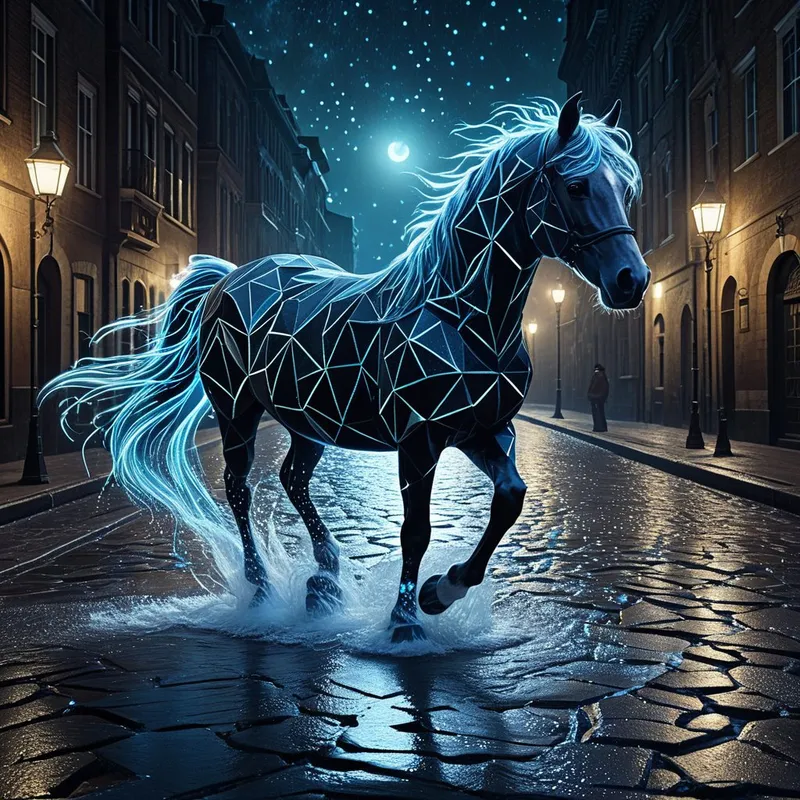
To dream of seeing the Dragon-Horse emerge from water—a lake, a sea, even a flooded street—suggests a long-brewing insight or a new foundational understanding is about to break the surface of consciousness. The dreamer may be in a period of great confusion or “chaos” in their life, where nothing seems to cohere. The beast’s appearance signals that the unconscious is actively working to deliver a new organizing principle.
If the dreamer is riding the Dragon-Horse, it indicates a nascent but powerful ability to harness and direct previously conflicting aspects of [the self](/myths/the-self “Myth from Jungian culture.”/)—perhaps raw ambition (horse) with spiritual depth (dragon), or logical mind with intuitive wisdom. The somatic feeling is often one of exhilarating, awe-filled control, a sense of being carried by a force both greater than oneself and intimately connected to oneself.
Conversely, a dream where the Dragon-Horse is wounded, trapped, or its pattern is fading speaks to a crisis of meaning. The dreamer may feel that the internal “map” that once guided their life—their values, beliefs, or self-concept—is failing, and the synthetic, ordering power of the psyche is under threat. The body may respond with anxiety, a feeling of being “unmoored” or lost.
Alchemical Translation
The myth of the Dragon-Horse is a perfect allegory for the Jungian process of individuation—the journey toward psychic wholeness. The journey begins with the “chaotic waters” of the unexamined life, where thoughts, drives, and emotions clash without a unifying center (Fuxi by the unruly river).
The first alchemical stage is the [nigredo](/myths/nigredo “Myth from Alchemical culture.”/), the blackening, represented by the dark, mysterious depths of the Huang He. This is a period of confusion, depression, or dissolution where old structures fail. From this fertile darkness, the conjunctio oppositorum—[the sacred marriage](/myths/the-sacred-marriage “Myth from Various culture.”/)—occurs. The conscious, striving, “horse-like” aspect of the personality encounters and integrates the unconscious, mysterious, “dragon-like” aspect. This is not a battle, but a miraculous fusion, giving birth to the Longma, the transcendent function.
This new, unified psychic entity then delivers the [lapis philosophorum](/myths/lapis-philosophorum “Myth from Alchemical culture.”/), [the philosopher’s stone](/myths/the-philosophers-stone “Myth from Alchemical culture.”/), which in this myth is the Hetu.
The goal of psychic alchemy is not to become a dragon or a horse, but to become the vessel upon which their union inscribes a new law of being.
The Hetu is the attained symbol of wholeness, the Self. It is the internal [mandala](/myths/mandala “Myth from Buddhist culture.”/) that orders the psyche’s contents around a new, authentic center. For the modern individual, the “Fuxi moment” is that point of quiet revelation after a long struggle, where a profound, simplifying insight suddenly makes sense of the complexity of one’s life. It is the pattern found in the chaos, the personal “cosmology” that allows one to navigate the world with grounded wisdom (the horse) and inspired vision (the dragon), no longer at war within oneself, but carrying the sacred map forward.
Associated Symbols
Explore related symbols from the CaleaDream lexicon: