
Delphinus Myth Meaning & Symbolism
A dolphin aids the god Poseidon, winning a bride and earning a place among the stars as a constellation of guidance and sacred union.
The Tale of Delphinus
Hear now the tale of the dolphin who swam between worlds, whose sleek form bridged the churning salt of the deep and the silent fire of the heavens.
In the time when the gods walked with purpose and passion ran as deep as the ocean trenches, the great Earth-Shaker, Poseidon, desired a bride. His eye fell upon the Nereid Amphitrite, whose beauty was like moonlight on a calm sea. But Amphitrite, wary of the god’s tempestuous nature, fled. She hid herself in the farthest reaches of the ocean, at the very pillars that held the sky, where the waters grew still and secret.
Poseidon’s longing became a storm within him, stirring the seas into frenzy. He sent messengers, but none could find her. The world was out of balance; the god’s heart was a tempest without a shore. Then, from the playful, intelligent depths, a dolphin volunteered. Not out of duty, but from a knowing deeper than instinct. This dolphin, whose name the waves have forgotten but whose deed they remember, swam. It did not swim with the brute force of a tidal wave, but with the cunning and gentle persuasion of a current that knows every shore.
Through forests of kelp and over plains of white sand, past sleeping leviathans and chattering reefs, the dolphin sought. It found Amphitrite in her remote atlas, not with a demand, but with a song of clicks and whistles that spoke of Poseidon’s genuine ardor, of the stability his love could offer, of a throne beside him not as a possession, but as a queen. The dolphin spoke of sacred union, of the marriage of depth and surface, chaos and order. Amphitrite, moved by this eloquent and selfless ambassador, consented.
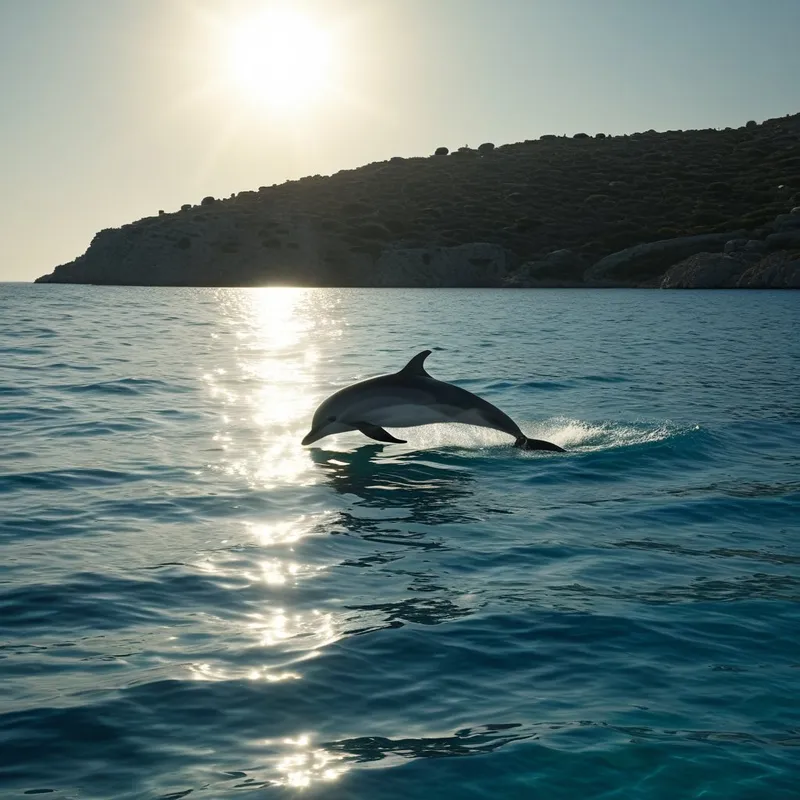
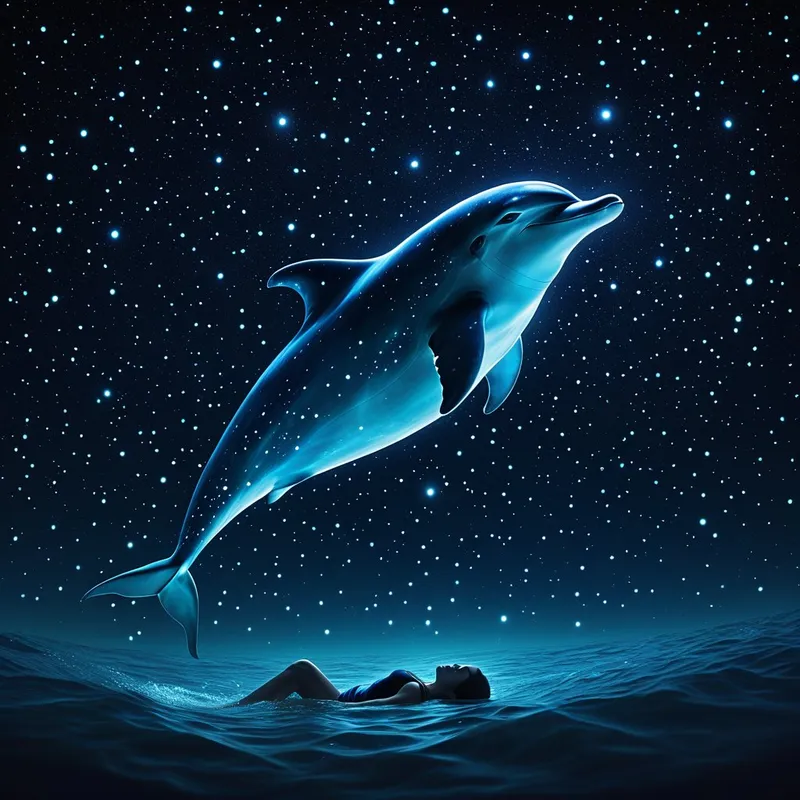
The dolphin carried the glad news on its back, racing through the sun-pierced blue. When Poseidon heard, his joy stilled the raging seas. In profound gratitude, he placed the dolphin’s image among the eternal lights. He did not simply kill it and cast its shape upward; he translated its essence. The dolphin’s form was lifted from the fluid dark of the sea and set into the fluid dark of the night sky, becoming the constellation Delphinus, a permanent celestial guide, leaping forever near the Water-Pourer, Aquarius.
Cultural Origins & Context
The myth of Delphinus is not a grand, foundational epic like those of the Titans, but a luminous anecdote, a star in the constellation of Greek mythological thought. It comes to us primarily through the work of the mythographer Pseudo-Hyginus in his Astronomica, a catalog of stellar myths. This places its formal recording in the Roman period, but its roots are undeniably older, woven into the fabric of Greek seafaring culture.
For a people whose lives were circumscribed by the thalassa, the dolphin was not merely an animal; it was a numinous presence. Sailors saw them as guides and protectors, their playful escort a sign of fair passage. They were considered friends to humanity, with legends telling of them saving the drowning, most famously the poet Arion. The Delphinus myth served a societal function of reinforcing connection: between gods and mortals (through the star-lore), between the human and natural worlds, and between conflicting desires (Poseidon’s passion and Amphitrite’s autonomy). It was a story told to explain a specific, gentle pattern in the night sky, transforming navigation points into narrative, giving the cosmos a familiar, benevolent face.
Symbolic Architecture
At its core, Delphinus is the archetype of the Mediator and the Messenger of the Deep. It symbolizes intelligence applied not for conquest, but for reconciliation. The dolphin swims between two poles: the raw, unbridled power and desire of Poseidon (the unconscious, instinctual realm) and the refined, elusive autonomy of Amphitrite (the conscious mind or the anima, the soul-image). The sea itself is the great unconscious, and the dolphin is the psychic function that can navigate its depths with agility and bring hidden contents to the surface.
The true guide does not conquer the chaos; it learns its currents and speaks its language.
The dolphin’s action is one of persuasion, not force. It does not capture Amphitrite; it communicates value. This represents the psychological process of integrating opposites within the psyche. The “storm” of unresolved desire or conflict (Poseidon’s rage) is calmed not by suppression, but by the arrival of a reconciling symbol—the insightful, empathetic thought or feeling that can articulate a deeper truth. The celestial ascent is the ultimate symbol of this success: the mediating principle is eternalized, made a permanent fixture of the inner cosmos, a tool for future orientation.

The Dreamer's Resonance
When the pattern of Delphinus surfaces in modern dreams, it often signals a process of navigation through emotional or psychic chaos. The dreamer may be caught in a storm of conflicting desires—a passionate need (Poseidon) clashing with a part of the self that feels vulnerable and hidden (Amphitrite). The appearance of a dolphin, or a dolphin-like guide, suggests the emergence of a reconciling intelligence from the depths of the unconscious.
Somatically, this can feel like a release of tension in the chest or diaphragm, a capacity to “ride the wave” of a difficult emotion rather than be submerged by it. Psychologically, it is the moment of finding the right words in a conflict, the insightful therapy session, the sudden creative solution that bridges two seemingly irreconcilable positions. The dolphin in a dream is the symbol of the psyche’s own innate wisdom seeking to establish communication between estranged parts of the self. If the dolphin is injured or trapped, it may reflect the dreamer’s failure to listen to this intuitive, mediating function, leaving them lost in their own inner tempest.
Alchemical Translation
The myth of Delphinus is a perfect map for the alchemical stage of Coniunctio—the sacred marriage. This is not a literal union, but the psychic integration of opposites: conscious and unconscious, spirit and matter, logos and eros. Poseidon represents the solvent, the fierce, dissolving power of the unconscious that disrupts stagnant conscious attitudes. Amphitrite represents the fixed, the elusive, precious element of the soul that must be found and honored, not seized.
The dolphin is the mediating mercurial spirit, the agile intelligence of the psyche itself that makes the Coniunctio possible. Its journey is the individuation process: diving into the chaotic, personal unconscious (the search), engaging with the soul-image (persuading Amphitrite), and returning with the aqua permanens—the “permanent water” or transformative insight that quenches the inner fire and restores balance.
The constellation is the prize: a new, permanent structure of awareness. Once the mediation is successful, the guiding principle becomes a fixed part of our inner sky, a reference point we can always look to.
For the modern individual, the struggle is the inner tempest of unresolved conflict. The triumph is not the violent conquest of one side over the other, but the development of that dolphin-like capacity: the empathetic, articulate, and agile part of the self that can speak the language of the depths and broker a lasting peace. We are asked to become our own Delphinus, to find the hidden nymph of our deepest truth and, through wise persuasion, bring her into sacred union with our powerful, world-shaking nature, earning our own place among the guiding stars of our character.
Associated Symbols
Explore related symbols from the CaleaDream lexicon: